
Opinion
The New Geometry of Global Finance: How Developing Nations Navigate the IMF, World Bank, ADB, AIIB, and IsDB

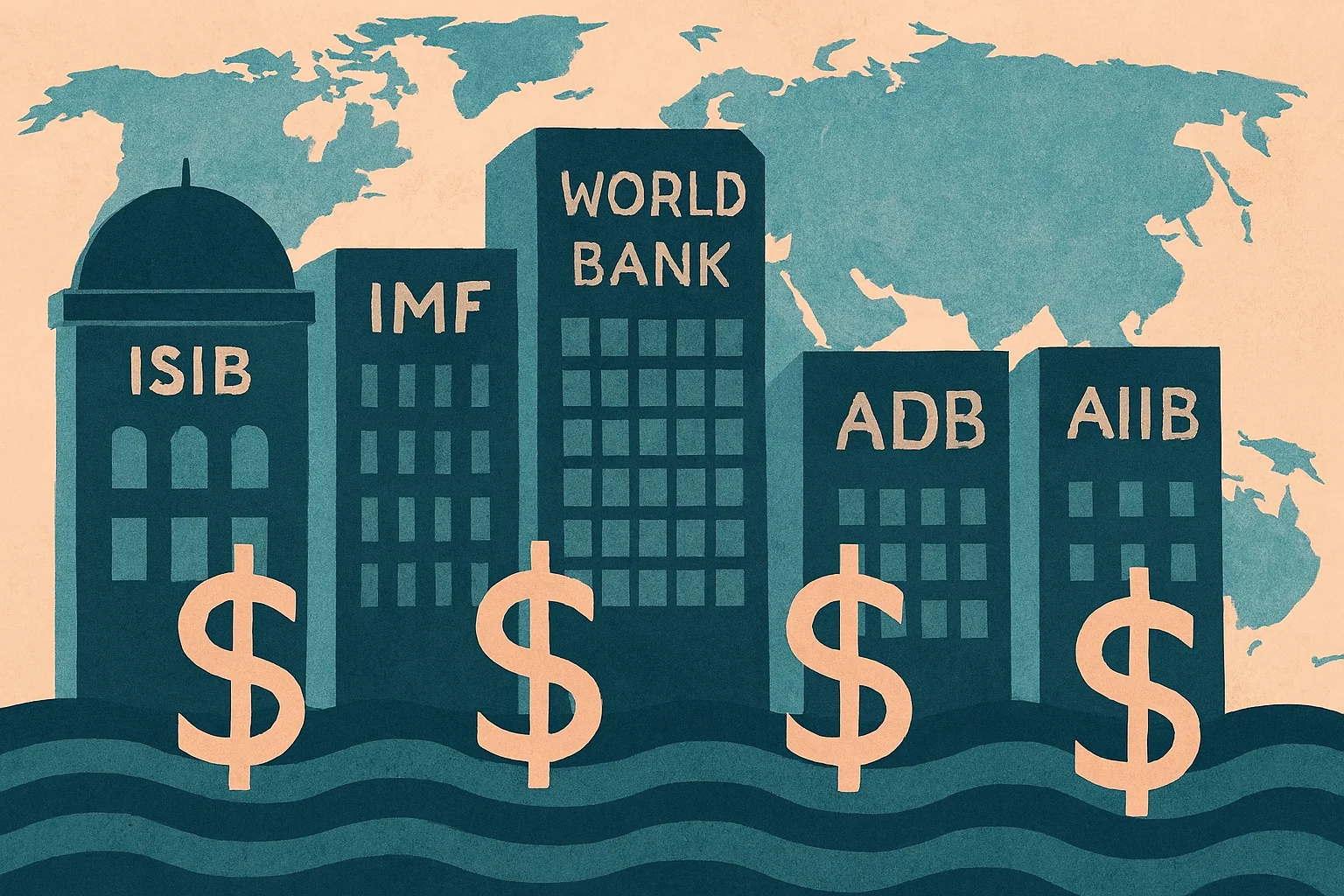
In the long arc of global development, few decisions shape a nation’s trajectory as profoundly as the choice of where to borrow. For developing countries—many juggling fragile currencies, widening infrastructure gaps, and volatile political cycles—the question is not merely how much financing they can secure, but from whom, on what terms, and at what cost to sovereignty and long‑term stability.
The global financial architecture has never been more crowded. The post‑war titans—the International Monetary Fund (IMF) and the World Bank—still dominate the landscape, but they no longer stand alone. The Asian Development Bank (ADB) continues to anchor Asia’s development agenda, while two newer entrants—the Asian Infrastructure Investment Bank (AIIB) and the Islamic Development Bank (IsDB)—have carved out distinct roles by offering faster, more flexible, and often less politically intrusive financing.
For developing nations, this expanding menu of lenders is both an opportunity and a strategic puzzle. Each institution brings its own ideology, regulatory philosophy, and geopolitical baggage. Understanding these differences is no longer optional; it is a prerequisite for any government seeking to build roads, stabilize currencies, or simply keep the lights on.
This article unpacks the comparative strengths, weaknesses, and regulatory burdens of the world’s most influential development lenders—and offers a clear-eyed assessment of which institutions are best positioned to support developing nations in the decade ahead.
The IMF: The Doctor You Call When the House Is Already on Fire

The International Monetary Fund was never designed to be loved. It was designed to be necessary. Its mandate is not development but stabilization—an emergency physician for economies in cardiac arrest.
When a country’s foreign reserves evaporate, when its currency spirals, when investors flee and imports stall, the IMF steps in with a lifeline. But the rescue comes with strings—thick, tightly knotted strings.
IMF programs typically require governments to implement structural reforms:
- Fiscal tightening
- Currency adjustments
- Subsidy rationalization
- Governance reforms
- Monetary discipline
These conditions are often politically explosive. They can topple governments, ignite protests, and reshape entire economic systems. Critics argue that IMF prescriptions can be too harsh, too uniform, and too indifferent to local realities. Supporters counter that stabilization is impossible without discipline.
What is undeniable is this: IMF financing is the most conditional, most regulated, and most intrusive of all global lenders. It is also the fastest in crises and the most influential in shaping macroeconomic policy.
For developing nations seeking long-term development financing, the IMF is rarely the first choice. It is the lender of last resort—the institution you turn to when every other door has closed.
The World Bank: The Architect of Long-Term Development—With Bureaucracy to Match

If the IMF is the emergency doctor, the World Bank is the urban planner. Its mission is long-term development: reducing poverty, building institutions, and financing infrastructure, education, health, and climate resilience.
The World Bank’s two arms—IBRD for middle-income countries and IDA for low-income nations—offer some of the world’s most concessional financing. IDA loans, in particular, come with extremely low interest rates and long maturities.
But the World Bank’s generosity comes wrapped in layers of governance requirements. Borrowers must adhere to strict procurement rules, environmental safeguards, anti-corruption frameworks, and transparency standards. These are designed to ensure accountability, but they also slow down disbursement and complicate project execution.
For governments with limited administrative capacity, World Bank financing can feel like navigating a labyrinth of paperwork. Yet for those willing to endure the bureaucracy, the rewards are substantial: large-scale funding, global expertise, and long-term stability.
The World Bank remains a cornerstone of development finance—but it is not the fastest, nor the most flexible, nor the least regulated.
The Asian Development Bank: Asia’s Policy Partner With Moderate Conditionality

The Asian Development Bank occupies a middle ground between the World Bank’s governance-heavy approach and the IMF’s macroeconomic conditionality. ADB’s mandate is development, but its lending philosophy is more pragmatic and regionally attuned.
ADB loans typically require:
- Sector-specific reforms
- Governance improvements
- Project-level safeguards
But unlike the IMF, ADB does not demand sweeping national restructuring. And unlike the World Bank, its processes are often more streamlined and regionally contextualized.
For Asian developing nations, ADB is a familiar partner—predictable, moderately regulated, and aligned with regional priorities such as energy transition, digital connectivity, and climate resilience.
Its concessional financing is competitive, though not as generous as IDA. Its bureaucracy is real, but not suffocating. Its influence is significant, but not overbearing.
In the hierarchy of regulatory burden, ADB sits comfortably in the middle.
The AIIB: The New Power Broker With Leaner Rules and Faster Money

The Asian Infrastructure Investment Bank is the newest major player—and arguably the most disruptive. Created in 2016, AIIB has positioned itself as a modern, efficient, and less politically intrusive alternative to Western-led institutions.
Its value proposition is simple:
- Faster approvals
- Leaner bureaucracy
- Fewer political conditions
- Strong focus on infrastructure
- Co-financing partnerships with World Bank, ADB, and others
AIIB’s governance standards are robust, but its conditionality is lighter. It does not impose macroeconomic reforms. It does not dictate national policy. It focuses on project quality, not political ideology.
For developing nations seeking infrastructure financing—roads, ports, energy grids, digital networks—AIIB is increasingly the lender of choice. Its rise reflects a broader shift in global power dynamics, as emerging economies seek alternatives to Western-dominated institutions.
AIIB is not without critics. Some argue it advances geopolitical interests. Others worry about debt sustainability. But its efficiency and flexibility are undeniable.
In the ranking of regulatory burden, AIIB is among the least restrictive.
The Islamic Development Bank: Development Without Political Strings

The Islamic Development Bank is unique—not only because it offers Shariah-compliant financing, but because its lending philosophy is fundamentally partnership-driven. IsDB emphasizes social development, equity, and shared prosperity.
Its financing structures—profit-sharing, leasing, equity participation—are often more flexible than traditional interest-based loans. Its conditionality is minimal. Its political footprint is light.
For Muslim-majority developing nations, IsDB is often the most culturally aligned and least intrusive lender. It supports:
- Agriculture
- Social infrastructure
- SMEs
- Human development
- Climate adaptation
IsDB’s funding volumes are smaller than the World Bank or ADB, but its impact is significant—particularly in Africa, the Middle East, and South Asia.
In terms of regulatory burden, IsDB ranks as the most flexible and least politically conditioned institution.
Comparative Analysis: Regulation, Speed, Flexibility, and Strategic Fit
To understand how these institutions stack up, it helps to evaluate them across four dimensions that matter most to developing nations:
1. Regulatory and Conditionality Burden
- Highest: IMF
- High: World Bank
- Moderate: ADB
- Low: AIIB
- Lowest: IsDB
2. Speed of Financing
- Fastest: IMF (crisis), AIIB (projects)
- Moderate: ADB
- Slower: World Bank
- Variable: IsDB
3. Flexibility of Terms
- Most Flexible: IsDB, AIIB
- Moderate: ADB
- Least Flexible: IMF, World Bank
4. Best Use Cases
- IMF: Crisis stabilization
- World Bank: Social development, climate, governance
- ADB: Regional development, infrastructure, reforms
- AIIB: Infrastructure, energy, digital connectivity
- IsDB: Social development, agriculture, SME support
The Strategic Puzzle for Developing Nations
Choosing a lender is no longer a binary decision. It is a strategic exercise in balancing:
- Sovereignty
- Speed
- Cost
- Political risk
- Long-term development goals
A country seeking to stabilize its currency may have no choice but to approach the IMF. A nation building a new port may find AIIB’s efficiency irresistible. A government investing in education or climate resilience may prefer the World Bank’s expertise. A Muslim-majority country seeking culturally aligned financing may turn to IsDB.
The smartest governments diversify their financing sources—leveraging each institution’s strengths while minimizing exposure to any single lender’s constraints.
The Next Decade: Who Will Shape Global Development?
The global financial order is shifting. The IMF and World Bank remain powerful, but their dominance is no longer unquestioned. AIIB’s rise signals a new era of multipolar development finance. ADB continues to anchor Asia’s growth story. IsDB provides a culturally aligned alternative for a vast swath of the developing world.
In the decade ahead, the institutions that will matter most are those that can combine:
- Speed
- Flexibility
- Sustainability
- Political neutrality
- Long-term developmental impact
By this measure, AIIB and IsDB are poised to expand their influence. ADB will remain a regional heavyweight. The World Bank will continue to lead on climate and social development. The IMF will remain indispensable in crises—but rarely welcomed.
Conclusion: The New Hierarchy of Development Finance
If we rank these institutions by their suitability for developing nations seeking accessible, low-regulation financing, the hierarchy is clear:
1. Islamic Development Bank (IsDB) — Most flexible, least political
2. Asian Infrastructure Investment Bank (AIIB) — Fast, modern, infrastructure-focused
3. Asian Development Bank (ADB) — Balanced, moderate conditionality
4. World Bank — Strong but bureaucratic
5. IMF — Essential but heavily conditioned
The world of development finance is no longer defined by a single pole of power. It is a competitive marketplace—one where developing nations, for the first time in decades, have real choices.
And in that choice lies the possibility of a more equitable, more responsive, and more multipolar global financial system.
Discover more from The Economy
Subscribe to get the latest posts sent to your email.


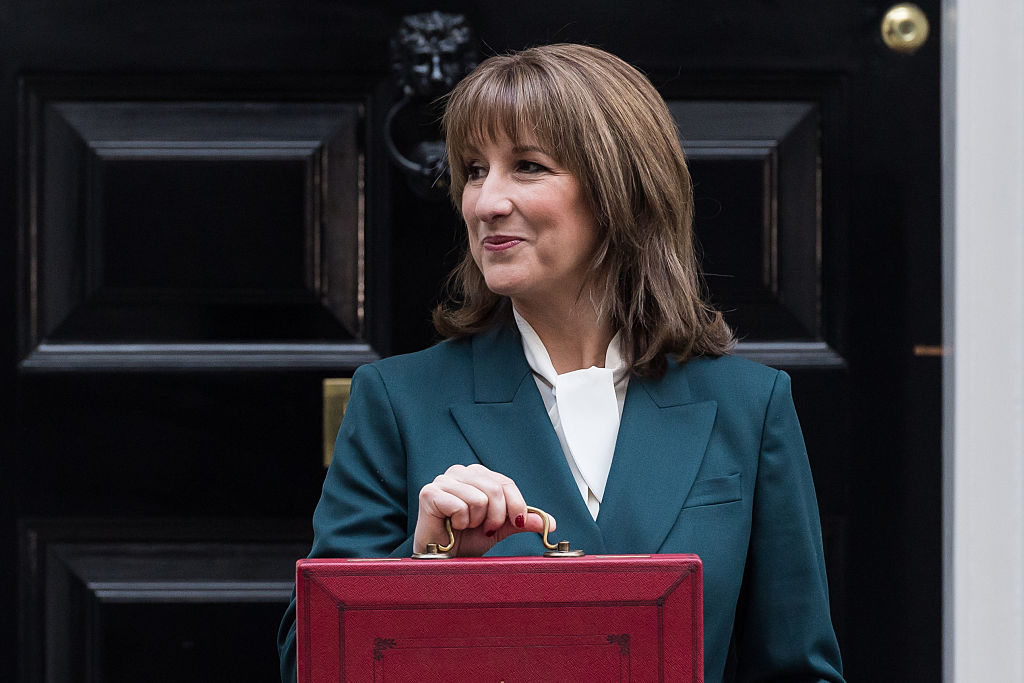
Britain’s economy is growing again — just not fast enough to spare Chancellor Rachel Reeves from another difficult budget. The UK expanded by roughly 0.1% in August, keeping the economy on track for about 0.2% growth in the third quarter, but that modest rebound won’t be enough to close a fiscal hole opening beneath the government’s plans, according to analysis from FXStreet.
Where the £25 billion gap comes from
The Office for Budget Responsibility is expected to downgrade its economic assessment this autumn relative to its Spring Statement forecast, chiefly on weaker productivity assumptions. Combined with higher gilt yields and a series of policy reversals over the past year, that downgrade is projected to blow a roughly £25 billion annual hole in the public finances compared with the position Reeves described in March, per the same FXStreet analysis. A separate assessment attributes some of the UK’s recent resilience to a substantial rise in government spending — departmental budgets have grown roughly 4% in real terms — a tailwind officials do not expect to persist into the next fiscal year.
This follows an already-large tax package. Reeves’s autumn 2025 budget delivered more than £26 billion in new tax measures, according to Allianz Trade’s UK economic outlook, on top of £41.5 billion in tax increases the year before. Much of that revenue is earmarked for higher welfare spending, leaving comparatively little room for growth-focused stimulus.
The government’s counter-narrative
Downing Street has framed its record differently. In its own Spring Forecast presentation, the government pointed to inflation falling faster than expected, GDP per person growing more than projected in the original Budget, and household energy bill relief as evidence its plan is working, according to the UK government’s own Spring Forecast statement. Officials also cite the UK’s growth rate as the fastest in the G7 among European economies in 2025.
The Bank of England, meanwhile, has penciled in third-quarter growth of around 0.4% — a target that already looks difficult to reach given the pace of expansion through August and September, according to FXStreet’s assessment of the BoE forecast gap.
Why global finance is watching
For institutional investors from Singapore to Dubai, the UK’s fiscal trajectory matters beyond domestic politics. Persistently elevated gilt yields make UK sovereign debt more attractive on a relative-yield basis but signal continued fiscal strain — a dynamic that has already accelerated the migration of UK-domiciled wealth toward lower-tax jurisdictions including Singapore and the UAE (see our companion report on the non-dom exodus). A credible autumn budget, or the absence of one, will shape whether that capital flow accelerates further.
Discover more from The Economy
Subscribe to get the latest posts sent to your email.
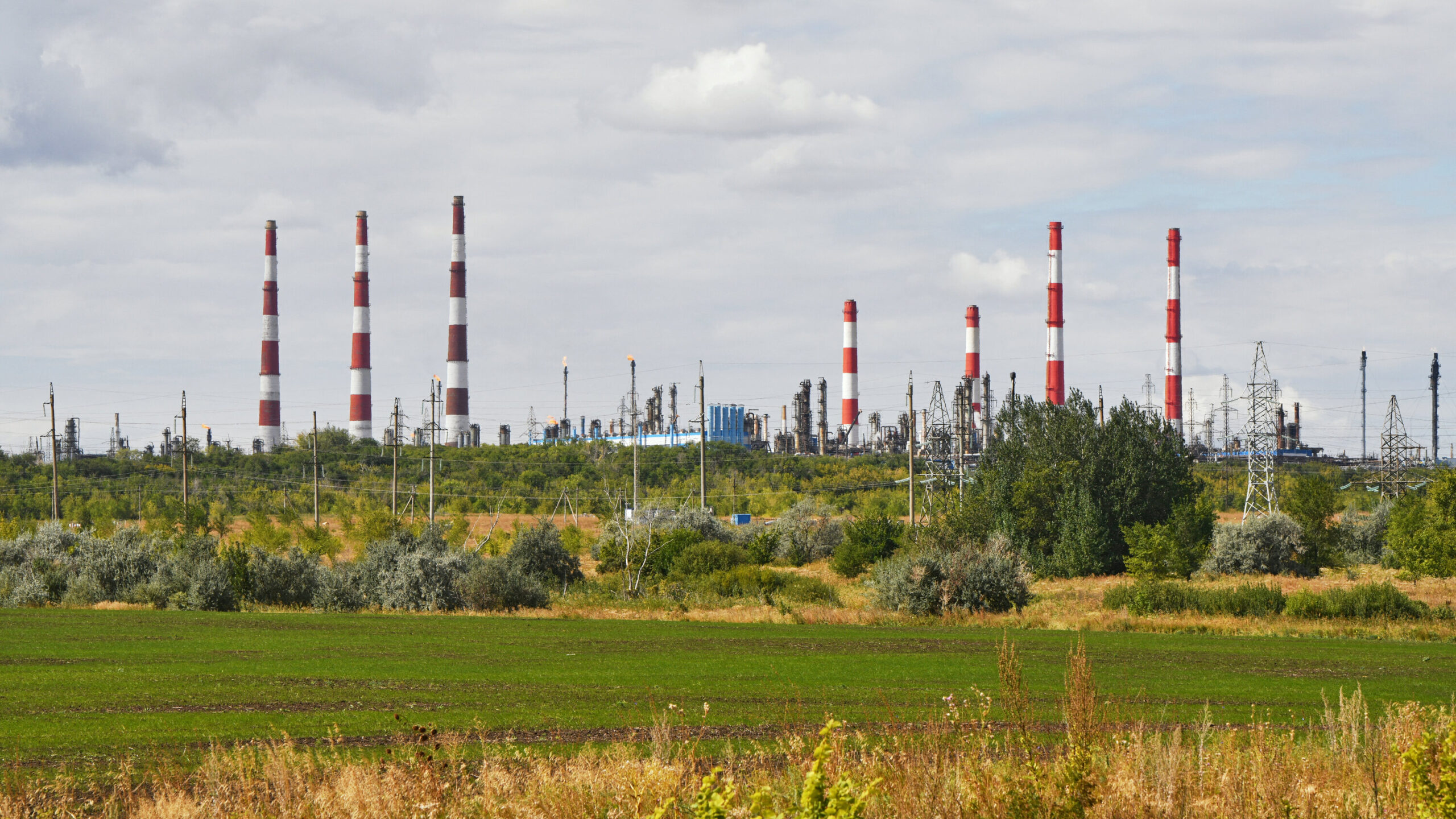
Gasoline shortages have begun appearing at filling stations in and around Moscow, a striking domestic symptom of strain in an economy the Kremlin has long held up as proof that Western sanctions have failed, even as gold reserve liquidation and a collapsing growth outlook point to deepening fiscal pressure from four years of war.
Fuel Shortages Reach the Capital
Images circulating from Moscow filling stations in mid-July showed pylons signalling “no gasoline” at pumps operated by domestic retailer Neftmagistral, according to reporting by TIME on the state of Russia’s war economy. Fuel shortages inside Russia’s own borders — as opposed to sanctions-driven export disruption — mark an escalation of a squeeze that has been building for months across the domestic refining and distribution network.
Growth Grinds Toward a Standstill
Russia’s economy is now projected to grow just 0.4% in 2026, down from an already anaemic 1% in 2025, when the country narrowly avoided outright recession, according to analysis published by Forbes. That trajectory stands in sharp contrast to the 4.1% rebound Russia posted in 2023, when the economy adapted to initial sanctions by forging new trade relationships — a bounce that has since proven unsustainable as wartime spending exhausted its stimulative effect and energy prices softened.
The same analysis notes that Russia has liquidated 71% of its gold reserves to help fund a civilian sector now stagnating alongside an overheating military-industrial complex, a combination that has pushed interest rates higher and squeezed non-defence business investment. Russia’s oil and gas revenues, which fund roughly 40% of the federal budget, reportedly halved in January 2026 before a temporary reprieve arrived via the Middle East conflict, when Brent crude surged more than 55% and the Trump administration eased some sanctions on Russian oil exports.
Gasoline shortages have reached Moscow filling stations in 2026 as Russia’s war economy shows deepening strain: GDP growth is projected at just 0.4% for the year, gold reserves have been 71% liquidated, and the EU has extended sanctions through July 2027, targeting energy revenue and shadow-fleet oil shipping.
Sanctions Extended Through 2027
The European Union has moved to lock in pressure for the medium term. The Council of the EU formally extended its economic sanctions regime against Russia for a further twelve months, through 31 July 2027, covering trade, finance, energy, and dual-use technology sectors first imposed in 2014 and dramatically expanded since February 2022. The bloc has said it remains determined to keep weakening Russia’s war economy, specifically citing plans to further curb shadow-fleet oil shipping operations and constrain the country’s banking system.
Enforcement has intensified in parallel. UK authorities reported seizing sanctioned goods on 58 occasions in the 2025/26 financial year and issuing a £1.1 million settlement for a sanctions breach, according to a summary of enforcement activity published by Fieldfisher.
The Iran War’s Double-Edged Lifeline
The Middle East conflict has proven a complicated boon for Moscow. While the oil-price spike has temporarily bolstered Russia’s export revenue, the same instability has undermined Russian energy and infrastructure ambitions in Iran itself — two Russian-backed power plant projects have reportedly been paused, along with oil and gas exploration work tied to a planned transit corridor linking Russia to India via Iranian territory, according to the Forbes analysis. In other words, the war that briefly rescued Russia’s energy revenues has simultaneously stalled one of its key long-term strategic diversification projects.
What Comes Next
With GDP growth cooling to near-zero, gold reserves depleted, and domestic fuel shortages now visible to ordinary Russians in the capital, the gap between the Kremlin’s public resilience narrative and underlying fiscal strain appears to be widening. Whether this translates into changed battlefield calculus or fresh diplomatic flexibility remains the central open question for Western policymakers as EU sanctions lock in through mid-2027.
Discover more from The Economy
Subscribe to get the latest posts sent to your email.
Introduction
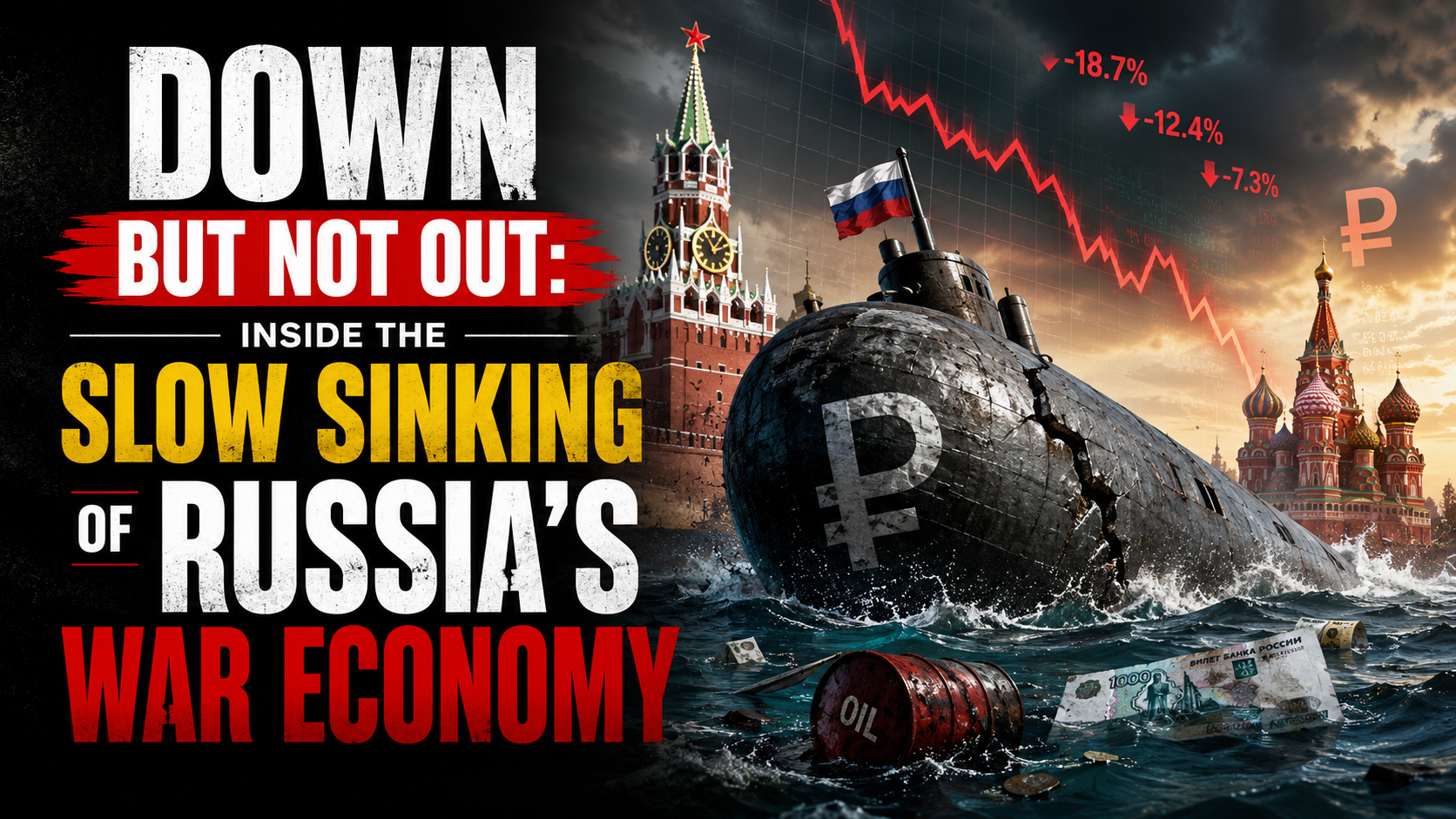
The European Council formally extended its economic sanctions against Russia for another full year on 25 June 2026, keeping restrictive measures in place until 31 July 2027 (Council of the EU). More than four years into the war, the headline story of Russia’s economy has shifted from whether sanctions would work to a more nuanced question: how much longer can the Kremlin keep financing the war before the accumulated strain becomes impossible to hide behind favorable official statistics.
The Sanctions Architecture, Renewed Again
The EU’s economic measures against Russia, first introduced in 2014 and dramatically expanded after the February 2022 full-scale invasion, now span trade, finance, energy and dual-use technology restrictions, alongside asset freezes and travel bans on a broad range of individuals and entities (Council of the EU). Since February 2022, the EU has adopted 20 separate sanctions packages, and the European Council has explicitly stated it remains determined to keep weakening Russia’s war economy by further reducing its energy revenues, curbing shadow-fleet oil shipping operations and constraining its banking system (Council of the EU). Separately, on 3 July 2026 the EU sanctioned six individuals connected to the poisoning and death of opposition figure Alexei Navalny, underscoring that the sanctions regime continues to expand on human-rights grounds as well as economic ones (Council of the EU Sanctions Timeline).
The Headline Numbers Beijing-Style Optimism Can No Longer Explain Away
Russia’s GDP is now put at roughly $2.51 trillion, the world’s eleventh-largest economy — comparable in size to South Korea despite Russia’s vastly larger landmass and resource base — with 2026 growth projected at just 1.0% and inflation running at 5.2% (Statistics of the World). More pessimistic estimates put full-year 2026 growth even lower, at around 0.4%, which would be worse than 2025’s already-weak 1% expansion and would mark a sharp deceleration from the 4.1% growth Russia posted in 2023 as it forged new trading relationships to route around initial sanctions (Forbes).
Oil and gas revenues — historically around half of Russia’s state income — have fallen to roughly a quarter, a deliberate outcome of Western sanctions strategy that targets how much Russia earns from exports rather than blocking those exports outright (Stockholm School of Economics/SITE). Russia’s oil and gas budget revenues reportedly halved in January 2026 alone, with crude prices falling below $73 a barrel before the Middle East conflict briefly reversed the trend, sending Brent surging more than 55% to near $120 a barrel at its peak (Forbes).
The Middle East War: A Temporary Lifeline With Long-Term Costs
The spike in oil prices tied to the Iran conflict, combined with a period of eased US sanctions enforcement on Russian oil under President Trump, offered Moscow unexpected fiscal breathing room in mid-2026 (Forbes). But that same conflict has undermined Russia’s longer-term energy diversification ambitions in the region: two Russian-backed power plant projects in Iran have been put on hold, along with oil and gas exploration work and plans to build new transit routes linking Russia to India via Iran (Forbes).
The Gap Between Official Statistics and Underlying Reality
Perhaps the most important analytical point from recent research is not about any single data point but about the reliability of Russian statistics themselves. Torbjörn Becker of the Stockholm Institute of Transition Economics has argued the real test of sanctions is not whether they end the war overnight, but how much they erode the Kremlin’s capacity to finance it — and by that measure, the evidence points to deeper strain than headline GDP figures suggest (Stockholm School of Economics/SITE). Becker notes that Russia’s economy grew only modestly in 2022 despite oil prices rising sharply that year — a gap between expected and actual performance that implies a considerably larger hidden economic hit than the official contraction figures showed (Stockholm School of Economics/SITE). Compounding the problem, Russian authorities have stopped publishing several key statistics since 2022, making independent assessment of inflation, consumption and real economic conditions increasingly difficult — leading Becker to conclude that “statistics have become part of the narrative” rather than a neutral measure of economic reality (Stockholm School of Economics/SITE).
The Military-Civilian Economic Split
A recurring theme across recent analysis is the growing bifurcation between Russia’s overheating military-industrial sector and a stagnating civilian economy. This imbalance has pushed interest rates higher and forced the liquidation of a striking 71% of Russia’s gold reserves to help fund continued war spending (Forbes). Russia’s total fossil fuel export revenue is estimated at roughly €734 million per day, underscoring just how central hydrocarbon income remains to the entire war financing model even as that revenue stream shrinks (Forbes).
The Counter-Narrative: Wages Still Rising
It would be inaccurate to describe Russia’s economy as in freefall. CSIS research notes that Russian salaries rose 17.8% in nominal terms and 8.7% in real terms in 2024 compared to 2023, with disposable incomes up 6.1% in 2023 and 7.3% in 2024 — growth rates not seen in Russia in almost two decades (CSIS). Government budget projections still expect real salaries to rise, albeit at a decelerating pace: 7% in 2025, 5.7% in 2026 and 4.1% in 2027 — a marked slowdown from the 2024 peak but still roughly double the pre-invasion decade average (CSIS). This wage growth, driven substantially by wartime labor shortages and military-adjacent spending, is precisely the kind of headline-stabilizing data point that has allowed Putin to argue publicly that sanctions have failed to cripple his economy (Fortune) — even as think tanks describe the broader trajectory as pushing Russia toward what one report calls an “economic, political, and military abyss” (Fortune).
What Comes Next
Renewed legislative pressure in Washington — including the Sanctioning Russia Act introduced with strong bipartisan support — signals appetite in the US for tightening the screws further, even as the loss of a key congressional champion for that effort has complicated the political path forward (TIME). Whether the EU’s renewed sanctions regime, continued oil price pressure, and constrained reserves ultimately force a shift in Kremlin calculus toward negotiation remains the central open question for 2027.
Key Takeaways
- The EU has extended Russia sanctions for a further year, through 31 July 2027, continuing a regime built from 20 separate packages since 2022.
- Russia’s 2026 GDP growth is forecast between 0.4% and 1.0%, a sharp deceleration from 2023’s 4.1% post-shock rebound.
- Oil and gas revenue’s share of Russian state income has fallen from roughly half to about a quarter as Western sanctions target export earnings specifically.
- Russia has liquidated a large share of its gold reserves to sustain war financing amid a widening split between an overheating military sector and a stagnating civilian economy.
- Official Russian statistics likely understate the true economic strain, according to independent economists who cite a widening gap between reported and expected performance.
Sources: Council of the EU, Council of the EU Sanctions Timeline, Stockholm School of Economics/SITE, Forbes, Statistics of the World, CSIS, Fortune, TIME
Discover more from The Economy
Subscribe to get the latest posts sent to your email.

The Taxman Cometh from Beijing

Pakistan IMF Program 2026: Inside the Push Toward an Interest-Free Economy

Russia Oil Revenue 2026: How Sanctions on Rosneft and Lukoil Are Draining the War Chest

Canada US Trade War 2026: Inside Carney’s Push to Cut Ties With Trump’s Tariffs

Rachel Reeves’s £25 Billion Problem: What the Autumn Budget Gap Means for Britain

Inside the Fed’s Most Divided Vote in Years: Why Warsh Held the Line on Rates

Pakistan Passed Its Third IMF Review

The Fed Is Fractured — And a New Chair Just Made It Louder, Not Quieter

The UK Economy in 2026 Is Neither Recession Nor Recovery :Stagflaton

Indonesia’s $121 Billion Nickel Bet Is Facing a Battery Chemistry

Why Ultra-Wealthy Families Are Splitting Between Singapore and Dubai inmarkets 2026

China Chose Political Control Over Fixing Its Deflation Trap in 2026

Oil Markets Are Oversupplied and Geopolitically Explosive at the Same Time

Russia’s Budget Deficit Blew Past Its Full-Year Target in Three Months

Russia Bans Diesel Exports 2026: Global Fuel Market Impact Explained

Gold Price Forecast 2026: Fed’s July 29 Decision and Record Central Bank Buying Explained

Strait of Hormuz Blockade 2026: Oil Prices Surge 9% as US-Iran Conflict Reignites

Strait of Hormuz 2026: Why Markets Still Don’t Trust It’s Open

China Politburo July 2026: Stimulus Signals Explained

Pakistan Economy 2026: GDP Grows 3.7% as IMF Completes EFF Review Amid Middle East Risk

Down But Not Out: Inside the Slow Sinking of Russia’s War Economy

Gulf Capital Retreat From Pakistan 2026: UAE Loan Freeze & What It Means

Apple vs OpenAI Lawsuit: The Economic Story Behind the Headline

Global Stock Market Selloff 2026: Stagflation Fears Return as Iran Conflict Reignites

Indonesia Russian Oil Imports 2026: Why Jakarta Is Diversifying Crude Supply

The Yuan Now Settles 67% of Russian Oil Payments — Quiet De-Dollarization in Action

AI Capex Bubble 2026: The Hidden $662B Debt Nobody Reports

Pakistan’s Economic Survey FY26: Inflation Spike Insights
-

 Markets & Finance7 months ago
Top 15 Stocks for Investment in 2026 in PSX: Your Complete Guide to Pakistan’s Best Investment Opportunities
-

 Analysis5 months ago
Johor’s Investment Boom: The Hidden Costs Behind Malaysia’s Most Ambitious Economic Surge
-

 Analysis6 months ago
Top 10 Stocks for Investment in PSX for Quick Returns in 2026
-

 Analysis6 months ago
Brazil’s Rare Earth Race: US, EU, and China Compete for Critical Minerals as Tensions Rise
-

 Banks7 months ago
Best Investments in Pakistan 2026: Top 10 Low-Price Shares and Long-Term Picks for the PSX
-

 Investment7 months ago
Top 10 Mutual Fund Managers in Pakistan for Investment in 2026: A Comprehensive Guide for Optimal Returns
-

 Global Economy7 months ago
15 Most Lucrative Sectors for Investment in Pakistan: A 2025 Data-Driven Analysis
-

 Global Economy7 months ago
Pakistan’s Export Goldmine: 10 Game-Changing Markets Where Pakistani Businesses Are Winning Big in 2025