
AI
Could AI’s Leading Men Become as Powerful as Ford or Rockefeller? For Now, They Are Still a Long Way Behind.


The five men reshaping intelligence — Dario Amodei, Demis Hassabis, Elon Musk, Mark Zuckerberg, and Sam Altman — command wealth, attention, and technological leverage that no previous generation of innovators has enjoyed. Yet the distance between their present dominance and the systemic, civilization-bending grip once exercised by John D. Rockefeller or Henry Ford remains vast — and poorly understood.
Imagine a boardroom meeting in 2035. The agenda is simple: who controls the infrastructure of thought itself? A decade earlier, five men launched what many called the most consequential technological disruption since electricity. By 2026, their companies had collectively captured trillions of dollars in market value, reshaped labor markets across three continents, and triggered geopolitical confrontations from Brussels to Beijing. And yet, if you measure their power by the standards history reserves for its true industrial titans — the men who didn’t just build industries but became them — the five AI leading men of our era still have a very long way to go.
That is not a comfortable argument to make. The numbers alone seem to render it absurd. Elon Musk’s net worth now exceeds $811 billion, a figure that surpasses the GDP of Poland. Musk’s February 2026 all-stock merger of SpaceX and xAI created a combined entity valued at $1.25 trillion — a single transaction larger than the entire U.S. defense budget. OpenAI, now valued at approximately $500 billion, counts some 800 million weekly active users of ChatGPT, a number that would have seemed science fiction five years ago. Anthropic — founded by Dario Amodei and his sister Daniela — reached a valuation of $380 billion in early 2026, while Meta has committed to spending $115 to $135 billion in capital expenditure in 2026 alone, with an astonishing $600 billion pledged toward data centers through 2028.
These are not ordinary fortunes. They are structurally new categories of wealth concentration. And still, the Rockefeller comparison fails — and fails instructively.
What Made a Tycoon a Tycoon: The Three Pillars of Historical Power
To understand why AI tycoons remain a long way behind their Gilded Age predecessors, one must first understand what actually made Rockefeller and Ford so uniquely dangerous to the social order of their time. It was not simply their wealth. Adjusted for GDP, Rockefeller’s peak fortune has been estimated at roughly $400 billion in today’s dollars — comfortably surpassed by Musk. What made Standard Oil a civilizational force was something more specific and more structural: the simultaneous control of physical infrastructure, political capture, and cultural monopoly.
Rockefeller didn’t just refine oil; he controlled approximately 91% of United States oil refining capacity by the mid-1880s through ownership of the pipelines, the railroad rebates, and the pricing mechanisms that every competitor had to use to survive. He didn’t lobby Congress — he owned the conversation. Ford, similarly, didn’t just manufacture cars; he built company towns, set wages for an entire economy, and deployed a private security apparatus — the Ford Service Department — to enforce his will on a captive workforce. Both men bent the physical world to their models in ways that left no exit for competitors, workers, or governments.
That is the three-pillar framework that the AI quintet has not yet replicated: physical infrastructure lock-in, political capture, and cultural monopoly. The gap between aspiration and achievement on each of these dimensions is the real story of power in 2026.
Infrastructure: Who Controls the Pipes?
The most important question in any era of technological transformation is not who builds the smartest machine, but who controls the plumbing. Rockefeller’s genius was not chemistry — it was logistics. He understood that the pipeline was more powerful than the refinery.
In the AI economy, the equivalent of the pipeline is the data center, the chip, and the undersea cable. Here the picture for the quintet is mixed at best. Mark Zuckerberg’s Meta is building on the most ambitious scale — two mega-clusters that dwarf any corporate construction project in a generation — but the silicon in those data centers is manufactured almost entirely by NVIDIA, a company none of the five control. Musk’s SpaceX-xAI merger is the most vertically integrated attempt to replicate Rockefeller’s pipeline logic: orbital data centers fed by Starlink satellites, in theory giving xAI the physical substrate to train and deploy models without dependence on third-party cloud providers. But as of 2026, that vision remains largely prospective. xAI’s Grok competes credibly against ChatGPT and Claude, but it does not yet possess the proprietary infrastructure advantage that would make it structurally inescapable.
Sam Altman, for his part, has no direct equity in OpenAI, earning a nominal salary of roughly $65,000 per year. His influence derives almost entirely from his position at the helm of the world’s most recognizable AI brand — a form of power that is real, but brittle. The moment a better or cheaper model displaces GPT, the institutional moat begins to crack. Rockefeller, by contrast, had no such vulnerability: he owned the pipes regardless of whose oil flowed through them.
Dario Amodei’s Anthropic presents a different case. With a $380 billion valuation, enterprise AI revenues reportedly growing at exponential rates, and a model — Claude — that has captured an estimated 40% of enterprise large language model spending in the United States, Anthropic is the most quietly formidable player in the quintet. Amodei has also demonstrated a rare form of institutional courage: in February 2026, he refused a Pentagon demand to remove contractual prohibitions on Claude’s use for mass domestic surveillance, even as the Trump administration labeled Anthropic a “supply-chain risk” and ordered agencies to stop using the model. That is not the behavior of a man who has captured the state. It is the behavior of a man trying not to be captured by it.
Political Power: Proximity Is Not Capture
The AI leading men have achieved unprecedented proximity to political power. Altman donated to Trump’s inaugural fund, sat on San Francisco’s mayoral transition team, and has testified repeatedly before Congress. Musk, as an architect of the Department of Government Efficiency, has arguably achieved more direct influence over federal bureaucracy than any private citizen since Bernard Baruch. Zuckerberg has reoriented Meta’s content moderation in ways that reflect political calculation as much as principled policy.
And yet proximity is not capture. Rockefeller’s Standard Oil didn’t merely lobby regulators — it effectively set the regulatory agenda in oil-producing states for two decades. The steel and railroad barons didn’t just meet with senators; they funded them in ways that made legislative independence a legal fiction.
Today’s AI executives remain subject to forces their predecessors never faced. The European Union’s AI Act imposes binding constraints that no 19th-century robber baron ever encountered. Antitrust scrutiny from both the Department of Justice and the EU threatens the integration strategies of both Google DeepMind and Meta. Anthropic’s standoff with the Pentagon demonstrates that even the most safety-focused AI lab cannot escape the gravitational pull of geopolitical competition. The five men are powerful political actors — but they are actors on a stage with many more directors than Rockefeller ever faced.
The Cognition Economy: A New Kind of Monopoly Risk
Where the AI quintet is converging toward something genuinely Rockefellerian is in what might be called the cognition economy — the emerging marketplace where intelligence itself, not oil or steel, is the resource being extracted, refined, and sold.
Demis Hassabis, the Nobel Prize–winning CEO of Google DeepMind, said at Davos 2026 that today’s AI systems are “nowhere near” human-level AGI, placing the milestone at “five to ten years” away. Amodei, characteristically more bullish, has predicted that AI will reach “Nobel-level” scientific research capability within two years, and has described the coming AI cluster as “a country of geniuses in a data center” running at superhuman speeds. If either is even partially correct, the downstream consequences for labor markets, knowledge production, and institutional power are more profound than anything the Industrial Revolution generated.
The danger is not that one of these five men will own the world’s intelligence outright. It is that the economic logic of AI — massive upfront compute costs, proprietary training data, and compounding capability advantages — tends toward the same concentration dynamics that produced Standard Oil. A model that is marginally better attracts more users; more users generate more data; more data enables further improvement; the loop closes. This is not metaphor. Meta’s Llama 5, released in April 2026, was explicitly designed to commoditize proprietary AI — Zuckerberg’s theory being that if intelligence becomes free, the company that distributes it through 3.5 billion social media users wins by default. That is not so different from Rockefeller’s insight that the real money was never in the oil itself, but in making yourself indispensable to everyone who wanted to transport it.
Cultural Monopoly: The Unfinished Frontier
Henry Ford didn’t just build cars. He built a culture. The five-dollar day, the $40 workweek — Ford shaped how Americans understood the relationship between labor, leisure, and consumption. His prejudices, published in the Dearborn Independent and later praised by Adolf Hitler, exercised a cultural influence that no modern tech executive has approached, for better or for worse.
The AI quintet has, so far, produced nothing comparable to that kind of cultural ownership. ChatGPT is used by hundreds of millions, but it has not yet redefined the terms of civic life in the way that Ford’s assembly lines redefined time itself. The AI leading men give TED talks and publish essays — Amodei’s “Machines of Loving Grace” and its sequel “The Adolescence of Technology” are genuine intellectual contributions — but they have not yet built the durable cultural institutions that the Carnegies and Fords used to launder their economic power into social legitimacy. The Carnegie libraries are still standing. The Ford Foundation still funds democracy initiatives. What will Sam Altman’s equivalent be? We do not yet know.
This gap may close faster than we expect. If AI agents do begin displacing 50% of white-collar jobs — as Amodei and others predict within five years — the resulting social disruption will demand new cultural narratives. The men who shape those narratives will wield a form of power that makes their current wealth look like a down payment.
Why the Gap Matters — And Why It Is Narrowing
The distance between the AI tycoons of 2026 and the historical robber barons is real, but it is not permanent. Three trends are accelerating the convergence.
First, physical infrastructure is being built at unprecedented speed. Meta’s $600 billion data center pledge, Musk’s orbital computing vision, and the arms-race dynamics of semiconductor procurement are creating the structural lock-in that historically defines industrial monopoly. The company that owns the compute wins — not just the model race, but the infrastructure race.
Second, regulatory arbitrage is becoming a competitive strategy. Just as Rockefeller used the legal patchwork of late-19th-century interstate commerce to outmaneuver state-level regulators, AI companies are exploiting the gap between national regulatory frameworks to deploy capabilities that no single jurisdiction can constrain. The Trump administration’s rollback of Biden-era AI safety executive orders has already opened space for more aggressive deployment by American companies.
Third, the feedback loops of AI capability are compounding in ways that no previous technology has. When Anthropic’s own engineers have largely stopped writing code themselves — directing AI-generated code as product managers rather than authors — the productivity advantages of leading AI labs over their competitors begin to resemble Standard Oil’s pipeline advantages over independent refiners. Not yet identical. But structurally rhyming.
The View from 2035: A Question of Institutions
The most important distinction between Ford, Rockefeller, and today’s AI leading men may ultimately be institutional rather than technological. The Gilded Age tycoons operated in a world with weak antitrust frameworks, no administrative state to speak of, and a political economy that had not yet developed the tools to constrain concentrated private power. The Progressive Era — Teddy Roosevelt’s trust-busting, the Sherman Act, the eventual dissolution of Standard Oil — was the institutional response. It took a generation.
We may be at the beginning of a similar reckoning. Whether the five men who currently lead the AI revolution become as powerful as Ford or Rockefeller depends less on their own ambitions — which are extraordinary — than on the speed and coherence of the institutional response. Policymakers who wait for the infrastructure to be fully built before acting will find themselves in the same position as the regulators who confronted Standard Oil in 1911: arriving at the scene of a revolution already completed.
The AI leading men are not, today, as powerful as Rockefeller. But they are building the conditions under which someone very like them could be. That is the moment for executives, investors, and policymakers to pay attention — not when the resemblance is complete, but now, while the architecture is still under construction and the pipes have not yet been welded shut.
Discover more from The Economy
Subscribe to get the latest posts sent to your email.


AI
Anthropic Offers Up to $600,000 Salary for Critical IPO Role as AI Giant Prepares for Wall Street Debut
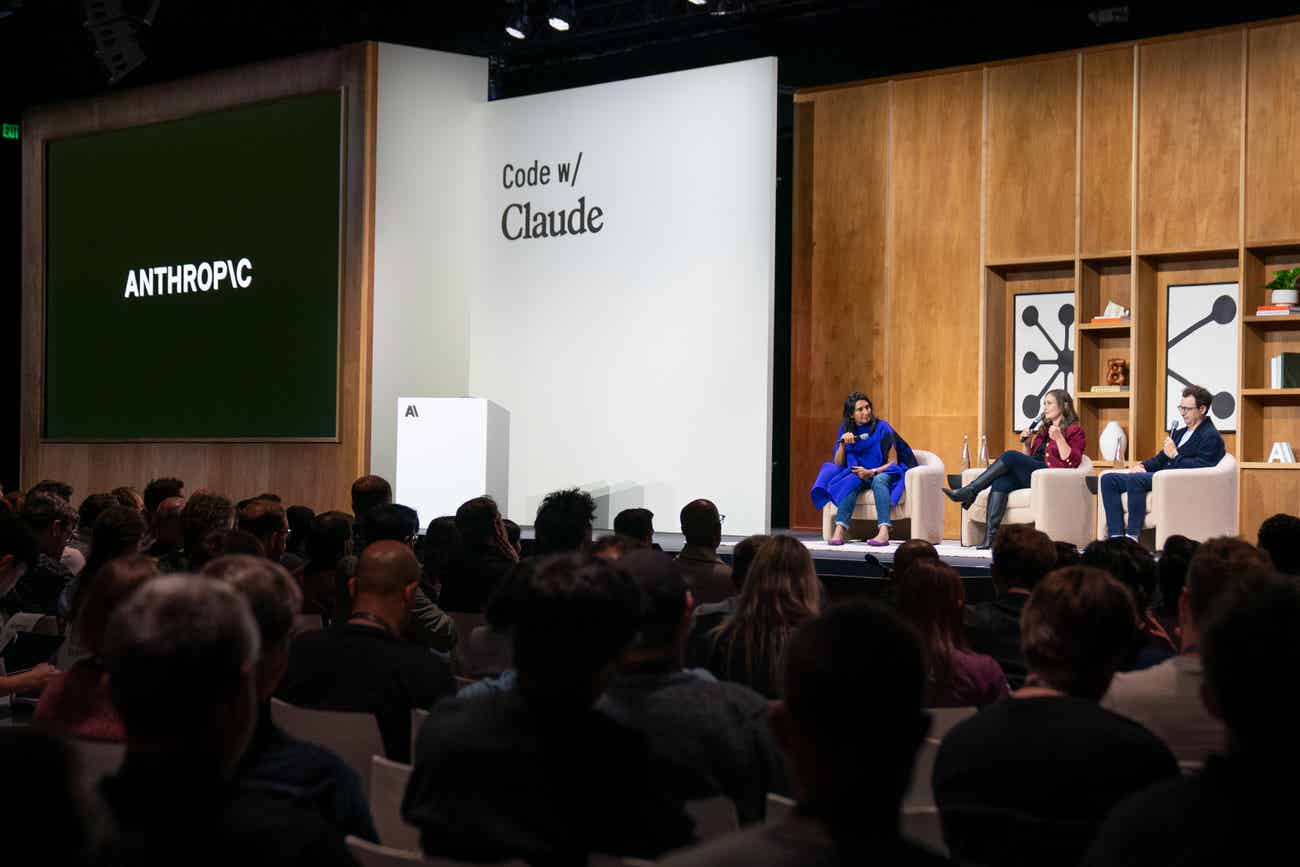
As anticipation builds around what could become one of the largest technology listings in recent history, artificial intelligence company Anthropic is offering an eye-catching base salary of up to $600,000 for a key investor relations position, underscoring how seriously the company is preparing for its expected initial public offering (IPO).
The San Francisco-based AI developer, best known for its Claude family of AI models, has posted a vacancy for a Director of Investor Relations with a base compensation ranging from $425,000 to $600,000, making it one of the most strategically important hires ahead of its anticipated public market debut. According to a report by Business Insider, the company is expected to pursue an IPO as early as fall 2026, following a surge in valuation and extraordinary revenue growth.
A Strategic Hire Ahead of a Landmark IPO
The investor relations director will be responsible for shaping Anthropic’s investment narrative, maintaining relationships with institutional investors, and helping Wall Street understand the company’s long-term strategy and financial outlook.
According to the job description, the successful candidate will:
- Develop Anthropic’s investment story for public markets.
- Serve as a primary liaison between executive leadership and investors.
- Analyze AI industry developments and communicate their financial implications.
- Support earnings communications, investor presentations, and regulatory disclosures.
- Work closely with the company’s newly appointed Head of Investor Relations.
The position reports into Kenneth Dorell, who joined Anthropic earlier this year after previously leading investor relations at Meta. His appointment reflects the company’s broader effort to build an experienced leadership team capable of navigating public market expectations.
Why Investor Relations Matters More Than Ever
While investor relations roles are common among public companies, they become especially significant during the transition from private to public ownership.
For Anthropic, the challenge extends beyond explaining quarterly financial results. The company must convince investors that its massive investments in AI research, computing infrastructure, and talent acquisition can translate into sustainable long-term growth.
Unlike many traditional software companies, Anthropic operates as a public benefit corporation, meaning it is legally committed to balancing shareholder returns with the responsible development of advanced artificial intelligence. The company’s official mission emphasizes building reliable, interpretable, and safe AI systems for the long-term benefit of society, according to the company’s website.
This dual mandate creates a unique communication challenge for investor relations executives, who must explain how commercial success aligns with responsible AI development.
AI Boom Drives Extraordinary Compensation
The offered salary highlights the increasingly fierce competition for executive talent across the AI industry.
Although a base salary of $600,000 is exceptional by conventional corporate standards, compensation at leading AI companies frequently includes stock awards, bonuses, and long-term incentives that can substantially increase total earnings.
Anthropic has become one of Silicon Valley’s fastest-growing companies, with demand for its enterprise AI products accelerating rapidly. The company’s coding assistant, Claude Code, has gained significant traction among software developers and businesses seeking AI-powered programming tools.
Recent reporting indicates that Anthropic’s annualized revenue has expanded dramatically as enterprise adoption of generative AI continues to accelerate, strengthening investor expectations ahead of a potential IPO.https://www.businessinsider.com/anthropic-ipo-hiring-investor-relations-director-2026-7
Preparing Wall Street for an Unconventional AI Company
Anthropic’s investor relations team faces a unique assignment.
Unlike mature technology companies with decades of operating history, frontier AI companies remain difficult to value because they invest billions of dollars annually in computing infrastructure, model training, and research talent while operating in a rapidly evolving competitive environment.
Potential investors will likely seek clarity on several key questions:
- Future profitability.
- Infrastructure spending.
- AI safety governance.
- Regulatory risks.
- Competitive positioning against OpenAI, Google, Meta, and xAI.
- Long-term monetization strategy.
The investor relations director will play a central role in translating these complex issues into a compelling investment thesis.
Strong Financial Momentum Strengthens IPO Expectations
Anthropic has emerged as one of the world’s most valuable privately held AI companies.
Backed by major investors including Amazon and Google, the company has attracted substantial funding over the past several years while rapidly expanding its enterprise customer base.
Its Claude models have become widely used for coding, research, enterprise automation, and business productivity, placing Anthropic among the strongest competitors to OpenAI.
The company’s remarkable financial momentum has fueled growing speculation that its IPO could become one of the defining public offerings of the AI era.
Competition for AI Talent Intensifies
The generous compensation package also reflects the broader battle for experienced executives across the artificial intelligence sector.
Companies developing frontier AI systems increasingly compete not only for elite researchers and engineers but also for specialists in finance, public markets, communications, and regulatory affairs.
As valuations continue climbing into the hundreds of billions of dollars, experienced executives capable of guiding companies through IPOs have become increasingly valuable.
Industry observers expect executive compensation across AI firms to remain elevated as competition intensifies.
The Bigger Picture
Anthropic’s decision to offer a base salary reaching $600,000 for an investor relations executive sends a clear signal that preparations for public markets are accelerating.
Beyond the headline salary, the recruitment reflects a broader transformation within the AI industry. As companies mature from venture-backed startups into global technology leaders, success increasingly depends not only on breakthrough research but also on convincing investors that enormous AI investments can produce sustainable long-term returns.
If Anthropic proceeds with its widely anticipated IPO, this investor relations hire could become one of the most influential behind-the-scenes roles in shaping how one of the world’s most valuable AI companies is introduced to public investors.
Sources
- Business Insider, Anthropic is offering a $600,000 salary for one of its most important IPO hires: https://www.businessinsider.com/anthropic-ipo-hiring-investor-relations-director-2026-7
- Anthropic, Official Company Website: https://www.anthropic.com/
Discover more from The Economy
Subscribe to get the latest posts sent to your email.
Anthropic is preparing for a possible October 2026 IPO with Morgan Stanley, Goldman Sachs and JPMorgan as lead underwriters, targeting a valuation close to or above $1 trillion — up from a $965 billion private valuation set in a May 2026 funding round. The listing would put Anthropic ahead of rival OpenAI, which has pushed its own IPO target from late 2026 into 2027.
Beyond the valuation headline
Most coverage of the Anthropic IPO has focused on a single number — the trillion-dollar valuation threshold. The more useful story for investors and market-watchers is the sequencing: why Anthropic is moving first, what its revenue trajectory actually looks like against that valuation, and what risks sit underneath the number that don’t show up in the headline.
Where things stand
Bankers working on Anthropic’s offering began scheduling meetings with prospective institutional investors in mid-July, according to reporting that cited people familiar with the process — a concrete signal that the company’s move toward a public listing, possible as early as October 2026, is advancing beyond speculation (CNBC via StartupHub; CNBC).
The valuation anchor is a $65 billion Series H funding round closed in May 2026, which pushed Anthropic’s post-money valuation to roughly $965 billion — surpassing OpenAI’s $852 billion valuation for the first time (CNBC; IG UK). Investment bankers and analysts widely expect the company to debut above the $1 trillion mark, assuming market conditions cooperate (IG UK).
Secondary-market pricing offers an early read on investor appetite: platforms tracking pre-IPO share transfers have shown an implied valuation range between roughly $1.05 trillion and $1.15 trillion, with one forecasting firm projecting a median first-day market capitalisation around $1.10 trillion — a 14% premium over the last private funding round (BitMEX).
The race against OpenAI
Timing is a deliberate part of the strategy. OpenAI also filed confidentially for an IPO but has since pushed its target from fall 2026 into 2027, giving Anthropic a window to list first (TheStreet). Being first matters for two structural reasons market analysts point to: the first mover sets the valuation benchmark the rest of the sector gets measured against, and it locks in institutional capital before broader AI-market sentiment has a chance to shift (TheStreet).
Prediction markets appear to be pricing that race directly: platform Kalshi has shown roughly a 72% probability of Anthropic listing before OpenAI, according to reporting (TheStreet).
The revenue math underneath the number
The valuation is aggressive relative to revenue by conventional software standards, though analysts describe it as within the range frontier AI companies have been commanding. Reported figures put Anthropic’s annualized revenue run-rate at roughly $47 billion as of May 2026, against the $965 billion private valuation — an implied multiple of around 20 times revenue (Luminix).
What stands out in the growth trajectory cited by analysts is its pace: the annualized run-rate reportedly moved from roughly $9 billion at the end of 2025 to $14 billion in February, $30 billion in April, and $47 billion by May — a rate of increase some analysts have described as effectively doubling every six weeks at points during that stretch (Luminix).
The consumer-versus-enterprise question
One structural risk analysts flag: Anthropic’s business is heavily weighted toward enterprise and API customers rather than consumer brand recognition. Estimates cited in investor analysis put ChatGPT’s share of consumer AI traffic at 53-68%, against roughly 2-6% for Claude (Luminix). That makes the IPO pitch to retail investors — who tend to reward consumer familiarity — different in kind from the enterprise-stickiness argument likely to anchor the institutional roadshow.
The SpaceX precedent looming over the deal
Anthropic’s timing follows closely behind SpaceX’s Nasdaq debut on June 12, 2026, which raised approximately $75 billion at a $1.77 trillion valuation under ticker SPCX. SpaceX shares have since fallen below their $135 IPO price — a data point IPO advisers and institutional buyers are reportedly weighing carefully as they assess how much premium markets will actually pay for a loss-making frontier technology company at IPO (StartupHub).
What’s confirmed versus speculative
It’s worth separating fact from forecast here. Confirmed: the confidential S-1 filing, the underwriter roster (Morgan Stanley, Goldman Sachs, JPMorgan), the $965 billion May funding round, and the ongoing investor meetings. Not yet confirmed: the actual offering price range, the exact IPO date, and the final valuation — none of which will be public until the S-1 is unsealed, expected in the lead-up to any autumn listing.
Anthropic has also taken an unusual defensive step ahead of the listing, warning multiple secondary-market platforms — including Forge, Hiive and Sydecar — that unauthorised transfers of its private shares are void and will not be recognised on the company’s books, a signal of how closely it is trying to control pre-IPO trading and pricing signals ahead of an official debut (IG UK).
The bottom line
For the nine markets covered in this analysis, the Anthropic listing is less a Silicon Valley story than a global capital-markets event: a trillion-dollar-plus debut would be among the largest IPOs in history, competing directly with OpenAI for the same pool of institutional capital and setting the valuation benchmark every subsequent AI listing — in the US, Singapore, the UK or elsewhere — will be measured against.
Discover more from The Economy
Subscribe to get the latest posts sent to your email.

Singapore’s non-oil domestic exports rose 20.7% year-on-year in June 2026, driven by a 115.4% surge in integrated circuit shipments tied to AI demand, even as a separate and less-covered trade story unfolds next door: Malaysia-Indonesia bilateral trade is projected to grow 10% to US$29.3 billion in 2026, powered by expanding halal-sector cooperation.
The story most coverage is missing
Regional business press has extensively covered Singapore’s semiconductor export boom. What’s had far less coverage is the parallel, non-tech growth engine developing in the halal trade corridor between Malaysia and Indonesia — a structural, policy-driven trade relationship that is scaling steadily even as the AI trade headlines dominate attention.
Singapore: the AI supply chain’s export barometer
Singapore’s June non-oil domestic exports climbed 20.7% year-on-year, with integrated circuit exports jumping 115.4% and disk media products and personal computers rising 170.9% and 95.8% respectively — a direct read on how deeply the AI infrastructure buildout is flowing through the city-state’s electronics trade (VietnamPlus/VNA). Non-electronic exports told a different story, falling 2.9% in June after a 17.7% rise in May, mainly on weaker shipments of non-monetary gold, petrochemicals and food preparations — evidence the export strength is narrowly concentrated in the AI-linked segment rather than broad-based.
Singapore’s economic gravitational pull on its neighbours is intensifying too: a joint study by the Singapore Business Federation, Restaurant Association of Singapore and Singapore Retailers Association found Singaporean consumers are projected to spend an additional S$1.05 billion (roughly US$810 million) annually in Johor Bahru, just across the Malaysian border — a cross-border consumption pattern that is becoming a meaningful line item in regional retail planning (VietnamPlus/VNA).
The halal corridor: a steadier, policy-built growth story
While AI exports grab headlines, Malaysia’s bilateral trade with Indonesia is forecast to grow 10% to US$29.3 billion in 2026, according to Malaysia’s Chargé d’Affaires in Jakarta, Farzamie Sarkawi — up from US$26.61 billion in 2025, itself a 5.3% increase on the year before (BusinessToday Malaysia).
The driver is structural rather than cyclical: a halal Memorandum of Cooperation signed by the two countries in 2023 established mutual recognition of halal certification, easing product movement and market access across sectors. Sarkawi described the arrangement as delivering “positive progress” through knowledge exchange, training and improved market access for businesses in both countries (BusinessToday Malaysia). The ambition extends beyond the bilateral relationship: intra-D-8 trade — spanning the eight-nation Developing 8 bloc of Muslim-majority economies — currently runs between US$150 billion and US$160 billion annually, with a stated target of US$500 billion by 2030.
The macro backdrop: a region growing, unevenly
The Asian Development Bank’s July 2026 outlook shows Indonesia’s growth forecast holding steady at 5.2% for both 2026 and 2027, while Malaysia’s outlook is unchanged at 4.6% for 2026 and 4.5% for 2027 (ADB). Regional growth leadership, per McKinsey’s Q1 2026 review, sits with Indonesia, Singapore and Vietnam, while the Philippines lagged as domestic challenges weighed on activity (McKinsey).
Indonesia’s investment story has particular momentum: foreign direct investment grew for a second consecutive quarter, rising 8.1% to 249.9 trillion rupiah (roughly US$14.5 billion) in the first quarter of 2026, with Singapore remaining Indonesia’s largest single foreign investor at US$4.6 billion, ahead of China, Japan, Hong Kong and the United States (McKinsey). Realised investment for full-year 2025 reached a record Rp1,931.2 trillion (about US$120.7 billion), exceeding the government’s own target, driven by downstream industrial projects outside Java (BERNAMA).
Indonesia’s central bank has flagged currency management as an active watch item, signalling readiness to step up both onshore and offshore FX intervention to curb rupiah weakness and keep inflation within its 2026-2027 target band (McKinsey). Foreign investment in Indonesian government bonds has nonetheless rebounded, with net inflows of 17.7 trillion rupiah following outflows in the first quarter, alongside cumulative foreign holdings of 174 trillion rupiah in Bank Indonesia Rupiah Securities (BERNAMA).
Institutional context: Singapore’s coming ASEAN chairmanship
Adding a governance dimension to the economic picture, Singapore is set to take over the ASEAN chairmanship from the Philippines in 2027, with Prime Minister Lawrence Wong pledging a smooth transition — a leadership handover that will shape how the bloc coordinates trade and investment policy, including the halal-corridor and semiconductor-trade dynamics described above, through the second half of the decade (BERNAMA).
The bottom line
Southeast Asia’s 2026 growth story is not a single narrative but two distinct, converging tracks: a high-velocity, AI-linked export boom concentrated in Singapore’s electronics trade, and a steadier, policy-engineered halal-sector trade corridor between Malaysia and Indonesia that is quietly scaling toward a $500 billion bloc-wide target by 2030. Investors and policymakers tracking only the semiconductor headlines risk missing the second, structurally more durable growth engine sitting right alongside it.
Discover more from The Economy
Subscribe to get the latest posts sent to your email.

Gulf Capital Retreat From Pakistan 2026: UAE Loan Freeze & What It Means

Pakistan’s Most Reliable Export Is Its People: Remittances Hit $41.6 Billion, Overtaking Total Exports

Indonesia’s Confidence Problem: Record Investment, a Sinking Rupiah, and a Widening Credibility Gap

Down But Not Out: Inside the Slow Sinking of Russia’s War Economy

China’s Growth Slips to a Four-Year Low: Why Beijing Still Won’t Pull the Stimulus Trigger

The Johor-Singapore Corridor: How Malaysia Became Southeast Asia’s AI Infrastructure Powerhouse

Canada’s Economy ‘On Pause’: Inside the CUSMA Deadline That Passed Without a Deal

Dubai’s Millionaire Magnet: How the UAE Turned Middle East Turmoil Into a Capital Safe-Haven Boom

Britain’s Sixth Prime Minister in a Decade: What Starmer’s Exit Means for Gilts, Sterling and Your Portfolio

Anthropic Offers Up to $600,000 Salary for Critical IPO Role as AI Giant Prepares for Wall Street Debut

EU Readies Crisis Team for Potential China Rare Earths Stand-Off as Supply Chain Risks Mount

Singapore Weighs Hedge Fund Tax Cuts to Counter Hong Kong’s Growing Financial Challenge

Facebook and Instagram Experience Global Outage

Inside the $1 Billion Tap-to-Pay Fraud Rings Targeting Banks and Retailers

Carry Trade Unwind 2026: How the Yen’s Snapback Triggered a Global Margin Call

AI Bubble Warning 2026: Why BIS, IMF and Bank of England Fear a Market Crash

BRICS De‑Dollarization Strategy Takes Shape with $15 Billion Local‑Currency Push

Male Labor Force Participation Rate 2026: Why Men Are Leaving & Economic Impact

Russia Bans Diesel Exports 2026: Global Fuel Market Impact Explained

The AI Super Bubble Is Ready to Burst

Strait of Hormuz Blockade 2026: Oil Prices Surge 9% as US-Iran Conflict Reignites

IMF Cuts Pakistan Growth Forecast, Raises Inflation to 8.4%

Private Credit Warning: Most BDCs Turn Unprofitable in 2026, Reuters Finds
Gulf Capital Retreat From Pakistan 2026: UAE Loan Freeze & What It Means

India Economic Rise 2026: How the Subcontinent Toppled Japan

Bitcoin $150k Milestone Achieved as US Sovereign Crypto Pivot Looms

Strait of Hormuz 2026: Why Markets Still Don’t Trust It’s Open

Chipmakers Just Lost 6.7% in Two Days: Inside the Great AI Trade Rotation
-

 Markets & Finance7 months ago
Top 15 Stocks for Investment in 2026 in PSX: Your Complete Guide to Pakistan’s Best Investment Opportunities
-

 Analysis5 months ago
Johor’s Investment Boom: The Hidden Costs Behind Malaysia’s Most Ambitious Economic Surge
-

 Analysis5 months ago
Top 10 Stocks for Investment in PSX for Quick Returns in 2026
-

 Analysis6 months ago
Brazil’s Rare Earth Race: US, EU, and China Compete for Critical Minerals as Tensions Rise
-

 Banks6 months ago
Best Investments in Pakistan 2026: Top 10 Low-Price Shares and Long-Term Picks for the PSX
-

 Investment7 months ago
Top 10 Mutual Fund Managers in Pakistan for Investment in 2026: A Comprehensive Guide for Optimal Returns
-

 Global Economy7 months ago
15 Most Lucrative Sectors for Investment in Pakistan: A 2025 Data-Driven Analysis
-

 Global Economy7 months ago
Pakistan’s Export Goldmine: 10 Game-Changing Markets Where Pakistani Businesses Are Winning Big in 2025