
Global Economy
Beyond the Bailout: Dismantling the Machinery of Pakistan’s Debt Trap

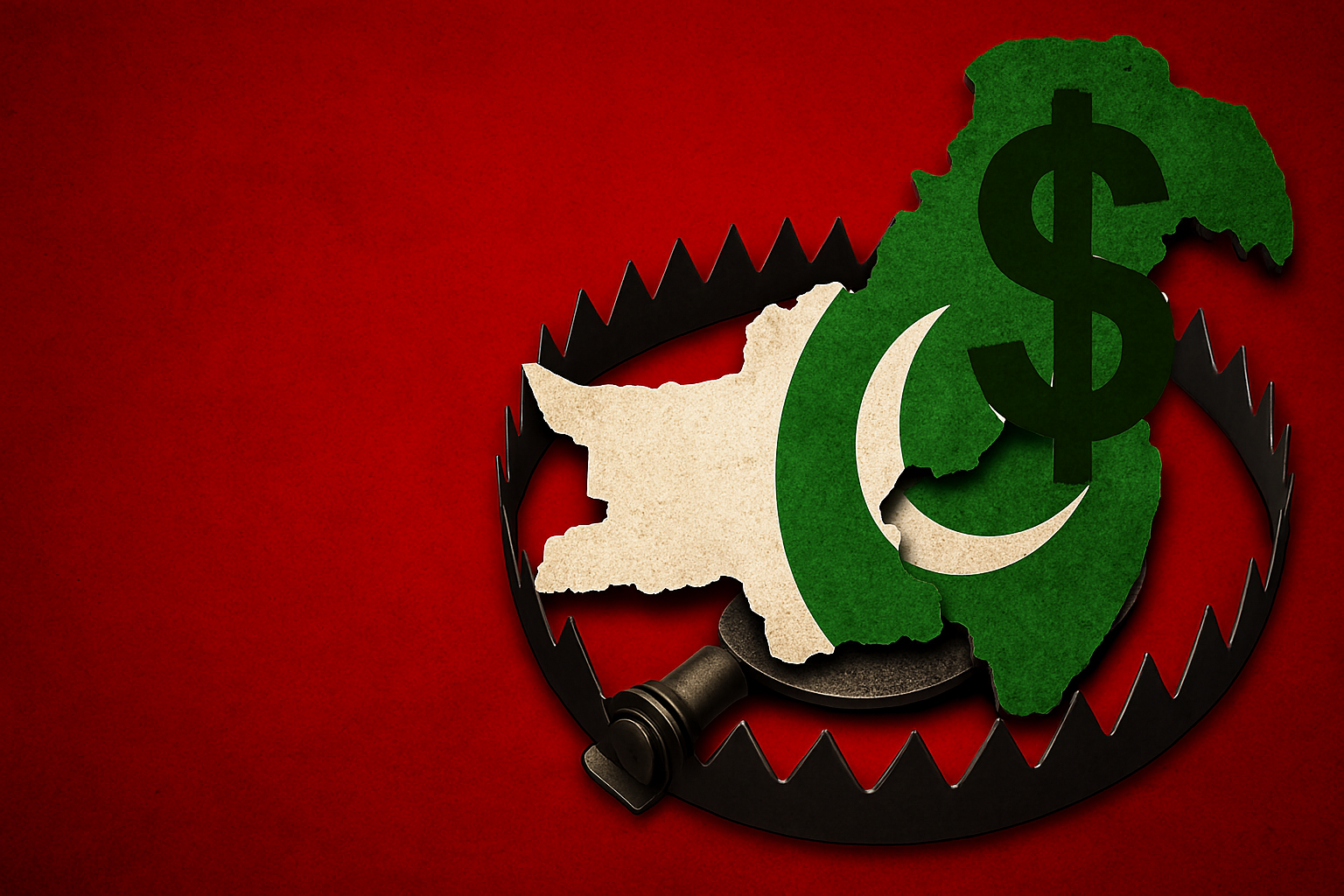
Pakistan has returned to the International Monetary Fund twenty-three times. Twenty-three. At some point, the conversation must shift from “how do we secure the next program” to “why does the machinery keep breaking down?”
The answer is not technical. It is not about capacity. It is about choice—specifically, the choice to maintain an economic system that rewards extraction over production, protects incumbents over entrants, and treats governance as a series of ad hoc deals rather than enforceable rules.
The Illusion of Planning
Every few years, a new committee is formed. A blueprint is drafted. Exports will be doubled. Investment will flood in. Growth will accelerate. Then nothing happens, because aspirations are not policies.
The real question is simpler: can a business start, scale, and operate without seeking permission at every turn? In Pakistan, the answer is no. The economy runs on discretion, not rules. Tariffs are negotiated. Tax exemptions are lobbied for. Energy prices are political decisions dressed up as technical adjustments.
This is not an economy designed for growth. It is designed for control. And control, by definition, limits entry. When entry is limited, competition dies. When competition dies, so does productivity.
The Energy Albatross
If there is a single sector that deserves to be called “ground zero” of Pakistan’s fiscal collapse, it is energy. The sector is fragmented across nearly two dozen entities, each with overlapping mandates and conflicting incentives. Prices are set not by cost recovery but by political calculus. The result is circular debt—a euphemism for a subsidy black hole that consumes billions annually and forces the government back to the IMF.
According to the World Bank’s Pakistan Development Update, the energy sector’s inefficiencies contribute significantly to the country’s fiscal imbalances. The problem is not technical complexity. It is governance failure. State-owned distribution companies operate as monopolies with no accountability for losses. Tariffs do not reflect costs. Political actors intervene when bills come due.
The solution is not another bailout. It is a shift to cost-reflective pricing, enforced through transparent contracts and independent regulation. This is not ideological. It is arithmetic. You cannot subsidize your way to solvency.
Taxation: From Predation to Participation
Pakistan’s tax system is broken by design. Rates are high for the few already in the net. Exemptions are widespread for those with influence. The result is a narrow base, crushing compliance costs for formal businesses, and a massive informal sector that operates entirely outside the tax system.
The Pakistan Institute of Development Economics (PIDE) Reform Agenda has consistently argued for what should be obvious: if you want more people to pay taxes, make it easier and cheaper to do so. Lower rates. Broaden the base. Remove exemptions. Digitize enforcement so that compliance becomes automatic, not adversarial.
Instead, the system does the opposite. It punishes formality and rewards informality. Businesses stay small to avoid detection. Transactions move to cash. The state responds by raising rates on those it can reach, which pushes more businesses underground.
This is not a growth strategy. It is a slow bleed.
What Growth Actually Requires
Growth is not engineered. It is not the output of a five-year plan or a committee report. Growth happens when firms can enter markets, compete on merit, and scale without bureaucratic gatekeeping.
The Asian Development Bank’s forecasts for Pakistan consistently note that structural constraints—particularly in trade policy, energy costs, and regulatory unpredictability—hold back potential. These are not external shocks. They are internal choices.
The state does not need to “create” growth. It needs to stop blocking it. That means shifting from a permission-based economy to a rules-based one. It means enforcing contracts rather than negotiating exemptions. It means allowing prices to signal costs rather than political preferences.
None of this is radical. It is what every functional economy does.
The Uncomfortable Truth
The IMF is not the problem. It is a symptom. The real problem is a political economy that depends on discretion, rewards rent-seeking, and treats public resources as bargaining chips.
Exiting the IMF permanently requires dismantling that machinery. It requires accepting that the state cannot subsidize, protect, and plan its way to prosperity. It requires shifting the source of economic dynamism from bureaucratic approval to market competition.
This is not a question of ideology. It is a question of survival. Pakistan can continue to seek programs every few years, each time promising reform and delivering adjustment. Or it can confront the fact that the system itself is the obstacle.
The choice, as always, remains political. But the consequences are already visible in the numbers: twenty-three programs and counting. At some point, pattern becomes policy. And the policy, whether deliberate or not, is dependence.
The alternative is not complicated. It is just uncomfortable. Remove the discretion. Enforce the rules. Let competition do its work. Growth will follow. But first, the machinery that prevents it must be dismantled.
The author is an independent economic analyst.
Discover more from The Economy
Subscribe to get the latest posts sent to your email.


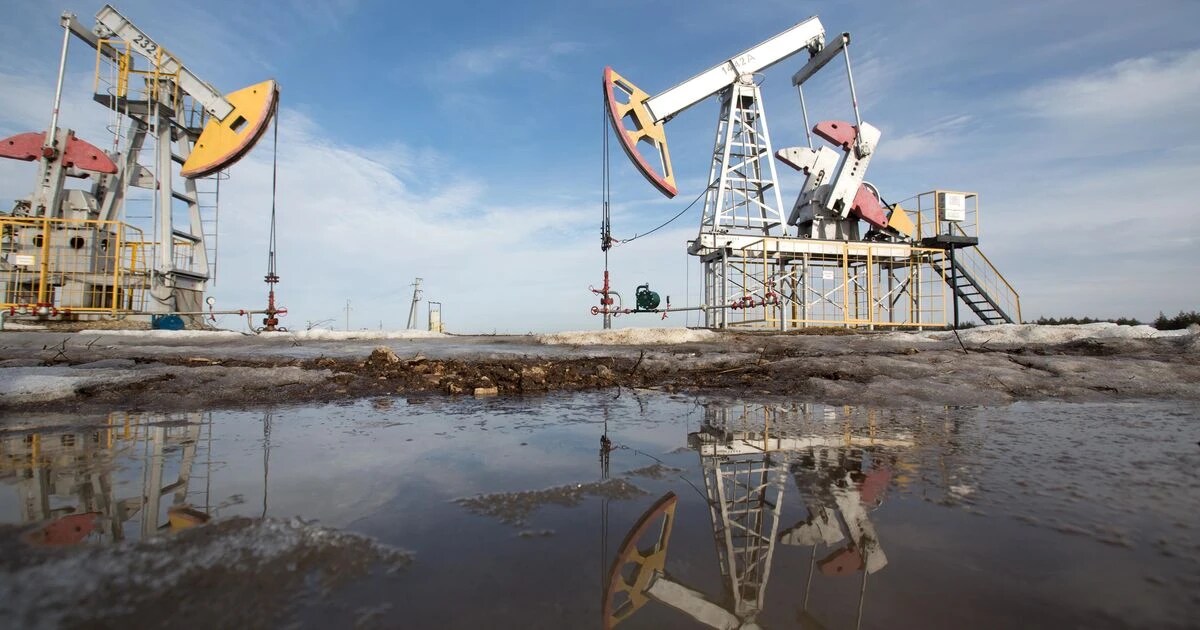
Two contradictory forces are shaping the 2026 oil market simultaneously: a structural glut large enough to keep prices depressed for years, and a live geopolitical risk premium large enough to send prices toward levels not seen in over a decade. Both are true at once, and understanding why matters for anyone pricing energy, currency, or emerging-market risk this year.
The Oversupply Case
The consensus view among major forecasters is bearish. The IEA has projected a 2026 surplus of up to 4.09 million barrels per day, later revising it slightly down to 3.84 million barrels per day as sanctions on Russian and Venezuelan supply offset some of the glut, according to Forex.com’s 2026 outlook. Goldman Sachs has forecast Brent averaging $56 per barrel and WTI $52 in 2026, driven by long-delayed pandemic-era projects coming online in clusters alongside OPEC+’s gradual unwinding of production cuts, per coverage from iTiger. The bank has flagged Brent could fall into the $40 range if non-OPEC supply proves more resilient than expected or a recession hits in 2026-2027.
EBC Financial Group’s analysis similarly expects Brent to average $58-60, with the IMF projecting global growth of 3.3% for 2026 — a supportive but not booming demand backdrop. Crucially, forecasters diverge sharply on demand growth itself: the IEA projects roughly 930,000 barrels per day of additional 2026 demand, while OPEC is far more bullish at 1.4 million barrels per day — a gap that alone could determine whether the market tightens faster than consensus expects.
The Geopolitical Premium
Layered on top of that oversupply is acute conflict risk. The 2026 U.S.-Israeli military conflict with Iran and the effective closure of the Strait of Hormuz triggered what one analysis calls a “historic geopolitical supply shock” against the oversupply backdrop, according to Just2Trade’s market review. The IMF has characterized an “adverse scenario” of 2.5% global growth and 5.4% inflation as a live operating risk, warning that prolonged conflict with oil near $125 a barrel could de-anchor global inflation expectations entirely. Notably, oil and equity markets have diverged during the crisis — Brent fell sharply during a late-May ceasefire period even as equities rallied, illustrating how regime-dependent the correlation between crude and financial markets has become.
Setting Up the Next Shortage
Perhaps the most underreported angle is the setup for what comes after 2026. Lower prices are already deferring investment, particularly in U.S. shale — the EIA forecasts flat 2026 output with potential declines if prices stay below $60, according to Fort Worth Inc.’s analysis of Saxo Bank data. Goldman Sachs projects prices could rebound toward $80/$76 (Brent/WTI) by end-2028 specifically because low 2025-2026 prices will curb non-OPEC supply growth while minimal new long-cycle projects come online post-2026, following roughly 15 years of underinvestment.
Who This Hits Hardest
The oversupply-plus-risk-premium combination lands unevenly. Producers with high fiscal breakeven prices and limited buffers — Russia chief among them, whose Q1 2026 oil and gas revenue collapsed 45% year-on-year — are exposed on the downside even as they occasionally benefit from conflict-driven price spikes. Gulf producers, by contrast, are using current elevated-but-volatile pricing to accelerate diversification of their sovereign wealth into non-oil assets, a hedge against exactly this kind of structural oversupply persisting into the 2030s.
Discover more from The Economy
Subscribe to get the latest posts sent to your email.

Indonesia has taken its first concrete legislative step toward building a financial centre intended to compete with Singapore, Hong Kong, and Dubai, as President Prabowo Subianto pushes an ambitious plan to draw foreign capital into Southeast Asia’s largest economy and lift growth toward 8% by the end of his term in 2029.
Parliament Passes Enabling Legislation
Indonesia’s parliament passed the enabling legislation for the new financial hub, laying its legal foundation, according to reporting by the South China Morning Post. The milestone marks the most tangible progress yet on a project analysts say is projected to attract billions of dollars in investment — though they caution that crucial details on tax incentives, investor eligibility requirements, and regulatory safeguards still need to be finalised before the centre can credibly compete with established regional players.
The ambition is unmistakable: a financial centre capable of pulling capital away from Singapore’s deep, established markets, Hong Kong’s China-gateway status, and Dubai’s fast-growing wealth-management ecosystem is a tall order, and observers note that persuading global institutional investors to relocate meaningful operations to a new jurisdiction is a multi-year undertaking that has only just begun in earnest.
Indonesia’s parliament passed enabling legislation in July 2026 for a new financial hub designed to rival Singapore, Hong Kong, and Dubai, as President Prabowo Subianto targets 8% GDP growth by 2029. Singapore remains Indonesia’s top foreign investor at $8.8 billion in H1 2026, ahead of Hong Kong and China.
A Broader Investment Story Already Taking Shape
The financial-hub push arrives alongside signs that Indonesia is already deepening its role as a regional investment destination. Singapore remained Indonesia’s largest foreign investor in the first half of 2026, contributing $8.8 billion, followed by Hong Kong at $7.8 billion, China at $3.9 billion, Japan at $1.9 billion, and the United States at $1.7 billion, according to investment data reported by the New Straits Times. Malaysia ranked fifth, contributing $700 million in the second quarter alone, as Indonesia’s total realised investment reached Rp511.8 trillion.
Indonesian Investment Minister Rosan Roeslani has pointed to regulatory reform — including Government Regulation No. 28, introduced last October, which he said has provided greater licensing certainty — as a key driver of investor interest, while explicitly acknowledging that neighbouring economies are reforming in parallel, requiring Indonesia to keep pace.
Growth Outlook Holds Steady Amid Regional Headwinds
The financial-hub push comes as Indonesia’s broader macroeconomic backdrop remains comparatively resilient. The Asian Development Bank’s July 2026 outlook kept Indonesia’s growth forecast unchanged at 5.2% for both 2026 and 2027, even as the bank lowered its overall developing Asia and Pacific growth projection to 4.9% amid Middle East-driven energy cost pressures. That stability stands in contrast to Malaysia, whose 2026 growth forecast was revised only marginally higher to 2%, according to the same ADB report — even as Maybank Investment Banking Group separately upgraded its own Malaysia forecast more aggressively, to 4.9%, citing strong regional investor interest at July’s Invest ASEAN conference in Singapore, which drew 200 institutional investors managing a combined $23 trillion in assets.
Rice Diplomacy as a Parallel Economic Thread
Indonesia’s regional economic engagement extends beyond high finance. State logistics agency Bulog is continuing negotiations with Malaysia and Singapore over proposed rice export deals, with pricing and commercial terms still under discussion as of mid-July, according to The Star. The talks illustrate the breadth of Indonesia’s economic diplomacy push across ASEAN even as its flagship financial-hub ambitions dominate headlines.
What It Means for Global Investors
For asset managers and multinationals weighing where to locate Southeast Asian operations, Indonesia’s financial-hub legislation is a signal of intent rather than an immediate call to relocate. The real test will come as tax-incentive structures, licensing rules, and investor-protection frameworks are finalised over the coming months — details that will determine whether Jakarta can credibly compete with Singapore’s decades-long regulatory head start, or whether the hub instead becomes a complementary gateway focused on domestic Indonesian capital markets and Belt-and-Road-adjacent regional flows.
Discover more from The Economy
Subscribe to get the latest posts sent to your email.
China’s leadership used its closely watched late-July Politburo meeting to strike a more supportive tone on the economy without committing to the kind of sweeping stimulus package investors had hoped might follow a sharp second-quarter slowdown, reinforcing Beijing’s preference for targeted, precision-guided policy support over broad-based easing.
Growth Slows Below Beijing’s Own Target Range
China’s economy expanded 4.3% year-on-year in the second quarter of 2026, a marked deceleration from the 5.0% pace recorded in the first quarter and a figure that sits below the lower bound of Beijing’s own 4.5–5% full-year growth target — the lowest such target range Beijing has set since the early 1990s, according to CryptoBriefing’s analysis of the data. Consumer demand has remained persistently weak, and deflationary pressure has now been a recurring theme in the Chinese economy for several consecutive quarters.
A Reuters poll of economists ahead of the meeting found growth for 2026 as a whole is expected to cool to around 4.6%, before easing further to roughly 4.4% in 2027, as weak domestic demand offsets the boost from resilient exports recorded during a global oil-price shock earlier this year.
Fiscal Firepower Exists — But Beijing Is Choosing Restraint
Perhaps the most consequential signal from analysts previewing the meeting was not about new money, but about unused capacity. China retains roughly RMB 6.8 trillion of this year’s approved government bond issuance quota still undeployed as of the end of June, alongside an RMB 800 billion quasi-policy financing instrument and an estimated RMB 1.8 trillion in unused bond quota carried over from prior years, according to analysis published on Substack’s macro research platform. The implication: Beijing does not lack tools, it is choosing to prioritise faster execution of existing plans over announcing a new headline package.
Standard Chartered economists have argued the meeting was likely to emphasise accelerating fiscal execution in the second half rather than expanding the overall scope of policy support, with monetary policy relegated to a supplementary role. That reading is consistent with the People’s Bank of China’s approach since May 2025, when it last adjusted policy rates or reserve requirements, opting instead for short-term liquidity operations.
China’s July 2026 Politburo meeting signalled stronger support language without a large new stimulus package, after Q2 GDP growth slowed to 4.3% — below Beijing’s 4.5–5% target. With RMB 6.8 trillion in unused bond quota available, policymakers are prioritising faster fiscal execution over broad-based monetary or fiscal easing.
Property Downturn and Overcapacity Remain the Structural Drag
Beneath the headline growth numbers lies a widening bifurcation. New growth drivers — high-end manufacturing, the digital economy, and modern services — accounted for more than 40% of growth in the first half, with high-tech manufacturing value-added up 13.3%. Yet retail sales grew just 1.3% year-on-year in the same period, and fixed-asset investment fell 5.7%, according to detailed policy analysis from independent China economy newsletter Fred Gao. That divergence — a resilient “new economy” propping up an ailing “old economy” — is precisely the dynamic policymakers appear determined not to paper over with indiscriminate stimulus that could derail the structural transition central to the 15th Five-Year Plan’s opening year.
Markets Should Watch Implementation, Not Rhetoric
The consistent message from economists across Citi, Standard Chartered, and independent research houses ahead of the meeting was that markets should discount policy language and instead track fiscal execution data in the coming months — the pace of local government bond issuance, infrastructure project approvals, and any loosening of housing-related restrictions in major cities. Beijing’s playbook, as one analyst close to policymaking circles put it, increasingly resembles precision-guided support rather than the credit-fuelled stimulus waves of 2008–09 or 2015–16.
What It Means for Investors
For global investors positioned in Chinese equities, the yuan, or commodities exposed to Chinese infrastructure demand, the takeaway is one of managed disappointment: meaningful policy support is coming, but gradually, and calibrated to avoid reigniting the property-sector excesses Beijing spent years trying to unwind. A weaker yuan remains the most likely near-term consequence of any incremental stimulus, while a sharper-than-expected growth slowdown in the third quarter remains the primary catalyst that could force Beijing’s hand toward broader action.
Discover more from The Economy
Subscribe to get the latest posts sent to your email.

Rachel Reeves’s £25 Billion Problem: What the Autumn Budget Gap Means for Britain

Inside the Fed’s Most Divided Vote in Years: Why Warsh Held the Line on Rates

Pakistan Passed Its Third IMF Review

The Fed Is Fractured — And a New Chair Just Made It Louder, Not Quieter

The UK Economy in 2026 Is Neither Recession Nor Recovery :Stagflaton

Indonesia’s $121 Billion Nickel Bet Is Facing a Battery Chemistry

Why Ultra-Wealthy Families Are Splitting Between Singapore and Dubai inmarkets 2026

China Chose Political Control Over Fixing Its Deflation Trap in 2026

Oil Markets Are Oversupplied and Geopolitically Explosive at the Same Time

Russia’s Budget Deficit Blew Past Its Full-Year Target in Three Months

Malaysia’s Rare Earth Bet: Six Powers Are Negotiating for Kuantan at Once

Gulf Sovereign Capital Bypasses Pakistan Despite Record 2026 Spending Spree

Pakistan’s $10bn US Facility Request: Inside the New Gulf Capital Triangle

China Criticizes US Bill Targeting Russian Oil Buyers — Why It Matters

AI Bubble Warning 2026: Why BIS, IMF and Bank of England Fear a Market Crash

Russia Bans Diesel Exports 2026: Global Fuel Market Impact Explained

Gold Price Forecast 2026: Fed’s July 29 Decision and Record Central Bank Buying Explained

Strait of Hormuz Blockade 2026: Oil Prices Surge 9% as US-Iran Conflict Reignites

Strait of Hormuz 2026: Why Markets Still Don’t Trust It’s Open

Down But Not Out: Inside the Slow Sinking of Russia’s War Economy

Gulf Capital Retreat From Pakistan 2026: UAE Loan Freeze & What It Means

China Politburo July 2026: Stimulus Signals Explained

Pakistan IMF Deal 2026: Third Review Cleared, Budget 2026-27 and Inflation Outlook

Pakistan Economy 2026: GDP Grows 3.7% as IMF Completes EFF Review Amid Middle East Risk

Apple vs OpenAI Lawsuit: The Economic Story Behind the Headline

Global Stock Market Selloff 2026: Stagflation Fears Return as Iran Conflict Reignites

Indonesia Russian Oil Imports 2026: Why Jakarta Is Diversifying Crude Supply

The Yuan Now Settles 67% of Russian Oil Payments — Quiet De-Dollarization in Action
-

 Markets & Finance7 months ago
Top 15 Stocks for Investment in 2026 in PSX: Your Complete Guide to Pakistan’s Best Investment Opportunities
-

 Analysis5 months ago
Johor’s Investment Boom: The Hidden Costs Behind Malaysia’s Most Ambitious Economic Surge
-

 Analysis6 months ago
Top 10 Stocks for Investment in PSX for Quick Returns in 2026
-

 Analysis6 months ago
Brazil’s Rare Earth Race: US, EU, and China Compete for Critical Minerals as Tensions Rise
-

 Banks7 months ago
Best Investments in Pakistan 2026: Top 10 Low-Price Shares and Long-Term Picks for the PSX
-

 Investment7 months ago
Top 10 Mutual Fund Managers in Pakistan for Investment in 2026: A Comprehensive Guide for Optimal Returns
-

 Global Economy7 months ago
15 Most Lucrative Sectors for Investment in Pakistan: A 2025 Data-Driven Analysis
-

 Global Economy7 months ago
Pakistan’s Export Goldmine: 10 Game-Changing Markets Where Pakistani Businesses Are Winning Big in 2025