Chips
Apple Price Hikes Confirmed: Tim Cook Warns of Chip Squeeze

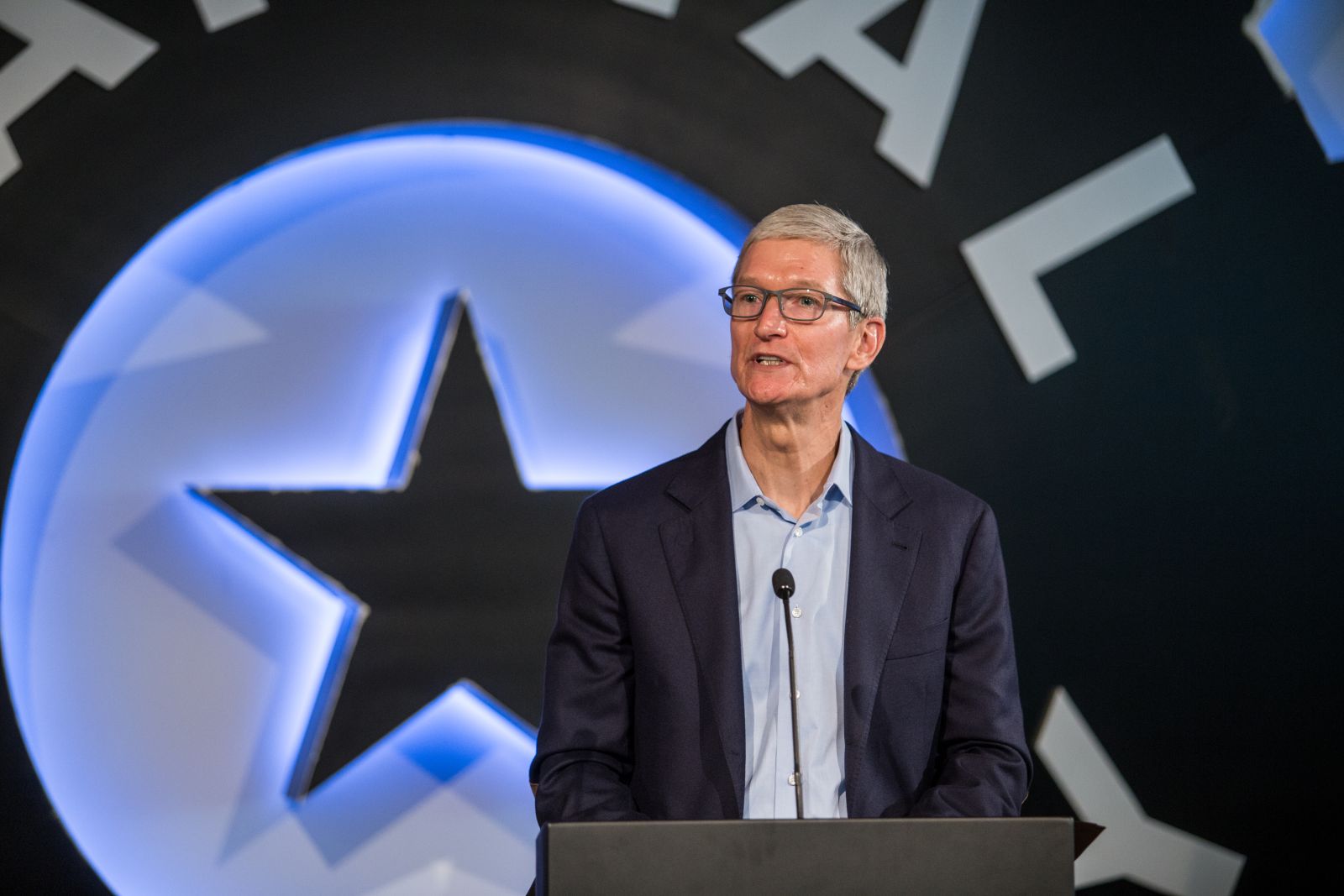
During a closed-door briefing with institutional investors in New York, Apple Inc. Chief Executive Tim Cook delivered a sobering assessment of the global hardware landscape, confirming that upcoming Apple price hikes are now inevitable due to an unprecedented structural deficit in the semiconductor supply chain. This announcement marks a sharp departure from Cupertino’s historical strategy of absorbing marginal component fluctuations to protect its massive hardware ecosystem. The primary catalyst is an acute, escalating memory chip crunch that has systematically choked the supply of premium NAND flash memory and DRAM components required for next-generation mobile devices. Investors immediately reacted, driving minor volatility across technology indices as the industry prepares for a broader recalibration of consumer hardware pricing.
The broader macroeconomic landscape complicates this supply-side bottleneck significantly. Over the past eighteen months, global semiconductor foundries have aggressively reallocated their capital expenditure toward advanced AI packaging and high-bandwidth components to feed enterprise data centers. According to recent data compiled by TrendForce, the production capacity for standard low-power mobile memory has contracted by 22% as fabrication lines pivot to high-margin server chips. This systemic reallocation has left consumer technology hardware facing severe structural deficits. Historical tracking by the Financial Times indicates that hardware manufacturers rarely maintain fixed retail prices when base component costs escalate beyond a 15% threshold over consecutive quarters. As consumer electronics inflation continues to outpace broader market indices, Apple’s decision represents the first major crack in the consumer technology sector’s pricing stability. The firm’s highly optimized supply chain, long considered immune to localized market shocks, is finally succumbing to global capacity constraints.
The Silicon Squeeze: Inside the 2026 Memory Crisis
The technical architecture of the current crisis resides within the highly concentrated silicon fabrication facilities of East Asia. Three dominant entities—Samsung Electronics, SK Hynix, and Micron Technology—control over 90% of the global mobile memory market. Throughout late 2025 and early 2026, these suppliers systematically modified their lithography lines to prioritize corporate AI infrastructure orders, creating an acute deficit in consumer-grade LPDDR5X memory.
Internal supply chain intelligence indicates that contract prices for premium flash memory storage tiers have surged by 34% over the last two quarters alone. For a company like Apple, which configures its baseline devices with increasingly memory-intensive features to support on-device artificial intelligence processing, these cost increases directly threaten historical gross margins. Industry trackers at Gartner reveal that the bill of materials for flagship smartphones has scaled to historic highs, driven almost entirely by these memory components.
Cook’s public acknowledgement of the situation signals that long-term supply agreements have failed to insulate the tech giant from spot-market volatility. Historically, Apple utilized its multi-billion-dollar cash prepayments to secure fixed component pricing years in advance from foundries like TSMC. Yet, the sheer scale of the enterprise AI demand shock has overridden traditional contractual advantages, forcing suppliers to renegotiate terms or risk production delays.
The physical limits of current silicon wafer production further compound the dilemma. Developing a new cleanroom facility requires billions of dollars in capital and an average operational runway of three years. Consequently, no immediate supply-side relief exists for hardware manufacturers caught in this structural vice. Consumers will bear the ultimate burden of this industrial bottleneck as retail channels adjust to the new reality.
Furthermore, specific logjams in sub-component materials have worsened baseline manufacturing speeds. Shortages in specialized photoresist polymers and advanced packaging substrates have created secondary bottlenecks that delay final assembly. Industry analysts tracking shipping manifests note that lead times for fully certified mobile memory modules have stretched from the standard six weeks to nearly twenty-four weeks. This operational drag prevents Apple from maintaining its legacy just-in-time inventory system, necessitating expensive warehouse hoarding strategies that further inflate overhead costs.
The specific production economics of 12-layer and 16-layer DRAM configurations exacerbate the issue. These dense architectures suffer from lower initial fabrication yields compared to standard legacy chips, meaning foundries must commit more raw silicon wafers to achieve the same volume of functional output. As the spot price of high-grade monocrystalline silicon escalates, foundational input costs climb before the wafer even enters the lithography phase.
The Mechanics of Consumer Electronics Inflation
To evaluate the structural implications of Cook’s warning, one must look past immediate retail pricing and analyze the core financial metrics that govern Cupertino’s corporate philosophy. Apple operates on an uncompromising gross margin floor, typically targeted between 43% and 45% for its hardware divisions. When supply chain inputs threaten this floor, corporate treasury departments systematically deploy retail price adjustments rather than compress investor returns.
How does the memory chip shortage affect iPhones?
The memory chip shortage forces Apple to raise retail prices to preserve its strict gross profit margins. Because advanced on-device AI tools demand larger, more expensive LPDDR5X memory modules, the soaring cost of these raw components is transferred directly to consumers through higher base-model price points.
This deliberate strategy highlights a critical shift in how premium hardware is valued in an inflationary environment. While hardware components like displays and aluminum enclosures have stabilized, computational layers have grown increasingly expensive. The integration of localized machine learning models requires significant hardware architecture upgrades that cannot function on legacy, low-cost silicon frameworks.
The broader impact of this shift extends deep into consumer behavior patterns. Economists tracking the premium electronics sector note that Apple possesses unique pricing power, allowing it to test the upper limits of demand elasticity without experiencing immediate volume losses. That said, the current macroeconomic environment presents a distinct set of challenges compared to previous tech cycles. High interest rates have constrained disposable income, meaning global markets may react less favorably to sudden upward price revisions.
The firm’s strategic response will likely involve a tiered pricing architecture designed to isolate the highest increases. By disproportionately raising prices on high-capacity storage configurations, Apple can protect its entry-level market share while extracting premium margins from power users. This approach shields aggregate unit volume metrics while satisfying Wall Street’s relentless focus on average selling prices (ASP).
Data from the Bloomberg Terminal suggests that a $50 increase in average selling prices could offset a 30% surge in raw memory procurement costs, preserving equity valuations. Still, this calculation relies on the assumption that global consumer sentiment will remain resilient in the face of persistent hardware cost escalation.
This dynamic invokes the psychology of Veblen goods, where higher pricing paradoxically reinforces the perceived exclusivity and premium status of the brand. When Apple introduced the thousand-dollar price barrier with its legacy anniversary models, critics predicted demand destruction, yet consumer adoption metrics shattered internal projections. Still, a supply-driven price hike differs fundamentally from an innovation-driven one, as consumers are asked to pay more for structural cost maintenance rather than visible novel features.
Why is Apple raising prices in 2026?
The decision to escalate retail costs is fundamentally driven by a shifting technological paradigm where local software capability is entirely dependent on hardware scale. In previous design eras, operating system optimizations allowed Apple to extract peak performance from smaller memory pools than its Android competitors. The arrival of localized large language models has completely broken this efficiency model, requiring raw, unyielding hardware capacity.
To execute complex computational tasks without relying on cloud-based servers, a device must keep billions of model parameters active within its volatile memory. This technical reality means that cutting memory capacities to avoid price hikes is no longer an option for Apple. Doing so would cripple the core feature set of their updated software ecosystem, rendering new devices obsolete upon release.
Concurrently, the global logistics network has entered a phase of structural cost escalation. Shipping rates along major trans-Pacific maritime routes have increased due to geopolitical tensions and fuel cost volatility. When these elevated transportation expenses combine with the climbing spot prices of memory modules, the cumulative pressure on the hardware margin profile becomes unsustainable for corporate treasury teams.
Macroeconomic Ripples: Beyond Cupertino’s Balance Sheet
The downstream consequences of Apple’s pricing strategy will reverberate far beyond its own retail storefronts. When the dominant player in consumer electronics shifts its pricing structure upward, it creates an umbrella effect that allows smaller competitors to raise their own prices without sacrificing market positioning. Competitors like Samsung Electronics and Google will likely mirror these price adjustments to protect their own tightening margins.
This collective shift will significantly accelerate global consumer electronics inflation, altering consumer replacement cycles across major economies. Data published by the Organisation for Economic Co-operation and Development (OECD) indicates that prolonged increases in durable goods pricing directly depress discretionary spending across adjacent retail sectors. Consumers will likely delay upgrading their personal devices, extending the average smartphone replacement lifecycle from 3.2 years to nearly 4 years.
For small and medium-sized enterprises (SMEs) that depend on fleet deployments of premium hardware for their workforces, these capital expenditure increases arrive at a difficult time. Corporate IT budgets are already strained by rising enterprise software subscription costs and broader labor expenses. Higher device costs will force purchasing managers to turn toward secondary refurbished markets or implement strict device-retention policies, squeezing enterprise hardware sales volumes globally.
Furthermore, the broader semiconductor supply ecosystem will face intense scrutiny from international regulatory bodies. As memory manufacturers reap record-breaking revenues from high-priced contracts, antitrust authorities in both the European Union and East Asia may initiate fresh inquiries into production capacity manipulation. The historical precedent for collusive behavior within the DRAM market makes regulators hypersensitive to prolonged, coordinated supply contractions that inflate consumer costs.
Telecommunications providers will also face immediate margin compression as their traditional subsidy models are disrupted. Major carriers rely heavily on offering low-cost or zero-dollar device upgrades paired with long-term data service contracts to maintain subscriber retention. If the baseline procurement cost of these devices jumps significantly, carriers will be forced to choose between absorbing the loss, extending financing terms from 36 months to 48 months, or passing the cost directly to subscribers via elevated monthly service fees.
Pressure will also intensify on central banking infrastructure. Policymakers at the Federal Reserve monitor technology pricing as a component of core manufacturing output data. If technology price hikes become entrenched, they could present a persistent headwind against central bank efforts to anchor long-term inflationary expectations. The interaction between technology component shortages and global monetary policy remains an underappreciated risk factor for the macroeconomic outlook of late 2026.
Will the memory chip crunch affect other tech brands?
The semiconductor deficit will strike the entire consumer technology spectrum, impacting everything from laptops and tablets to smart home infrastructure and automotive computing modules. Lower-tier hardware brands that lack Apple’s immense purchasing power will face even harsher choices. While Apple can use its scale to guarantee at least a baseline supply of silicon, smaller manufacturers are frequently pushed to the back of the queue by foundries.
This dynamic risks creating a bifurcated market where mid-tier tech brands are completely starved of high-performance components. These companies will either have to suspend production of premium devices entirely or accept drastically reduced profit margins to stay on retail shelves. Consequently, consumers will observe product shortages and price increases stretching across multiple electronics categories well into the coming fiscal years.
The Counter-Thesis: Margin Cushions and Market Share Plays
The prevailing consensus view frames these price increases as an unavoidable consequence of exogenous supply shocks. Yet, a compelling counter-thesis circulating among some independent financial analysts suggests a more tactical motivation. Dissenting research published by tech sector analysts at Morgan Stanley indicates that Apple’s current cash reserves and high-margin services ecosystem provide more than enough financial cushion to absorb temporary component cost spikes.
From this perspective, the memory chip crunch serves as a convenient narrative shield for a structural margin expansion strategy. By attributing higher retail price tags to external supply chain dynamics, the company can successfully elevate its average selling prices without triggering consumer backlash or damaging brand equity. This maneuver allows Apple to offset slowing unit volume growth across saturated Western markets by extracting higher revenue per user.
The picture is more complicated when analyzing competitive dynamics in emerging markets. In regions such as India and Southeast Asia, domestic brands utilizing lower-cost, older-generation memory architectures could exploit Apple’s price hikes to capture market share. These regional manufacturers are often willing to operate on razor-thin margins to secure ecosystem dominance. If Apple prices its hardware out of reach for middle-class consumers in these high-growth zones, it risks permanently sacrificing valuable ecosystem footprint to agile regional competitors.
Furthermore, fixed-income analysts point out that Apple’s massive share buyback programs require continuous, predictable cash generation. Any sustained contraction in hardware gross margin would directly threaten capital allocation strategies that support its premium equity valuation. Therefore, impending price actions may stem less from supply chain helplessness and more from a rigid commitment to corporate treasury optimization.
The Future of Silicon Valuation
Impending pricing adjustments across the premium consumer hardware market signal an end to the era of cheap, deflationary technology upgrades. For over two decades, continuous manufacturing efficiencies and global supply chains consistently delivered more computing power for fewer consumer dollars. That era has collided directly with the insatiable physical infrastructure demands of the global artificial intelligence boom.
The real tension going forward lies not in whether consumers can afford more expensive devices, but in whether incremental software utility delivered by advanced on-device AI justifies premium retail price tags. Ultimately, hardware is no longer just an access point for digital services; it has become a scarce, asset-backed commodity in its own right. The silicon reality of 2026 confirms that raw processing capability has recovered its pricing leverage over consumer software ecosystems. As manufacturing priorities continue to favor enterprise data infrastructure, individual consumers must prepare to pay a structural premium for the localized silicon power they once took for granted.
Discover more from The Economy
Subscribe to get the latest posts sent to your email.



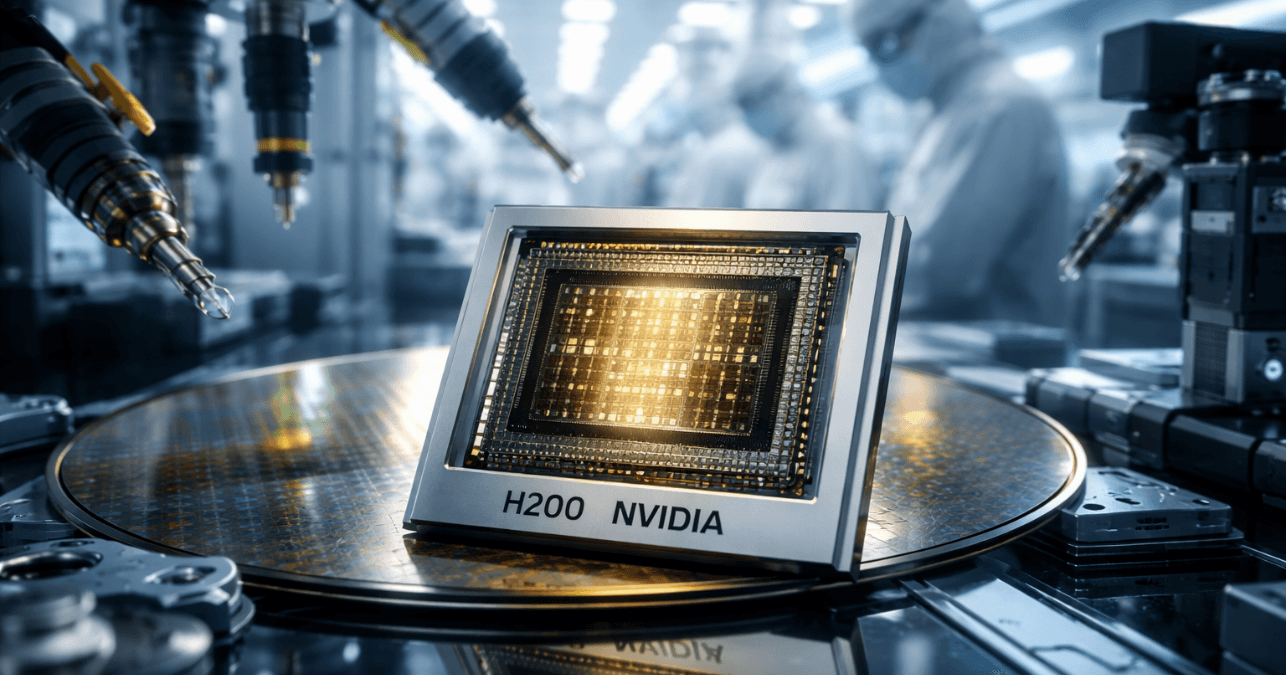
Nvidia has begun shipping its advanced H200 AI chips to China under a reversed US export policy, but the volumes moving so far are, in the words of a senior Commerce Department official, “trivial” — even as Chinese technology firms have collectively ordered more than two million units against a global Nvidia inventory of roughly 700,000.
A Policy Reversal That Remains Mostly Symbolic
Under Secretary of Commerce for Industry and Security Jeffrey Kessler told Congress on 14 July that H200 shipments to China remain minimal despite roughly $10 billion in approved licenses, according to TechTimes. Washington has approved sales to roughly ten Chinese firms — including Alibaba, Tencent, ByteDance, and JD.com — with each cleared buyer permitted to purchase up to 75,000 chips through Nvidia directly or via authorised distributors Lenovo and Foxconn.
The scale of pent-up Chinese demand dwarfs what can actually be delivered. Chinese technology companies have collectively ordered more than two million H200 chips for 2026, against Nvidia’s total global inventory of roughly 700,000 units — a supply gap severe enough to force emergency production discussions with TSMC to restart manufacturing of the older Hopper-generation chip architecture, according to the same TechTimes reporting.
Bipartisan Political Backlash in Washington
The limited shipments have nonetheless triggered a sharp political divide in Congress. Democratic Representative Gregory Meeks, the top Democrat on the House Foreign Affairs Committee, accused the administration of weakening safeguards by approving advanced AI chip licenses, describing export controls as being used as a bargaining chip in broader trade negotiations with China. Republican Representative Bill Huizenga separately criticised the Commerce Department over a reported loophole allowing Chinese subsidiaries operating outside mainland China to acquire the more advanced Blackwell-generation chips despite restrictions targeting the mainland market.
The Policy Architecture Is Genuinely Contradictory
The current framework traces back to a December 2025 announcement by President Trump permitting H200 sales to China, formally codified by the Commerce Department in January 2026 alongside conditions experts have called self-contradictory, according to detailed policy analysis from Semiconductor Insight. Those conditions include a 25% tariff on advanced AI chips meeting specific performance thresholds under Section 232 of the Trade Expansion Act, case-by-case licensing replacing a prior blanket presumption of denial, mandatory end-use certifications, and a volume cap estimated at roughly one million H200 units — about half of what Chinese buyers have already ordered.
The buyer list has continued to expand in recent weeks. Newly cleared purchasers include a unit of telecom equipment maker ZTE and a server assembly firm, alongside a cloud computing subsidiary of Kingsoft cleared to purchase competing AMD chips, according to Technetbook.
Why the Ambiguity Itself Is Costly
Perhaps the most consequential effect of the policy has been on long-term planning rather than near-term volume. Nvidia has not recovered the Chinese customer base it lost after roughly a year of regulatory uncertainty, as export controls introduced in 2022 and escalated under both the Biden and Trump administrations had already pushed the company’s China market share from roughly 95% toward zero, according to Semiconductor Insight’s analysis. Customers requiring long-term procurement certainty are reportedly reluctant to commit against a policy framework that could reverse again within months — while a bipartisan group of lawmakers has separately pushed Commerce Secretary Howard Lutnick and Secretary of State Marco Rubio toward a complete country-level ban on chipmaking equipment exports to China.
What It Means for Investors and the AI Supply Chain
For semiconductor investors, the H200 saga illustrates how thoroughly US-China technology policy has become entangled with broader trade diplomacy — a dynamic that leaves Nvidia’s China revenue outlook genuinely unpredictable regardless of near-term shipment volumes. For TSMC and its packaging partners, the emergency restart of Hopper-generation production lines signals capacity strain that may persist regardless of how the export-control debate ultimately resolves.
What to Watch
The Commerce Department’s enforcement posture on the reported Blackwell subsidiary loophole, along with any Congressional movement toward the proposed blanket equipment-export ban, will be the clearest signals of whether Washington’s China chip policy is heading toward further liberalisation or a renewed crackdown.
Discover more from The Economy
Subscribe to get the latest posts sent to your email.
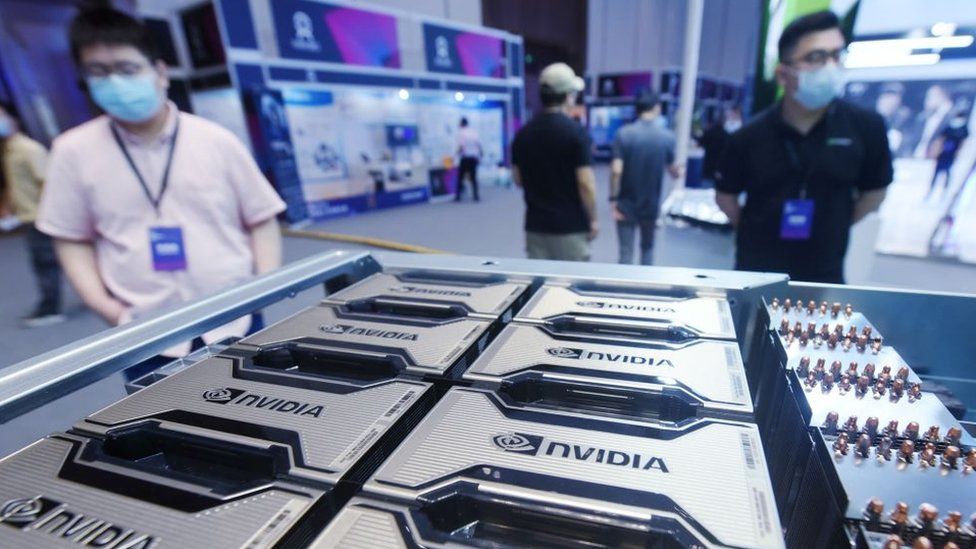
Semiconductor stocks that had roughly doubled during the second quarter of 2026 have started unwinding those gains fast, with the Philadelphia Semiconductor Index losing 6.7% in a two-session slide that has wiped out billions in market value even as broader indices climb toward record territory, according to CNBC’s markets desk.
The Sell-Off’s Anatomy
The damage has concentrated in specific names rather than spreading evenly across the sector. Sandisk tumbled 10.6%, Applied Materials fell about 10%, and Micron Technology, Lam Research, Intel, and Marvell each lost between 5.5% and 10% as investors took profits following what Schwab’s market desk described as a great run for chip stocks through the second quarter, per Schwab’s update. Teradyne and KLA fared worse still, sliding 13.6% and 11.5% respectively, dragging the VanEck Semiconductor ETF down 4.5% in a single session, according to CNBC.
Even Nvidia, the bellwether that has anchored the AI trade since 2023, pulled back 1.4%, a modest decline by comparison but notable given the stock’s outsized influence on index-level performance. The moves have come despite Applied Materials carrying a Zacks Rank #1, or “Strong Buy,” rating, illustrating that the current rotation is driven by positioning and sentiment shifts rather than any change in fundamental analyst outlooks, per Zacks’ coverage.
Rotation, Not Retreat
What distinguishes this pullback from a broader risk-off event is where the money is flowing instead. Communication services and financial stocks were the session’s biggest gainers, with the sector-tracking SPDR funds for each rising 2.4% and 2.2% respectively even as the Information Technology Select Sector SPDR dropped 2.6%, Zacks reported. One market strategist characterized the move as “a rotation potentially out of a sector that’s been red hot for the last few months and into other areas,” while also noting a broader revaluation of the AI trade itself is underway, language captured in CNBC’s live coverage.
Netflix shares jumped 5% on Thursday afternoon, making the streaming company a standout outperformer within the Nasdaq-100 even as that index sold off roughly 2% overall, on pace for its best single day since late February and a 5.6% weekly gain heading into the holiday-shortened trading week, per CNBC.
The Meta Cloud Pivot Adds a New Wrinkle
Adding to the sector’s uncertainty, news broke that Meta plans to begin renting out portions of its computing infrastructure, positioning the social media company as a direct competitor to smaller cloud providers such as Nebius and CoreWeave. JPMorgan analyst Doug Anmuth pushed back on the strategy in a note to clients, arguing the company would be better served developing its own inference capabilities to strengthen its advertising business rather than diversifying into infrastructure rental, according to CNBC’s reporting on the note.
The episode illustrates a broader tension within the AI capital expenditure story: as detailed in the Bank for International Settlements’ recent warning about AI-related credit risk, hyperscalers are increasingly searching for revenue streams to justify capex that already outpaces free cash flow, and Meta’s cloud pivot can be read either as prudent diversification or as a signal that internal AI economics are not yet closing the gap analysts expected.
What This Means Going Into a Holiday-Shortened Week
US markets closed Friday, July 3, for Independence Day, meaning the semiconductor sector enters a long weekend carrying two days of sharp losses without the usual next-session opportunity to stabilize. The next scheduled catalyst is the ISM June Services PMI on July 6, followed by FOMC minutes on July 8, both of which will shape whether the current rotation out of chip stocks and into rate-sensitive sectors continues or reverses.
Small-cap stocks, meanwhile, just posted their best first half since 1991, according to Google Finance’s markets summary, a data point that reinforces the rotation narrative: capital appears to be broadening out from the concentrated AI mega-cap trade that dominated 2025 and early 2026 into a wider set of market segments, even as the underlying question of whether AI infrastructure spending can generate the returns markets have priced in remains unresolved.
Discover more from The Economy
Subscribe to get the latest posts sent to your email.
A global memory chip shortage is hitting AI hyperscalers, tanking Nvidia and Apple shares, and triggering a Wall Street rotation. Here’s what the AI sector’s supply crisis means for investors.The artificial intelligence boom that has driven Wall Street’s most extraordinary bull run in a generation is running headlong into a physical constraint: the world cannot produce memory chips fast enough to feed it.
On Friday, June 26, 2026, technology stocks extended a brutal weekly decline even as the broader market stabilized and advancing shares outnumbered declining ones. Nvidia slipped another 1% in early trading and was on pace for an 8% weekly loss—its worst five-day stretch in more than a year. Apple dived after announcing price increases for several iPad and Mac models, citing higher costs from memory chip shortages. Oracle and CoreWeave fell after the New York Times reported that OpenAI was considering delaying its initial public offering to as late as 2027.
What the headlines share is a single underlying cause: the cost of the memory chips that power AI infrastructure is rising faster than even the most aggressive hyperscaler budgets assumed, and the shortage driving that cost increase is not expected to ease before 2028.
The Architecture of the Crisis
Memory chips—specifically the high-bandwidth memory, or HBM, used in AI accelerators—are produced by a small number of manufacturers: SK Hynix, Micron, and Samsung. Demand for HBM has exploded because each new generation of Nvidia’s AI chips requires substantially more of it. As Nvidia pushes its product cycle faster to maintain competitive advantage, each cycle pulls forward enormous new demand for chips that take 18 to 24 months to ramp in production.
Micron reported strong quarterly earnings—its results have been spectacular—but the very strength of those results is the problem for the rest of the tech sector. Micron’s margins are rising because memory is scarce and expensive. The companies buying that memory—Microsoft, Amazon, Alphabet, Meta, and the rest of the hyperscaler complex—are absorbing higher input costs on a scale that is beginning to show up in margin guidance.
Analysts at Charles Schwab noted a “growing wedge” in the technology sector between memory producers like Micron—which is posting massive gains—and the hyperscaler stocks that are watching their AI infrastructure economics deteriorate. The latter group includes names like Microsoft, Amazon, and Alphabet, which are collectively projected to spend between $660 billion and $700 billion on AI infrastructure in 2026, according to research from Fair Observer.
Nvidia’s Problem Is a Market Concentration Problem
Nvidia entered 2026 having crossed a $5 trillion market capitalization—larger by GDP comparison than all but four national economies. That concentration made the stock not merely a bet on AI but a systemic weight in the S&P 500. Nvidia and its mega-cap technology peers now account for roughly 30% of the entire index—the highest concentration in half a century.
When Nvidia corrects, it does not correct in isolation. It reprices the risk premium of every fund manager with an S&P 500 benchmark, which is nearly every institutional investor in the world. The 8% weekly decline in late June—attributed to a combination of rising memory costs, margin anxiety among hyperscaler customers, and a broader rotation away from high-multiple AI stocks—had ripple effects across semiconductor infrastructure names including Lumentum, Marvell Technology, and Corning.
Apple Raises Prices—and Reveals the Exposure
Apple’s announcement of price increases for iPad and Mac models was notable for two reasons. First, Apple’s supply chain is among the most sophisticated on earth; if Apple could not absorb memory cost increases without raising consumer prices, the margin pressure is acute. Second, Apple’s pricing decision revealed an exposure that consumer electronics companies had managed to keep largely invisible through inventory buffers.
Those buffers, built up when memory was cheap, are now depleted. The shortage is forecast to persist through 2027 and potentially into 2028, driven by Nvidia’s accelerated chip release cadence and the insatiable demand of AI data centers for high-bandwidth memory. Analysts at Briefing.com noted that higher memory costs are seen “persisting throughout 2027 and perhaps into 2028, driven by increasing data center demand and Nvidia’s rapid introduction of updated AI chips.”
OpenAI Delays Its IPO—Absorbing the Lesson From SpaceX
The reported delay in OpenAI’s public offering is a direct consequence of two market developments: the broader tech weakness driven by the memory supply crisis, and the troubled IPO debut of SpaceX earlier in June, whose shares suffered heavy losses in the days following listing as global markets repriced risk.
OpenAI executives, who had targeted 2026 for a public offering, are now said to be evaluating a 2027 launch—giving markets time to stabilize and giving the company time to demonstrate that its AI infrastructure economics are sustainable at the scale that a public market valuation would demand.
The Rotation That May Define the Rest of 2026
The most significant market dynamic emerging from the memory chip crisis is not the decline in any single stock but the rotation it is enabling. As the mega-cap AI trade faces margin headwinds, investors are moving into financial and industrial companies, healthcare, and energy—sectors that had been overshadowed for years by the AI growth narrative. The Dow, weighted toward those steadier names, was holding up even as the Nasdaq declined through the final week of June.
That divergence—Dow up, Nasdaq down—is a familiar pattern in sector rotation cycles. It does not necessarily signal a bear market. It may signal the beginning of a more broadly distributed bull market, one less concentrated in five or seven names. The memory supply crisis, in that reading, is not the end of the AI boom—it is the first serious test of whether the boom’s economics are durable enough to survive contact with physical constraints.
Discover more from The Economy
Subscribe to get the latest posts sent to your email.

The Taxman Cometh from Beijing

Pakistan IMF Program 2026: Inside the Push Toward an Interest-Free Economy

Russia Oil Revenue 2026: How Sanctions on Rosneft and Lukoil Are Draining the War Chest

Canada US Trade War 2026: Inside Carney’s Push to Cut Ties With Trump’s Tariffs

Rachel Reeves’s £25 Billion Problem: What the Autumn Budget Gap Means for Britain

Inside the Fed’s Most Divided Vote in Years: Why Warsh Held the Line on Rates

Pakistan Passed Its Third IMF Review

The Fed Is Fractured — And a New Chair Just Made It Louder, Not Quieter

The UK Economy in 2026 Is Neither Recession Nor Recovery :Stagflaton

Indonesia’s $121 Billion Nickel Bet Is Facing a Battery Chemistry

Why Ultra-Wealthy Families Are Splitting Between Singapore and Dubai inmarkets 2026

China Chose Political Control Over Fixing Its Deflation Trap in 2026

Oil Markets Are Oversupplied and Geopolitically Explosive at the Same Time

Russia’s Budget Deficit Blew Past Its Full-Year Target in Three Months

Russia Bans Diesel Exports 2026: Global Fuel Market Impact Explained

Gold Price Forecast 2026: Fed’s July 29 Decision and Record Central Bank Buying Explained

Strait of Hormuz Blockade 2026: Oil Prices Surge 9% as US-Iran Conflict Reignites

Strait of Hormuz 2026: Why Markets Still Don’t Trust It’s Open

China Politburo July 2026: Stimulus Signals Explained

Pakistan Economy 2026: GDP Grows 3.7% as IMF Completes EFF Review Amid Middle East Risk

Down But Not Out: Inside the Slow Sinking of Russia’s War Economy

Gulf Capital Retreat From Pakistan 2026: UAE Loan Freeze & What It Means

Apple vs OpenAI Lawsuit: The Economic Story Behind the Headline

Indonesia Russian Oil Imports 2026: Why Jakarta Is Diversifying Crude Supply

Global Stock Market Selloff 2026: Stagflation Fears Return as Iran Conflict Reignites

The Yuan Now Settles 67% of Russian Oil Payments — Quiet De-Dollarization in Action

AI Capex Bubble 2026: The Hidden $662B Debt Nobody Reports

Pakistan’s Economic Survey FY26: Inflation Spike Insights
-

 Markets & Finance7 months ago
Top 15 Stocks for Investment in 2026 in PSX: Your Complete Guide to Pakistan’s Best Investment Opportunities
-

 Analysis5 months ago
Johor’s Investment Boom: The Hidden Costs Behind Malaysia’s Most Ambitious Economic Surge
-

 Analysis6 months ago
Top 10 Stocks for Investment in PSX for Quick Returns in 2026
-

 Analysis6 months ago
Brazil’s Rare Earth Race: US, EU, and China Compete for Critical Minerals as Tensions Rise
-

 Banks7 months ago
Best Investments in Pakistan 2026: Top 10 Low-Price Shares and Long-Term Picks for the PSX
-

 Investment7 months ago
Top 10 Mutual Fund Managers in Pakistan for Investment in 2026: A Comprehensive Guide for Optimal Returns
-

 Global Economy7 months ago
15 Most Lucrative Sectors for Investment in Pakistan: A 2025 Data-Driven Analysis
-

 Global Economy7 months ago
Pakistan’s Export Goldmine: 10 Game-Changing Markets Where Pakistani Businesses Are Winning Big in 2025