
Travel
Airfare Prices 2026: Why Flights Are Up 26.5% and What Could Finally Bring Fares Down

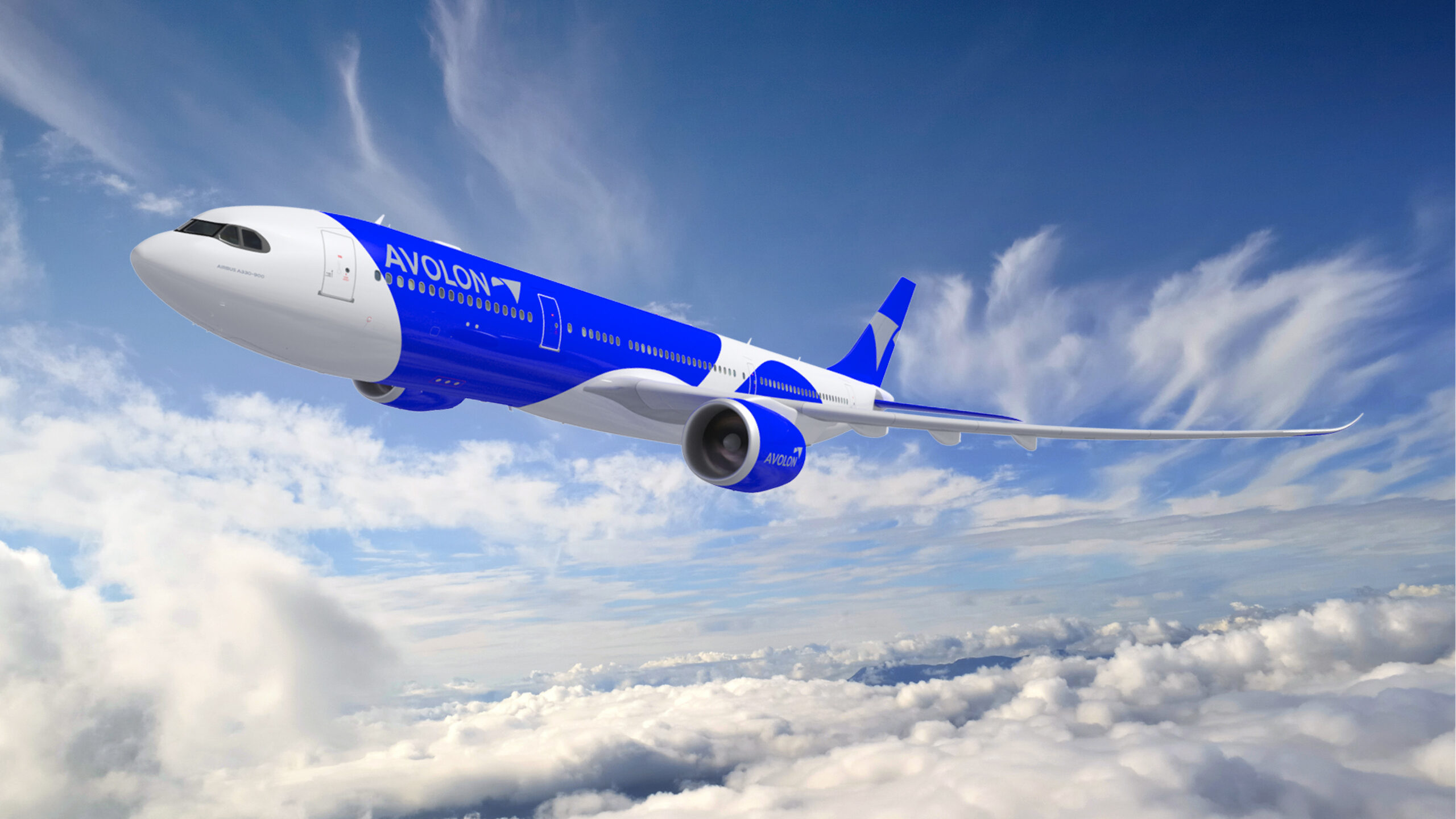
Travelers booking flights in 2026 aren’t imagining the price increases. US airfares are up 26.5% year-on-year as of June 2026, according to Bureau of Labor Statistics data compiled by NerdWallet’s Travel Inflation Report — a sharp acceleration compared with the broader cost-of-living increase over the same period. Zoomed out over a decade, airfares have actually grown more slowly than overall inflation, but the year-on-year spike is real and it is being driven by a specific, identifiable cause.
Summer-specific data confirms the same trend from a different angle: domestic cash fares for travel between June 1 and September 20, 2026 are running roughly 15% higher than the prior year, with domestic points fares up 18% and international cash fares up 12%, according to Points Path’s 2026 summer airfare report.
The root cause: a genuine jet fuel supply problem
Unlike prior periods of airfare inflation driven mainly by demand recovery, 2026’s price increases trace directly to a jet fuel shortage triggered by the Middle East conflict and the Strait of Hormuz disruption, according to Travel And Tour World, citing IATA analysis. Airlines have responded by raising fuel surcharges and adjusting flight schedules — but the more consequential response has been outright capacity cuts.
Airlines are flying fewer planes, not just charging more
The scale of the capacity response has been striking. In April, 19 of the top 20 global airlines — including Lufthansa, Delta, United, and Air France-KLM — slashed flights, with further cuts possible into winter if fuel costs remain elevated, according to J.P. Morgan’s Summer Travel Outlook. Air India cut more than 250 international flights, Singapore Airlines has warned that geopolitical tensions and elevated fuel prices will continue to weigh on earnings, and major Chinese carriers are reporting softening demand as high fuel costs squeeze margins with limited room to raise prices further.
Demand hasn’t cracked — yet
Despite the sharply higher prices, demand has largely held up in the US. Delta Air Lines — the first major US carrier to report Q1 2026 earnings after the Iran conflict escalated — posted record first-quarter revenue of $14.2 billion, more than 9% higher year-on-year, according to Points Path. The report’s broader conclusion is blunt: with demand still running strong, airlines have no financial incentive to lower prices. Planes are still flying full even at elevated fares, giving carriers pricing confidence they have used to push fares higher across the board.
The picture looks different outside the US. A leading European tour operator’s mid-May data showed UK summer 2026 bookings tracking 10% behind the same period last year, compared with a 7% lag across all geographies combined, per the same J.P. Morgan analysis — suggesting European price sensitivity is higher than in the American market, and that low-cost carriers and tour operators there are already using discounting to fill seats as customers hesitate on bookings.
Would a Strait of Hormuz deal bring fares down?
The direct line between the fuel shortage and the Iran-Hormuz conflict means the emerging reopening deal — described by US and regional officials this week as in its “final stage” — is directly relevant to airfare trajectories. Lower crude and jet fuel prices would ease the primary cost pressure airlines have cited for both surcharges and capacity cuts. However, industry analysts caution the relief would not be immediate: fuel hedging programmes shield some carriers from price swings for months at a time, and the capacity cuts already made take time to reverse even once input costs ease.
Key takeaways
- US airfares are up 26.5% year-on-year as of June 2026; summer domestic fares are up roughly 15-18%, international up 12%.
- The primary driver is a jet fuel shortage tied to the Strait of Hormuz disruption, not simply post-pandemic demand recovery.
- 19 of the top 20 global airlines cut flights in April 2026, with further cuts possible if fuel costs stay elevated.
- US demand has remained resilient — Delta posted record Q1 2026 revenue — giving airlines little incentive to cut prices.
- European demand looks softer, with UK summer bookings tracking roughly 10% behind last year, prompting earlier discounting there than in the US.
FAQ
Why are flight prices so high in 2026? Primarily a jet fuel shortage caused by the Strait of Hormuz disruption, which has pushed airlines to raise fuel surcharges and cut capacity, combined with resilient travel demand that gives carriers little incentive to lower fares.
Will airfares come down if the Strait of Hormuz reopens? Potentially, over time — lower fuel costs would ease the core cost pressure, though fuel hedging contracts and the time needed to restore cut capacity mean any relief likely wouldn’t be immediate.
Are flight prices rising everywhere equally? No. US demand and pricing have stayed firmer, while parts of Europe — notably the UK — are seeing softer bookings and earlier discounting from low-cost carriers.
Discover more from The Economy
Subscribe to get the latest posts sent to your email.


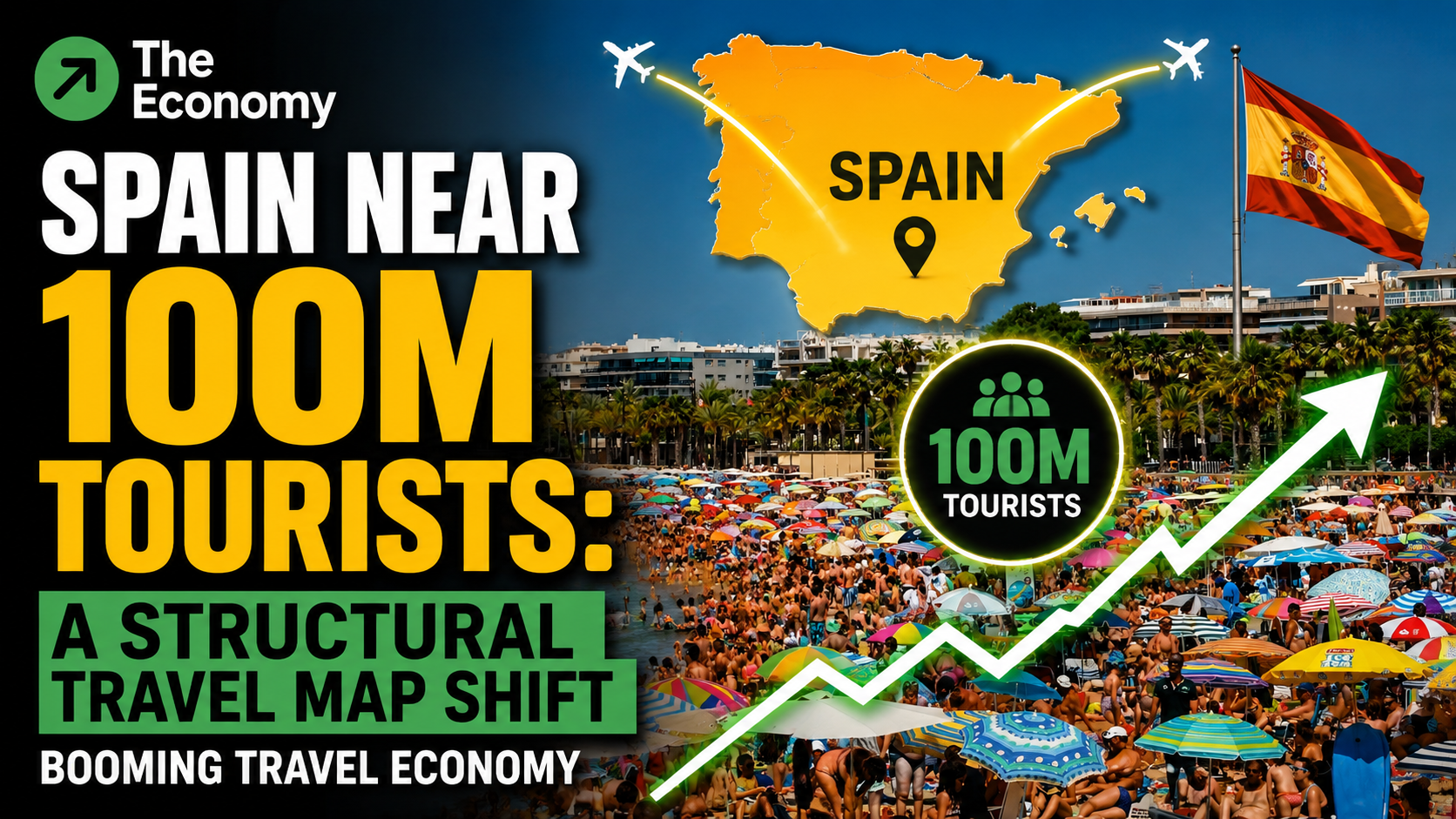
How the Iran war, Mediterranean demand consolidation, and Europe’s geopolitical stability premium are producing a structural realignment in global tourism flows that will outlast any single crisis.
Spain is approaching a number that no country has ever reached: 100 million international tourists in a single calendar year. As of the end of April 2026, with 26.6 million arrivals in the first four months alone — a 3.4% increase year-on-year — the trajectory has become, for the first time, a genuine statistical probability. The question facing the Spanish tourism industry, and the global travel market watching it, is not whether the milestone will be crossed but what it will cost, who will pay, and what it means for the structural architecture of global travel flows that produced it.
The answer to that last question is more important than the headline number. Spain’s tourism surge in 2026 is not a story about one country’s beaches and gastronomy. It is a story about how geopolitical instability in one region permanently redirects demand to another, how safety perception drives structural rather than cyclical change in travel behaviour, and why the Mediterranean is consolidating a dominance in global tourism that its infrastructure was not built to absorb.
The Record and Its Arithmetic
Spain’s National Statistics Institute (INE) confirmed that the country received 96.8 million international visitors in 2025, a new all-time record and a 3.2% increase over 2024 — which was itself a record year. International tourist spending in 2025 reached €134.7 billion, a 6.8% increase on the prior year, reflecting a shift toward higher-value, longer-duration travel by wealthier visitors spending more per trip.
In April 2026 alone, Spain received 9.1 million international tourists — a 5.2% increase year-on-year and a new monthly record. March saw 6.8 million visitors, a 3.3% rise. The United Kingdom remained the single largest source market, contributing approximately 1.7 million visitors in April, followed by France with 1.3 million and Germany with 1.2 million. Average expenditure per traveller reached €1,291 in April, with daily spending of €189 — figures that confirm the premium tourism profile driving the spending surge even as volume growth moderates relative to the pandemic-rebound years.
Exceltur, the Spanish tourism alliance, forecasts tourism GDP at €229.4 billion in 2026, representing real growth of 2.4% on 2025 levels, with tourism’s share of the national economy reaching 13.1%. The World Travel & Tourism Council projects Spain’s tourism sector will contribute €315.7 billion to GDP by 2035, representing more than 17% of the Spanish economy, with 4 million jobs — 700,000 more than the 2025 baseline.
The Iran Variable: Geopolitics as a Tourism Accelerant
Behind the headline arithmetic is a geopolitical accelerant that the industry is only beginning to quantify. The ongoing conflict involving Iran has materially redirected travel demand away from Middle Eastern and Eastern Mediterranean destinations toward European markets perceived as safe, accessible, and well-connected. Spain, Italy, and France are the primary beneficiaries of this structural diversion.
Destinations in the Middle East and eastern Mediterranean normally draw up to 181 million visitors annually. That demand does not disappear when regional instability rises — it relocates. Summer flight bookings to Spain rose 32% year-on-year as of early April 2026, while hotel searches increased 28%, according to Sojern, the digital travel intelligence platform. Cruise lines have repositioned itineraries away from Red Sea and Persian Gulf routes, with the freed capacity redeployed on Mediterranean routes where demand is demonstrably stronger and operational risks are judged to be lower.
Phocuswright’s Spain Travel Market Brief 2026 is explicit on the causality: the geopolitical diversion is functioning as “an additional demand driver” on top of an already sustained positive trajectory. But the same analysis notes a critical asymmetry — the uncertainty created by ongoing conflict will require time to reverse. Traveller confidence in Middle Eastern destinations will not recover the moment a ceasefire is announced. The structural reallocation of travel demand toward perceived-safe European destinations may outlast the conflict by years.
A Structural Realignment, Not a Cyclical Bounce
The distinction between structural and cyclical change matters enormously for destination planning, hotel investment, and airline capacity allocation. A cyclical bounce returns to baseline when the disrupting condition resolves. A structural realignment produces a new baseline.
The evidence in Spain’s case points firmly toward structural. The country’s tourism growth pre-dates the Iran conflict by several years. It pre-dates the post-pandemic revenge travel surge by more than that. Spain has consistently grown its international visitor numbers and spending through multiple economic cycles, geopolitical disruptions, and health crises, with growth rates remaining firmly positive throughout. The Iran conflict has added volume to a trend that was already established.
European Travel Commission (ETC) data confirms that Southern Europe captured 11.71% of international travel intent in early 2026, marking a significant year-on-year increase. Within that, Spain captured the largest incremental gain in global travel demand share among benchmark Mediterranean destinations, ahead of Italy and France. Catalonia led regional arrivals in April with 1.9 million visitors, followed by Andalusia at 1.5 million and the Balearic Islands at 1.4 million.
What is particularly notable is the seasonality shift. Demand is no longer concentrated in the summer peak. Visitors are spreading across spring, autumn, and winter with increasing uniformity. For businesses, that distributes revenue more evenly through the year. For residents in popular areas, it means tourism pressure is becoming nearly permanent — which is producing the political backlash that is now the dominant narrative tension in Spain’s otherwise triumphant tourism story.
Overtourism: The Structural Cost of Success
A YouGov poll in 2024 found that 28% of Spaniards held negative views of foreign tourism — the highest rate in Europe. By 2026, the political economy of Spanish tourism has become significantly more complex. In Barcelona, the city government has committed to reducing the number of tourist rental properties by 10,000 by 2028. In Mallorca and Ibiza, short-term rental listings have already been reduced by approximately half. Nearly 70% of Balearic residents have expressed support for visitor caps.
The housing dimension is the most politically charged. Rising short-term rental supply in tourism-heavy cities has contributed to housing costs that outpace local wages, concentrating the economic benefits of tourism among property owners and hospitality businesses while distributing its costs — congestion, noise, displacement — across the broader resident population. Barcelona, San Sebastián, Seville, and the Canary and Balearic Islands are all managing active political tension over tourism capacity.
The Spanish government’s response has been measured: promoting higher-value, longer-stay, off-peak travel to reduce the per-arrival footprint; investing in infrastructure for northern and inland regions that remain significantly under-touristed; and implementing regulatory frameworks for short-term rentals that attempt to balance housing markets with legitimate hospitality supply.
The tourism-resident conflict in Spain is not exceptional. It is the leading edge of a pattern that will define destination governance globally as travel volumes continue to grow. Amsterdam, Venice, Kyoto, and Dubrovnik have all enacted visitor limitations in recent years. Spain’s scale makes its experience the most important test case for how high-income democracies manage the political economy of mass tourism without destroying the economic engine that funds the services residents depend on.
Spain’s Competitive Positioning in the Global Market
Spain’s emergence as the dominant beneficiary of geopolitical demand diversion is not accidental. It reflects a set of structural advantages that cannot be easily replicated by competing destinations on a short time horizon.
Infrastructure depth is the first advantage. Spain has large international airports — Madrid Barajas and Barcelona El Prat are two of Europe’s five busiest — major cruise ports on both Atlantic and Mediterranean coasts, and a high-speed rail network that connects mainland cities efficiently. The carrying capacity of this infrastructure is sufficient to absorb demand surges that would overwhelm smaller destinations.
Destination diversification is the second advantage. Spain offers beach tourism on four distinct coastlines, major urban cultural destinations (Madrid, Barcelona, Seville, Valencia), gastronomy tourism of global reputation, skiing in the Pyrenees and Sierra Nevada, and rural agrotourism across regions including La Rioja, Extremadura, and Galicia. No single demand category saturates the country’s capacity simultaneously — though the concentration of international arrivals in a handful of regions means that regional infrastructure remains under severe pressure.
Safety perception — relative to the Middle Eastern and eastern Mediterranean alternatives — is the third and currently most powerful advantage. Spain’s measured stance on foreign conflicts has allowed it to project stability to key visitor markets (UK, Germany, France, US) while its geographic position as a Western European democracy with NATO membership provides the institutional reassurance that wary travellers increasingly demand before booking non-refundable travel.
The 100 Million Question
Spain received approximately 96.8 million international tourists in 2025. The first four months of 2026 grew 3.4% year-on-year. Applying that rate to the full 2025 baseline produces a figure of approximately 100.1 million — comfortably above the symbolic threshold. But the final 2026 total will be determined by factors not yet known: summer weather patterns, air capacity constraints, fuel costs, household budget pressure in key source markets, and the trajectory of the Middle East conflict through the peak travel season.
What can be stated with confidence is that the structural conditions producing Spain’s tourism surge are neither temporary nor self-correcting. The geopolitical demand diversion from the Middle East will persist for as long as the conflict and its reputational aftermath endure. The Mediterranean’s safety premium relative to other long-haul alternatives will compound over time as infrastructure investment follows demand. And Spain’s fundamental tourism proposition — climate, culture, cuisine, connectivity — is not subject to the same political and security risks affecting its competitors for global travel demand.
The country approaching 100 million visitors is not the same country that first broke its previous records in the mid-2010s. It is wealthier by tourism spend, more diversified by season, more invested in premium visitor profiles, and more politically aware of the social costs of the industry it depends on. Managing the next 100 million — how many come, where they go, how long they stay, and what they spend — is the most consequential economic policy question facing Spanish tourism for the remainder of the decade.
Frequently Asked Questions (FAQs)
- Q: How many tourists visited Spain in 2026?
- A: Spain received 96.8 million international tourists in 2025, a new record, and is on course to approach or exceed 100 million in 2026 based on early data showing 3.4% year-on-year growth in the first four months.
- Q: Why is Spain breaking tourism records in 2026?
- A: Spain is benefiting from a combination of its established tourism infrastructure, safety perception relative to the Middle East, and geopolitical demand diversion from conflict-affected regions redirecting travellers toward stable European destinations.
- Q: What is overtourism in Spain?
- A: Overtourism refers to the strain on infrastructure, housing markets, and quality of life in popular Spanish destinations — including Barcelona, Mallorca, and the Canary Islands — caused by visitor volumes that exceed the carrying capacity of local communities and environments.
Discover more from The Economy
Subscribe to get the latest posts sent to your email.

From $438 billion in 2012 to a projected $1.4 trillion by 2029, wellness tourism has moved from a niche indulgence to the fastest-growing structural force in the $1.6 trillion global travel economy
When Hilton Hotels asked travellers what was driving their 2026 leisure decisions, 56% named a single motivation: to rest and recharge. Not to see a landmark. Not to tick off a bucket list. Not to attend an event. To rest. That answer — drawn from Hilton’s 2026 Trends Report, The Whycation: Travel’s New Starting Point — encapsulates a structural transformation underway in the $1.6 trillion global travel economy, one that has already produced a market now valued at close to $1 trillion and forecast to reach $1.4 trillion by the end of the decade.
Wellness tourism is no longer a niche amenity marketed to the affluent. It is the fastest-growing segment of the global travel industry by both absolute value and growth rate — and the operators, platforms, and destinations that treat it as a premium add-on rather than a core structural trend are misreading what is happening beneath the surface.
The Numbers That Define the Shift
The Global Wellness Institute places the wellness tourism market at $894 billion in 2024, more than double the $438 billion recorded in 2012 — a figure that surpasses pre-pandemic levels by 36%. Phocuswright and WiT’s Online Travel Tracker: The Wellness Stack projects the market will reach $1.4 trillion by 2029, growing at a compound annual rate of 9.1%.
Grand View Research places the 2025 market valuation at $990.4 billion, projecting growth to $1.085 trillion in 2026 and $2.4 trillion by 2035, at a CAGR of 9.3%. The variance across forecasting houses reflects different methodology and scope, but the directional consensus is unambiguous: wellness tourism is expanding faster than any other major travel segment, and its growth is accelerating as it moves from a secondary travel purpose to a primary one.
North America holds the largest regional share at approximately 35%, driven by high consumer spending on preventive health and premium spa retreats. Asia-Pacific is the fastest-growing region, with countries including Thailand, India, Indonesia, and Japan emerging as globally competitive wellness destinations through traditional healing practices — Ayurveda, yoga, onsens, forest bathing — that cannot be replicated at scale elsewhere. Europe maintains a 30% share, anchored by established spa cultures in Central and Eastern Europe and rapidly expanding luxury wellness infrastructure in Southern Europe.
Search Data Reveals Demand Beneath the Headlines
The consumer demand underpinning these projections is not abstract. Trip.com and Google’s 2025 “Why Travel?” report tracked year-on-year search growth across wellness categories in H1 2025 that signal a mainstream, not specialist, market:
- “Golf and spa resorts” searches grew 300% year-on-year
- “All inclusive spa” searches grew 250% year-on-year
- “Ski and spa” searches grew 250% year-on-year
- “Spa destination experiences” grew 140% year-on-year
- “Japanese tea ceremonies” grew 53% year-on-year
- “Onsens” grew 20% year-on-year
These are not searches by a niche demographic of yoga practitioners and meditation enthusiasts. Golf and spa resort searches growing at 300% represent an affluent, mainstream consumer base integrating wellness into existing travel patterns. That integration — wellness as a design element within conventional travel, rather than wellness as the sole purpose of a dedicated trip — is the most important structural feature of the current growth cycle.
The Whycation: How Traveller Motivation Is Changing
Phocuswright defines wellness tourism as “travel associated with the pursuit of maintaining or enhancing one’s personal wellbeing” — a proactive effort to maintain health and augment wellbeing, distinct from reactive medical tourism. What the 2026 data adds to this definition is urgency. Travellers are not booking wellness trips when it fits. They are budgeting for wellness experiences even when they cut back elsewhere.
Hilton’s 2026 Trends Report found that 67% of American travellers reported a stronger interest in nature immersion retreats, 60% in spiritual retreats, and 56% in meditation or silent retreats — figures that would have been implausible in any pre-pandemic survey of mainstream travel intent. The same report identified “the Whycation” as travel’s new starting point: trips defined not by destination but by outcome. The destination is incidental. The restorative function is the product.
McKinsey’s 2025 Future of Wellness report added demographic texture: millennials and Gen Z are spending more on wellness than on any other category, while Boomers are driving demand for longevity travel and preventive health experiences. The market has no dominant age cohort. It is growing across generations with different motivations and different price sensitivities, producing a product spectrum from accessible domestic wellness getaways to ultra-premium longevity resorts charging thousands per night.
Capital Is Following the Consumer
The investment response to wellness tourism’s growth trajectory is becoming visible in several simultaneous trends.
Hotel majors are incorporating wellness as a core product line rather than a spa add-on. Hyatt acquired miraval and Exhale to establish direct wellness brand positioning. Marriott has expanded its W Hotels wellness programming and integrated longevity-focused amenities across multiple tiers. The Oberoi Group launched Asmi by Oberoi in October 2025, a structured wellness programme built around five pillars — movement, nutrition, bodywork, breathwork, and mindfulness — delivered across its resort portfolio.
Cruise lines are incorporating floating wellness clinics into itineraries, responding to demand from professionals who cannot commit to destination stays. Canyon Ranch — the Arizona-founded wellness brand that helped define the category — now operates collaborations with Celebrity and Regent cruise lines, and opened a new wellness club in Austin’s Texas Hill Country in 2025, bringing premium wellness closer to urban markets without requiring multi-day commitment.
Incentive travel is undergoing a parallel structural shift. Australia has seen wellness move from a retreat option to a strategic design element in corporate incentive programmes, linked explicitly to productivity, engagement, and retention. This positioning — wellness as a measurable performance investment rather than a perk — significantly expands the addressable corporate travel budget.
Sleep Tourism: The Fastest-Growing Sub-Segment
Within wellness tourism’s already rapid expansion, sleep tourism is growing faster still. The global sleep tourism market was valued at $72.6 billion in 2024 and is projected to reach $237.9 billion by 2034 — a CAGR that substantially exceeds the broader wellness travel market.
The demand is documented in consumer behaviour data: 70% of luxury travellers choose hotels with sleep-centric amenities, and more than half of global respondents report sleeping better in hotels than at home. Miraval Arizona has made sleep optimisation a centrepiece of its 2026 strategy, integrating AI beds, sound therapy, and personalised sleep coaching — commodities that resonate precisely because the same traveller who cannot sleep in their own home is willing to travel to access therapeutic infrastructure they cannot build themselves.
RESET Hotel near Joshua Tree, which opened in mid-2025, exemplifies the new property model: hypnotherapy, yoga nidra, sound baths, and breathwork in a silence-optimised desert setting. Off-grid analogue lodges in the US — including LeConte Lodge, Hike Inn, and Muir Trail Ranch — are reporting unprecedented demand from families and professionals specifically seeking to disconnect from screens. The paradox is that the most expensive amenity some properties can now offer is the absence of connectivity.
What the $1.4 Trillion Forecast Means for OTAs and Distribution
The booking infrastructure question is wellness tourism’s most consequential commercial gap. Phocuswright and WiT’s Wellness Stack report identifies meaningful gaps in online booking infrastructure for wellness travel: the product is complex, frequently composed of bundled services with variable availability, and poorly served by the standardised booking interfaces designed for commodity accommodation transactions.
This creates a structural opportunity — and a structural risk. The opportunity: operators that invest in bookable wellness inventory across OTA and direct channels capture demand that is currently lost because the friction of booking is too high. The risk: OTAs that move faster than hotels and wellness operators to build structured wellness product pages will replicate the same intermediary dynamic that defines the accommodation market.
Klook, one of the leading online travel agencies focused on experiences, filed for a US IPO in late 2025. Expedia is expanding its experiences offering through the acquisition of Tiqets. Tripadvisor has confirmed its intention to merge its core brand with Viator, the experiences booking platform. The consolidation of the experiences booking infrastructure is happening now, in real time, and wellness experiences — spa bookings, retreat packages, longevity programmes — are directly in its path.
The Regenerative Turn
Wellness tourism is increasingly promoted alongside regenerative and sustainable tourism, positioning wellness for the traveller alongside wellness for the destination itself. This framing matters commercially because it shifts the competitive differentiation from price and amenity to mission and values — categories in which independent wellness destinations have structural advantages over major chains.
The Global Wellness Institute estimated the total wellness economy at $6.8 trillion in 2024, growing 7.9% year-on-year, with a forecast of $9.8 trillion by 2029. Wellness tourism, at $894 billion, represents approximately 13% of that total — a share that is growing as the wellness economy’s fastest-expanding vertical. The destinations and operators that understand they are competing not just against other travel products but against the entire wellness economy — gyms, supplements, apps, wearables — will price, package, and distribute their product accordingly.
The traveller seeking a nature immersion retreat in 2026 has a Whoop subscription, a Headspace account, and a Peloton in their home gym. The proposition travel must beat is not a cheap flight and a hotel room. It is transformation that requires physical presence in a place capable of delivering it.
FAQs
- Q: How big is the wellness tourism market in 2026? A: The wellness tourism market is estimated at approximately $1 trillion in 2026, having grown from $438 billion in 2012 to $894 billion in 2024, with projections to reach $1.4 trillion by 2029.
- Q: What is the fastest-growing wellness travel segment? A: Sleep tourism is the fastest-growing sub-segment, with the market projected to grow from $72.6 billion in 2024 to $237.9 billion by 2034.
- Q: What is regenerative tourism? A: Regenerative tourism is travel designed to improve the destination and local community, not just the traveller — pairing personal wellness with environmental and cultural restoration.
Discover more from The Economy
Subscribe to get the latest posts sent to your email.
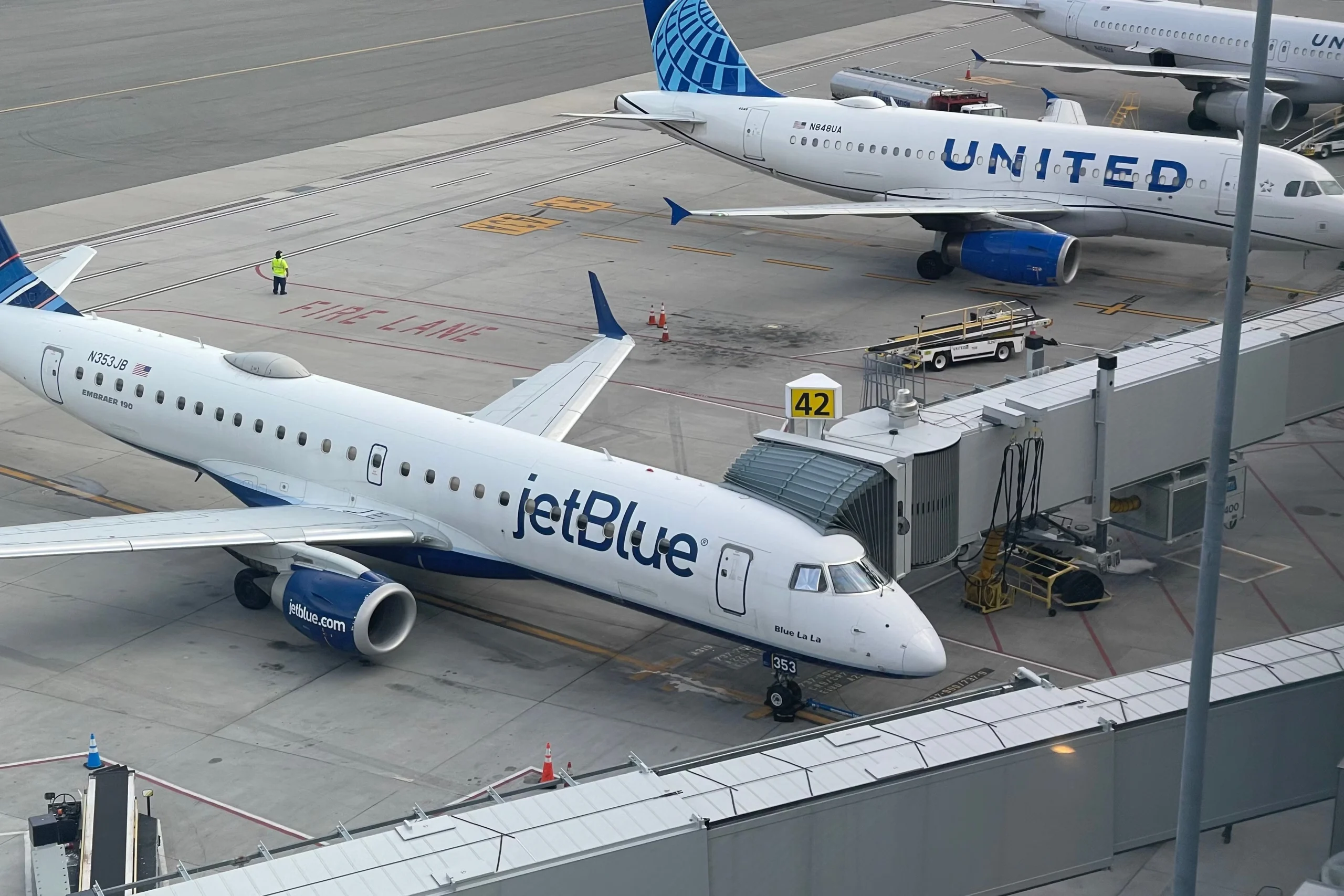
CNBC’s viral analysis argues the U.S. budget airline model is structurally broken. Rising fuel costs, labour pressures, fare compression, and changing traveller behaviour are eroding the low-cost carrier value proposition. Here’s what it means for travellers and investors.
A Model Built on Thin Margins
The U.S. budget airline model is, at its core, a financial engineering achievement as much as an operational one. Carriers like Spirit, Frontier, and Allegiant built viable businesses by stripping the flying experience to its minimum viable product — a seat, a seatbelt, and a destination — and then charging separately for everything else: bags, seat selection, boarding position, snacks, and legroom. The base fare became a marketing tool; the ancillary fee revenue became the actual business.
For roughly two decades, this model worked. Low-cost carriers stimulated demand by making flying accessible to price-sensitive travellers who would not otherwise have purchased a ticket. They pressured legacy carriers to lower fares, benefiting consumers across the market. They flew point-to-point routes that avoided the hub-and-spoke complexity and associated costs of network carriers.
Key Takeaways
- The U.S. budget airline model — built on high-frequency, point-to-point routes with ancillary fee revenue — faces simultaneous pressure from fuel costs, labour, and fare competition
- Spirit Airlines filed for Chapter 11 bankruptcy in late 2024; Frontier and Allegiant face structurally elevated cost bases
- The post-pandemic leisure travel boom that sustained low-cost carriers through 2022–2024 is normalising
- Legacy carriers have closed the fare gap by aggressively expanding basic economy offerings
- Goldman Sachs is simultaneously backing a travel-sector merger as Gulf airline recovery accelerates, suggesting a bifurcated global aviation recovery
Now, according to a widely-read CNBC analysis published June 20, 2026, the model is running out of runway (CNBC, June 20, 2026).
What Went Wrong
Several structural forces have converged to undermine the budget carrier value proposition simultaneously.
Fuel costs are the most immediate and severe. The Iran conflict-driven oil price spike — WTI rising from $57 to $113 over three months — hit budget carriers disproportionately hard. Unlike the legacy majors, which have sophisticated fuel hedging programmes and larger balance sheets to absorb cost volatility, carriers like Frontier and Allegiant operate with limited hedging and thin cash reserves. Jet fuel, which typically represents 25–35% of operating costs, became the decisive variable in earnings projections for the first two quarters of 2026.
Labour costs represent a second, less cyclical challenge. Post-pandemic pilot shortages, accelerated retirements, and the renegotiation of multiple pilot contracts across the industry have permanently raised the cost of flight crews. Unlike fuel costs, which will partially reverse as oil prices normalise, labour costs are sticky. Budget carriers, which historically competed partly by paying below industry-average wages to a workforce that valued the lifestyle and schedule flexibility of low-cost operations, no longer have that cost advantage to the same degree.
The legacy fare response has been arguably the most strategically damaging development. Delta, United, and American have spent the past four years aggressively expanding their basic economy and unbundled fare offerings — effectively creating a product tier that competes directly with budget carriers on price while retaining the network, reliability, and loyalty programme advantages of a full-service carrier. A traveller who would have chosen Spirit for a $99 base fare can now often find a similar price on United’s basic economy with better schedule options, more route combinations, and the ability to earn miles.
The Spirit Collapse as a Warning
Spirit Airlines’ Chapter 11 bankruptcy filing in late 2024 was the clearest signal that the model’s most aggressive practitioners were structurally unviable. Spirit had bet on a hyper-growth strategy that required sustained load factors above 85%, consistent ancillary revenue per passenger, and fuel costs that cooperated. When leisure demand began normalising after the post-pandemic travel boom, load factors fell; when oil prices spiked, the cost side blew out. The result was a carrier with an unsustainable unit cost structure and insufficient pricing power to offset it.
Spirit’s failure should have been a clarifying moment for the broader budget sector. Instead, the remaining carriers largely maintained their growth ambitions and capacity commitments — a bet that proved difficult to sustain as the macroeconomic environment deteriorated in early 2026.
The Ancillary Fee Arms Race
One of the more counterproductive dynamics in the budget carrier model has been the escalating arms race of ancillary fee complexity. What began as simple charges for checked bags has evolved into a labyrinthine system of seat selection fees, carry-on bag fees, priority boarding charges, and in-flight service fees that has progressively alienated the price-sensitive travellers the model was designed to serve.
Consumer research consistently shows that travellers who are surprised by total fare costs — arriving at checkout to find a $99 advertised base fare has become a $180 total transaction — experience significant dissatisfaction and reduce loyalty to the brand. Budget carriers have built businesses that are architecturally dependent on fees that customers resent paying. Legacy carriers, having adopted similar unbundling, have neutralised the price advantage while largely avoiding the customer experience degradation — because their base product is better enough to absorb the irritation.
The Global Contrast: Gulf Aviation’s Recovery
The story of American budget airline distress runs in stark contrast to what is happening in the Gulf aviation market. Goldman Sachs recently placed a bet on a travel sector merger that its analysts believe will drive sharp gains in a specific travel stock, citing the recovery of Gulf carrier operations and the structural growth in premium international travel (CNBC, June 20, 2026).
Emirates, Etihad, and Qatar Airways — carrying passengers who increasingly favour the premium end of the market — are seeing strong demand recovery, particularly for long-haul routes connecting Asia to Europe and North America via Gulf hubs. The post-Hormuz-crisis reopening is already restoring Gulf carrier capacity that was disrupted during the conflict period. That recovery bifurcates global aviation: premium long-haul carriers are thriving while U.S. budget short-haul carriers struggle.
The contrast reflects a deeper shift in post-pandemic travel preferences. Research has consistently shown that travellers who resumed flying after COVID were willing to pay more for comfort, reliability, and flexibility. The budget model, which monetises discomfort and inflexibility, was structurally better suited to a pre-pandemic travel market characterised by price-maximising leisure travellers — a market that has evolved.
Implications for Investors and Travellers
For equity investors, the budget airline sector looks increasingly like a value trap rather than a cyclical recovery opportunity. The structural challenges — permanent labour cost elevation, legacy carrier competition, customer experience erosion, and oil price sensitivity — suggest that the sector’s problems are not simply a function of the current economic cycle. Fuel cost normalisation will provide some near-term relief, but it will not restore the competitive moat that budget carriers once possessed.
For travellers, the medium-term consequence may paradoxically be higher base fares. As capacity is rationalised and weaker carriers are restructured or consolidated, the aggressive price competition that benefited consumers over the past 15 years may moderate. The market is moving toward a structure where three or four large network carriers dominate on most routes, competing on loyalty programmes and premium cabins rather than base price.
That is better news for airline shareholders than for the travellers who built their vacation planning around $79 one-way fares. The era of genuinely cheap flying in the United States may be closer to its end than its beginning.
Discover more from The Economy
Subscribe to get the latest posts sent to your email.

Global Growth Forecast 2026: IMF, World Bank Outlooks and the “Slow-Hire, Slow-Fire” Labor Market

Pakistan Agriculture 2026: Sindh’s Cotton Surge vs. Punjab’s Monsoon Decline

Gold Price 2026: Why Bullion Has Fallen 25% From Its January Record High

Airfare Prices 2026: Why Flights Are Up 26.5% and What Could Finally Bring Fares Down

Indonesia Investment 2026: Record Q2 Realization vs. Falling FDI Confidence

Russia Oil Revenue 2026: The Iran War Windfall and What a Hormuz Deal Means for Moscow

China Economy 2026: How AI Exports and a Property Crash Are Splitting Growth in Two

Malaysia GDP 2026: Why Growth Keeps Outperforming Official Forecasts

Singapore GDP Q2 2026: 5.7% Growth Driven by AI-Linked Semiconductor Exports

Al Maktoum International Airport 2026: Dubai’s $35B Plan for the World’s Largest Airport

Pakistan Economy 2026: Why GDP Growth Isn’t Reaching Ordinary Households

Strait of Hormuz Deal 2026: Iran-Oman Talks, Oil Price Impact & What Happens Next

SpaceX Stock Lockup Expiration Explained: Why $123B in Shares Could Hit the Market

The Taxman Cometh from Beijing

Russia Bans Diesel Exports 2026: Global Fuel Market Impact Explained

Gold Price Forecast 2026: Fed’s July 29 Decision and Record Central Bank Buying Explained

Strait of Hormuz 2026: Why Markets Still Don’t Trust It’s Open

Strait of Hormuz Blockade 2026: Oil Prices Surge 9% as US-Iran Conflict Reignites

China Politburo July 2026: Stimulus Signals Explained

Pakistan Economy 2026: GDP Grows 3.7% as IMF Completes EFF Review Amid Middle East Risk

Apple vs OpenAI Lawsuit: The Economic Story Behind the Headline

Down But Not Out: Inside the Slow Sinking of Russia’s War Economy

Gulf Capital Retreat From Pakistan 2026: UAE Loan Freeze & What It Means

Indonesia Russian Oil Imports 2026: Why Jakarta Is Diversifying Crude Supply

AI Capex Bubble 2026: The Hidden $662B Debt Nobody Reports

The Yuan Now Settles 67% of Russian Oil Payments — Quiet De-Dollarization in Action

Global Stock Market Selloff 2026: Stagflation Fears Return as Iran Conflict Reignites

Gulf Sovereign Wealth Funds Hit Record $53.9B in H1 2026 Despite Iran War
-

 Markets & Finance7 months ago
Top 15 Stocks for Investment in 2026 in PSX: Your Complete Guide to Pakistan’s Best Investment Opportunities
-

 Analysis6 months ago
Johor’s Investment Boom: The Hidden Costs Behind Malaysia’s Most Ambitious Economic Surge
-

 Analysis6 months ago
Top 10 Stocks for Investment in PSX for Quick Returns in 2026
-

 Analysis6 months ago
Brazil’s Rare Earth Race: US, EU, and China Compete for Critical Minerals as Tensions Rise
-

 Banks7 months ago
Best Investments in Pakistan 2026: Top 10 Low-Price Shares and Long-Term Picks for the PSX
-

 Investment7 months ago
Top 10 Mutual Fund Managers in Pakistan for Investment in 2026: A Comprehensive Guide for Optimal Returns
-

 Global Economy7 months ago
15 Most Lucrative Sectors for Investment in Pakistan: A 2025 Data-Driven Analysis
-

 Global Economy7 months ago
Pakistan’s Export Goldmine: 10 Game-Changing Markets Where Pakistani Businesses Are Winning Big in 2025