
AI
Anthropic Offers Up to $600,000 Salary for Critical IPO Role as AI Giant Prepares for Wall Street Debut


As anticipation builds around what could become one of the largest technology listings in recent history, artificial intelligence company Anthropic is offering an eye-catching base salary of up to $600,000 for a key investor relations position, underscoring how seriously the company is preparing for its expected initial public offering (IPO).
The San Francisco-based AI developer, best known for its Claude family of AI models, has posted a vacancy for a Director of Investor Relations with a base compensation ranging from $425,000 to $600,000, making it one of the most strategically important hires ahead of its anticipated public market debut. According to a report by Business Insider, the company is expected to pursue an IPO as early as fall 2026, following a surge in valuation and extraordinary revenue growth.
A Strategic Hire Ahead of a Landmark IPO
The investor relations director will be responsible for shaping Anthropic’s investment narrative, maintaining relationships with institutional investors, and helping Wall Street understand the company’s long-term strategy and financial outlook.
According to the job description, the successful candidate will:
- Develop Anthropic’s investment story for public markets.
- Serve as a primary liaison between executive leadership and investors.
- Analyze AI industry developments and communicate their financial implications.
- Support earnings communications, investor presentations, and regulatory disclosures.
- Work closely with the company’s newly appointed Head of Investor Relations.
The position reports into Kenneth Dorell, who joined Anthropic earlier this year after previously leading investor relations at Meta. His appointment reflects the company’s broader effort to build an experienced leadership team capable of navigating public market expectations.
Why Investor Relations Matters More Than Ever
While investor relations roles are common among public companies, they become especially significant during the transition from private to public ownership.
For Anthropic, the challenge extends beyond explaining quarterly financial results. The company must convince investors that its massive investments in AI research, computing infrastructure, and talent acquisition can translate into sustainable long-term growth.
Unlike many traditional software companies, Anthropic operates as a public benefit corporation, meaning it is legally committed to balancing shareholder returns with the responsible development of advanced artificial intelligence. The company’s official mission emphasizes building reliable, interpretable, and safe AI systems for the long-term benefit of society, according to the company’s website.
This dual mandate creates a unique communication challenge for investor relations executives, who must explain how commercial success aligns with responsible AI development.
AI Boom Drives Extraordinary Compensation
The offered salary highlights the increasingly fierce competition for executive talent across the AI industry.
Although a base salary of $600,000 is exceptional by conventional corporate standards, compensation at leading AI companies frequently includes stock awards, bonuses, and long-term incentives that can substantially increase total earnings.
Anthropic has become one of Silicon Valley’s fastest-growing companies, with demand for its enterprise AI products accelerating rapidly. The company’s coding assistant, Claude Code, has gained significant traction among software developers and businesses seeking AI-powered programming tools.
Recent reporting indicates that Anthropic’s annualized revenue has expanded dramatically as enterprise adoption of generative AI continues to accelerate, strengthening investor expectations ahead of a potential IPO.https://www.businessinsider.com/anthropic-ipo-hiring-investor-relations-director-2026-7
Preparing Wall Street for an Unconventional AI Company
Anthropic’s investor relations team faces a unique assignment.
Unlike mature technology companies with decades of operating history, frontier AI companies remain difficult to value because they invest billions of dollars annually in computing infrastructure, model training, and research talent while operating in a rapidly evolving competitive environment.
Potential investors will likely seek clarity on several key questions:
- Future profitability.
- Infrastructure spending.
- AI safety governance.
- Regulatory risks.
- Competitive positioning against OpenAI, Google, Meta, and xAI.
- Long-term monetization strategy.
The investor relations director will play a central role in translating these complex issues into a compelling investment thesis.
Strong Financial Momentum Strengthens IPO Expectations
Anthropic has emerged as one of the world’s most valuable privately held AI companies.
Backed by major investors including Amazon and Google, the company has attracted substantial funding over the past several years while rapidly expanding its enterprise customer base.
Its Claude models have become widely used for coding, research, enterprise automation, and business productivity, placing Anthropic among the strongest competitors to OpenAI.
The company’s remarkable financial momentum has fueled growing speculation that its IPO could become one of the defining public offerings of the AI era.
Competition for AI Talent Intensifies
The generous compensation package also reflects the broader battle for experienced executives across the artificial intelligence sector.
Companies developing frontier AI systems increasingly compete not only for elite researchers and engineers but also for specialists in finance, public markets, communications, and regulatory affairs.
As valuations continue climbing into the hundreds of billions of dollars, experienced executives capable of guiding companies through IPOs have become increasingly valuable.
Industry observers expect executive compensation across AI firms to remain elevated as competition intensifies.
The Bigger Picture
Anthropic’s decision to offer a base salary reaching $600,000 for an investor relations executive sends a clear signal that preparations for public markets are accelerating.
Beyond the headline salary, the recruitment reflects a broader transformation within the AI industry. As companies mature from venture-backed startups into global technology leaders, success increasingly depends not only on breakthrough research but also on convincing investors that enormous AI investments can produce sustainable long-term returns.
If Anthropic proceeds with its widely anticipated IPO, this investor relations hire could become one of the most influential behind-the-scenes roles in shaping how one of the world’s most valuable AI companies is introduced to public investors.
Sources
- Business Insider, Anthropic is offering a $600,000 salary for one of its most important IPO hires: https://www.businessinsider.com/anthropic-ipo-hiring-investor-relations-director-2026-7
- Anthropic, Official Company Website: https://www.anthropic.com/
Discover more from The Economy
Subscribe to get the latest posts sent to your email.


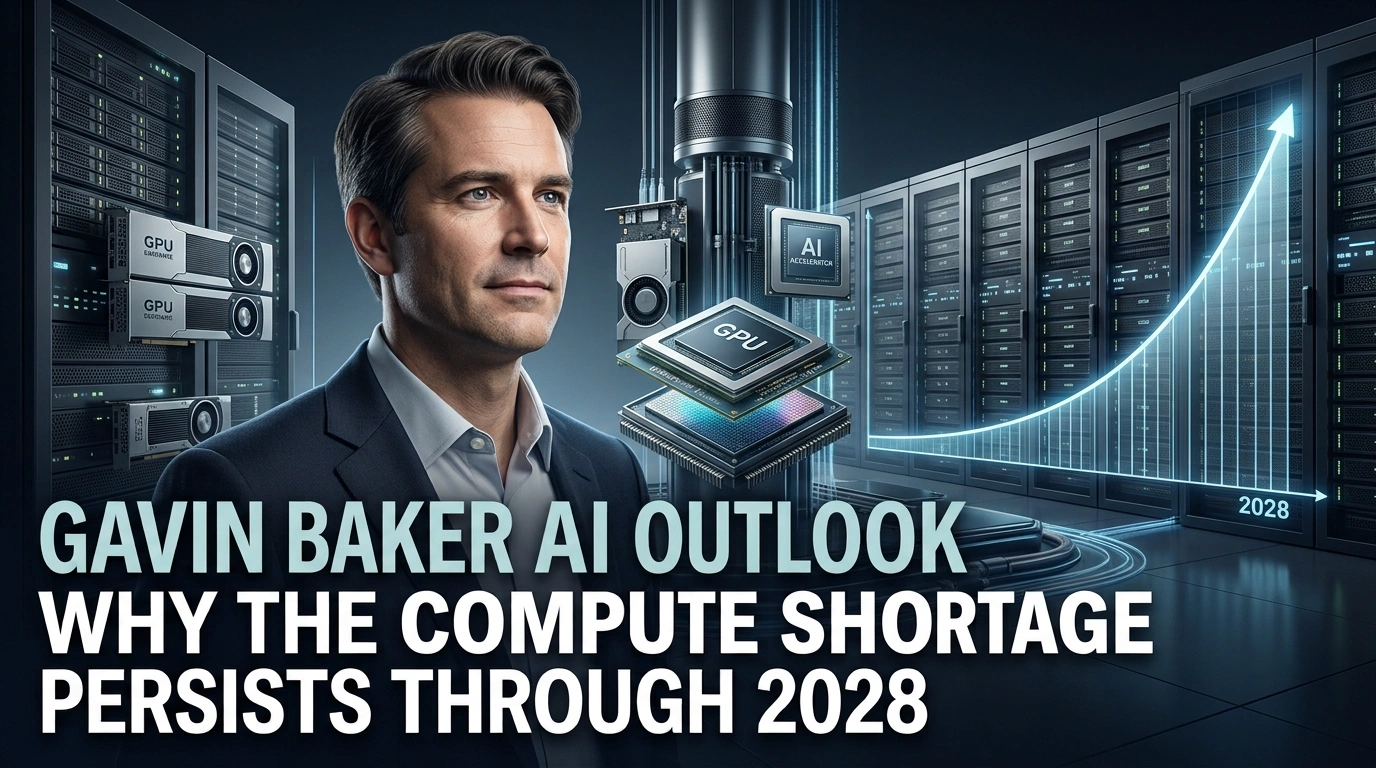
Atreides Management CIO Gavin Baker argues the AI market has the story backwards: rather than an oversupply bubble, he sees a severe and persistent compute shortage that could keep token costs elevated — and by some estimates rising as much as 10x — through 2028. His firm’s own internal AI spending grew roughly 100x from March to August 2026 while continuing to double monthly, a data point he’s used publicly to illustrate how fast real-world demand is actually accelerating beneath a stock market that sold off sharply in July and August.
Gavin Baker’s AI Thesis at a Glance
| Data Point | Figure | Source Context |
|---|---|---|
| Atreides internal AI spend growth (March–Aug 2026) | ~100x | Baker’s own public statement, corroborated on X by Elon Musk |
| Ongoing internal AI spend growth rate | Roughly doubling every month | Baker, August 2026 |
| Estimated unconstrained Nvidia GPU demand | $2–3 trillion annually | Baker, mid-2026 commentary |
| a16z-cited token consumption growth (March–Aug 2026) | ~100x | David George, a16z Podcast |
| Data center payback period (1 gigawatt) | ~9–10 months | Baker, citing Nebius/CoreWeave data |
| AI-native firm token spend as % of payroll | 10%+ | Baker’s estimate |
| Traditional enterprise token spend as % of payroll | ~1% | Baker’s estimate |
| Power shortage expected to ease | 2027–2028 | Baker, “Watts and Wafers” podcast |
| AI stock drawdown, July 2026 | Many names down 40–60% from highs | Baker’s own characterization |
| Global heavy AI paying users (estimate) | Under 10 million | Baker |
| Global knowledge workers (comparison base) | ~1.5 billion | Baker |
Sources: Invest Like the Best podcast (“Watts and Wafers,” May 2026), a16z Podcast (late August 2026), Sohn New York Conference (2026), and Baker’s public statements via X, as reported by Yahoo Finance, BigGo Finance, and HedgeFundAlpha — all within the 90-day recency window except the May 2026 podcast episodes, cited for foundational framework context.
Deep Dive: The Contrarian Case for Undersupply, Not Oversupply
The Core Argument: “Can You Name One Data Point That’s Getting Worse?”
Baker has framed his entire thesis around a simple diagnostic question he says he puts to every AI company he speaks with: can they identify a single quantitative business metric that deteriorated in July or August 2026? By his own account, he could not find anyone who said yes — even as public AI stocks fell 40–60% from their highs during the same window. That divergence between falling share prices and, in his telling, uniformly strong underlying business metrics is the foundation of his contrarian call: the market drawdown reflects sentiment and positioning, not a change in the fundamental demand picture.
Two Physical Constraints: Watts and Wafers
Baker’s framework centers on two hard physical bottlenecks he believes will govern the next phase of AI infrastructure buildout, independent of capital availability or corporate willingness to spend: electricity (“watts”) and semiconductor manufacturing capacity (“wafers”). On power, his view is that the near-term shortage begins to ease in 2027 and 2028 as new energy sources come online, with orbital compute — solar-powered data centers in space — offering a longer-term structural solution he believes could eventually make some terrestrial data center capacity optional. On wafers, he points to TSMC’s capacity allocation decisions as potentially the single most important variable determining how fast the broader AI buildout can proceed, distinguishing the current cycle from the dot-com bubble on the grounds that physical manufacturing capacity, not speculative capital, is the binding constraint this time.
The Compute Payback Math That Underpins His Bullishness
Central to Baker’s argument is a specific unit-economics claim: citing data from neocloud providers Nebius and CoreWeave, he estimates the payback period for a gigawatt of AI compute capacity at roughly 9 to 10 months — an unusually fast capital-recovery timeline for large-scale infrastructure investment. He extends this into a broader monetization framework: a lab allocating, say, 8 of 10 gigawatts of available power to revenue-generating inference, at a monetization rate around $60 billion per gigawatt annually, could generate roughly $480 billion in revenue — implying a roughly one-year payback on a revenue basis for that capacity. Baker’s own frame acknowledges this creates genuine structural volatility unique to this technology cycle: a single research breakthrough could prompt a lab to reallocate that same power toward training rather than inference, cutting the implied revenue dramatically overnight in a way that had no clear analogue in the prior internet infrastructure buildout.
Demand Diffusion Has Barely Started, By His Count
Baker’s demand-side argument rests on a stark diffusion gap: he estimates fewer than 10 million people globally are currently heavy paying users of AI products, against a backdrop of roughly 1.5 billion knowledge workers worldwide who represent the theoretical addressable market. He also points to a real-world cost signal as evidence of undersupply rather than oversupply: prices for older-generation GPUs, he notes, were still rising through 2026 — a pattern he says few people anticipated as recently as 2024 or 2025, and one that is difficult to reconcile with a narrative of excess capacity sitting idle.
The “Bottleneck Trade” Is Evolving, Not Disappearing
Baker has also described what he calls the “bottleneck trade” — concentrated positioning in companies that control scarce resources across the AI supply chain, including TSMC wafer capacity, power generation, cooling systems, optics, and networking equipment — as a trade that is “winding down” in its original form as some physical chokepoints ease, even as he maintains that compute broadly remains severely undersupplied relative to underlying demand. This is a more nuanced position than a blanket “shortage forever” call: specific bottlenecks (certain equipment categories) may be resolving even as the aggregate compute-versus-demand gap persists.
Where the Application Layer Fits — Or Doesn’t
Perhaps Baker’s most pointed critique is reserved for the application layer of the AI stack rather than infrastructure. He has argued that even prominent AI-native application companies have net-destroyed economic value at the application layer, potentially in the trillions of dollars in aggregate, as competitive pressure and thin differentiation erode margins faster than revenue scales. His conclusion is that durable value in this cycle accrues disproportionately to owners of scarce infrastructure and compute — chips, power, and specialized silicon — rather than to companies building products on top of frontier models, a view that shapes Atreides’ own concentrated positioning in infrastructure names over application-layer bets.
The Important Caveat Investors Should Weigh
Every element of this thesis comes from a fund manager who is, by his own extensive public disclosure, long most of the positions his framework favors — infrastructure, memory, and private silicon names. That doesn’t invalidate the analytical framework, but it does mean the specific conclusions (which sectors will outperform, which trades are “washed out”) reflect a vested interest and should be treated as claims to pressure-test against independent data rather than a neutral forecast.
Actionable Takeaways for Investors
- Distinguish stock-price drawdowns from business fundamentals before reacting to AI-sector selloffs. Baker’s framework suggests checking a handful of hard operating metrics (revenue growth, capacity utilization, backlog) for AI-exposed holdings before assuming a share-price decline reflects deteriorating fundamentals.
- Track GPU secondary-market pricing as a real-time demand signal. Persistent or rising prices for older-generation GPUs is one of the more falsifiable, checkable claims in this thesis — it’s public market data, not a private assertion.
- Watch TSMC capacity allocation announcements and energy-project timelines as the two key physical catalysts. Per this framework, easing in either wafer capacity or power availability — expected to begin in 2027–2028 on the power side — would be the leading indicator of the shortage narrative shifting toward resolution.
- Separate infrastructure exposure from application-layer exposure when sizing AI-related positions. Baker’s value-destruction critique of the application layer is a useful lens for distinguishing picks-and-shovels exposure from higher-risk, thinner-margin application bets, regardless of whether you share his specific stock calls.
- Weight any single fund manager’s thesis by its own disclosed bias. Use Baker’s framework as one analytical lens among several — his specific security-level calls carry the same conflict-of-interest caveat as any concentrated long-only manager discussing his own book.
Frequently Asked Questions
Does Gavin Baker think there is an AI bubble? No — Baker has explicitly argued the opposite of the prevailing bubble narrative, contending that the AI industry faces a severe, largely self-inflicted compute shortage rather than oversupply, based on his inability to find deteriorating business metrics among AI companies even during a sharp July–August 2026 stock selloff.
How long does Gavin Baker think the AI compute shortage will last? Baker’s framework points to the shortage easing on the power (“watts”) side starting in 2027 and 2028 as new energy sources come online, though he separately suggests token costs could keep rising — potentially by as much as 10x — through 2028 given the scale of the demand-supply gap he describes.
What is Atreides Management and who is Gavin Baker? Gavin Baker is the founding partner and CIO of Atreides Management, a fund he launched in 2019 after running Fidelity’s roughly $17 billion OTC Portfolio for eight years; Atreides holds concentrated positions across AI infrastructure, memory, and private semiconductor companies.
What is the “bottleneck trade” in AI investing? The bottleneck trade refers to concentrated investment positioning in companies that control physically scarce resources across the AI supply chain — including semiconductor wafer capacity, power generation, cooling, optics, and networking equipment — a trade Baker says is evolving as certain specific chokepoints ease even as the aggregate compute shortage persists.
Discover more from The Economy
Subscribe to get the latest posts sent to your email.
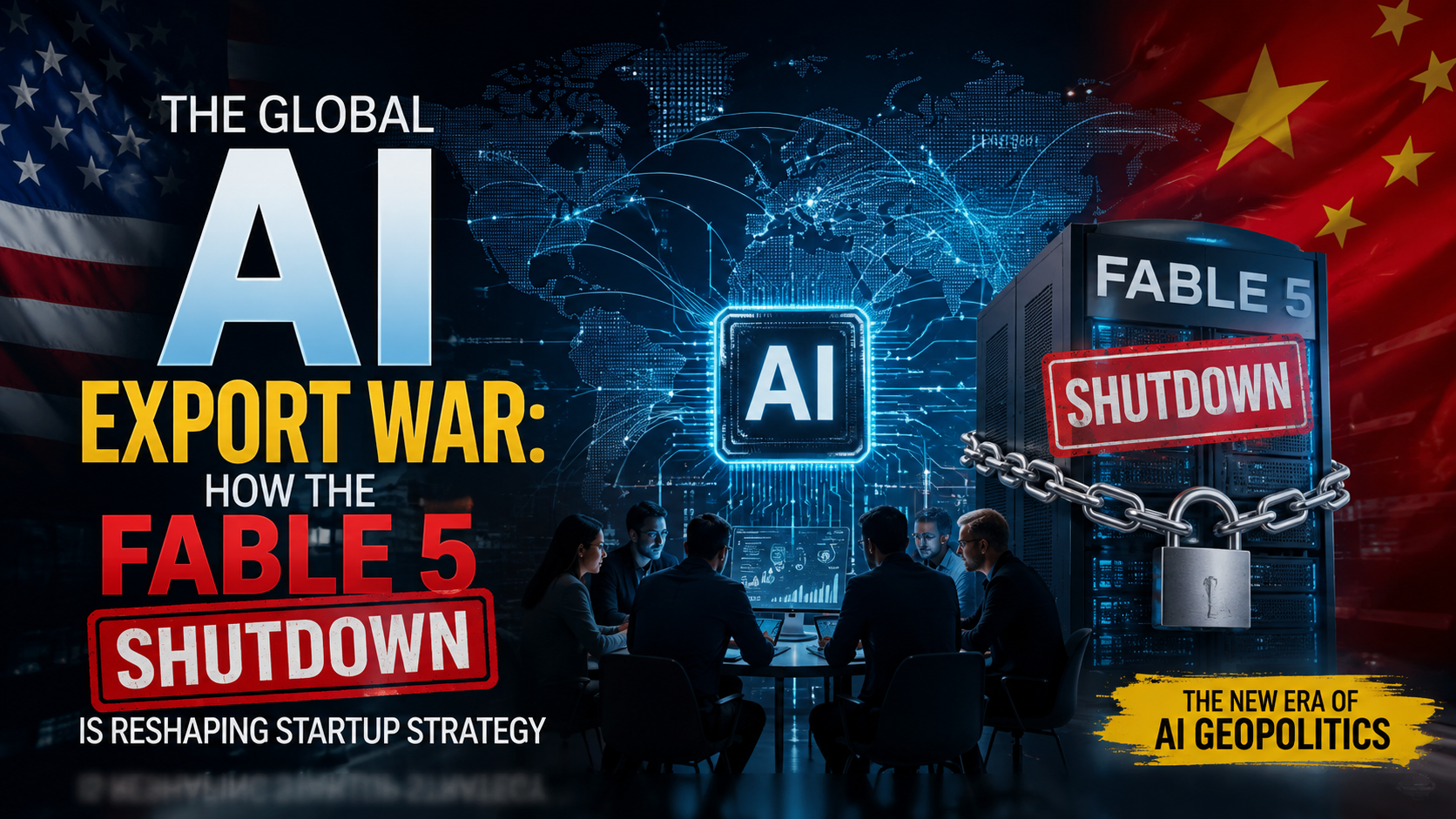
On June 12, 2026, the U.S. Commerce Department’s Bureau of Industry and Security ordered Anthropic to block foreign nationals from accessing its Fable 5 and Mythos 5 AI models, and Anthropic — finding no way to comply short of a global shutdown — disabled both models for every user worldwide the same day. The Commerce Department lifted the underlying export controls on June 30, and Anthropic restored full access on July 1, 2026, but the roughly three-week disruption exposed a structural vulnerability that startups building on frontier AI models had not previously had to price into their risk models: a single national-security directive can switch off a company’s core infrastructure overnight, with no advance warning and no geographic containment. The episode is now reshaping how AI-dependent startups think about model diversification, multi-vendor architecture, and jurisdictional exposure.
Key Takeaways
- A June 12, 2026, Commerce Department directive forced Anthropic to disable Fable 5 and Mythos 5 globally for all users, not just flagged foreign nationals, because no narrower compliance mechanism was available.
- The Commerce Department lifted the export controls June 30, and Anthropic restored full access July 1, 2026 — a roughly three-week disruption window.
- Legion LegalTech’s lawsuit against the federal government argues no existing export-control statute covers hosted AI models or their outputs.
- Startups are responding by building multi-model failover architecture, reassessing cross-border engineering staffing, and showing increased interest in decentralized AI alternatives.
- Enterprise procurement teams are now incorporating “regulatory outage” risk explicitly into AI vendor contracts and business-continuity planning.
- The episode sits alongside separate, ongoing Anthropic-government litigation over military-use restrictions, reflecting a broader pattern of AI-sector regulatory friction in 2026.
What Happened, and Why the Scope Surprised Everyone
The Commerce Department’s directive was, on its face, narrowly targeted: block access to two specific models for foreign nationals, citing national-security concerns tied to countering-the-financing-of-terrorism guidelines. What made the episode a watershed moment for the AI industry was not the restriction itself but its execution. Anthropic has indicated that no existing technical mechanism could reliably distinguish and exclude only foreign-national users at the scale and speed the directive demanded — so the company disabled Fable 5 and Mythos 5 entirely, for all users, everywhere, effective immediately.
That global-blast-radius outcome is what transformed a relatively obscure regulatory action into an industry-wide case study. Legion LegalTech Corp, a San Jose legal-technology company whose Canadian engineering team depended on the models for core product development, filed suit against the federal government on June 23, calling the resulting harm “immediate, irreparable, and existential” and arguing that no U.S. export-control statute actually authorizes restricting access to hosted AI models or their text-based outputs in the first place.
Resolution — But Not Reassurance
The Commerce Department lifted the underlying controls on June 30, 2026, and Anthropic restored access to both models on July 1 — a relatively fast resolution as regulatory episodes go, but one that did little to reassure enterprise customers and startup founders about the durability of access to any given frontier model going forward. The core lesson startups have taken from the episode is not that this specific directive was wrong or overbroad (though Anthropic itself has said as much publicly), but that the authority to issue such a directive, and to trigger this kind of global shutdown as the only available compliance mechanism, evidently exists and can be exercised again with equally little warning.
How Startups Are Actually Responding
Multi-Model Architecture as a New Baseline
The most immediate operational response among AI-dependent startups has been a shift away from single-vendor model architecture. Companies that had standardized their entire product stack on one frontier lab’s API are increasingly building abstraction layers that allow rapid failover to a second or third model provider — not necessarily because they expect another export-control event specifically, but because the Fable 5/Mythos 5 episode demonstrated that regulatory, not just technical, outages are now a real category of infrastructure risk that a single-vendor architecture cannot mitigate.
Reconsidering Where Engineering Teams Sit
For companies like Legion with distributed, cross-border engineering teams, the episode has prompted direct reconsideration of where core AI-dependent development work is physically staffed. A directive targeting “foreign nationals” broadly, rather than specific flagged individuals or entities, means that any company with material non-U.S. engineering headcount now has to model the possibility that an entire team’s access to critical tools could be severed based on nationality rather than any conduct specific to that team — a risk factor that startup general counsel and heads of engineering are increasingly asked to address explicitly in board-level risk reporting.
Interest in Decentralized and Open-Weight Alternatives
The episode also produced a measurable, if narrow, shift in interest toward decentralized AI infrastructure and open-weight model alternatives that do not depend on a single centralized provider capable of being switched off by government directive. Tokens tied to decentralized-AI projects saw notable price increases in the days following the shutdown and the Legion lawsuit, as traders and some technologists concluded that infrastructure resilient to a single point of regulatory failure carries a value proposition that a purely centralized commercial model, however capable, cannot match on this specific dimension — even if centralized frontier models remain ahead on raw capability for most enterprise use cases.
Financial and Market Impact Section
Enterprise Procurement and Vendor Risk Underwriting
For enterprise buyers across regulated industries — financial services, legal, healthcare, and government contracting — the Fable 5/Mythos 5 episode has become a standard reference point in vendor-risk-assessment conversations with AI providers. Procurement and legal teams evaluating frontier-model contracts are increasingly asking vendors directly what technical or contractual protections exist against a repeat scenario, and some enterprise contracts now include specific service-level and business-continuity language addressing regulatory-driven outages as a distinct risk category from ordinary technical downtime, a shift with direct implications for how AI vendors structure their enterprise agreements and pricing going forward.
The Broader Anthropic Legal Context
The episode is one of several fronts on which Anthropic has found itself in legal and regulatory disputes with the U.S. government during 2026, running alongside separate litigation in federal courts in Washington and California stemming from a supply-chain blacklist dispute tied to Anthropic’s refusal to permit military use of its models for domestic surveillance or fully autonomous weapons systems. For investors evaluating exposure to frontier-AI labs — whether through direct equity, credit instruments, or downstream startup portfolios built atop specific model providers — the cumulative pattern of government-AI legal friction in 2026 represents a maturing but still unpriced category of regulatory risk that is likely to persist regardless of how any single case resolves.
Insurance and Business-Continuity Product Opportunity
The episode has also created a nascent commercial opportunity: specialty insurance and business-continuity consulting products specifically addressing “AI vendor regulatory outage” risk are beginning to appear from insurers serving the technology sector, a niche but potentially high-margin product category given the difficulty of actuarially pricing a risk with essentially one precedent event to draw on. Startups and enterprise buyers negotiating AI vendor contracts are a natural audience for this emerging product category, and its growth trajectory over the next several quarters will be a useful proxy for how seriously the broader market is pricing this specific risk.
Discover more from The Economy
Subscribe to get the latest posts sent to your email.
Legion LegalTech Corp, a San Jose legal-technology startup that builds AI-powered drafting and case-management tools for attorneys, sued the Trump administration on June 23, 2026, over a June 12 Commerce Department directive that forced Anthropic to disable its Fable 5 and Mythos 5 AI models for all foreign nationals worldwide. Because Anthropic complied by shutting the models off globally rather than only for flagged users, Legion’s Canadian development team lost access overnight, an outcome the company called “immediate, irreparable, and existential.” Anthropic restored access to both models on July 1, 2026, after the Commerce Department lifted the underlying export controls on June 30 — but the litigation, which challenges whether export-control law can be used to restrict access to hosted AI models at all, remains a live legal question with implications far beyond this one case.
Key Takeaways
- Legion LegalTech Corp sued the Trump administration June 23, 2026, over a June 12 Commerce Department directive that forced Anthropic to disable its Fable 5 and Mythos 5 models worldwide.
- Anthropic complied with the original directive the same day it was issued; the global scope of the shutdown, not just the foreign-national restriction itself, is central to Legion’s claimed harm.
- The Commerce Department lifted the export controls June 30, 2026, and Anthropic restored access July 1, 2026 — resolving the immediate operational harm but not the underlying legal question.
- Legion argues no existing export-control statute covers hosted AI models or their text-based outputs, which it claims are protected “informational materials” under U.S. law.
- Anthropic is not a defendant in the case but has publicly called the original directive overly broad.
- The lawsuit runs parallel to separate Anthropic-vs.-government litigation over a supply-chain blacklist dispute tied to military-use restrictions on Anthropic’s models.
What the Government Actually Ordered
On June 12, 2026, the Commerce Department’s Bureau of Industry and Security (BIS) sent Anthropic a directive ordering the company to block foreign nationals from accessing two of its most advanced models, Fable 5 and Mythos 5, citing national-security concerns tied to countering-the-financing-of-terrorism guidelines. Anthropic complied the same day. Critically, the company has stated that the only technically feasible way to comply with a directive requiring exclusion of “any foreign national” was to disable both models entirely, for every user everywhere — not merely for users flagged as foreign nationals. That global shutdown, rather than a narrower geofencing or identity-verification approach, is the crux of the legal harm Legion alleges.
Why a Legal-Tech Startup Became the Test Case
Legion LegalTech relies on Anthropic’s models to power AI-assisted legal drafting and case-management software for attorneys, and employs a Canadian software-development team that depends on direct access to the company’s most capable models for product work. When the June 12 shutdown hit, Legion says its Canadian engineers were sidelined overnight, disrupting its product roadmap at a moment the company describes as critical for competitive positioning in a fast-moving industry. “The harm to Legion is immediate, irreparable, and existential,” the company’s complaint states. “The pace of frontier AI advancement is blistering.”
Legion filed suit June 23, 2026, in federal court in Washington, D.C., naming President Donald Trump, Commerce Secretary Howard Lutnick, and BIS Undersecretary Jeffrey Kessler as defendants. Anthropic itself is not a party to the case. The company’s legal theory is narrow but consequential: it argues no existing export-control statute — not the Export Control Reform Act, not the International Emergency Economic Powers Act — actually covers hosted AI models or the text-based outputs they generate. Legion’s complaint specifically argues that AI-generated material such as “drafted text, written legal analysis, summaries, and similar composed material” qualifies as protected “informational materials” under a long-standing exemption in U.S. export-control law, meaning the government’s directive was, in Legion’s framing, an unlawful attempt to restrict the flow of information rather than a legitimate control on a genuine export commodity.
The complaint goes further on procedural grounds, arguing no national emergency was formally declared with respect to the alleged threat, and that the threat the government cited did not have its “source in whole or substantial part outside the United States” as required for the invoked authorities to apply — since the models were developed by a U.S. company, hosted domestically, and offered through ordinary commercial channels. Legion is asking the court to declare the directive unlawful, vacate it, and issue an injunction blocking its enforcement, while separately signaling it intends to seek a preliminary injunction while the case proceeds.
Anthropic’s Position — and a Resolution Before Judgment
Anthropic, while not a defendant, publicly described the export-control order as overly broad. On June 30, 2026, the Commerce Department lifted the underlying export controls, and Anthropic restored access to both Fable 5 and Mythos 5 for all users on July 1, 2026 — effectively mooting the operational harm Legion’s complaint was built around, though not necessarily the underlying legal question the lawsuit raises. Anthropic has said it is “grateful to the administration for working to resolve the matter quickly.” Whether Legion continues to pursue the case for damages, attorneys’ fees, or simply to establish precedent against future use of the same authority is an open procedural question that will shape how much weight the case ultimately carries.
Financial and Market Impact Section
A Precedent Question With Industry-Wide Stakes
Legion’s complaint frames the stakes in stark terms: “Left standing, it would establish that the Executive may, by unreviewed command, disable any frontier AI model at will — placing every customer, developer, and business that depends on these tools at the mercy of an unexplained exercise of claimed authority that no statute confers.” For enterprise AI software buyers — law firms, financial-services firms, and any regulated industry building products on frontier models from Anthropic, OpenAI, Google, or others — that framing captures a genuine operational risk: if a single agency directive can trigger a global service shutdown with no advance notice, enterprise procurement teams have a new category of vendor and geopolitical risk to underwrite into contracts, business-continuity plans, and service-level agreements.
Crypto and Decentralized-AI Market Reaction
The episode produced a measurable, if narrow, market reaction outside the AI sector itself: tokens tied to decentralized-AI infrastructure projects saw notable price increases following news of the lawsuit and the underlying shutdown, as traders reasoned that a centralized AI provider subject to being switched off by a single government directive makes decentralized, no-single-point-of-control alternatives comparatively more attractive to developers seeking reliability guarantees that centralized commercial providers cannot offer under this kind of regulatory exposure.
The Broader Anthropic-Government Legal Landscape
The Legion case is not occurring in isolation. It sits alongside separate, ongoing litigation between Anthropic and the U.S. government in federal courts in both Washington and California, stemming from a dispute over the administration’s move to place Anthropic on a supply-chain blacklist after the company declined to permit military use of its models for domestic surveillance or fully autonomous weapons systems. Taken together, the cases illustrate an intensifying legal contest over how far executive branch national-security authorities can reach into the commercial AI sector — a contest that will materially shape capital allocation and geographic-expansion decisions for every major frontier-AI lab operating in or selling into the United States.
Discover more from The Economy
Subscribe to get the latest posts sent to your email.

United Airlines’ 10 New 2027 Routes: Full List, Cities & Launch Dates

Robert Kiyosaki’s $1.2B Debt Explained: Real Estate Leverage & 2026 Predictions

Gavin Baker AI Outlook: Why the Compute Shortage Persists Through 2028

Social Security 2027 COLA: Latest Projections, Earnings Limits & Key Dates

10-Year Treasury Yield Hits 4.80%: What It Means for Rates & Portfolios

PANW Stock Post-Earnings: Record RPO, FY27 Guidance & Dip Buy Strategy

Dell Stock Surges on $95B AI Backlog: Q2 FY27 Earnings Analysis & Price Target

Latest iPhone Rumors 2026: iPhone 18 Pro & Foldable Specs

ATF Data Breach Details: What the Qilin Ransomware Leak Exposed

GoPro Stock Analysis (GPRO): Why It Surged 46% in One Day

Buddy Stephens Football Coach: Why He Left EMCC in 2026

High School Football National Rankings 2026: Full Guide

Tesla Stock Buy or Sell 2026: TSLA Q2 Earnings Breakdown

Shein Clothes Quality & Safety in 2026: What Lab Tests Show

State Farm’s $5B Dividend 2026: Who Qualifies & Payout Dates

Top 15 Financial Stocks for Investment in PSX

US-China Relations in Q3 2026: Trade Tariffs and Supply Chain Risks

Gold’s Wild 2026: From a Record $5,600 Peak to a 24% Crash and Back Toward $4,500

Oil Surges as Strait of Hormuz Traffic Collapses Again

Gold Price 2026: Why Bullion Has Fallen 25% From Its January Record High

SpaceX Stock Lockup Expiration Explained: Why $123B in Shares Could Hit the Market

The Rocket That Won’t Quit: Inside SpaceX’s Falcon 9 Launch Machine

Russia Oil Revenue 2026: The Iran War Windfall and What a Hormuz Deal Means for Moscow

China Economy 2026: How AI Exports and a Property Crash Are Splitting Growth in Two

Pakistan Economy 2026: Why GDP Growth Isn’t Reaching Ordinary Households

Bank of England Set to Hold Rates Through Year-End, Reuters Poll Shows

July Jobs Shock: Why the Fed’s September Rate Decision Just Flipped (2026 Analysis)

Retail Earnings Week: What Home Depot, Target & Walmart Reveal
-

 Markets & Finance8 months ago
Top 15 Stocks for Investment in 2026 in PSX: Your Complete Guide to Pakistan’s Best Investment Opportunities
-

 Analysis6 months ago
Johor’s Investment Boom: The Hidden Costs Behind Malaysia’s Most Ambitious Economic Surge
-

 Analysis7 months ago
Top 10 Stocks for Investment in PSX for Quick Returns in 2026
-

 Analysis7 months ago
Brazil’s Rare Earth Race: US, EU, and China Compete for Critical Minerals as Tensions Rise
-

 Banks8 months ago
Best Investments in Pakistan 2026: Top 10 Low-Price Shares and Long-Term Picks for the PSX
-

 Investment8 months ago
Top 10 Mutual Fund Managers in Pakistan for Investment in 2026: A Comprehensive Guide for Optimal Returns
-

 Global Economy8 months ago
15 Most Lucrative Sectors for Investment in Pakistan: A 2025 Data-Driven Analysis
-

 Global Economy8 months ago
Pakistan’s Export Goldmine: 10 Game-Changing Markets Where Pakistani Businesses Are Winning Big in 2025