
Business
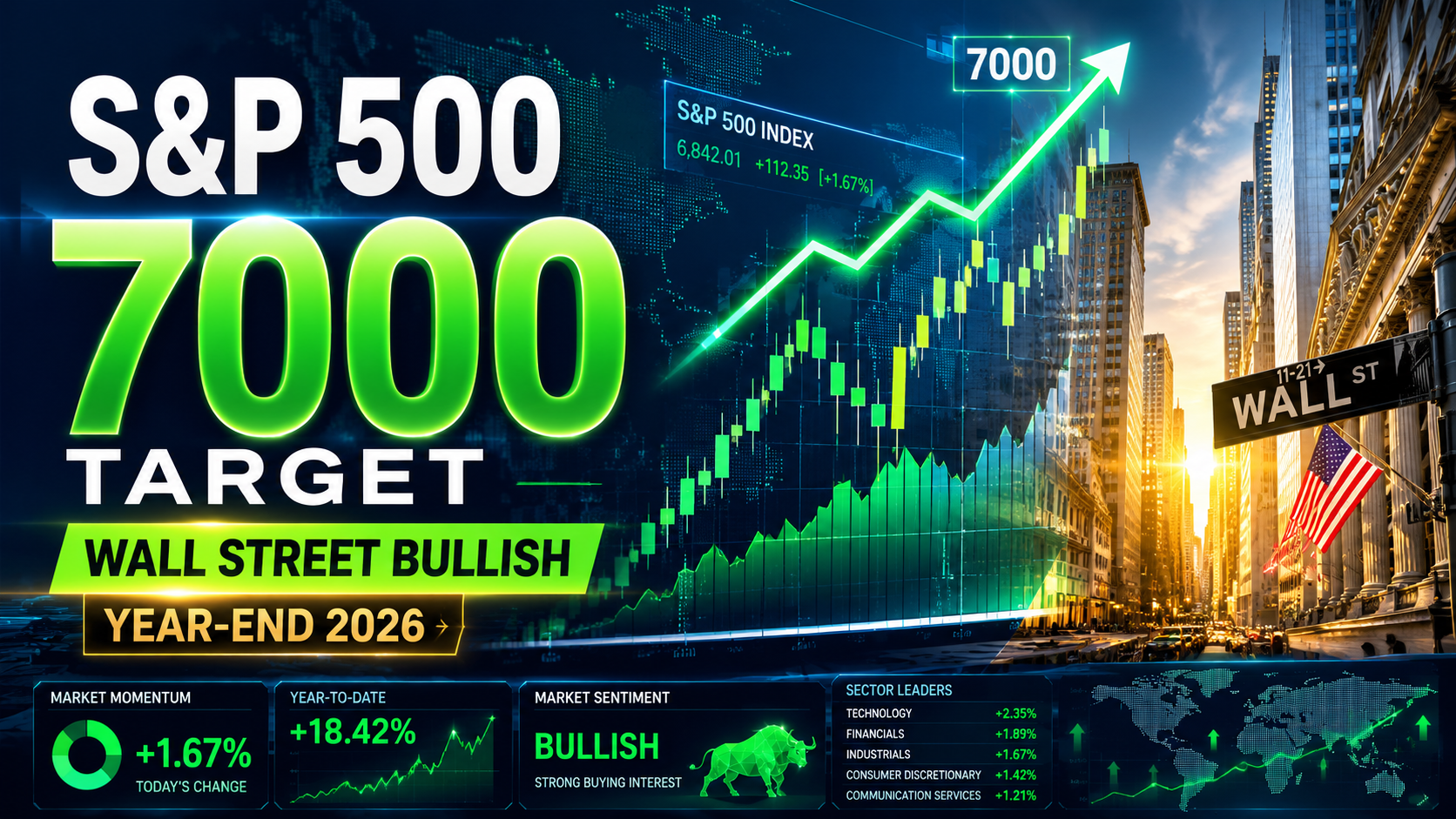
S&P 500 7000 Target: Wall Street’s Bullish Case for Year‑End 2026

Earnings Expansion, AI Capex, and Dovish Pivot Fuel the Rally
Goldman Sachs has lifted its year‑end 2026 target for the S&P 500 to 7,000, implying a 15% upside from the index’s late‑June level of around 6,100 (Goldman Sachs US Weekly Kickstart, June 2026). The call is not an outlier: Morgan Stanley and Bank of America have issued similarly bullish forecasts, and the consensus among strategists tracked by Bloomberg is 6,800. The S&P 500 7000 target is built on three pillars: a robust expansion in corporate earnings, a massive capital‑spending cycle in artificial intelligence, and a Federal Reserve that is expected to begin cutting rates in the fourth quarter as inflation finally recedes.
Earnings Expansion Forecast: The Numbers
Goldman’s top‑down earnings forecast for S&P 500 companies in 2026 is $260 per share, rising to $285 in 2027. That represents a 9% growth rate, well above the 20‑year average of 5–6%. The earnings expansion forecast is broad‑based. Technology remains the star, with AI‑related demand for cloud services, chips, and software driving 20%+ earnings growth for the “Magnificent Seven.” But the rally has broadened: financials are benefiting from a steepening yield curve and increased dealmaking, industrials are riding the reshoring and infrastructure wave, and even energy is surging on $95 oil.
Margins are holding up better than feared. Despite sticky wage growth, productivity gains from AI and automation are offsetting labor costs. The S&P 500 aggregate operating margin is estimated at 13.2%, near all‑time highs. Critically, buybacks—expected to exceed $1 trillion globally in 2026—are reducing share counts by 1.5% per year, mechanically boosting earnings per share (S&P Dow Jones Indices, Buyback Report Q1 2026).
AI Capex: A $300 Billion Super‑Cycle
The second pillar is a capital‑spending super‑cycle on artificial intelligence. Goldman estimates that total capital expenditure by US‑listed tech giants—Microsoft, Alphabet, Amazon, Meta, and Apple—plus semiconductor firms will reach $310 billion in 2026, up 35% from 2025. This spending is building out the data centers, specialized chips (GPUs, TPUs), and networking infrastructure needed to train and deploy large language models. While some investors worry about returns, the early evidence is compelling: Microsoft’s Azure AI services revenue is growing at 50%, and enterprise adoption of generative AI is cutting costs in legal, customer service, and R&D at a rate that justifies the investment (Microsoft Q1 FY2026 Earnings).
The capex boom is cascading through the economy. Nvidia’s next‑generation Blackwell architecture is sold out through 2027. Electrical equipment, cooling systems, and renewable energy to power these data centers are seeing a surge in orders. This capital investment cycle is boosting construction employment and industrial production, contributing to the “no‑landing” scenario in which growth remains resilient even as rates stay high.
The Dovish Pivot Narrative
The third leg of the bull case is monetary policy. Futures markets are pricing in a 70% probability that the Fed will cut the federal funds rate by 25 basis points in November 2026, with another cut in December. The core PCE deflator, which had been stuck in the 2.8–3.2% range, is finally showing signs of moderation as the lagged impact of tight policy, cooling rents, and falling used‑car prices feeds through (Bureau of Economic Analysis, May 2026 PCE Release). A dovish pivot would lower the discount rate applied to future earnings, supporting higher valuation multiples. Goldman’s model assumes a forward P/E of 21.5x, consistent with a soft‑landing environment.
The economic backdrop for this scenario is a “soft landing lite”: GDP growth slows to 1.5% but does not contract, the unemployment rate ticks up to 4.3%, and the housing market stabilizes. Consumer spending, underpinned by rising real wages at the lower end and wealth effects at the top, holds up. Corporate credit spreads remain tight, allowing firms to refinance debt comfortably.
Risks to the Bull Case
No forecast is without risks. The primary danger is a reacceleration of inflation, forcing the Fed to hike again, which would crush the P/E multiple. A second risk is a geopolitical shock—an escalation in the Taiwan Strait or a broader Middle East conflict—that disrupts supply chains and spikes energy prices. A third risk is a fiscal confidence crisis that pushes the 10‑year Treasury yield to 6%, as discussed in Article 5, making bonds competitive with equities. Finally, an AI earnings disappointment—if enterprise adoption slows or regulation curtails deployment—could puncture the capex narrative.
Positioning for 7,000
Investors aiming to capture the upside are overweight US equities, particularly growth and cyclical value. The trade of the year has been to own the “AI infrastructure stack” (semiconductors, data centers, utilities) and the “reshoring/industrial renaissance” basket. The equal‑weighted S&P 500, which has lagged the market‑cap‑weighted index for years, is finally outperforming as the rally broadens, a sign of health. Fixed‑income allocations are being concentrated in short‑to‑intermediate corporates, capturing yield while avoiding duration risk if the bond market sells off. Gold and Bitcoin also remain in portfolios as hedges against fiscal and monetary uncertainty.
The S&P 500 at 7,000 would represent a 40% total return from the start of 2023, an extraordinary bull run. It is predicated on a Goldilocks combination of AI‑driven productivity, disinflation, and stable geopolitics. The margin for error is thin, but for now, the path of least resistance is higher.
Discover more from The Economy
Subscribe to get the latest posts sent to your email.



- A Utah ice cream maker and a crypto-adjacent prediction market have almost nothing in common commercially — yet both landed in August 2026 headlines for the same underlying reason: unresolved legal and regulatory exposure eventually forces a reckoning.
- Rebel Creamery’s $23.785 million trade dress judgment pushed it into Chapter 11 bankruptcy; Polymarket’s unresolved regulatory status cost it a direct banking relationship with JPMorgan Chase.
- Together, the two cases offer a timely governance lesson: legal and regulatory risk needs to be tracked and priced at the board level long before it becomes a balance-sheet or banking-access crisis.
Two Very Different Companies, One Shared Failure Mode
Rebel Creamery sells keto ice cream at Walmart and Kroger. Polymarket runs a prediction-market platform for event contracts. There’s no commercial overlap between them, and nothing links the two stories except timing — both broke into major business coverage within days of each other in mid-August 2026. But set side by side, they illustrate the same structural failure mode with unusual clarity: a legal or regulatory question that a company treats as a background risk for years can, without warning, convert into an existential capital or operational event.
For Rebel Creamery, that conversion took five years — from a 2021 trade dress lawsuit to a 2026 judgment that exceeded the company’s total asset base, forcing a Chapter 11 filing just weeks after the ruling. For Polymarket, the exposure has been more chronic: years of operating in a contested regulatory category culminated not in a single court judgment, but in a major institutional bank quietly declining to keep providing core banking services — a slower-motion, but no less consequential, form of the same risk materializing.
The Common Thread: Risk That Sits Outside the P&L
What makes both cases instructive for corporate governance is that neither risk showed up as an operating cost until it was too late to manage cheaply. Rebel’s packaging decisions in 2018 didn’t register as a balance-sheet risk at the time; by 2026, the resulting judgment was larger than the company’s entire asset base. Polymarket’s regulatory ambiguity didn’t show up in its transaction volume or user growth — by several measures, including a combined $1.6 billion in investment from Intercontinental Exchange, the business has been thriving — but it was enough to cost the company a marquee banking relationship regardless.
That’s the pattern worth internalizing: trademark litigation and regulatory scrutiny exposure often don’t correlate with a company’s day-to-day commercial performance. A fast-growing, profitable business can still be carrying dormant legal or regulatory risk large enough to force a restructuring or sever a critical institutional relationship, with little warning until the event itself arrives.
A Practical Framework for Boards and Founders
Drawing directly from both cases, four governance practices stand out as the difference between risk that gets managed proactively and risk that becomes a crisis:
1. Price legal and regulatory exposure like a contingent liability, not a legal-department line item. Rebel Creamery’s board-level financial planning, based on the public record, does not appear to have treated the Van Leeuwen litigation as a balance-sheet-scale risk until the judgment landed. Contingent liabilities from pending litigation belong in the same governance conversation as debt covenants and capital planning, particularly once a case reaches active trial.
2. Build in independent verification before scaling a design, brand, or business model that sits near a competitor’s established territory. Whether it’s packaging trade dress or operating in a category with unsettled federal classification, proximity to an established competitor or a contested regulatory category raises the stakes of any dispute that follows.
3. Diversify institutional relationships before you’re forced to. Polymarket’s exposure to a single major banking relationship meant that one bank’s risk-tolerance decision could materially affect its operations. Companies in regulatorily contested categories should treat banking-relationship concentration as a specific risk to manage, not an afterthought.
4. Treat early warning signals as governance inputs, not just customer service or PR noise. In the Rebel Creamery case, evidence of real-world consumer confusion reportedly existed years before litigation intensified. Escalating those signals to legal and governance functions early — rather than treating them as isolated complaints — is a low-cost way to surface risk before it compounds.
The Cost of Getting This Wrong Is Rising, Not Falling
Both stories are unfolding against a backdrop that makes this framework more urgent, not less. Corporate bankruptcy driven by IP litigation is not a new phenomenon, but the scale of trade dress and trademark judgments — disgorgement remedies tied to a defendant’s full profit stream from an infringing product line — means the downside case has gotten larger. And on the regulatory side, 2026’s active debate over banking access and “debanking” practices means that regulatory ambiguity is translating into institutional-relationship risk faster and more visibly than it has in prior cycles.
For general counsel, CFOs, and boards, the actionable takeaway from this week’s headlines isn’t about ice cream or prediction markets specifically — it’s a reminder to run a systematic audit of where legal and regulatory exposure sits dormant in the business today, and to price it before a court, or a bank, prices it for you.
Discover more from The Economy
Subscribe to get the latest posts sent to your email.
The Bureau of Labor Statistics’ July Consumer Price Index report, released Wednesday, August 12, showed headline CPI rising just 0.1% month-over-month, holding the annual inflation rate at 3.4% — a second consecutive month of cooling and a result that gives the Federal Reserve considerably more room to maneuver at its September meeting (BLS).
Inside the Numbers
The July reading followed a 0.4% monthly decline in June — the sharpest drop since April 2020 — as the initial energy shock from the U.S.-Iran conflict continued to fade. Trading Economics’ breakdown shows gasoline prices up 24.6% year-over-year in July, down from 26.7% in June, while fuel oil costs rose 39.1%, easing from 42.9% the prior month. Shelter inflation cooled slightly to 3.2% from 3.3%, and food inflation held steady at 3% (Trading Economics).
Economists polled ahead of the release had expected a similarly modest 0.1% headline increase and a 0.2% rise in core CPI, according to CNBC’s pre-release preview, with the report widely seen as “a big deal for the Fed” given how directly it would shape September rate-decision odds (CNBC).
Why This Report Matters More Than Usual
The July CPI print landed against the backdrop of a weak July jobs report that had already shifted market expectations sharply toward a rate cut. CNBC’s prediction-market tracking noted that the odds of a Fed hike in September “tumbled” following the disappointing jobs data, with the debate among traders shifting almost entirely toward the size of an eventual cut rather than its direction (CNBC Finance).
That combination — a softening labor market alongside genuinely cooling inflation — is precisely the setup the Fed has been waiting for since the Iran-war-driven energy spike complicated its policy path earlier in the year. With energy-related price pressures now clearly in retreat and the labor market showing real cracks, the case for holding rates restrictively into the fall has weakened considerably.
The Market Reaction
Broader financial markets have been trading on exactly this dynamic all week. CNBC’s live markets coverage from August 10 showed oil prices still elevated — Brent crude near $84.42 a barrel — as traders assessed mixed signals over whether a US-Iran deal to reopen the Strait of Hormuz would materialize, even as equity markets continued pricing in a more dovish Fed path (CNBC). By August 12, European and U.S. futures were mixed as attacks on vessels in the Red Sea and Gulf of Oman reignited some shipping-route concerns even as Strait of Hormuz reopening diplomacy continued to show incremental progress (CNBC).
What Comes Next
The Fed’s rate decision is still roughly a month away, and one more jobs report and a Personal Consumption Expenditures inflation reading will land before then. But Wednesday’s CPI data removes one of the last major obstacles to a September cut. The BLS has confirmed the next Consumer Price Index release — covering August data — is scheduled for September 11, 2026, just days before the Fed’s meeting, meaning that report will likely be the final, decisive input into the September decision (BLS).
For now, the combination of a cooling CPI print and a softening labor market has done what months of Fed commentary could not: it has largely settled the argument over the direction of the next move, leaving only the size of the cut still genuinely in question.
What was the US inflation rate in July 2026?
US CPI inflation held at 3.4% year-over-year in July 2026, with prices rising just 0.1% month-over-month, reinforcing market expectations for a Federal Reserve rate cut in September.
Discover more from The Economy
Subscribe to get the latest posts sent to your email.
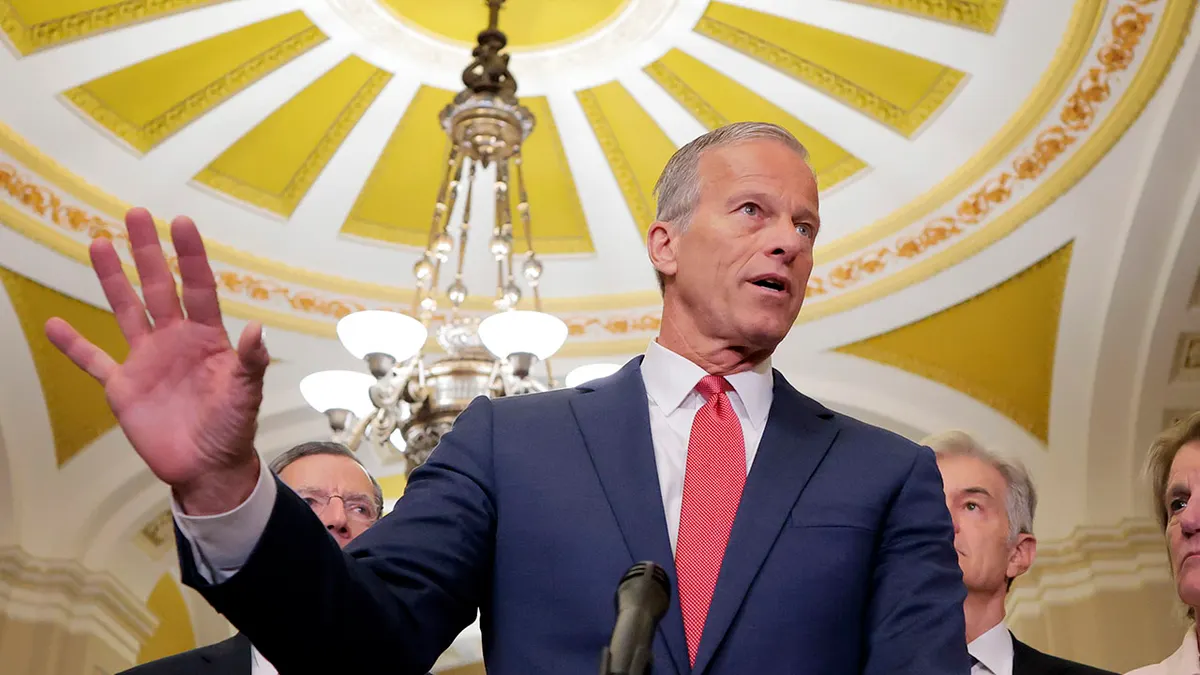
The U.S. Senate passed a sweeping new sanctions bill on Friday, August 7, targeting Moscow’s energy revenues in what could become the most consequential piece of Russia-related legislation since the war in Ukraine began. The bill, dubbed the “Lindsey O. Graham Sanctioning Russia and Iran Act of 2026,” authorizes tariffs of up to 100% on countries that continue importing Russian oil and gas (Al Jazeera).
A Bill Years in the Making
The legislation had been stalled for months, previously blocked by the Trump administration before securing White House approval in the days before its passage. Senator Lindsey Graham, working with a bipartisan group of colleagues, called the measure one that “will make a decisive impact that goes beyond what can be achieved on the battlefield,” according to Al Jazeera’s reporting on the Senate vote.
The bill’s scope extends well past Russia’s direct trading partners. Reporting from the Hindustan Times flagged that India risks new US tariffs over its continued purchases of discounted Russian crude, illustrating how the legislation is designed to pressure third-country buyers, not just Moscow directly (NewsNow aggregation).
Why Now: Russia’s Oil Windfall From the Iran War
The timing is notable. According to a mid-year assessment from the Kyiv School of Economics Institute, the Iran war has inadvertently boosted Russian oil export earnings, which climbed from an average of $10.4 billion per month in January–February to $21.5 billion in April and $20.8 billion in May as global energy prices spiked (KSE Institute).
That windfall has complicated Western sanctions strategy. The KSE Institute’s analysis notes that disruptions to global energy flows caused by the Iran war have prevented more transformative measures against Russian energy exports, even as the EU has continued layering on incremental sanctions packages — its 21st so far — targeting the shadow fleet and anti-circumvention structures.
The Domestic Squeeze Continues Regardless
Even with the oil windfall, Russia’s underlying fiscal position remains under strain. The Moscow Times reports that Russian authorities are hiking the value-added tax rate from 20% to 22% starting January 1, 2027, while lowering the mandatory VAT registration threshold from 60 million to 10 million rubles — a move that will sweep far more small businesses into the tax net (The Moscow Times).
Forbes contributor analysis from mid-July estimated Russia’s 2026 growth at just 0.4%, down from an already weak 1% in 2025, even as the economy remains dependent on fossil fuel revenues that bring in roughly €734 million a day (Forbes). The World Bank, meanwhile, projects a global oil supply surplus will push Brent crude down to around $60 a barrel on average in 2026 — the lowest in five years — which would sharply cut into the same export revenues the Iran war has temporarily inflated.
What the New Sanctions Regime Adds
Beyond the Senate bill, the UK’s Office of Trade Sanctions Implementation published fresh guidance on August 3 covering banknote trade restrictions with Russia and Belarus, part of a broader tightening across Western jurisdictions (Fieldfisher). China has also been drawn into the sanctions crossfire: on July 24, Beijing added 14 EU-based companies to its own export control list in retaliation for the EU’s designation of 14 Chinese and Hong Kong entities under its Russia sanctions package — a sign the sanctions fight is becoming a genuinely multipolar affair rather than a purely US-Russia dispute.
The Bottom Line
The Graham bill’s real test will come in implementation. Secondary tariffs on buyers like India and China carry significant diplomatic and economic risk for Washington itself, given how deeply intertwined those countries are with US trade and investment flows. Whether the administration follows through on the threatened 100% tariffs — or uses the legislation primarily as negotiating leverage — will shape both the endgame of the Ukraine war and the next chapter of global energy markets.
For Russia, the near-term picture is one of contradiction: elevated oil revenues from a war it isn’t party to, layered atop a domestic economy showing every sign of a prolonged, tax-funded slowdown.
What does the new US Russia sanctions bill do?
The Senate-passed “Lindsey O. Graham Sanctioning Russia and Iran Act of 2026” authorizes tariffs of up to 100% on countries, including India, that continue importing Russian oil, gas, and uranium, aiming to cut off Moscow’s energy revenues.
Discover more from The Economy
Subscribe to get the latest posts sent to your email.

UAE Demands Hormuz Reopening After 15 ADNOC Vessels Attacked Since War Began

Canada Faces an August 19 Tariff Cliff as CUSMA’s Future Hangs in the Balance

Pakistan Posts Fastest Growth in Four Years as KSE-100 Closes at a Record High

China’s Economy Slows Across the Board in July, Raising Pressure for Fresh Stimulus

UK Gilt Yields Ease as Q2 GDP Beats Forecasts — But Inflation Report Looms

AI Rally vs Oil War Premium: Markets Split as Anthropic Surges, Brent Nears $90

Rebel Creamery & Polymarket: A Corporate Risk Management Playbook

Susan Collins vs. Troy Jackson: Inside Maine’s Toss-Up 2026 Senate Race

Retail Earnings Week: What Home Depot, Target & Walmart Reveal

FTC Scrutiny of Prediction Markets: What Traders Need to Know

Nvidia’s $500 Billion AI Financing Plan Has a China-Shaped Hole In It

The Rocket That Won’t Quit: Inside SpaceX’s Falcon 9 Launch Machine

Safeway and Tyson Foods: Pricing in Today’s Economy

Inside the New Jif Peanut Butter Branding Overhaul

China Politburo July 2026: Stimulus Signals Explained

Down But Not Out: Inside the Slow Sinking of Russia’s War Economy

Gulf Capital Retreat From Pakistan 2026: UAE Loan Freeze & What It Means

Russia Fuel Shortages 2026: Inside a Cracking War Economy

Top 15 Financial Stocks for Investment in PSX

Pakistan Passed Its Third IMF Review

Andy Burnham, UK Gilts and Mortgages: July 2026 Explainer

Anthropic’s Trillion-Dollar Race: Inside the Path to an October 2026 IPO

SpaceX Stock Lockup Expiration Explained: Why $123B in Shares Could Hit the Market

Pakistan IMF Program 2026: Inside the Push Toward an Interest-Free Economy

Facebook and Instagram Experience Global Outage

Pakistan’s 2026 Monsoon Floods Threaten Fragile Economic Recovery as Inflation Nears 9%

Canada US Trade War 2026: Inside Carney’s Push to Cut Ties With Trump’s Tariffs

Russia Oil Revenue 2026: How Sanctions on Rosneft and Lukoil Are Draining the War Chest
-

 Markets & Finance7 months ago
Top 15 Stocks for Investment in 2026 in PSX: Your Complete Guide to Pakistan’s Best Investment Opportunities
-

 Analysis6 months ago
Johor’s Investment Boom: The Hidden Costs Behind Malaysia’s Most Ambitious Economic Surge
-

 Analysis6 months ago
Top 10 Stocks for Investment in PSX for Quick Returns in 2026
-

 Analysis6 months ago
Brazil’s Rare Earth Race: US, EU, and China Compete for Critical Minerals as Tensions Rise
-

 Banks7 months ago
Best Investments in Pakistan 2026: Top 10 Low-Price Shares and Long-Term Picks for the PSX
-

 Investment7 months ago
Top 10 Mutual Fund Managers in Pakistan for Investment in 2026: A Comprehensive Guide for Optimal Returns
-

 Global Economy8 months ago
15 Most Lucrative Sectors for Investment in Pakistan: A 2025 Data-Driven Analysis
-

 Global Economy8 months ago
Pakistan’s Export Goldmine: 10 Game-Changing Markets Where Pakistani Businesses Are Winning Big in 2025