
Analysis
SpaceX Valuation Overtakes Amazon: The $2.3T Shift


The moment the ink dried on the latest secondary share sale in Austin this morning, the hierarchy of global capitalism permanently fractured. The SpaceX valuation overtakes Amazon, pushing Elon Musk’s aerospace conglomerate to an unprecedented $2.3 trillion market capitalization. This milestone renders a privately held rocket manufacturer the world’s fourth-most valuable company, displacing the very e-commerce giant founded by Musk’s primary orbital rival, Jeff Bezos. It’s a staggering realignment of capital allocation. Investors are no longer merely pricing in launch contracts; they are valuing sovereign-level infrastructure.
The macro landscape makes this ascension even more startling. Global central banks have maintained restrictive borrowing costs throughout 2026, starving capital-intensive startups of easy liquidity. Yet, deep tech monopolies have defied gravity. According to the Financial Times, aggregate private capital deployed into aerospace has outpaced conventional software-as-a-service investments by 41% year-to-date. The market has collectively decided that owning the physical routing layer of the internet—and the sole reliable transport mechanism to low Earth orbit (LEO)—is worth a supreme premium. Data from Bloomberg Intelligence confirms that orbital logistics now commands higher forward earnings multiples than terrestrial cloud computing.
The Core Development: Deconstructing the $2.3 Trillion Tender Offer
The mechanics of this valuation leap stem from a highly restricted insider tender offer finalized on June 15, 2026. Employees and early backers were permitted to sell shares at $1,140 apiece, up dramatically from the $350 mark seen just 18 months prior. This pricing reflects a fundamental shift in how institutional capital categorizes the firm. SpaceX is no longer evaluated as a hardware manufacturer. It is priced as an omnipresent utility.
Starship, the company’s fully reusable super-heavy lift vehicle, fundamentally altered the unit economics of spaceflight. By driving the cost to orbit down to a recorded $85 per kilogram, the firm unlocked entirely new business models for third-party operators. Competitors like Blue Origin and United Launch Alliance (ULA) have simply failed to match the operational cadence, managing only a fraction of SpaceX’s weekly launch volume.
Financial markets operate on future cash flow certainty. The Starlink division—which spun up its three-millionth active terminal earlier this year—provides exactly that. A recent analysis published by the OECD indicates that satellite broadband now captures 18% of new rural internet activations across G7 nations. This recurring revenue engine effectively subsidizes the high-risk, capital-intensive deep space exploration mandates dictated by Musk and President Gwynne Shotwell.
The Analytical Layer: Why SpaceX’s Private Valuation Defies Gravity
To understand the sheer magnitude of a $2.3 trillion private market valuation, one must look at the structural decay of terrestrial tech monopolies. The legacy giants are fighting a war of attrition against antitrust regulators in Brussels and Washington. SpaceX, conversely, operates in an environment where regulatory bodies like the Federal Communications Commission (FCC) and the Federal Aviation Administration (FAA) are effectively dependent on the company’s architecture to maintain Western geopolitical dominance.
Why is SpaceX valued higher than Amazon?
SpaceX is valued higher than Amazon because it has secured a de facto monopoly over both orbital logistics and global satellite broadband. While Amazon faces increasing margin compression in retail, SpaceX’s Starlink generates compounding, high-margin recurring revenue entirely free from terrestrial infrastructure constraints.
This reality answers the secondary question: Will SpaceX go public? There is currently no mathematical incentive to file an IPO. Remaining private shields the firm from the quarterly earnings pressures that routinely force public companies into myopic decision-making. Liquidity is abundant in the secondary markets, allowing executives to retain absolute voting control while still compensating talent with highly liquid equity. The private market secondary share sale has effectively replaced the traditional public offering.
- Margin Expansion: Unlike Amazon’s sprawling physical warehouse footprint, Starlink’s “warehouses” are in orbit, requiring zero property tax or terrestrial labor disputes.
- Customer Acquisition: Starlink relies on word-of-mouth and self-installation, bypassing the exorbitant customer acquisition costs associated with traditional telecom infrastructure.
- Vertical Integration: SpaceX manufactures its own raptor engines, Starlink dishes, and flight software, insulating the company from the global supply chain shocks that periodically paralyze the consumer electronics sector.
Implications and Second-Order Effects: The Sovereign Corporate Actor
The downstream consequences of a space-based corporate superpower are immense. Policymakers are waking up to a reality where critical telecommunications and defense infrastructure are concentrated within a single, privately held entity. The Department of Defense already relies heavily on the Starshield network for secure orbital communications. As the SpaceX valuation swells, the power dynamic between the contractor and the sovereign state begins to invert.
This concentration of power presents a distinct headwind for the broader space economy. Venture capitalists are increasingly hesitant to fund early-stage aerospace hardware startups. The logic is ruthlessly pragmatic: if an upstart develops a novel orbital tug or satellite bus, SpaceX can either replicate the technology in-house or acquire the firm for pennies. According to the Bank of England’s latest technological risk assessment, monopolistic consolidation in LEO presents a “tier-one systemic risk” to competitive pricing in future digital infrastructure.
Yet, for small and medium enterprises (SMEs) operating outside the aerospace sector, the proliferation of Starlink represents a massive deflationary force. Remote maritime, agricultural, and mining operations now have access to gigabit-speed connectivity, unlocking automated machinery and real-time data analytics previously impossible in disconnected geographies. The productivity gains are measurable, injecting billions into the global economy.
Competing Perspectives: The Trillion-Dollar Bubble Hypothesis
Not every market participant accepts this valuation as gospel. A vocal minority of institutional bears argue that pricing SpaceX at $2.3 trillion represents a peak-liquidity illusion, driven by a cult of personality rather than sustainable fundamentals. Dr. Arati Prabhakar, former director of DARPA, recently cautioned that the firm’s monopoly is inherently fragile.
The bearish argument rests on the Kessler Syndrome and regulatory intervention. The sheer density of the Starlink constellation poses an unquantified risk of orbital collisions. A single cascading debris event could physically destroy the company’s primary revenue engine in hours. Furthermore, international telecom regulators may eventually cap market share to protect domestic broadband providers. A dissenting report from the European Space Agency suggests that sovereign coalitions will eventually heavily subsidize domestic launch providers simply to break the Musk monopoly, rendering SpaceX’s current pricing power temporary.
Still, shorting the company is practically impossible due to its private status, leaving skeptics to merely voice their concerns from the sidelines while institutional capital continues to aggressively bid up secondary shares.
The New Orbit of Capital
The realization that a private aerospace firm has surpassed the world’s dominant e-commerce and cloud logistics empire forces a total recalculation of industrial value. Amazon perfected the movement of physical goods across the Earth; SpaceX is perfecting the movement of data and mass beyond it. The $2.3 trillion price tag is not merely a reflection of current revenue, but a premium paid for total systemic dominance. The age of terrestrial tech supremacy has quietly ended, replaced by an era where the highest returns are found exactly 500 kilometers above the ground.
Discover more from The Economy
Subscribe to get the latest posts sent to your email.


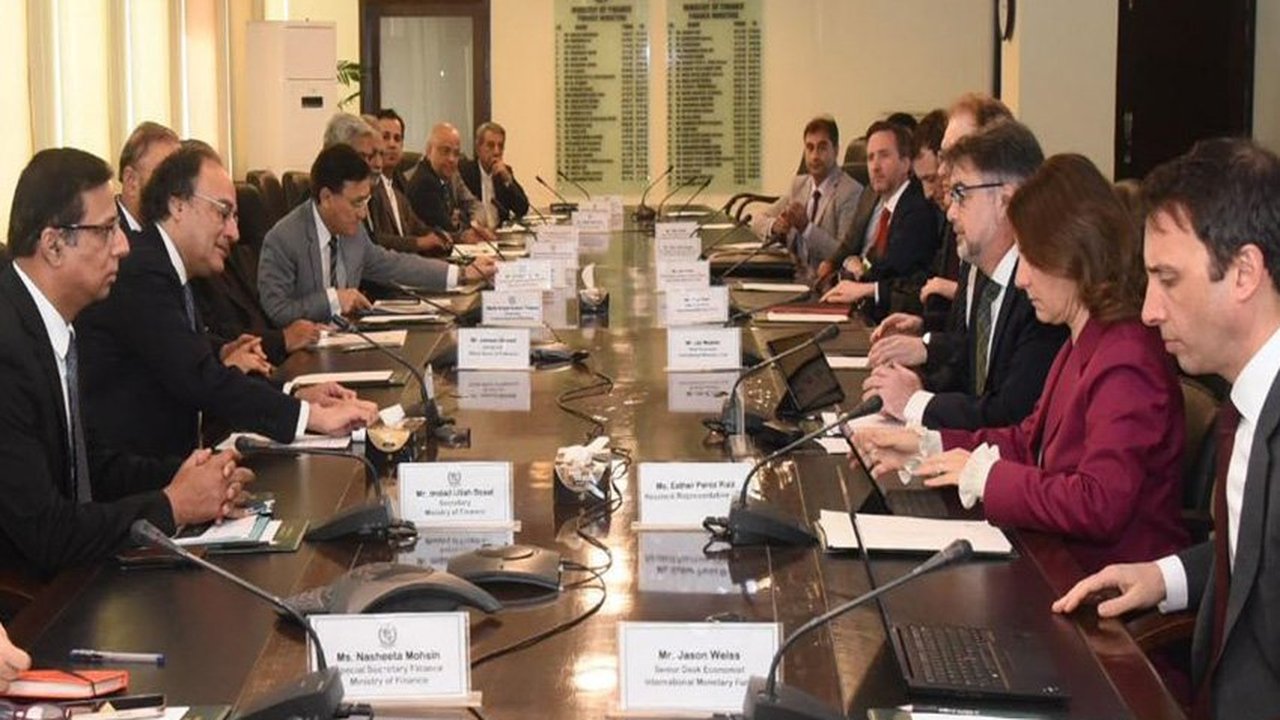
The IMF’s Executive Board completed Pakistan’s third review of its 37-month Extended Fund Facility (EFF) and second review of its Resilience and Sustainability Facility (RSF) on May 8, 2026, unlocking roughly $1.1 billion under the EFF and $220 million under the RSF, according to the IMF’s official statement. Total disbursements under both arrangements now stand at roughly $4.8 billion. Acting Chair Nigel Clarke credited Pakistan’s “strong program implementation” for supporting macroeconomic recovery and building resilience to shocks.
The Genuinely Good Numbers
By the IMF’s own account, the underlying data supports the assessment. GDP growth accelerated to an average of 3.8% year-on-year in the first half of FY26, driven by the auto, construction and garment industries, even accounting for flood disruption in July-August, according to the IMF’s staff report. Inflation, while ticking up to 7.3% year-on-year in March as commodity price pass-through hit domestic energy prices, remained within a broadly contained range, with core inflation at 7.6%. The current account was described as broadly balanced, and reserve rebuilding exceeded earlier projections — the State Bank of Pakistan projects reserves continuing to climb to roughly $18 billion by June 2026, according to analysis from the Islamabad Policy Research Institute.
The State Bank confirmed receipt of $1.3 billion from the IMF on May 12, 2026, according to CSS Prep’s policy analysis, which notes reserves had fallen to dangerously low levels in 2022-2023 before this recovery.
The External Risk the IMF Flagged Explicitly
The Fund’s own report is notably candid about downside exposure: under its April 2026 World Economic Outlook adverse scenario, the cumulative hit to Pakistan’s GDP from continued Middle East conflict could rise to around 1.5 percentage points by FY27, with inflation and the current account deficit each worsening by roughly 1.5-2.5 percentage points of GDP, according to the IMF’s staff country report. Given Pakistan’s reliance on imported energy, oil price volatility discussed in the IMF’s global outlook feeds directly into this specific country risk.
The Reform Question That Keeps Recurring
The structural policy conditions attached to this review read as familiar territory: sustaining fiscal consolidation, broadening the tax base, maintaining tight monetary policy to keep inflation within the State Bank’s target range, and advancing energy-sector reform — commitments the IMF’s own end-of-mission statement described as still “ongoing” rather than complete, per the IMF’s March 2026 mission statement.
A sharper framing comes from Pakistani policy analysts themselves: reforms that would genuinely break the IMF-program cycle — broadening the tax base to include agriculture and retail, ending energy subsidies, privatizing loss-making state-owned enterprises — impose concentrated, visible costs on politically organized interest groups, while the benefits of reversing those costs are diffuse and delayed, according to CSS Prep’s analysis. That political-economy imbalance, the analysis argues, consistently favors populist continuation of stabilization support over the structural reform that would end the need for it — a pattern this third review’s genuine macroeconomic progress doesn’t yet break.
Social Cost of the Adjustment
Pakistan’s poverty headcount rate rose to 25.3% in FY24, up sharply from 18.3% in FY22, driven by overlapping shocks from COVID, floods and inflation, according to the IMF’s staff report. The Benazir Income Support Programme (BISP) remains the primary social protection mechanism absorbing the distributional cost of IMF-mandated energy price increases and fiscal tightening — whether its scale is adequate remains, in the IMF’s own words, a live policy question rather than a settled one.
Discover more from The Economy
Subscribe to get the latest posts sent to your email.
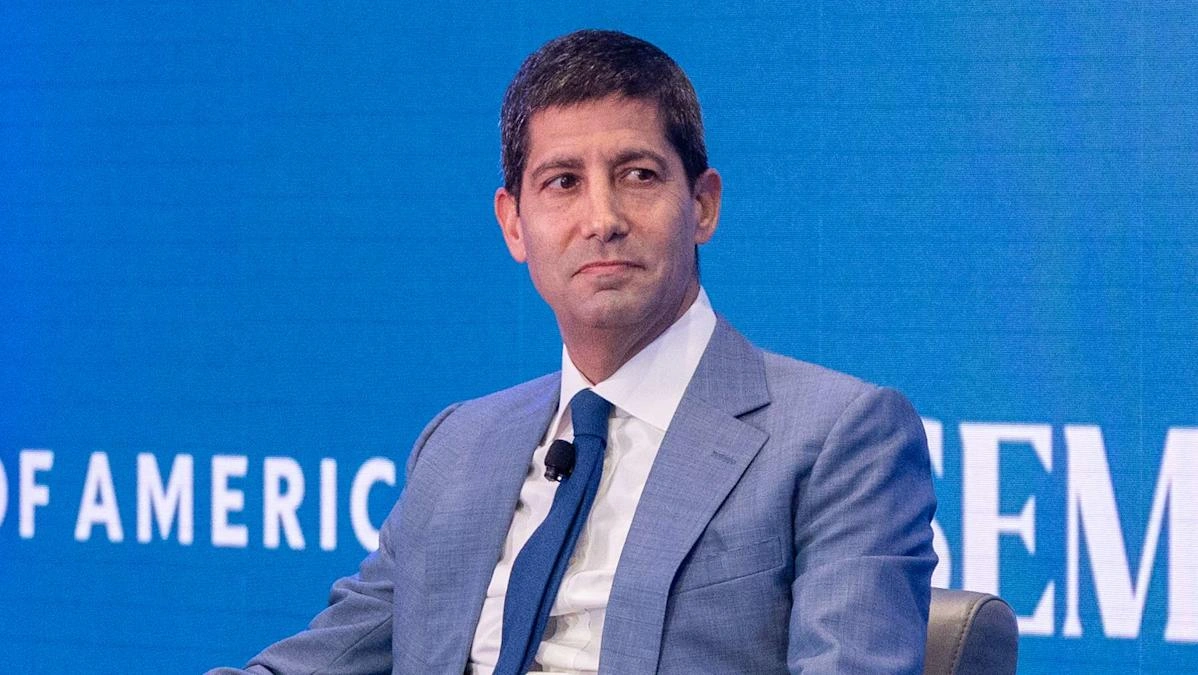
The Federal Reserve held its benchmark interest rate steady at 3.5%-3.75% on July 29, 2026, but the more consequential detail was the vote itself: 9-3, with three regional Federal Reserve Bank presidents — Cleveland’s Beth Hammack, Minneapolis’s Neel Kashkari, and Dallas’s Lorie Logan — dissenting in favor of a rate hike, according to CNBC’s coverage of the meeting. Inflation has remained above the Fed’s 2% target for more than five years, the underlying tension driving the split.
A New Chair, A Different Communication Style
The decision was the latest under Fed Chair Kevin Warsh, who took over after Jerome Powell’s term expired on May 15, 2026, according to iShares’ 2026 Fed outlook. Warsh has deliberately shortened the Fed’s post-meeting statements and pulled back on the kind of explicit forward guidance markets had grown accustomed to under his predecessors — he has reportedly dedicated one of five internal task forces specifically to rethinking how the Fed communicates, according to CNBC’s reporting. Warsh has publicly called inflation “a choice,” repeatedly emphasizing the importance of getting prices under control in recent congressional testimony.
At his post-meeting press conference, Warsh pushed back on characterizing the decision as a “pause,” instead describing it as “a rigorous review of the economic situation” and “a view of what our own homework is to try to resolve those questions in the period ahead,” according to a separate CNBC recap. Warsh has reportedly used the phrase “family fight” 13 times across five public appearances to acknowledge the committee’s internal divisions — an unusually candid framing for a sitting Fed Chair.
Why the Split Exists
Governor Christopher Waller has separately voiced concern that higher rates could become necessary without more inflation progress, even though he voted for the hold at this meeting. The full committee’s June projections penciled in one quarter-point increase by the end of 2026 — a notable shift from the rate-cutting path markets had priced in earlier in the year, according to the Fed’s own June 2026 Summary of Economic Projections, which explicitly flags that the federal funds rate outlook “is subject to considerable uncertainty” given how sensitive each participant’s view is to how inflation and employment data evolve from here.
Complicating Factors
Renewed U.S.-Iran tensions have already pushed mortgage rates near a one-year high independent of the Fed’s own decisions, since longer-term rates track Treasury yields and inflation expectations rather than the Fed funds rate directly, according to CNBC’s analysis. Separately, iShares had earlier projected that once a new Chair was confirmed, the Fed might seek one or two rate cuts to bring rates closer to a 3%-3.25% range — a path the July hold and hawkish dissents now put in serious doubt.
The next FOMC meeting is scheduled for September 15-16, 2026, and will include a fresh Summary of Economic Projections, according to Forbes’ Fed tracker — the next real test of whether Warsh’s committee can narrow its internal divide or whether the “family fight” framing becomes the defining feature of Fed policy through the rest of 2026.
Discover more from The Economy
Subscribe to get the latest posts sent to your email.

Four major UK forecasters — the OBR, the Bank of England-adjacent IFS, NIESR, and RSM UK — are converging on a similar diagnosis for 2026: an economy that’s avoiding outright recession but also not meaningfully growing, squeezed between resilient inflation and cautious business investment.
The Growth Numbers Are Converging Downward
RSM UK’s latest forecast puts 2026 GDP growth at just 1.0%, down from 1.4% in 2025, describing the pattern explicitly as “stagflation-lite” for a second consecutive year, with a modest recovery only expected in 2027 as inflation fades and rate cuts continue, according to RSM’s economic outlook. NIESR’s central forecast is slightly more optimistic at 1.4% GDP growth for 2026, describing the economy as beginning the year “closer to normal than at any other point this decade” despite heightened geopolitical stress, per NIESR’s winter 2026 outlook.
The Institute for Fiscal Studies frames the constraint more directly: consumption and business investment will likely stay muted as elevated uncertainty, still-restrictive monetary policy, and continued household saving all weigh on activity, with businesses “dissuaded from investing by squeezed margins and high financing costs,” according to IFS’s economic outlook.
Inflation Is Heading Back Up, Not Down
The most consequential shared theme across forecasters: inflation, which briefly dipped below 3% in early 2026, is expected to climb back toward 3.5% by year-end. RSM attributes this to a 13% rise in the energy price cap in July, higher motor fuel costs, and pass-through effects into food and goods prices, forecasting inflation to average 3.1% for 2026 overall, per RSM’s analysis. Notably, the report flags that the IMF has revised its UK inflation and growth forecasts more sharply than for any other developed economy, given Britain’s outsized reliance on gas for electricity pricing.
Bank of England Rate Path
Despite the inflation uptick, both NIESR and IFS still expect further Bank of England rate cuts through 2026. NIESR forecasts two further 25-basis-point cuts bringing Bank Rate to 3.25% by year-end — its estimate of the long-run neutral rate — following a cut to 3.75% in December 2025. IFS’s own forecast assumes Bank Rate reaches 3.5% in the first half of 2026. The divergence between continued rate cuts and rising inflation is the core tension defining UK monetary policy through the rest of the year.
Fiscal Headroom Is Nearly Gone
The Office for Budget Responsibility’s March 2026 outlook flags the tax-to-GDP ratio rising to a post-war high of 38% by 2030-31, with the November 2025 Budget having raised taxes by roughly £26 billion annually against OBR-assessed fiscal headroom of just £22 billion, according to NIESR’s reading of the same data. NIESR’s own forecast is notably more pessimistic than the OBR’s, projecting the current budget stays close to balance by 2029-30 with effectively no headroom at all — meaning public debt continues climbing toward 100% of GDP by decade’s end, sharply limiting the government’s room to respond to any future shock. RSM adds a domestic political risk on top: a Labour leadership contest raising the prospect of higher borrowing and renewed gilt yield pressure, with a short recession “not ruled out” if that risk materializes alongside global headwinds.
For UK-based investors, Deloitte notes the practical fallout includes a reduced cash ISA allowance for under-65s (down from £20,000 to £12,000) and a 2027 increase in tax on landlord property income — both tightening the traditional wealth-preservation toolkit just as broader growth conditions stay subdued, according to Deloitte’s TaxScape 2026 briefing.
Discover more from The Economy
Subscribe to get the latest posts sent to your email.

Pakistan Passed Its Third IMF Review

The Fed Is Fractured — And a New Chair Just Made It Louder, Not Quieter

The UK Economy in 2026 Is Neither Recession Nor Recovery :Stagflaton

Indonesia’s $121 Billion Nickel Bet Is Facing a Battery Chemistry

Why Ultra-Wealthy Families Are Splitting Between Singapore and Dubai inmarkets 2026

China Chose Political Control Over Fixing Its Deflation Trap in 2026

Oil Markets Are Oversupplied and Geopolitically Explosive at the Same Time

Russia’s Budget Deficit Blew Past Its Full-Year Target in Three Months

Malaysia’s Rare Earth Bet: Six Powers Are Negotiating for Kuantan at Once

Gulf Sovereign Capital Bypasses Pakistan Despite Record 2026 Spending Spree

Pakistan’s $10bn US Facility Request: Inside the New Gulf Capital Triangle

China Criticizes US Bill Targeting Russian Oil Buyers — Why It Matters

Nvidia’s H200 Chips Are Finally Reaching China — In Numbers Too Small to Matter Yet

Oil Prices Fall as Strait of Hormuz Reopens: 2026 Update

AI Bubble Warning 2026: Why BIS, IMF and Bank of England Fear a Market Crash

Russia Bans Diesel Exports 2026: Global Fuel Market Impact Explained

Gold Price Forecast 2026: Fed’s July 29 Decision and Record Central Bank Buying Explained

Strait of Hormuz Blockade 2026: Oil Prices Surge 9% as US-Iran Conflict Reignites

IMF Cuts Pakistan Growth Forecast, Raises Inflation to 8.4%

Gulf Capital Retreat From Pakistan 2026: UAE Loan Freeze & What It Means

Strait of Hormuz 2026: Why Markets Still Don’t Trust It’s Open

Down But Not Out: Inside the Slow Sinking of Russia’s War Economy

Chipmakers Just Lost 6.7% in Two Days: Inside the Great AI Trade Rotation

Pakistan Economy 2026: GDP Grows 3.7% as IMF Completes EFF Review Amid Middle East Risk

Pakistan IMF Deal 2026: Third Review Cleared, Budget 2026-27 and Inflation Outlook

US Jobs Report July 2026: Why Weak Payrolls Sent the Dow to a Record High

China Politburo July 2026: Stimulus Signals Explained

Global Stock Market Selloff 2026: Stagflation Fears Return as Iran Conflict Reignites
-

 Markets & Finance7 months ago
Top 15 Stocks for Investment in 2026 in PSX: Your Complete Guide to Pakistan’s Best Investment Opportunities
-

 Analysis5 months ago
Johor’s Investment Boom: The Hidden Costs Behind Malaysia’s Most Ambitious Economic Surge
-

 Analysis5 months ago
Top 10 Stocks for Investment in PSX for Quick Returns in 2026
-

 Analysis6 months ago
Brazil’s Rare Earth Race: US, EU, and China Compete for Critical Minerals as Tensions Rise
-

 Banks7 months ago
Best Investments in Pakistan 2026: Top 10 Low-Price Shares and Long-Term Picks for the PSX
-

 Investment7 months ago
Top 10 Mutual Fund Managers in Pakistan for Investment in 2026: A Comprehensive Guide for Optimal Returns
-

 Global Economy7 months ago
15 Most Lucrative Sectors for Investment in Pakistan: A 2025 Data-Driven Analysis
-

 Global Economy7 months ago
Pakistan’s Export Goldmine: 10 Game-Changing Markets Where Pakistani Businesses Are Winning Big in 2025