
Analysis
Pakistan’s Visionary CEOs: 10 Startup Leaders Redefining Emerging Market Innovation in 2026


In the halls of global venture capital, the narrative around emerging markets has quietly but forcefully shifted. The era of blitzscaling—where growth was prioritized over unit economics, and capital was cheap—is definitively over. What has emerged from the ashes of the 2022–2024 funding winter is a leaner, more formidable breed of “patient capital” builders. And nowhere is this evolution more striking than in Pakistan.
As we navigate 2026, Pakistan’s startup ecosystem is no longer a story of untested potential; it is a laboratory for solving profound institutional voids. According to the recent Ecosystem Signals 2026 report by invest2innovate (i2i), Pakistani startups mobilized over $74 million in 2025—nearly doubling the previous year’s total. But the real story isn’t the volume; it’s the structure. Over 89% of these funds were secured through hybrid equity-debt deals, signaling a shift toward disciplined capital deployment, sustainable revenue paths, and mature governance.
The founders leading this charge are not merely building apps; they are constructing the digital infrastructure of a nation of 240 million people. By digitizing deeply fragmented sectors—from kiryana (corner store) retail to supply chain logistics and healthcare—these 10 visionary CEOs are redefining what innovation looks like in the Global South.
1. Omair Ansari, Co-Founder & CEO, Abhi
The Financial Inclusion Pioneer

Omair Ansari is proving that embedded finance is the ultimate equalizer in frontier markets. Abhi began as an Earned Wage Access (EWA) platform in Pakistan but has rapidly evolved into a MENAP-region powerhouse. Recognized as a World Economic Forum Technology Pioneer, Ansari has leveraged his global investment banking background to expand Abhi’s footprint into the UAE and Saudi Arabia, striking strategic partnerships with the UAE’s Federal Exchange in early 2026 to enable instant cross-border remittances. By unfreezing working capital for both MSMEs and individual wage-earners, Ansari is dismantling the barriers to traditional credit access that have long hampered regional growth.
2. Omer Bin Ahsan, CEO, Haball
The B2B Infrastructure Architect

If there is a poster child for Pakistan’s 2025–2026 funding revival, it is Haball. Securing a staggering $52 million hybrid round—the largest of its kind in recent years—Omer has cemented Haball as the vital connective tissue of Pakistan’s B2B supply chain. The platform digitizes corporate payments and distributor financing, bringing transparency to a notoriously opaque, cash-heavy sector. Omer’s approach reflects a deep understanding of macroeconomic resilience: by integrating directly with enterprise supply chains, Haball ensures sticky revenues and creates a defensible moat against currency volatility.
3. Maha Shahzad, Founder, BusCaro
The Mobility Reformer

In a country where unsafe and unreliable transportation severely restricts female labor force participation, Maha Shahzad is delivering a masterclass in purpose-driven tech. Launching BusCaro after navigating the turbulence of the mobility sector’s early days, Shahzad has built a highly efficient tech-based commute solution. BusCaro has not only secured vital funding amid a tight market but has also revolutionized safe commuting for women and organizations across Pakistan. Shahzad’s grit—and her obsession with unit economics—demonstrates how solving an acute localized pain point can yield a highly scalable business model.
4. Hamza Jawaid & Saad Jangda, Co-Founders, Bazaar Technologies
The Retail Digitizers

Bazaar Technologies remains a foundational pillar of Pakistan’s e-commerce landscape. Jawaid and Jangda recognized early that the real opportunity in Pakistan wasn’t in rapid grocery delivery to affluent consumers, but in empowering the millions of unbanked kiryana stores that drive the retail economy. By providing B2B inventory procurement alongside digital ledger apps (Easy Khata), Bazaar acts as a trojan horse for financial inclusion. Their vision has matured from raw expansion to driving high-margin financial products through their vast network, embodying the shift toward capital-efficient growth.
5. Muhammad Omer Khan, Founder & CEO, PostEx
The E-commerce Enabler

Bridging the perilous gap between logistics and cash flow, Muhammad Omer Khan has transformed PostEx into Pakistan’s largest e-commerce service provider. Cash-on-Delivery (COD) has long been the Achilles’ heel of Pakistani e-commerce, creating massive working capital bottlenecks for merchants. Khan, utilizing his diverse background in finance and risk compliance, built PostEx to offer embedded receivables factoring alongside courier services. By paying merchants upfront for COD orders, PostEx absorbs the friction of the digital economy, enabling small businesses to scale without being starved of cash.
6. Dr. Saira Siddique, Founder & CEO, MedIQ
The Digital Health Democratizer

Healthtech has emerged as the second strongest sector for capital in Pakistan, and Dr. Saira Siddique is leading the charge. Securing a pivotal $6 million Series A round in 2025, MedIQ operates as a virtual hospital, providing B2B digital care delivery, diagnostics, and wellness solutions. In a nation where out-of-pocket healthcare expenses are crippling and doctor-to-patient ratios are strained, Dr. Siddique’s platform is leapfrogging traditional brick-and-mortar limitations, proving that digital-first healthcare can be both highly impactful and commercially viable.
7. Monis Rahman, Founder, Dukan (and Rozee.pk/Finja)
The Veteran Ecosystem Builder

No list of Pakistani innovation is complete without Monis Rahman. As a serial entrepreneur who laid the groundwork for Pakistan’s internet economy with Rozee.pk and later Finja, his current focus with Dukan highlights his enduring vision. Rahman is a staunch advocate of “patient capital.” By empowering micro-merchants with free e-commerce web stores and seamlessly linking them to localized digital lending, Rahman continues to target the base of the economic pyramid, combining deep institutional knowledge with relentless execution.
8. Arif Lakhani, Co-Founder, Qist Bazaar
The Consumer Credit Innovator

Buy-Now-Pay-Later (BNPL) in the Global North is largely a convenience; in Pakistan, it is a necessity for upward mobility. Arif Lakhani and his team at Qist Bazaar are serving a consumer base entirely ignored by traditional banks. Backed by strategic investments—and standing out as one of the key players navigating the 2025 hybrid financing wave—Qist Bazaar is giving the unbanked working class access to essential electronics and goods. Lakhani’s model is built on hyper-localized credit scoring, turning alternative data into actionable financial trust.
9. Halima Iqbal, Co-Founder & CEO, Oraan
The Champion of Female Financial Agency

Women in Pakistan are historically excluded from formal banking, yet they manage the bulk of household finances through informal rotating savings and credit associations (ROSCAs), locally known as committees. Halima Iqbal recognized the power of digitizing this cultural staple. Oraan provides a secure, digital platform for these savings groups, giving women a digital footprint and an entry point into the formal financial sector. Iqbal’s vision is a prime example of leveraging cultural nuances to build scalable fintech infrastructure.
10. Ali Makki, Co-Founder, Farmdar
The Agritech Visionary

With agriculture contributing to nearly a quarter of Pakistan’s GDP, the sector’s modernization is an existential imperative. Ali Makki is applying deep tech to the soil. Farmdar utilizes high-resolution satellite imagery and AI to provide precision agriculture data to farmers and corporate buyers. Amid climate change challenges and devastating floods in recent years, Makki’s technology enables proactive crop monitoring and yield forecasting. Farmdar is not just a startup; it is a critical tool for regional food security.
The Global South Paradigm: Lessons from Pakistan
The resilience of these founders offers profound insights for the broader emerging markets narrative. South Asia, Latin America, and Sub-Saharan Africa share similar “institutional voids”—a lack of formal credit, broken supply chains, and inadequate public infrastructure.
What the 2026 data reveals is a maturation of the ecosystem. Female-founded startups, for instance, secured 31% of the deal share in 2025—a significant jump from previous years—proving that diversity in leadership is translating into tangible capital allocation, even if capital scale gaps remain. Furthermore, the pivot from consumer-facing cash-burners (like rapid grocery delivery) to B2B infrastructure (fintech, supply chain logistics, healthtech) mirrors a global appetite for startups that can generate immediate, predictable revenue.
Conclusion: A Call for Favorable Winds
The vision of these 10 CEOs proves that Pakistan’s digital talent is world-class, capable of engineering sophisticated solutions to complex socio-economic problems. However, entrepreneurs cannot build in a vacuum. For this momentum to sustain, macroeconomic stabilization must be met with regulatory foresight.
Policymakers must prioritize creating a frictionless environment for venture capital repatriation, standardizing digital banking licenses, and protecting intellectual property. Furthermore, international development finance institutions (DFIs) should double down on hybrid financing models that provide these startups with the runway to scale without punitive equity dilution.
Pakistan is no longer just a high-risk, high-reward frontier; it is a strategic hub where the future of the digital Global South is being aggressively, brilliantly forged. The capital that is patient enough to partner with these builders today will reap the demographic dividends of tomorrow.
Discover more from The Economy
Subscribe to get the latest posts sent to your email.



For decades, the global dominance of the U.S. dollar has rested on two primary pillars: deep, unencumbered liquid capital markets and an indispensable global financial messaging protocol known as SWIFT. When Beijing launched its e-CNY initiative, Western observers initially framed it as a central bank digital currency (CBDC) designed primarily for domestic surveillance, retail convenience, and financial inclusion.
However, recent strategic moves highlight a far more ambitious objective. As documented by the South China Morning Post, Beijing is actively leveraging Hong Kong as its central offshore laboratory to establish the infrastructure required for international cross-border digital yuan adoption.
The crucial strategic question is no longer whether China can engineer robust distributed ledger architecture, but whether an offshore financial hub operating under “One Country, Two Systems” can bridge the gap between rigid domestic capital controls and global institutional acceptance. To succeed, China must resolve the fundamental tension between absolute monetary sovereignty and the open networks required for international currency adoption.
1. The Paradox of the Offshore Laboratory
China’s monetary expansion faces a well-documented structural paradox. According to macroeconomic research from the Carnegie Endowment for International Peace, no currency can achieve true international reserve status without offering open capital accounts and deep, freely convertible liquidity. Yet, completely relaxing capital controls would expose China’s domestic banking system to volatile international capital flows and speculative pressures.
Hong Kong serves as the pressure valve and testing ground for this paradox:
- Legal & Regulatory Buffer: Hong Kong maintains a trusted common law judicial system and an independent monetary authority (Hong Kong Monetary Authority).
- Convertibility Bridge: It allows mainland authorities to test e-CNY settlement, cross-border retail links, and digital asset integration without opening mainland financial markets directly to global speculative shocks.
- Institutional Liquidity: As the world’s premier offshore renminbi hub, Hong Kong provides the institutional counterparties necessary to build real-world transaction volume.
“The digital yuan’s true test lies not in domestic retail adoption, but in whether foreign counterparties can settle cross-border trade without taking on unacceptable regulatory or capital risks.”
2. Wholesale Settlement and Project mBridge
While retail consumer wallets attract considerable media attention, the real geopolitical shift is occurring at the wholesale institutional level. Strategic initiatives like Project mBridge—developed in partnership with the Bank for International Settlements (BIS), the People’s Bank of China, and regional central banks—demonstrate how multi-CBDC platforms can streamline international trade.
As reported in market analyses by Bloomberg and trade finance studies covered by Reuters, multi-lateral CBDC platforms offer significant operational advantages:
- Elimination of Intermediaries: Direct ledger-to-ledger transactions bypass traditional correspondent banking networks.
- Speed and Efficiency: Cross-border settlement times are reduced from days to seconds.
- Cost Reduction: Transaction costs and foreign exchange spreads across regional trade corridors in Asia and the Middle East are dramatically lowered.
If commercial enterprises operating in Hong Kong can settle trade directly in e-CNY with instant finality, Beijing creates a compelling economic incentive for trade partners that operates independently of Western clearing networks.
3. Geopolitical Implications & The Road Ahead
Western policymakers and central bankers are monitoring these developments closely. Recent congressional testimony and Treasury reviews highlighted by Reuters reflect growing concern in Washington that alternative settlement rails could gradually erode the reach and enforcement of Western financial sanctions.
However, technological capability alone does not guarantee global currency dominance. Until foreign corporate treasuries and central banks have full confidence in converted currency liquidity, property rights, and transparent legal protections, the digital yuan will serve primarily as an efficient alternative mechanism for bilateral trade rather than an immediate replacement for the U.S. dollar.
Institutional Summary & Comparison
| Dimension | Conventional Retail Focus | Wholesale / Strategic Reality |
| Primary Mechanism | Retail e-CNY wallets for tourists & merchants | Multi-CBDC corridors (Project mBridge) & Project Ensemble |
| Core Objective | Domestic payments & payment app competition | Disintermediation of correspondent banking and SWIFT rails |
| Primary Barrier | Consumer habituation & merchant readiness | Capital controls, currency convertibility, and institutional trust |
Sources & Citations
- South China Morning Post: Beijing wants Hong Kong to sow the seeds for the digital yuan
- Bank for International Settlements (BIS): Central Bank Digital Currency (CBDC) & Cross-Border Payments Research
- Carnegie Endowment for International Peace: China’s Financial System and Capital Account Dynamics
- Bloomberg Financial Analysis: Global Macro & Digital Currency Integration
- Reuters News & Analysis: Cross-Border Settlement and Global Trade Finance
Discover more from The Economy
Subscribe to get the latest posts sent to your email.
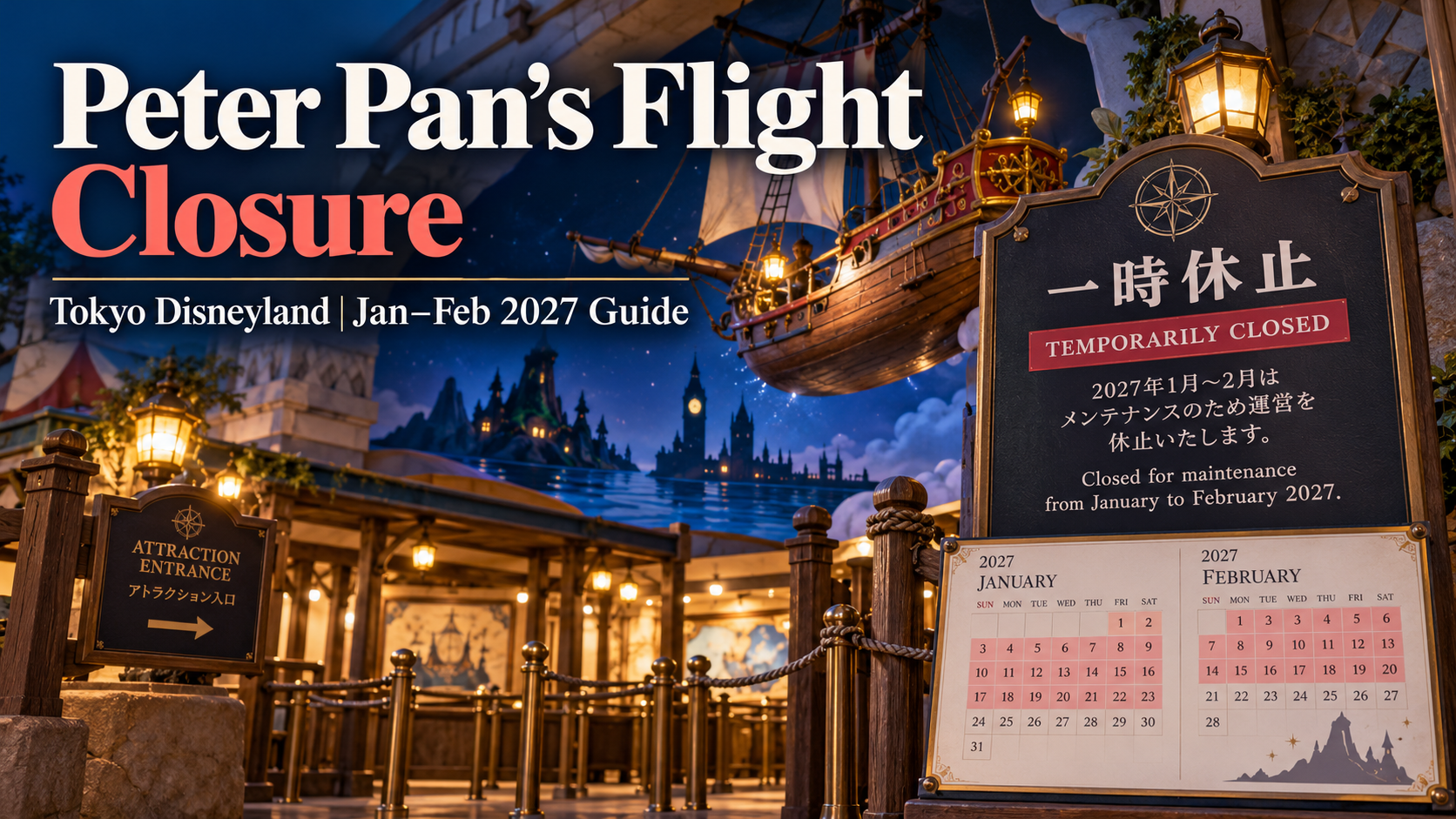
Guests planning a visit to Tokyo Disneyland in early 2027 should put one easily missed detail on their itinerary: Peter Pan’s Flight is scheduled to be temporarily closed from January 6 through February 2, 2027. The operator lists the dates both on its official attraction page and in the Tokyo Disneyland closure schedule. This is a scheduled interruption, not an announcement that the classic ride is being removed permanently. Travelers visiting on dates inside that window should assume the attraction will not be available unless Tokyo Disney Resort publishes a change.
The distinction matters because online references to “Peter Pan closing at Tokyo Disney” can confuse two different parks and two different experiences. Tokyo Disneyland’s Peter Pan’s Flight is a compact Fantasyland ride. Tokyo DisneySea has a separate, newer attraction called Peter Pan’s Never Land Adventure, with its own planned March 2027 maintenance period. The first planning step is making sure the information applies to the ticket you actually bought.
At a glance: what the operator currently says
| Planning question | Verified answer |
|---|---|
| Which attraction? | Peter Pan’s Flight |
| Which park? | Tokyo Disneyland, Fantasyland |
| Scheduled closure starts | January 6, 2027 |
| Scheduled closure ends | February 2, 2027 |
| Reopening expectation | After the listed closure window, subject to operator changes |
| Type of notice | Temporary closure; not announced as permanent |
| Where to recheck | Official attraction listing |
The dates are explicitly labeled as a temporary closure by Tokyo Disney Resort. Do not treat February 3 as an unconditional reopening guarantee: an operator may update maintenance information or temporarily suspend operations for other reasons. Check again shortly before travel and on the day you enter the park.
What is Peter Pan’s Flight?
Peter Pan’s Flight is a dark ride based on the familiar journey from London to Never Land. Guests sit in a flying pirate-ship vehicle that travels through a storybook environment. According to the operator’s ride information, it is in Fantasyland, lasts about two and a half minutes and carries two people per vehicle. It operates indoors and includes dark spaces. These details make it particularly appealing to families who want a gentle, classic Disney experience rather than a high-speed thrill ride.
There are restrictions worth noting even on operating days. The published guidance says a guest must be able to maintain a stable seated position independently and that children may not be held on an adult’s lap during the ride. If your group includes young children, anyone needing seating assistance or visitors uncomfortable with darkness, read the official description and accessibility guidance rather than assuming that the attraction suits everyone because it is short.
Short ride duration is not the same as short waiting time. Demand for well-known classics can vary with crowds, operating conditions and holiday schedules, so it is unwise to schedule a tight sequence of unrelated bookings around a predicted queue. The operator’s app and in-park staff can provide current operating information when the ride is available.
The dates around the closure are not interchangeable
A guest visiting January 5 has a fundamentally different planning position from someone arriving January 6. January 5 falls before the currently listed closure, while January 6 is its opening day. A February 2 visit falls on the final listed day of the maintenance window; February 3 is the earliest day after that window, not a contractual promise that the ride will run.
For a family staying at the resort for multiple days, the difference might be worth changing which day is assigned to Tokyo Disneyland. If one day is before January 6 and another is inside the closure, put Disneyland first if the classic Peter Pan ride is a must-do. But do not swap a park ticket or hotel reservation until you understand the applicable change and cancellation conditions. The economic cost of reshuffling an entire trip can exceed the benefit of experiencing one short ride.
A visitor traveling from overseas may be choosing between a single Disneyland day and a DisneySea day. In that case, consider the trip’s overall priorities. Someone who values vintage Fantasyland attractions may still prefer Disneyland even during the closure. Someone traveling expressly for an immersive Peter Pan adventure could be more interested in the DisneySea attraction—but must buy admission to that different park and verify its own operating schedule.
Other Tokyo Disneyland closures during the same period
The official park maintenance listing shows other attractions with early-2027 closure windows that may overlap your visit. At the time of this review, it lists Jungle Cruise: Wildlife Expeditions from January 6 through March 31, Splash Mountain from January 7 through February 4, and Haunted Mansion from January 8 through February 4. These are operator-published schedules, not independent predictions about refurbishment completion.
This makes the Peter Pan closure more significant for certain visitors than a single unavailable ride might suggest. A group that expected several classic experiences in one afternoon could find multiple priorities temporarily inaccessible. Conversely, the park contains many other attractions and entertainment offerings, and the attractions that remain open should be evaluated on their own current descriptions rather than guessed from historical schedules.
It is worth making a small “must ride / would enjoy / optional” list. Mark each attraction against the closure page. Then build flexibility around weather, performance calendars and queue variation. A plan with alternatives is more resilient than a rigid minute-by-minute schedule.
Better alternatives for different kinds of visitors
If the attraction’s appeal is gentle fantasy storytelling, explore other Fantasyland offerings listed in the official Tokyo Disneyland attraction directory. Filter for ride type and height or access restrictions, and read the current operating details. Do not assume that a neighboring attraction will be open merely because it is not listed in an older travel blog.
If the main attraction is Disney character immersion, devote time to character experiences, themed areas, shopping or scheduled entertainment that is actually available on your day. These can preserve the spirit of the trip without pretending they are substitutes for the ride itself. Some guests will prefer to spend the recovered time on a longer headliner; others may value an unhurried lunch and a park exploration that is less vulnerable to queues.
If the trip is built around Peter Pan specifically, Tokyo DisneySea’s Never Land Adventure may appear attractive. But it is not the same ride: it is a 3D boat-based experience in Fantasy Springs, with different restrictions and a different length. Tokyo Disney Resort’s DisneySea attraction page is the reliable way to compare them. Admission, access arrangements and the day’s capacity remain separate questions.
Parents should also avoid overstating the value of a replacement to children. “Another attraction has pirates” does not make it the planned Peter Pan experience. Setting expectations before entering the park is often more effective than negotiating disappointment in a crowded queue area.
Are refunds or ticket changes automatic?
The announcement of an attraction’s temporary closure does not itself demonstrate that every guest is entitled to a ticket refund or a date change. Theme-park tickets ordinarily grant admission subject to operating conditions, not a binding guarantee that every individual ride will operate. Actual ticket terms, package conditions and any operator-specific accommodation policy govern what can be changed.
Before buying or modifying a pass, review the official Tokyo Disney Resort ticket and reservations guidance and any reseller’s terms. A third-party package might combine transport, hotel rooms and tickets under separate cancellation rules. You should not rely on the statement “ride closed” as a universal reason for a penalty-free cancellation.
If your booking is complex, write down the name of the supplier, reservation reference, exact park date and type of admission. Seek a written answer before paying a change fee. This is particularly important if you plan to move only one day of a multi-day trip and keep the remainder unchanged.
Does Disney Premier Access help during the closure?
No paid queue-management product can make an attraction operate while it is closed. Disney Premier Access is a separate, paid tool for eligible operating experiences; eligibility and availability can change. The official Premier Access guide explains that places may sell out and that the price does not include park admission. It should not be marketed to families as a guaranteed workaround for a published maintenance closure.
The app can nevertheless be useful for other attractions and live operating information. If a ride is unavailable, remove it from the day’s queue-management plan and redirect attention to attractions genuinely offered that day. Check the current product terms before purchasing any additional access.
How to build a more reliable 2027 itinerary
Start with the official attraction closure list rather than the social-media version of it. Choose a date, read the list for the correct park, then check the pages for the two or three attractions most important to your group. If several favorites overlap with closures, compare another travel day, but preserve buffer time and cost limits.
Once you have a provisional itinerary, check whether your whole group can experience the alternatives. A family with a toddler and grandparents may have different needs from a group of teenagers. Ride seating rules, dark environments, height restrictions and walking distances deserve attention before buying optional upgrades.
A week before departure, look at the operator’s park calendar and attraction pages again. On the morning of your visit, follow current app information and staff instructions. Write down a backup plan that does not depend on a single ride reopening on the first conceivable day.
Quick visitor questions
Is Peter Pan’s Flight shutting permanently? The published notice says temporary closure January 6–February 2, 2027. It does not announce permanent removal.
Is it in Tokyo Disneyland or DisneySea? Peter Pan’s Flight is in Tokyo Disneyland’s Fantasyland. DisneySea has the separate Never Land Adventure.
Can I ride on February 2? The current listing includes February 2 in the closure window. Do not plan on riding that day.
Is February 3 the official reopening day? It is the first day after the presently announced closure period, assuming the dates are unchanged. Confirm the park’s live information rather than treating operation as guaranteed.
Should I change my trip? That depends on how important this specific ride is compared with hotel, flights, admission and other attractions. For most travelers, adjusting priorities within the same park is the lower-risk first option.
Final planning advice
This news is not a farewell to Peter Pan’s Flight. It is a defined, temporary gap in the operating calendar. The useful response is to check your exact visit date, compare the rides your family actually cares about and keep a realistic alternative ready. Tokyo Disneyland can still be an appealing destination during the listed closure; the difference between an enjoyable trip and a frustrating one may simply be accurate expectations.
Discover more from The Economy
Subscribe to get the latest posts sent to your email.

Key Takeaways
- Rolex’s secondary market rose approximately 7.9% year-over-year as of 2026 (per WatchCharts data) — trailing Patek Philippe (+16.2%) and Tudor (+11.4%) but still outperforming Audemars Piguet (+3.4%).
- Rolex raised U.S. retail prices 4–9% in January 2026 (steel models ~5.6%, gold models ~8.7%), narrowing the historical gap between retail and pre-owned pricing.
- Not every model appreciates: steel sports references (Submariner, GMT-Master II, Daytona) have held value far better than two-tone or widely available dress references like the standard Datejust.
- The Lady-Datejust posted the sharpest 2026 gain among tracked collections — up 22.73%, from roughly $9,269 to $11,376 — driven by demand for smaller, “everyday luxury” watches.
- Gold’s rise past $2,400/oz has directly lifted the investment case for Rolex’s precious-metal references (Day-Date, Sky-Dweller, Yacht-Master).
The Model-by-Model Picture
| Category | 2026 Trend |
|---|---|
| Lady-Datejust | +22.73% (strongest performer among tracked collections) |
| Steel sports models (Submariner, GMT-Master II) | Held value well; corrected from 2022 peak but stabilized above retail |
| Daytona | Corrected from highs above $50,000 to the mid-$30,000s; still among the most sought-after references |
| Two-tone/widely available Datejust | Flat to negative — “holds value” is an overstatement for this category |
| Gold references (Day-Date, Sky-Dweller) | Lifted by gold’s rise above $2,400/oz |
Why the “Rolex Always Appreciates” Myth Is Fading
The pandemic-era boom pushed some references — the Daytona above all — to speculative highs disconnected from historical norms. Since the March 2022 peak, steel sports models have compressed meaningfully, and dealers who bought inventory near the top have in some cases faced 20–40% markdowns on liquidation. The lesson for 2026 buyers: Rolex as a category is not a monolith. Value retention depends heavily on specific reference, condition, and whether the piece comes with box and papers (“full set”).
What’s Actually Driving 2026 Strength
- Retail price increases raise the floor. When a new Submariner retails at $10,050 (up from $9,500), a pre-owned example at $11,000–$12,000 suddenly represents a smaller premium — narrowing the gap without secondary prices actually moving.
- Supply discipline remains Rolex’s core lever. The brand has never confirmed production numbers, and secondary-market premiums remain entirely a function of Rolex’s own manufacturing decisions — a risk factor as much as a support.
- Certified Pre-Owned rollout. Rolex’s now fully rolled-out CPO program has changed how buyers transact in the used market, adding a layer of brand-verified legitimacy that supports pricing.
The Case for Rolex as a Portfolio Diversifier
Financial advisors increasingly frame luxury watches not as a replacement for equities or bonds, but as a tangible, historically low-correlation diversifier — one that carries its own risks (illiquidity, condition-dependent pricing, no yield) but has demonstrated multi-decade resilience for specific references.
Is Rolex a good investment in 2026?
It depends heavily on the specific reference. Steel sports models like the Submariner and Daytona have held or grown in value; two-tone and widely available dress models generally have not. Overall, Rolex’s secondary market rose about 7.9% year-over-year in 2026, trailing Patek Philippe but ahead of Audemars Piguet.
Discover more from The Economy
Subscribe to get the latest posts sent to your email.

Stock Market Crash 2026? What the November Rout Actually Tells Us

IMF Global Outlook 2027: The Recovery Is Real, but the Divide Is Growing

World Bank Debt Report 2026: The $9.4 Trillion Burden Behind the Recovery

Singapore Stock Market Outlook 2027: The STI’s Bank-and-Yield Test

Asian Stock Markets: Why the AI Rout Is Dividing the Region

Global Markets Today: The AI Sell-Off Has Become a Test of Liquidity

Global Finance 2027: Debt, Inflation and AI Are Pulling the Economy Apart

Brian Kemp’s Georgia Legacy: Economic Growth, Elections and the Costs of His Policy Choices

Dow Futures vs Dow Jones: What E-mini Contracts Really Tell You Before Wall Street Opens

China Tape Maker Stock Debut: Crown New Materials Soared 787%

Apple’s Earnings Beat Had a Catch: Look Past the Tariff Refund

Social Security Payments in November 2026: The Full Calendar and Two Important Changes

Johor–Singapore SEZ’s $21.8 Billion Bet: The Hard Part Starts Now

China’s 175 Trillion AI Tokens Reveal a Bigger Shift: The AI Boom

Crude Oil & Petroleum Market Analysis: OPEC+ Decisions and Price Forecasts

Top US Convenience Store Chains: Store Counts, EV Charging, and Sales Trends

Social Security Extra $90 Deposit: Who Qualifies for the October 2026 Medicare Rebate?

Gold Price Outlook 2026: The Forces Behind the Forecasts—and What Could Reverse Them

Stock Market Crash in 2026? Warning Signs, Scenarios and a Calm Investor Checklist

Anthropic Bans Sustained Abuse of Claude AI Under New Usage Policy Effective November 12, 2026

US–Iran Conflict in October 2026: Hormuz, Oil Prices and Diplomacy

US–China Critical Minerals Competition: Why a Trade Deal Cannot Fix Every Supply Risk

SSI November 2026 Payment: Why Benefits Arrive October 30

US–China AI Export Controls in 2026: Chips, Testing Rules and Corporate Risk

China’s AI Microdrama Boom: How Beijing Is Reshaping Global Media

EU vs UK Electric Vehicle Tariffs: Impact on Automotive Supply Chains & Consumer Prices

Pakistan IMF Programme 2026: Why Bailouts Keep Returning

Jeff Bezos Three-Day Workweek View: What He Really Said
-

 Markets & Finance10 months ago
Top 15 Stocks for Investment in 2026 in PSX: Your Complete Guide to Pakistan’s Best Investment Opportunities
-

 Analysis9 months ago
Johor’s Investment Boom: The Hidden Costs Behind Malaysia’s Most Ambitious Economic Surge
-

 Analysis9 months ago
Top 10 Stocks for Investment in PSX for Quick Returns in 2026
-

 Banks10 months ago
Best Investments in Pakistan 2026: Top 10 Low-Price Shares and Long-Term Picks for the PSX
-

 Analysis9 months ago
Brazil’s Rare Earth Race: US, EU, and China Compete for Critical Minerals as Tensions Rise
-

 Investment10 months ago
Top 10 Mutual Fund Managers in Pakistan for Investment in 2026: A Comprehensive Guide for Optimal Returns
-

 Global Economy10 months ago
15 Most Lucrative Sectors for Investment in Pakistan: A 2025 Data-Driven Analysis
-

 Global Economy10 months ago
Pakistan’s Export Goldmine: 10 Game-Changing Markets Where Pakistani Businesses Are Winning Big in 2025