
Analysis
America’s AI Engine Meets the China Fault Line: Can Growth Outrun Geopolitics in 2026?

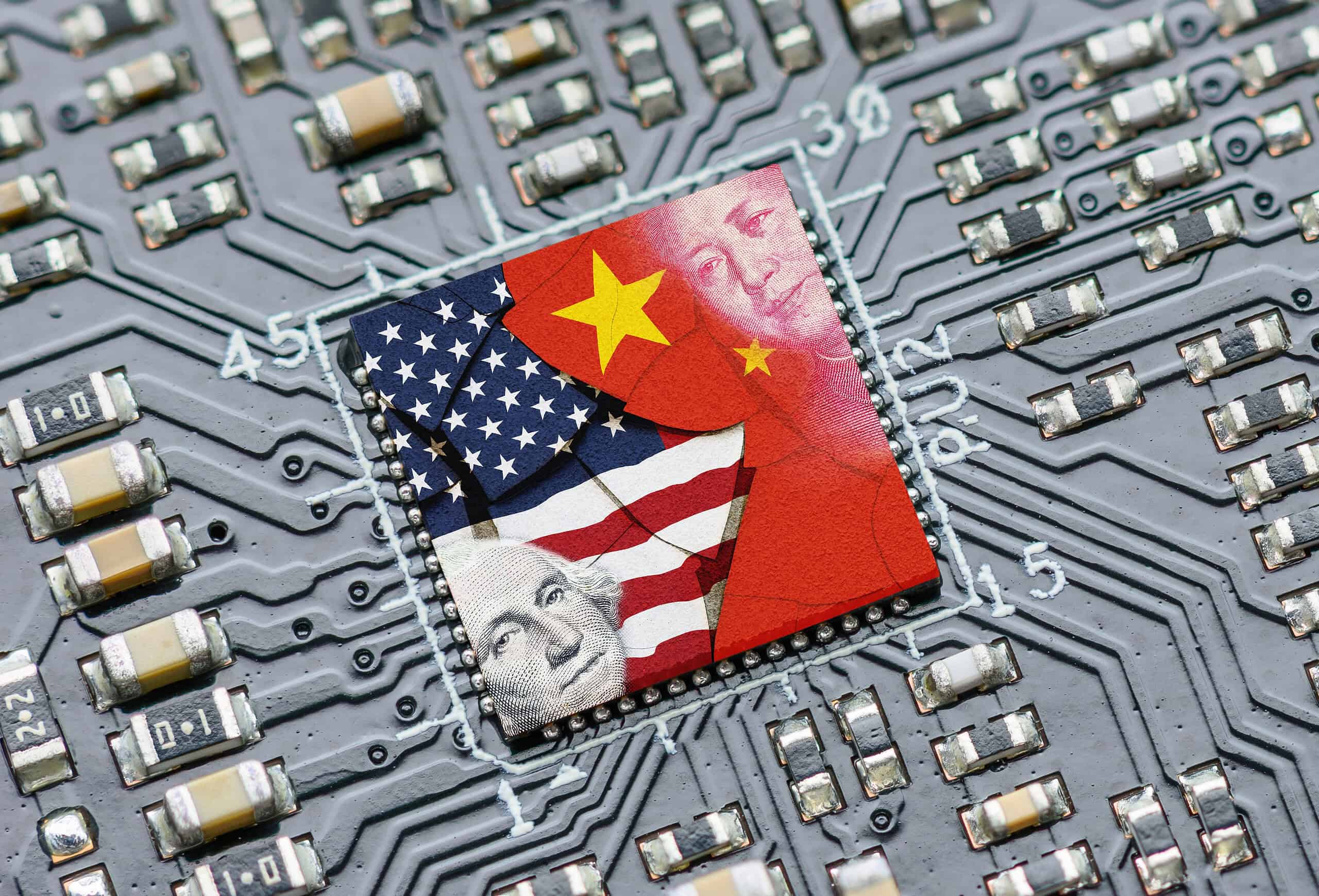
US GDP rebounded to 2.0% in Q1 2026 on AI investment, while jobless claims hit a 57-year low. But can America’s AI-driven growth outlast the fragile US-China trade truce and global uncertainty?
On the same Thursday morning that the Bureau of Economic Analysis confirmed America’s economic rebound, the Labor Department delivered a figure that made analysts double-check their screens: 189,000 initial jobless claims for the week ending April 25 — the lowest reading since September 1969, when Neil Armstrong’s moonwalk was still fresh in the national memory. Set against a backdrop of an active conflict with Iran, persistent inflation, and some of the most contentious trade diplomacy since the Cold War, the US economy’s resilience borders on the paradoxical.
The headline GDP number — a 2.0% annualized growth rate in Q1 2026, according to the BEA’s advance estimate — was slightly below the 2.2-2.3% consensus, and skeptics rightly note the mechanical lift from post-shutdown federal payroll normalization. But the number that deserves greater analytical weight is hidden deeper in the national accounts: business investment in equipment, particularly computers and AI-related infrastructure, surged to become the economy’s single most dynamic engine of demand. According to the Federal Reserve Bank of St. Louis, AI-related investment in software, specialized processing equipment, and data center buildout accounted for roughly 39% of the marginal growth in US GDP over the last four quarters — a contribution that exceeds even the tech sector’s peak impact during the dot-com boom of 2000.
That is an extraordinary fact. It is also a strategically dangerous one.
The AI Boost Behind US GDP Resilience
The private-sector numbers are staggering in their ambition. Microsoft has earmarked approximately $190 billion in capital expenditure for 2026. Alphabet is targeting $180–190 billion. Amazon is maintaining a near-$200 billion capex envelope. Meta projects $125–145 billion. At the midpoint, these four hyperscalers alone represent capital deployment equivalent to roughly 2.2% of annualized US nominal GDP — before a single smaller competitor, startup, or government AI initiative is counted.
The real-economy effects are tangible. Data center-related spending alone added approximately 100 basis points to US real GDP growth, according to Morgan Stanley’s chief investment officer. In Gallatin, Tennessee, Meta’s $1.5 billion hyperscale data center revitalized a local economy that had previously depended on declining manufacturing. In Washington, D.C., AI infrastructure investment materially buffered the regional economy during the federal government shutdown that dragged Q4 2025 GDP to a near-stall of 0.5%. The BEA’s own Q1 2026 data confirms that investment led the recovery, driven by equipment — computers and peripherals — and intellectual property products including software.
Oxford Economics chief US economist Michael Pearce summed it up with characteristic precision: “The core of the economy remained solid in Q1, driven by the AI buildout and the tax cuts beginning to feed through.” Cornell economist Eswar Prasad, Wells Fargo’s Shannon Grein, and Brookings’ Mark Muro have reached similar conclusions, though Muro’s framing is more pointed: “This AI gold rush is generating all the excitement and papering over a drift in the rest of the economy.”
That is the first tension embedded in America’s resilience story. The growth is real. Its distribution is not.
A Labor Market Defying Gravity — For Now
The jobless claims figure deserves its own moment of pause. Initial claims fell by 26,000 to 189,000 in the week ended April 25, according to Labor Department data — well below the 212,000 median forecast from Bloomberg’s economist survey. Continuing claims simultaneously dropped to 1.79 million, a two-year low. High Frequency Economics’ chief economist Carl Weinberg called it a clean report. “There is nothing to worry about in this report. YET!,” he wrote to clients, with the emphasis and punctuation entirely deliberate.
That caveat matters. The job market’s tightness reflects AI-driven demand for power engineers, data center technicians, and specialized researchers — occupational categories experiencing wage inflation that lifts aggregate statistics while leaving large swaths of traditional workers in wage stagnation. A “two-track economy,” as Brookings put it, rarely remains politically stable. And with the PCE price index — the Federal Reserve’s preferred inflation gauge — jumping to a 4.5% annualized rate in Q1 2026, real purchasing power erosion is biting even as employment remains robust. The Fed, under pressure not to cut rates into an inflationary surge, is boxed in.
This is the macroeconomic paradox of 2026: an economy generating headline strength through concentrated private investment and a historically tight labor market, while consumers decelerate, inflation accelerates, and geopolitical shocks keep piling up at the margins.
Navigating US-China Trade Diplomacy in Volatile Times
Against this domestic backdrop, the diplomatic chessboard between Washington and Beijing has been moving rapidly — and not always in predictable directions.
The arc of the past eighteen months reads like a crisis management manual. In April 2025, the Trump administration’s “Liberation Day” tariff regime ignited a full escalation, with mutual tariffs between the US and China ultimately exceeding 100% before a Geneva truce in May 2025 brought temporary de-escalation. That truce frayed quickly. By October 2025, Washington imposed additional 100% duties on Chinese goods alongside expanded export controls on critical software. Beijing countered with non-tariff measures — canceling orders, restricting rare earth exports, and tightening end-use disclosure requirements for American firms dependent on Chinese inputs.
Then came the Busan inflection point. At their summit in South Korea in late October 2025, Trump and Xi agreed to a new trade truce that suspended US escalatory tariffs through November 2026 and delivered Chinese commitments on fentanyl, rare earth pauses, and soybean purchases. The deal was described by analysts as tactical rather than structural — a détente without a doctrine. Persistent friction in technology, semiconductors, and strategic manufacturing was pointedly left unresolved.
In February 2026, the dynamics shifted again when the US Supreme Court ruled that the executive branch could not use the International Emergency Economic Powers Act (IEEPA) to impose tariffs, obligating the government to refund affected businesses and forcing the administration to shift to a 10% global tariff under Section 122 of the Trade Act of 1974. It was a legal earthquake that simultaneously constrained White House trade leverage and injected fresh legal uncertainty into bilateral negotiations.
Senior trade officials from both countries have since engaged in multiple rounds of talks — Paris in February, with both sides describing the discussions as “constructive,” a diplomatic adjective that in this context carries approximately the same information content as “ongoing.” President Trump’s planned visit to China in 2026 — his first trip in eight years — represents the highest-stakes diplomatic moment in the relationship since the first-term Phase One deal, and arguably since the 2001 WTO accession itself.
De-Risking, Decoupling, and the Silicon Chessboard
The language in this debate matters enormously. “Decoupling” — the full bifurcation of US and Chinese economic systems — is a fantasy embraced primarily by those who have not priced its consequences. The US imported over $400 billion in goods from China in 2024, from consumer electronics to pharmaceutical precursors to the very servers and peripherals that are now driving American GDP growth. The BEA noted that the Q1 2026 surge in goods imports was led by computers, peripherals, and parts — meaning that America’s AI boom is, in part, being assembled with Asian supply chains that run through Taiwan, South Korea, and yes, mainland China.
This is the central irony of US-China relations in 2026: the technology sector powering America’s economic resilience is also the sector most exposed to geopolitical disruption. Advanced semiconductors, rare earth magnets essential for defense and clean energy systems, and the specialized capital equipment for AI training clusters — all exist at the intersection of national security and economic interdependence.
The USTR’s 2026 Trade Policy Agenda explicitly frames the goal as “managing trade with China for reciprocity and balance” — a formulation that signals the administration understands full decoupling is neither achievable nor desirable, even as it maintains sweeping Section 301 tariffs inherited from the first Trump term and pursues new Section 301 investigations into Chinese semiconductor practices. The more honest strategic concept is “de-risking”: maintaining commercial engagement while systematically reducing dependencies in sectors where a supply shock could compromise national security or economic function.
That is, in principle, the correct instinct. The difficulty is execution. Export controls on advanced AI chips — the Nvidia H200 episode, where the administration allowed sales to China while collecting 25% of proceeds, drew fierce bipartisan criticism for precisely the reason that critics of managed trade always articulate: when economic and security concessions become transactional, you erode the credibility of both. Former senior US officials, quoted in Congressional Research Service analysis, noted that the decision “contradicts past US practice” of separating national security decisions from trade negotiations.
Risks and Opportunities in Bilateral Economic Ties
The structural risks are not hypothetical. They are identifiable, measurable, and — for policymakers willing to look — actionable.
On the American side, the AI buildout has created three distinct vulnerabilities. First, energy infrastructure: data centers are projected to require upwards of 25 gigawatts of new grid capacity by decade’s end, already driving electricity prices up 5.4% in 2025. A supply chain in which compute capacity races ahead of grid investment is a supply chain that will eventually encounter a hard ceiling. Second, talent concentration: the AI economy has generated insatiable demand for a narrow band of specialists — power engineers, ML researchers, data center architects — while leaving broader labor markets structurally unchanged. This is not a foundation for durable political economy. Third, import exposure: as Oxford Economics’ Pearce noted, the AI boom is partly self-limiting because US firms send substantial money abroad to import chips and components from South Korea and Taiwan — a geographic concentration that creates fragility precisely where resilience is most needed.
On the diplomatic side, the fragility of the current truce is not in dispute. The November 2026 deadline on the Busan commitments will arrive fast, and the structural issues — Chinese overcapacity in electric vehicles, solar, and steel; American restrictions on semiconductor exports and connected vehicle technology; Beijing’s tightening of rare earth export controls — will not have resolved themselves in the interim. A Trump-Xi meeting in May 2026 offers the possibility of extending the détente, perhaps structuring a more durable “managed trade” framework. But managed trade, when both parties define “management” differently, has a well-documented tendency to collapse at precisely the moment it is most needed.
The Iran war — now in its ninth week, with crude oil trading near $104 per barrel — adds a layer of global volatility that is already showing up in energy prices and consumer sentiment, and will appear in Q2 data. The Conference Board has warned that higher energy costs and supply chain disruptions are likely to weigh on GDP growth and keep the Fed on hold, further tightening the policy space available to manage whatever comes next.
The Path Forward: Smart Diplomacy or Missed Opportunity?
The case for measured optimism is real but requires specificity to be credible. The US holds asymmetric advantages in this competition: the frontier AI research ecosystem, the dollar’s reserve currency status, the depth of its capital markets, and the extraordinary private-sector energy now channeled into technological infrastructure. These are genuine strengths. They confer strategic leverage. They also, if mismanaged, create complacency — the assumption that technological lead translates automatically into diplomatic leverage, or that economic dynamism renders geopolitical risk management optional.
It does not. The Reagan-era trade disputes with Japan, the Clinton-era engagement with China, and the first-term Trump tariff campaigns all demonstrate that economic power and diplomatic sophistication must operate in tandem. The current moment calls for exactly that combination: a framework that protects semiconductor supply chains and critical technology leadership without sacrificing the commercial relationships that make the AI buildout itself possible. “Friend-shoring” — the deliberate diversification of supply chains toward allied democracies — is a genuine and necessary strategy, but it takes a decade to build what markets created over forty years.
The diplomats who navigate this most successfully will be those who resist the binary of engagement versus confrontation, and instead build durable, enforceable rules in the specific sectors where rivalry is sharpest: advanced chips, rare earths, AI governance, and data security. The USTR’s ambitious Reciprocal Trade Agreement program, which seeks binding market access commitments from partners across Asia and Europe, points in roughly the right direction — provided it does not inadvertently impose costs that undermine the private investment driving the very GDP growth policymakers are celebrating today.
America’s AI-driven resilience is real, and this week’s data — a 2.0% rebound from near-stall, jobless claims at a 57-year low — deserves genuine recognition. But economies, like tectonic plates, can appear stable right up to the moment they are not. The fault line running beneath the current recovery is not primarily technological. It is geopolitical. Managing it demands the same ambition and precision that the private sector is currently bringing to the AI buildout. There is, in 2026, no reason to believe it cannot be done. There is also no reason to assume it will be done automatically.
That, ultimately, is the work.
FAQ: US-China Relations, GDP Growth, and the AI Economy in 2026
Q: What drove US GDP growth in Q1 2026? The BEA’s advance estimate showed 2.0% annualized growth, driven by surging business investment in AI equipment, computers, and software, alongside a rebound in government spending following the end of the Q4 2025 federal government shutdown. Consumer spending and exports also contributed, while elevated imports — largely computers and AI-related parts — partially offset those gains.
Q: Why did US initial jobless claims fall to 189,000 in April 2026? The week ending April 25 saw claims fall by 26,000 to 189,000, the lowest since September 1969. The drop reflects a tight labor market in which layoff announcements — from companies like Meta and Nike — have not yet translated into actual terminations. AI-driven sectors are generating strong demand for specialized workers, keeping aggregate layoff rates historically low despite broader economic uncertainty.
Q: What is the current state of US-China trade relations in 2026? Relations are in a fragile détente. The Trump-Xi Busan summit in late 2025 produced a truce suspending escalatory US tariffs until November 2026 in exchange for Chinese commitments on fentanyl, rare earths, and agricultural purchases. However, structural disputes over semiconductors, technology export controls, Chinese industrial overcapacity, and rare earth access remain unresolved. A Trump visit to China in 2026 may seek to extend or deepen this framework.
Q: What does “de-risking” versus “decoupling” mean in the US-China context? Decoupling refers to a full economic separation — ending significant trade and investment ties between the two countries. De-risking is the more pragmatic approach: maintaining commercial engagement while systematically reducing dependencies in sectors critical to national security, such as advanced semiconductors, rare earth materials, and connected technology. The current US administration’s policy formally targets the latter, though execution remains contested.
Q: How much of US GDP growth is driven by AI investment? The Federal Reserve Bank of St. Louis estimates that AI-related investment in software, specialized equipment, and data centers accounted for approximately 39% of marginal US GDP growth over the four quarters through Q3 2025 — surpassing the tech sector’s contribution at the peak of the dot-com boom. Major tech companies have collectively planned over $700 billion in capital expenditure for 2026, much of it AI-related.
Q: What are the key risks to US economic resilience in 2026? The main risks include: elevated inflation (PCE at 4.5% annualized in Q1 2026) constraining consumer spending and Federal Reserve flexibility; the Iran war driving energy prices higher; AI investment’s over-concentration in a single sector; grid capacity failing to keep pace with data center energy demand; and the potential collapse of the US-China trade truce ahead of its November 2026 deadline.
Q: What is the outlook for a Trump-Xi summit in 2026? President Trump’s planned visit to China — his first in eight years — is expected in 2026 and would represent the most significant bilateral diplomatic moment since the Phase One trade deal. Analysts broadly expect any summit outcome to be tactical rather than structural: a potential extension of the tariff truce, some progress on fentanyl and agricultural trade, but no resolution of deeper disputes over technology, Taiwan, or the strategic competition in advanced manufacturing.
Discover more from The Economy
Subscribe to get the latest posts sent to your email.


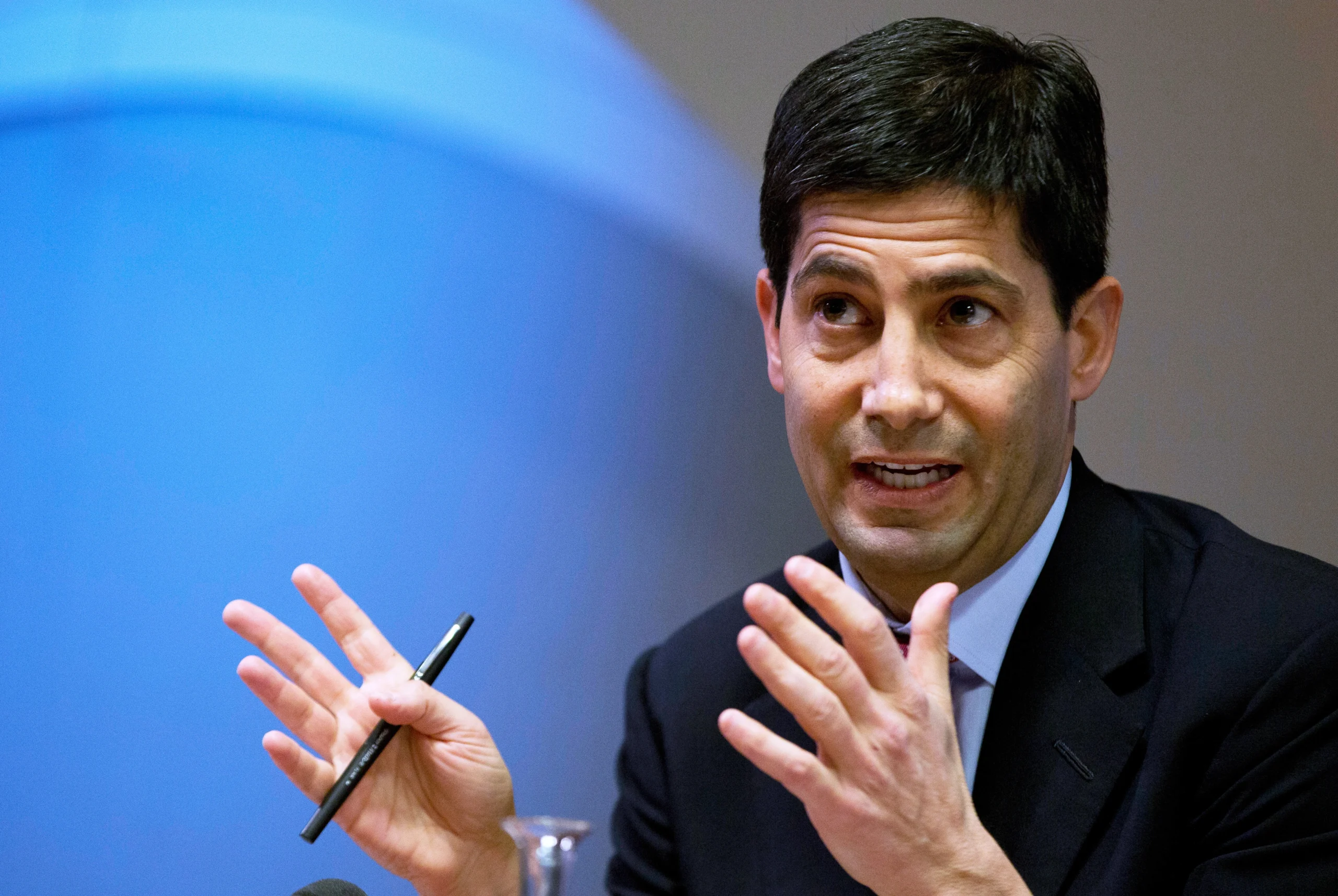
The Federal Reserve’s rate-setting committee held its benchmark borrowing rate steady on July 29, keeping it in a range of 3.5% to 3.75% — but the calm on the surface masked one of the most contested votes of the post-pandemic era. The Federal Open Market Committee split 9 to 3, with three members pushing to raise rates rather than hold, according to NPR’s coverage of the decision.
Chair Kevin Warsh, who took over the Eccles Building earlier this year after a nomination process that rattled bond markets, used his post-meeting press conference to make a point of not making a point. Rather than signal where rates are headed next, Warsh told reporters the Fed would judge market reaction “direct and unfiltered” instead of offering the rolling forecasts investors have come to expect, a stance detailed in CNBC’s meeting recap.
A rate hike was genuinely on the table
What made this meeting unusual wasn’t just the dissent — it was how close markets came to pricing in a hike rather than a cut. Fed funds futures tracked by CME Group put the odds of a rate increase at roughly 35% heading into the decision, up sharply from 26% a week earlier, according to CNBC’s markets analysis. That is a striking reversal from the rate-cutting cycle many investors had expected when Warsh’s nomination was first floated as a “productivity-led growth” pivot away from his predecessor’s caution.
The market reaction told its own story. The S&P 500 slid roughly 0.6% during Warsh’s press conference, the Dow shed more than 840 points intraday, and the 10-year Treasury yield rose to 4.657%, even as the Fed opted for a hold rather than a hike.
Why Warsh is playing it differently
Warsh’s approach reflects both economic and political calculus. Treasury yields have climbed since the Fed’s prior meeting despite the hold, a dynamic Warsh acknowledged directly. And unlike his predecessor, Warsh has been explicit that he intends to set policy independent of the White House’s preferences — even as he awaits a possible additional ally on the Board once a pending internal review concludes, according to CNBC’s analysis of the political backdrop.
Why this matters beyond Washington
A genuinely undecided Fed has knock-on effects well past US borrowers. Higher-for-longer Treasury yields pull global capital toward dollar assets, complicating rate paths in London, Ottawa, and emerging markets alike — a dynamic playing out in parallel with the UK’s own fiscal squeeze (see our companion report on the Autumn Budget) and China’s deflationary drag on global demand. For businesses and investors across the Gulf, Southeast Asia, and South Asia weighing dollar-denominated debt or dollar-pegged currencies, an unpredictable Fed chair is arguably a bigger variable than the rate level itself.
Discover more from The Economy
Subscribe to get the latest posts sent to your email.

The IMF’s Executive Board completed Pakistan’s third review of its 37-month Extended Fund Facility (EFF) and second review of its Resilience and Sustainability Facility (RSF) on May 8, 2026, unlocking roughly $1.1 billion under the EFF and $220 million under the RSF, according to the IMF’s official statement. Total disbursements under both arrangements now stand at roughly $4.8 billion. Acting Chair Nigel Clarke credited Pakistan’s “strong program implementation” for supporting macroeconomic recovery and building resilience to shocks.
The Genuinely Good Numbers
By the IMF’s own account, the underlying data supports the assessment. GDP growth accelerated to an average of 3.8% year-on-year in the first half of FY26, driven by the auto, construction and garment industries, even accounting for flood disruption in July-August, according to the IMF’s staff report. Inflation, while ticking up to 7.3% year-on-year in March as commodity price pass-through hit domestic energy prices, remained within a broadly contained range, with core inflation at 7.6%. The current account was described as broadly balanced, and reserve rebuilding exceeded earlier projections — the State Bank of Pakistan projects reserves continuing to climb to roughly $18 billion by June 2026, according to analysis from the Islamabad Policy Research Institute.
The State Bank confirmed receipt of $1.3 billion from the IMF on May 12, 2026, according to CSS Prep’s policy analysis, which notes reserves had fallen to dangerously low levels in 2022-2023 before this recovery.
The External Risk the IMF Flagged Explicitly
The Fund’s own report is notably candid about downside exposure: under its April 2026 World Economic Outlook adverse scenario, the cumulative hit to Pakistan’s GDP from continued Middle East conflict could rise to around 1.5 percentage points by FY27, with inflation and the current account deficit each worsening by roughly 1.5-2.5 percentage points of GDP, according to the IMF’s staff country report. Given Pakistan’s reliance on imported energy, oil price volatility discussed in the IMF’s global outlook feeds directly into this specific country risk.
The Reform Question That Keeps Recurring
The structural policy conditions attached to this review read as familiar territory: sustaining fiscal consolidation, broadening the tax base, maintaining tight monetary policy to keep inflation within the State Bank’s target range, and advancing energy-sector reform — commitments the IMF’s own end-of-mission statement described as still “ongoing” rather than complete, per the IMF’s March 2026 mission statement.
A sharper framing comes from Pakistani policy analysts themselves: reforms that would genuinely break the IMF-program cycle — broadening the tax base to include agriculture and retail, ending energy subsidies, privatizing loss-making state-owned enterprises — impose concentrated, visible costs on politically organized interest groups, while the benefits of reversing those costs are diffuse and delayed, according to CSS Prep’s analysis. That political-economy imbalance, the analysis argues, consistently favors populist continuation of stabilization support over the structural reform that would end the need for it — a pattern this third review’s genuine macroeconomic progress doesn’t yet break.
Social Cost of the Adjustment
Pakistan’s poverty headcount rate rose to 25.3% in FY24, up sharply from 18.3% in FY22, driven by overlapping shocks from COVID, floods and inflation, according to the IMF’s staff report. The Benazir Income Support Programme (BISP) remains the primary social protection mechanism absorbing the distributional cost of IMF-mandated energy price increases and fiscal tightening — whether its scale is adequate remains, in the IMF’s own words, a live policy question rather than a settled one.
Discover more from The Economy
Subscribe to get the latest posts sent to your email.
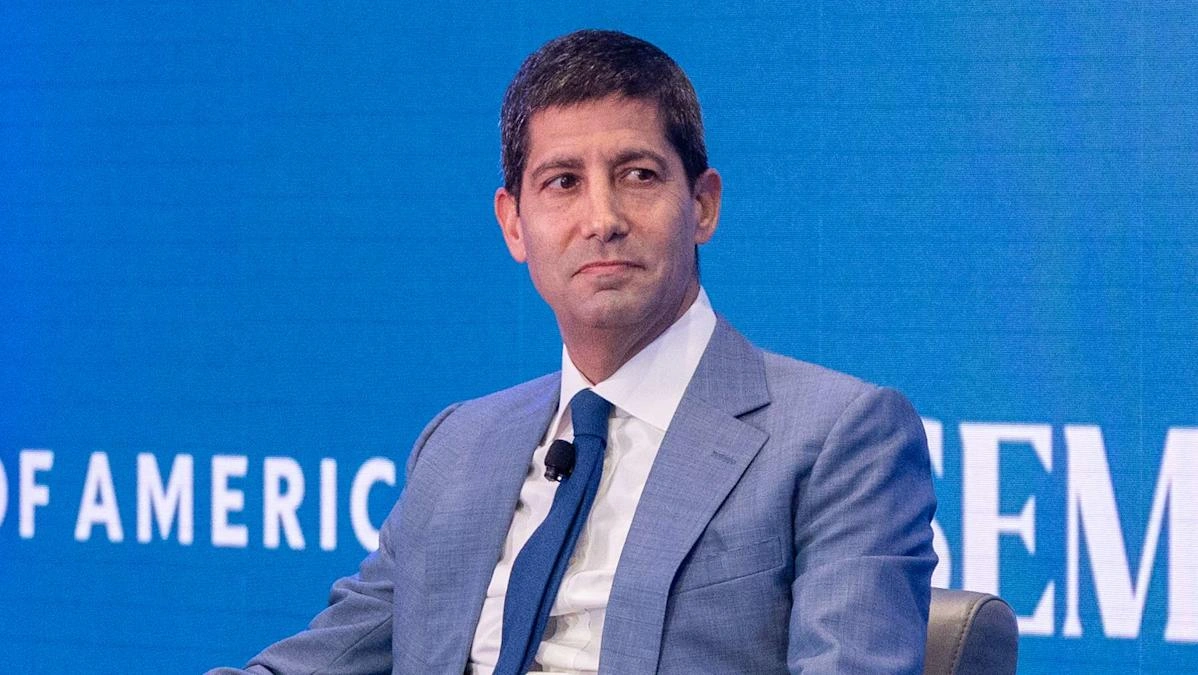
The Federal Reserve held its benchmark interest rate steady at 3.5%-3.75% on July 29, 2026, but the more consequential detail was the vote itself: 9-3, with three regional Federal Reserve Bank presidents — Cleveland’s Beth Hammack, Minneapolis’s Neel Kashkari, and Dallas’s Lorie Logan — dissenting in favor of a rate hike, according to CNBC’s coverage of the meeting. Inflation has remained above the Fed’s 2% target for more than five years, the underlying tension driving the split.
A New Chair, A Different Communication Style
The decision was the latest under Fed Chair Kevin Warsh, who took over after Jerome Powell’s term expired on May 15, 2026, according to iShares’ 2026 Fed outlook. Warsh has deliberately shortened the Fed’s post-meeting statements and pulled back on the kind of explicit forward guidance markets had grown accustomed to under his predecessors — he has reportedly dedicated one of five internal task forces specifically to rethinking how the Fed communicates, according to CNBC’s reporting. Warsh has publicly called inflation “a choice,” repeatedly emphasizing the importance of getting prices under control in recent congressional testimony.
At his post-meeting press conference, Warsh pushed back on characterizing the decision as a “pause,” instead describing it as “a rigorous review of the economic situation” and “a view of what our own homework is to try to resolve those questions in the period ahead,” according to a separate CNBC recap. Warsh has reportedly used the phrase “family fight” 13 times across five public appearances to acknowledge the committee’s internal divisions — an unusually candid framing for a sitting Fed Chair.
Why the Split Exists
Governor Christopher Waller has separately voiced concern that higher rates could become necessary without more inflation progress, even though he voted for the hold at this meeting. The full committee’s June projections penciled in one quarter-point increase by the end of 2026 — a notable shift from the rate-cutting path markets had priced in earlier in the year, according to the Fed’s own June 2026 Summary of Economic Projections, which explicitly flags that the federal funds rate outlook “is subject to considerable uncertainty” given how sensitive each participant’s view is to how inflation and employment data evolve from here.
Complicating Factors
Renewed U.S.-Iran tensions have already pushed mortgage rates near a one-year high independent of the Fed’s own decisions, since longer-term rates track Treasury yields and inflation expectations rather than the Fed funds rate directly, according to CNBC’s analysis. Separately, iShares had earlier projected that once a new Chair was confirmed, the Fed might seek one or two rate cuts to bring rates closer to a 3%-3.25% range — a path the July hold and hawkish dissents now put in serious doubt.
The next FOMC meeting is scheduled for September 15-16, 2026, and will include a fresh Summary of Economic Projections, according to Forbes’ Fed tracker — the next real test of whether Warsh’s committee can narrow its internal divide or whether the “family fight” framing becomes the defining feature of Fed policy through the rest of 2026.
Discover more from The Economy
Subscribe to get the latest posts sent to your email.

Pakistan IMF Program 2026: Inside the Push Toward an Interest-Free Economy

Russia Oil Revenue 2026: How Sanctions on Rosneft and Lukoil Are Draining the War Chest

Canada US Trade War 2026: Inside Carney’s Push to Cut Ties With Trump’s Tariffs

Rachel Reeves’s £25 Billion Problem: What the Autumn Budget Gap Means for Britain

Inside the Fed’s Most Divided Vote in Years: Why Warsh Held the Line on Rates

Pakistan Passed Its Third IMF Review

The Fed Is Fractured — And a New Chair Just Made It Louder, Not Quieter

The UK Economy in 2026 Is Neither Recession Nor Recovery :Stagflaton

Indonesia’s $121 Billion Nickel Bet Is Facing a Battery Chemistry

Why Ultra-Wealthy Families Are Splitting Between Singapore and Dubai inmarkets 2026

China Chose Political Control Over Fixing Its Deflation Trap in 2026

Oil Markets Are Oversupplied and Geopolitically Explosive at the Same Time

Russia’s Budget Deficit Blew Past Its Full-Year Target in Three Months

Malaysia’s Rare Earth Bet: Six Powers Are Negotiating for Kuantan at Once

Russia Bans Diesel Exports 2026: Global Fuel Market Impact Explained

Gold Price Forecast 2026: Fed’s July 29 Decision and Record Central Bank Buying Explained

Strait of Hormuz Blockade 2026: Oil Prices Surge 9% as US-Iran Conflict Reignites

Strait of Hormuz 2026: Why Markets Still Don’t Trust It’s Open

Down But Not Out: Inside the Slow Sinking of Russia’s War Economy

China Politburo July 2026: Stimulus Signals Explained

Gulf Capital Retreat From Pakistan 2026: UAE Loan Freeze & What It Means

Pakistan Economy 2026: GDP Grows 3.7% as IMF Completes EFF Review Amid Middle East Risk

Apple vs OpenAI Lawsuit: The Economic Story Behind the Headline

Global Stock Market Selloff 2026: Stagflation Fears Return as Iran Conflict Reignites

Indonesia Russian Oil Imports 2026: Why Jakarta Is Diversifying Crude Supply

The Yuan Now Settles 67% of Russian Oil Payments — Quiet De-Dollarization in Action

AI Capex Bubble 2026: The Hidden $662B Debt Nobody Reports

Pakistan’s Economic Survey FY26: Inflation Spike Insights
-

 Markets & Finance7 months ago
Top 15 Stocks for Investment in 2026 in PSX: Your Complete Guide to Pakistan’s Best Investment Opportunities
-

 Analysis5 months ago
Johor’s Investment Boom: The Hidden Costs Behind Malaysia’s Most Ambitious Economic Surge
-

 Analysis6 months ago
Top 10 Stocks for Investment in PSX for Quick Returns in 2026
-

 Analysis6 months ago
Brazil’s Rare Earth Race: US, EU, and China Compete for Critical Minerals as Tensions Rise
-

 Banks7 months ago
Best Investments in Pakistan 2026: Top 10 Low-Price Shares and Long-Term Picks for the PSX
-

 Investment7 months ago
Top 10 Mutual Fund Managers in Pakistan for Investment in 2026: A Comprehensive Guide for Optimal Returns
-

 Global Economy7 months ago
15 Most Lucrative Sectors for Investment in Pakistan: A 2025 Data-Driven Analysis
-

 Global Economy7 months ago
Pakistan’s Export Goldmine: 10 Game-Changing Markets Where Pakistani Businesses Are Winning Big in 2025