
Analysis
Singapore’s Margin Squeeze vs Malaysia’s Patient Payoff: Why F&B Operators Are Betting on Johor Bahru as the RTS Link Looms

Pinaki Rath has built a career on the art of calibrated risk. As chief executive of Les Bouchons, the French bistro group that has been a quiet institution of Singapore’s restaurant scene for decades, he has navigated rent hikes, labour shortages, post-pandemic convulsions, and the peculiar social physics of feeding a city-state where a $40 steak is simultaneously aspirational and ordinary. But lately, Rath finds himself voicing something more structurally disorienting than any of those past disruptions — a moment when Singapore’s famous reliability has quietly become a cage.
“Singapore gives you reliability but squeezes your margins,” Rath said. “Malaysia gives you margin opportunities, but demands far more patience and market education.”
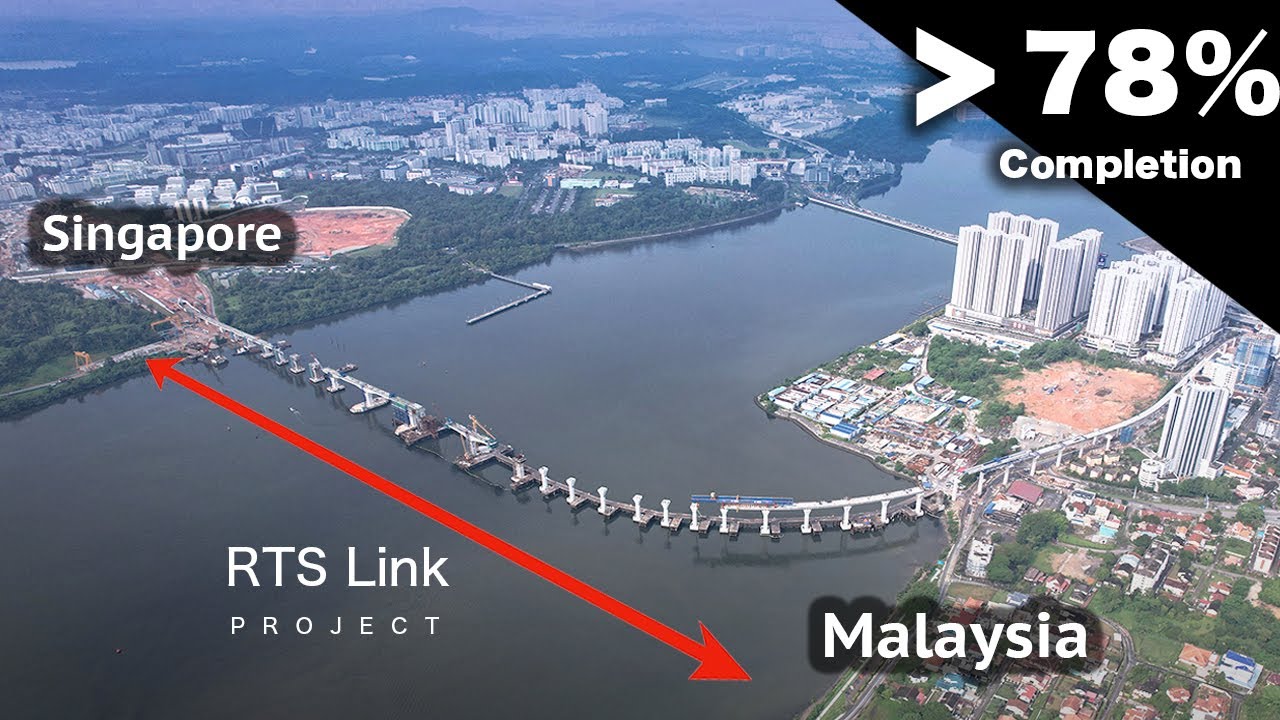
That sentence, deceptively simple, encodes one of the most important strategic dilemmas facing Singapore F&B operators Malaysia-bound expansion decisions in a generation. The squeeze he describes is not cyclical — it is structural. And as the Johor Bahru–Singapore RTS Link edges toward its end-2026 commercial launch, the calculus for ambitious operators is shifting in ways that Singapore’s urban planners and mall landlords are only beginning to reckon with.
The Squeeze That Never Relents: Singapore’s Structural F&B Cost Crisis
Let’s be precise about what “squeeze” means, because this is not simply the familiar lament that Singapore is expensive. It is something more ominous: a structural convergence of cost pressures that has made the city-state’s famous reliability premium a burden rather than a benefit for all but the most capitalised operators.
In 2025, Singapore recorded 2,431 F&B establishment closures in the first ten months alone — a monthly rate of roughly 307 closures at peak, exceeding even pandemic-era levels, according to government data cited by Reuters. Critically, 82% of closed outlets under five years old had never posted a single profitable year in their tax filings, per figures shared by Deputy Prime Minister Gan Kim Yong. The Restaurant Association of Singapore declared a “serious manpower crisis” in early 2025, urging government review of foreign worker quotas as larger chains began outbidding smaller independents with near-double wage offers to secure kitchen staff.
Rent remains the loudest pressure — but it is no longer acting alone. When Flor Patisserie’s landlord raised monthly rent from S$5,400 to S$8,500 (a 57% jump at lease renewal) after 12 years of continuous operation, it was not aberrant. It was diagnostic. Across Singapore’s commercial corridors, 10–30% rental increases at renewal have become normalised, driven by institutional REIT landlords under their own investor pressure with little structural incentive to ease. Utilities costs climbed. GST hit 9%. And a labour market constrained by strict foreign worker levies and a shrinking domestic talent pool has pushed what used to be a 28–32% wage-to-revenue ratio into decidedly less manageable territory.
The sector now operates on net margins of 5–7% — a structure in which the closure of a Michelin-starred restaurant is no longer news but a recurring feature. Esora, Euphoria, Alma by Juan Amador, Sushi Oshino, Terra Tokyo Italian: all shuttered in 2024–2025 despite critical acclaim. The Providore group, a recognisable lifestyle brand with six outlets and over a decade of operation, pulled its shutters down in March 2026. Lolla, a 14-year Mediterranean institution with Michelin recognition, closed in February. These are not marginal operators failing at the edges. They are bellwether collapses at the centre.
The trap is this: Singapore’s stability — its rule of law, predictable utilities, affluent consumer base, tourist foot traffic — has long justified paying three to four times the rent of any comparable regional city. But stability only generates returns if margins are thick enough to absorb the premium. When margins compress below a certain floor, stability becomes a very expensive way to slowly lose money.
The Temptation Across the Causeway: Why Johor Bahru F&B Expansion Is Accelerating
Here is where the narrative becomes more interesting — and more nuanced — than the standard “Singapore expensive, Malaysia cheap” shorthand implies.
Johor Bahru F&B expansion RTS as a strategic thesis is no longer a fringe aspiration. The Malaysian Investment Development Authority (MIDA) has publicly acknowledged growing interest from Singapore-based F&B operators seeking Johor operations, noting at least one concrete model already live: a Singapore-headquartered group has established a central kitchen in Johor for halal-certified production, gaining cost efficiencies and — crucially — a regional export capability into the Middle East. That is not retreat. That is strategic geographic arbitrage.
The rent arithmetic alone is striking. Commercial F&B space in established Johor Bahru corridors runs at roughly 20–35% of equivalent Singapore rates. Labour costs, even accounting for cross-border workforce management complexity, remain substantially lower. Ingredient sourcing benefits from Malaysia’s agricultural base and lower import duties on regional produce. For operators running high-volume casual concepts, achievable EBITDA margins in JB can be two to three times those available in Singapore’s competitive restaurant belt.
But the structural story — the one that changes the long-term payoff calculus categorically — is the RTS Link.
The RTS Link: Infrastructure as Market-Maker
The Johor Bahru–Singapore Rapid Transit System Link, now in its final commissioning phase with structural works largely completed by April 2026 and system testing scheduled to begin as early as September, is targeted to begin passenger service by end-2026 — with January 2027 as the formal operational milestone confirmed by Malaysian transport minister Anthony Loke. Fares are set between S$5–7 per one-way journey. Each of eight CRRC-manufactured trains carries over 600 passengers, operating at peak intervals of 3.6 minutes — a capacity of up to 10,000 passengers per hour per direction.
The initial daily ridership projection of 40,000 passengers — rising to 140,000 over time — understates the behavioural transformation underway. DBS Group Research estimates that an incremental 40,000 daily travellers post-RTS opening could generate S$1.5–2.1 billion in annual retail spending leakage from Singapore to Johor, equivalent to 3–4% of Singapore’s total retail sales. Within that, F&B is the most exposed trade category: DBS calculates a potential S$450–620 million drop in Singapore F&B sales annually once the RTS becomes routine — roughly 4–5% of 2023 sector revenues. The bank’s channel checks found F&B savings of 30–50% for Singaporeans spending in JB.
Read that again. Before a single new Johor restaurant has opened to capture this wave, the RTS is already projected to divert nearly half a billion Singapore dollars of F&B spending northward per year. The operators who have already positioned themselves in JB — who have built brand recognition, localised their menus, and trained their teams — will be capturing that flow rather than mourning it.
The broader geopolitical context amplifies this further. The Johor-Singapore Special Economic Zone (JS-SEZ), formally signed in January 2025, covers 3,588 square kilometres across nine designated flagship zones, with a tax framework that includes special corporate rates of 5% for up to 15 years in qualifying sectors, stamp duty exemptions on commercial property purchases, and the IMFC-J investment facilitation centre involving 30+ government agencies. Johor’s first-quarter 2025 FDI surged by MYR 24 billion year-on-year. This is not a speculative frontier — it is an economy in active, policy-backed ignition.
The Hidden Costs of “Easy” Malaysia: What Les Bouchons in Johor Bahru Knows That Others Don’t
And yet Pinaki Rath’s formulation deserves to be sat with far longer. He did not say Malaysia was better. He said it was different in ways that punish the impatient — and patience is the one resource that margin-squeezed Singapore operators have in shortest supply.
“Malaysia gives you margin opportunities, but demands far more patience and market education.”
This is the insight that separates operators who will succeed in the Johor Bahru F&B expansion wave from those who will burn through their capital advantage within 18 months. The hidden costs of Johor Bahru operations are real, and they are systematically underestimated by Singapore operators accustomed to a consumer base that is wealthy, cosmopolitan, food-literate, and — crucially — already educated about what a S$35 glass of natural wine or a S$28 bowl of artisanal ramen represents in the value equation.
The Consumer Education Gap
Johor Bahru’s dining culture, despite its rapid evolution, remains a market in transition. The consumer base is more price-anchored, more accustomed to hawker-level value propositions, and more oriented toward family-style, occasion-based dining than Singapore’s café-and-bar ecosystem. Concepts requiring sustained menu education — farm-to-table provenance, natural wine pairings, omakase formats, zero-waste kitchen philosophy — face not just a marketing challenge but an epistemological one: they must build the category before they can sell the product.
This takes time. In Singapore, an ambitious restaurant can reach sustained awareness within 12–18 months with the right press and social strategy. In Johor, even a well-executed concept may need 24–36 months to build the loyal, returning customer base that generates stable revenue. During that window, operators must absorb operational losses on the basis of a future payoff that is probable but not guaranteed.
Regulatory and Operational Friction
Additional friction points stack up in ways Singapore-based operators rarely model accurately. Halal certification — near-mandatory for operators targeting the majority Malaysian market — requires operational changes that go beyond paperwork, touching supplier relationships, kitchen segregation protocols, and staff management practice. Regulatory navigation across Malaysian federal and Johor state frameworks is less streamlined than Singapore’s single-authority environment, despite the JS-SEZ’s one-stop investment centre. Talent pipelines, while improving, remain less dense at the experienced-manager level than operators sourcing from Singapore’s hospitality schools expect.
And for operators maintaining a Singapore flagship while building a Johor presence, the management bandwidth tax is severe. Running two markets across a border — even a five-minute train ride wide — doubles the complexity of everything from inventory management to compliance calendars to staff rostering.
The Causeway F&B operators who have successfully crossed are candid about this reality. The economics work — eventually. But the path is paved with under-forecasted patience costs that eat into the very margin advantage operators crossed the border to secure.
Singapore Reliability vs Malaysia Margins: Who Actually Wins?
The contrarian thesis of this article is not that Singapore is dying and Johor Bahru is the promised land. It is more precise than that — and ultimately more interesting.
Singapore’s stability is now a trap for the merely competent. Malaysia’s messiness is an opportunity for the strategically sophisticated.
Singapore remains a world-class market for operators who have achieved genuine brand differentiation: concepts with pricing power, loyal regulars, and identities that cannot be replicated by the next well-capitalised chain. If your consumer is paying 40% for intangible brand equity and 60% for the food, Singapore’s foot traffic and institutional reliability still justify the cost structure. If you are competing primarily on quality and value, Singapore’s margin environment has become existential.
The Sophisticated Operator Playbook
The operators best positioned for the post-RTS era are pursuing a dual-market architecture: retaining a Singapore flagship as a brand validation platform while building operational scale and margin depth in Johor. The Singapore outlet justifies the brand story. The Johor operation generates the actual returns.
This is not hypothetical. The central kitchen model — Johor production, Singapore and regional distribution — is already in operation among Causeway F&B operators. It exploits the same logic that has made Johor attractive to Singapore’s manufacturing sector for three decades: proximity without the premium.
The strategic upside for operators who move decisively includes four distinct advantages:
Revenue diversification gives operators dual exposure: the growing Malaysian middle-class dining market and the incoming wave of Singapore day-trippers post-RTS, two distinct revenue streams with different currency dynamics and seasonal demand patterns.
Margin restoration follows when even modest JB operations running at 15–18% EBITDA can cross-subsidise a Singapore flagship running at 8–10%, allowing the overall group to invest in quality without being held hostage to one city’s cost environment.
Talent pipeline development becomes possible when JB’s lower labour costs allow operators to develop junior staff who can be rotated to Singapore roles, partially addressing the manpower crisis on the north side of the Causeway.
Export optionality opens when Johor’s halal-certified production infrastructure, combined with the JS-SEZ’s ASEAN connectivity, creates pathways to Indonesia, the Gulf, and broader regional markets — destinations categorically inaccessible to Singapore-only operators.
Broader Implications: Johor as ASEAN’s Next Growth Engine
The F&B movement is a leading indicator of something larger. What is happening on the Johor Bahru–Singapore axis is not merely a story about restaurant rent differentials. It is an early chapter in the redrawing of Southeast Asia’s economic geography.
The JS-SEZ’s nine flagship zones represent a conscious attempt by both governments to create a genuinely integrated economic corridor — one that deploys Singapore’s regulatory quality and financial sophistication alongside Malaysia’s land abundance, labour depth, and natural resource base. The RTS Link’s transformative passenger capacity, combined with the Johor Super Lane logistics initiative and streamlined customs procedures, is beginning to dissolve the friction that has historically made cross-border business feel more complicated than its six-kilometre geographic separation warranted.
The Hong Kong–Shenzhen analogy is instructive and often cited — perhaps too readily. That corridor took decades to find its equilibrium, passing through speculative excess, regulatory friction, and periodic political turbulence before becoming the world’s most productive cross-border manufacturing cluster. The Singapore–Johor corridor is following recognisably similar logic, with F&B as one of the more visible early-mover sectors, but it will not be friction-free. The JS-SEZ’s pragmatic investor sentiment — optimism tempered by execution challenges — is precisely the right posture.
For Singapore policymakers, the implications demand proactive rather than reactive response. The projected S$450–620 million in annual F&B spending diversion to JB cannot be stopped by protectionism — the bilateral logic of the JS-SEZ and the RTS Link make that both impossible and counterproductive. The correct response is accelerating the conditions for irreplaceability: easing skilled foreign worker restrictions for experienced kitchen and hospitality roles, creating regulatory fast-tracks for food innovation, and investing in culinary training pipelines that make Singapore’s food scene genuinely difficult to replicate in any other market. Singapore high costs push F&B to Johor Bahru — that headline will keep writing itself. The question for policymakers is whether Singapore’s remaining operators are differentiated enough to justify staying.
The Verdict: Stability Was Never the Strategy
Here is the prediction this column is willing to commit to, in April 2026, with the RTS still months from opening and the full contours of Johor’s consumer boom still coming into focus.
The operators who will define Singapore’s F&B landscape in 2030 are not the ones who stayed and absorbed the squeeze, nor those who fled to Johor and discovered that cheaper rent does not automatically generate revenue. They are the ones who understood Rath’s formulation deeply enough to do both — who had the sophistication to use Singapore’s reliability as a launch platform and Malaysia’s margins as a growth engine, who invested in the patience that Johor’s market education demands before the RTS made that patience unnecessary.
The RTS link impact on F&B operators 2026 will be asymmetric. Operators without a Johor presence will watch the spending diversion as spectators, scrambling to differentiate too late. Those with early positioning will welcome the daily flood of 40,000 new potential customers stepping off a five-minute train ride, already warmed up, already curious, already spending.
Singapore high costs push F&B to Johor Bahru — that headline will keep writing itself, loudly and repeatedly, over the next 24 months. But the deeper story is not about costs. It is about foresight. About who had the patience, in 2024 and 2025 when Johor still felt uncertain and complicated, to build something before the infrastructure made it obvious.
In the economics of frontier consumer markets — and make no mistake, Johor’s dining scene, despite its proximity to one of the world’s wealthiest city-states, is still in frontier territory — the early movers do not merely capture market share. They write the categories. They become the benchmark against which every subsequent entrant is measured.
Les Bouchons understood this. The operators who act on it now, rather than waiting for the train to arrive before booking their ticket, will understand it too.
The five-minute crossing is almost ready. The question is which side of it you intend to be on.
Data Summary: The F&B Cross-Border Shift in Numbers
| Metric | Figure | Source |
|---|---|---|
| Singapore F&B closures (Jan–Oct 2025) | 2,431 (avg. 254–307/month) | MTI Singapore |
| Unprofitable closures (<5 yrs old) | 82% never posted a profit | DPM Gan Kim Yong |
| Typical net margin, Singapore F&B | 5–7% | Industry estimates |
| Rent increase, Flor Patisserie case | 57% (S$5,400 → S$8,500/month) | Reported |
| Projected annual retail leakage to JB (post-RTS) | S$1.5–2.1 billion | DBS Group Research |
| F&B-specific spending diversion to JB | S$450–620 million/year | DBS Group Research |
| RTS daily ridership at launch | 40,000 passengers | LTA / MOT |
| RTS peak capacity | 10,000 pax/hour/direction | LTA |
| RTS one-way fare | S$5–7 | RTS Operations (H2 2026 confirmation) |
| F&B cost savings in JB vs Singapore | 30–50% | DBS channel checks |
| Johor Q1 2025 FDI growth | +MYR 24 billion YoY | MIDA |
| JS-SEZ total area | 3,588 km² | JS-SEZ Agreement |
Discover more from The Economy
Subscribe to get the latest posts sent to your email.



Key Takeaways
- Rolex’s secondary market rose approximately 7.9% year-over-year as of 2026 (per WatchCharts data) — trailing Patek Philippe (+16.2%) and Tudor (+11.4%) but still outperforming Audemars Piguet (+3.4%).
- Rolex raised U.S. retail prices 4–9% in January 2026 (steel models ~5.6%, gold models ~8.7%), narrowing the historical gap between retail and pre-owned pricing.
- Not every model appreciates: steel sports references (Submariner, GMT-Master II, Daytona) have held value far better than two-tone or widely available dress references like the standard Datejust.
- The Lady-Datejust posted the sharpest 2026 gain among tracked collections — up 22.73%, from roughly $9,269 to $11,376 — driven by demand for smaller, “everyday luxury” watches.
- Gold’s rise past $2,400/oz has directly lifted the investment case for Rolex’s precious-metal references (Day-Date, Sky-Dweller, Yacht-Master).
The Model-by-Model Picture
| Category | 2026 Trend |
|---|---|
| Lady-Datejust | +22.73% (strongest performer among tracked collections) |
| Steel sports models (Submariner, GMT-Master II) | Held value well; corrected from 2022 peak but stabilized above retail |
| Daytona | Corrected from highs above $50,000 to the mid-$30,000s; still among the most sought-after references |
| Two-tone/widely available Datejust | Flat to negative — “holds value” is an overstatement for this category |
| Gold references (Day-Date, Sky-Dweller) | Lifted by gold’s rise above $2,400/oz |
Why the “Rolex Always Appreciates” Myth Is Fading
The pandemic-era boom pushed some references — the Daytona above all — to speculative highs disconnected from historical norms. Since the March 2022 peak, steel sports models have compressed meaningfully, and dealers who bought inventory near the top have in some cases faced 20–40% markdowns on liquidation. The lesson for 2026 buyers: Rolex as a category is not a monolith. Value retention depends heavily on specific reference, condition, and whether the piece comes with box and papers (“full set”).
What’s Actually Driving 2026 Strength
- Retail price increases raise the floor. When a new Submariner retails at $10,050 (up from $9,500), a pre-owned example at $11,000–$12,000 suddenly represents a smaller premium — narrowing the gap without secondary prices actually moving.
- Supply discipline remains Rolex’s core lever. The brand has never confirmed production numbers, and secondary-market premiums remain entirely a function of Rolex’s own manufacturing decisions — a risk factor as much as a support.
- Certified Pre-Owned rollout. Rolex’s now fully rolled-out CPO program has changed how buyers transact in the used market, adding a layer of brand-verified legitimacy that supports pricing.
The Case for Rolex as a Portfolio Diversifier
Financial advisors increasingly frame luxury watches not as a replacement for equities or bonds, but as a tangible, historically low-correlation diversifier — one that carries its own risks (illiquidity, condition-dependent pricing, no yield) but has demonstrated multi-decade resilience for specific references.
Is Rolex a good investment in 2026?
It depends heavily on the specific reference. Steel sports models like the Submariner and Daytona have held or grown in value; two-tone and widely available dress models generally have not. Overall, Rolex’s secondary market rose about 7.9% year-over-year in 2026, trailing Patek Philippe but ahead of Audemars Piguet.
Discover more from The Economy
Subscribe to get the latest posts sent to your email.

Navigating Mortgage and Loan Refinancing in a High-Yield Environment
Global public debt crossing critical thresholds has kept central bank policies volatile, resulting in fluctuating US Treasury yields throughout 2026. For homeowners and commercial property holders burdened by previous high-interest borrowing cycles, finding optimal refinance windows has become a high-stakes financial puzzle. Stalled disinflation and stubborn employment numbers mean rate cuts are incremental, requiring borrowers to act with precision.
Timing your mortgage or commercial loan refinance in this environment requires a deep understanding of yield curve movements and lender risk appetites.
Decoding 2026 Refinance Dynamics
The 10-Year Treasury Yield Benchmark
Mortgage rates continue to track closely with the 10-year US Treasury yield. When macroeconomic anxiety spikes debt issuance, yields rise, tightening consumer borrowing capacity. Savvy borrowers monitor weekly Treasury auctions to lock in rates during brief dip windows.
Hybrid ARMs and Alternative Structures
With fixed rates remaining elevated, 7/1 and 10/1 adjustable-rate mortgages (ARMs) have surged in popularity. These products offer lower initial monthly payments, giving borrowers breathing room until central bank easing cycles fully materialize.
| Loan Product | Current Rate Range | Best For | Key Risk Factor |
| 30-Year Fixed Mortgage | 6.2% – 6.8% | Long-term predictability | Higher initial monthly outlay |
| 7/1 Hybrid ARM | 5.5% – 5.9% | Short-term ownership / flipping | Rate reset risk after year 7 |
| Commercial Refinance | 7.0% – 8.2% | Corporate asset restructuring | Strict DSCR lender covenants |
Actionable Steps for Successful Refinancing
To maximize your chances of securing favorable refinance terms in a volatile market, follow a disciplined preparation strategy.
Boost Your Credit Score Immediately: Lenders in 2026 are applying stringent credit tiering; a 20-point increase can drop your APR by a crucial quarter-point.
Shop Regional Credit Unions: Smaller financial institutions often offer portfolio loans with more flexible underwriting than major national banks.
Calculate the Break-Even Point: Ensure your total closing costs are recouped through monthly savings within 24 months of closing.
“Market Strategist View: Refinancing in 2026 is an exercise in opportunistic timing. Borrowers must maintain immaculate financial profiles ready to strike the moment Treasury yields dip.”
Mastering the complexities of today’s debt environment ensures you can successfully lower your debt service costs and protect your long-term financial stability.
Discover more from The Economy
Subscribe to get the latest posts sent to your email.

The days of pulling generic auto insurance quotes based purely on your zip code and age are officially over. In 2026, insurance comparison engines are powered entirely by generative AI and real-time telematics. These platforms digest thousands of live data points—ranging from your driving smoothness via connected vehicle sensors to real-time traffic congestion patterns—to generate hyper-personalized premiums instantly.
For consumers, this evolution represents both a massive opportunity for savings and a hidden trap for penalty pricing. Understanding how AI algorithms evaluate risk is essential for anyone looking to lower their monthly auto insurance premiums.
How AI Comparison Engines Evaluate Your Risk Profile
Behavioral Telematics and Connected Cars
Modern cars stream performance data directly to insurance aggregators. Generative AI models analyze braking sharpness, acceleration curves, cornering G-forces, and phone distraction metrics. Drivers who maintain smooth, defensive habits are rewarded with dynamic rate cuts of up to 40% compared to traditional rating tiers.
Predictive Traffic and Weather Modeling
AI tools now cross-reference your daily commute route with predictive weather and accident probability models. If your standard parking location or driving corridor has a statistically higher incidence of uninsured motorist claims, your quotes will reflect that hyper-local risk assessment.
| Comparison Factor | Traditional Rating Model | 2026 Generative AI Model | Impact on Premium |
| Mileage & Usage | Annual estimated odometer reading | GPS tracking & live trip duration | High (up to 35% savings) |
| Driving Behavior | MVR driving record & accidents | Real-time braking, speed, & G-force | Critical (determines tier) |
| Vehicle Tech | Make, model, and safety rating | ADAS calibration & repair cost data | Moderate |
Strategies to Lower Your AI-Driven Insurance Quote
To outsmart the algorithm and secure the lowest possible premium in 2026, drivers must proactively manage their digital footprint on insurance platforms.
Opt-In for Telematics Trial Periods: Many insurers offer immediate 15% discounts just for installing their driving app; let it track safe habits for 30 days to lock in permanent savings.
Scrub Unverified Public Records: Ensure your motor vehicle report is free of clerical errors that AI risk models misinterpret as reckless behavior.
Compare AI Aggregators: Use platforms that integrate multi-carrier API feeds rather than single-brand comparison sites to find the best risk-adjusted rate.
“Industry Note: AI-driven pricing rewards transparency and precision. Drivers who actively manage their telematics data consistently out-save those relying on legacy quote calculators.”
Embracing AI comparison tools allows savvy policyholders to customize coverage limits precisely to their driving habits, eliminating wasted premium spend while ensuring robust protection.
Discover more from The Economy
Subscribe to get the latest posts sent to your email.

Neocloud Economics in 2026: GPU Debt, Utilization and Power

What Is a Neocloud? How AI GPU Clouds Work and Compare

Lula Re-elected in 2026: What Changes for the Dollar, Brazilian Stocks, and Interest Rates?

Lula Wins Brazil’s 2026 Election: Five Economic Tests for 2027

SSI November 2026 Payment: Why Benefits Arrive October 30

Russia Sanctions Waiver: What Asian Oil Buyers Gain

Asia Markets Weekly: How Oil, US Yields and the Fed Reach Tokyo, Kuala Lumpur and Karachi

Gold Near $4,000: Buy, Hold or Wait? A Pakistan Tola Price Guide

US 10-Year Treasury Yield Near 5%: The Hidden Cost for Pakistani Investors

Fed Meeting on October 28: Hike or Hold—and Why Pakistan Investors Should Care

Can Pakistan Turn US–Iran Mediation Into an Economic Dividend?

Oil Above $100: How Higher Crude Prices Reach Pakistan’s Rupee, Petrol and Imports

SBP Interest Rate at 11.5%: What Will Decide Pakistan’s Next Policy Move?

The Global South: Debt, Climate Finance and Investment in 2026

Crude Oil & Petroleum Market Analysis: OPEC+ Decisions and Price Forecasts

Top US Convenience Store Chains: Store Counts, EV Charging, and Sales Trends

Algorithmic Dogfights: Why the U.S. and China Must Establish Rules of Engagement for Autonomous Air Power

Who Is Shivon Zilis? The Neuralink Executive at the Center of the Musk–OpenAI Trial

Social Security Extra $90 Deposit: Who Qualifies for the October 2026 Medicare Rebate?

Corporate America Faces a New Debt Test as US Borrowing Costs Surge

Gold Price Outlook 2026: The Forces Behind the Forecasts—and What Could Reverse Them

Global Economic Outlook 2026: 7 Forces Reshaping Markets, Trade and Business

Gold Falls 3.7% as Yields Surge: Is Gold Still a Safe Haven in 2026?

Stock Market Crash in 2026? Warning Signs, Scenarios and a Calm Investor Checklist

MAS Allocates S$1.45 Billion to Five Asset Managers in Third EQDP Batch: Total Deployment Reaches S$5.4 Billion

Anthropic Bans Sustained Abuse of Claude AI Under New Usage Policy Effective November 12, 2026

Stock Market Today: Dow, S&P 500, and Nasdaq Retreat as Treasury Yields

Geopolitics and Your Portfolio: How International Affairs Move Global Markets
-

 Markets & Finance10 months ago
Top 15 Stocks for Investment in 2026 in PSX: Your Complete Guide to Pakistan’s Best Investment Opportunities
-

 Analysis8 months ago
Johor’s Investment Boom: The Hidden Costs Behind Malaysia’s Most Ambitious Economic Surge
-

 Analysis8 months ago
Top 10 Stocks for Investment in PSX for Quick Returns in 2026
-

 Banks9 months ago
Best Investments in Pakistan 2026: Top 10 Low-Price Shares and Long-Term Picks for the PSX
-

 Analysis9 months ago
Brazil’s Rare Earth Race: US, EU, and China Compete for Critical Minerals as Tensions Rise
-

 Investment10 months ago
Top 10 Mutual Fund Managers in Pakistan for Investment in 2026: A Comprehensive Guide for Optimal Returns
-

 Global Economy10 months ago
15 Most Lucrative Sectors for Investment in Pakistan: A 2025 Data-Driven Analysis
-

 Global Economy10 months ago
Pakistan’s Export Goldmine: 10 Game-Changing Markets Where Pakistani Businesses Are Winning Big in 2025