
Acquisitions
The $14 Billion Backfire: How the TikTok US Sale Hands ByteDance the Global South

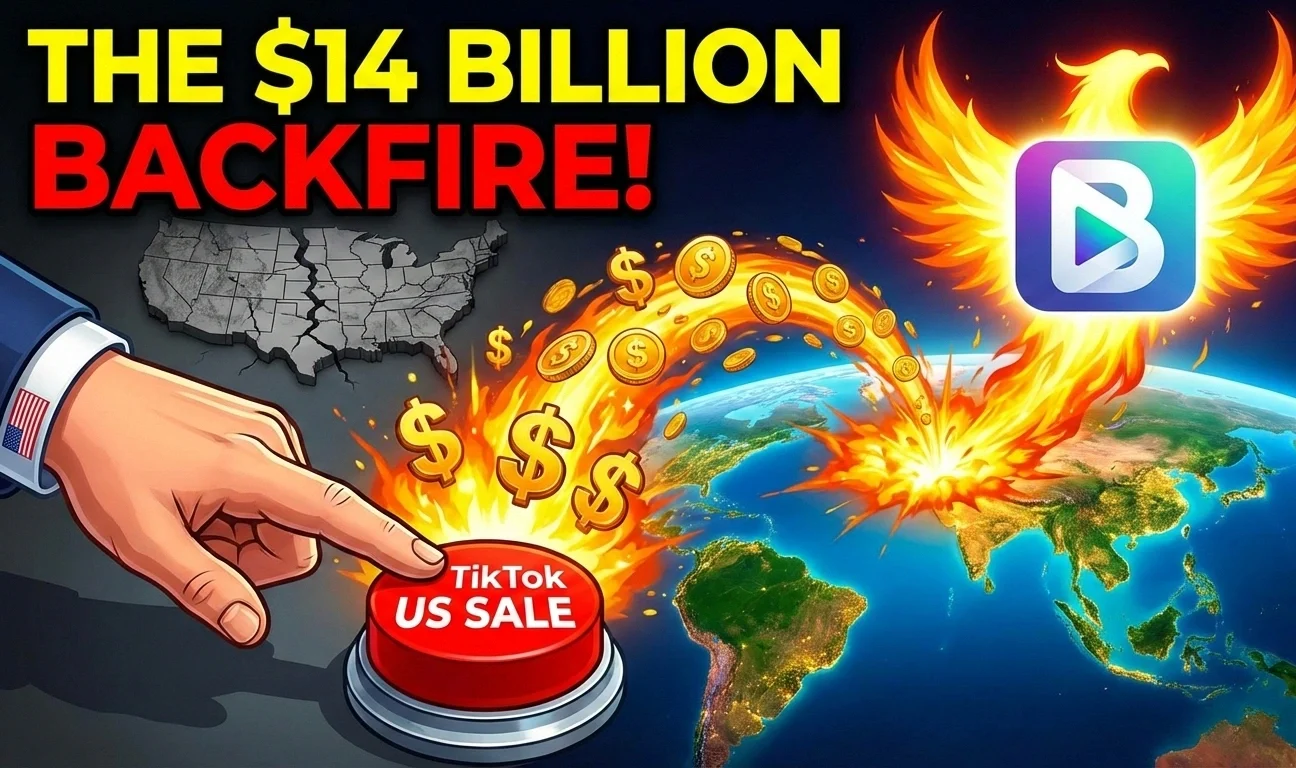
Washington may have “secured” American data, but the forced divestment has armed China’s tech giant with the cash and focus to conquer the next billion users.
As of January 23, the ink is dry on the deal that dilutes ByteDance’s stake in TikTok’s US operations to a passive 19.9 percent, handing the keys (and the code oversight) to an Oracle-led consortium.
For the China hawks, it is a clean kill: a national security threat neutralized without the political suicide of banning the app outright.
But across the Pacific, in the glass-walled meeting rooms of ByteDance’s Singapore headquarters, the mood is not one of defeat. It is one of liquidity.
The forced TikTok US sale has triggered a counterintuitive reality: by severing its most scrutinized limb, ByteDance has not only removed its greatest regulatory headache but has also secured a reported US$14 billion cash influx. Analysts warn that this war chest, combined with the removal of the US distraction, will now be deployed with ruthless efficiency to accelerate ByteDance’s Asia expansion and dominance in the Global South—markets where Meta and Google are already struggling to hold ground.
The Liquidity Paradox
The deal, structured as a joint venture involving Oracle, Silver Lake, and the UAE-based investment firm MGX, values the US operations at a discount relative to its user base—a necessary concession to meet the January deadline. Yet, the financial implications for ByteDance are staggering.
“Washington essentially just handed the world’s most aggressive algorithm factory a venture capital check the size of a small nation’s GDP,” notes Aris Thorne, a senior tech analyst at Forrester (Financial Times, Jan 2026). “ByteDance is projected to clear US$50 billion in profits in 2025. This deal adds $14 billion in immediate liquidity to that pile. They don’t need to reinvest that in the US anymore. They can pour it entirely into Jakarta, São Paulo, and Lagos.”
The math is simple but devastating for ByteDance’s Silicon Valley rivals. While the US currently accounts for roughly 40% of TikTok’s global revenue, it also accounts for 90% of its legal fees, lobbying costs, and executive bandwidth.
With the TikTok Oracle joint venture now managing the slow-moving, compliance-heavy American ecosystem, ByteDance is free to return to its roots: hyper-speed product iteration.
The “Splinternet” Accelerates: A Tale of Two TikToks
The most profound consequence of the TikTok divestment impact will be the bifurcation of the product itself.
In the US, the “new” TikTok will be a safe, sanitized utility. Governed by Oracle’s cloud infrastructure and overseen by a board of American patriots, it will likely see slower feature rollouts. The algorithmic “secret sauce” will be frozen in time or painfully retrained on US-only data silos to satisfy “Project Texas” protocols.
The rest of the world, however, will get the real TikTok.
“We are about to see a divergence in user experience,” says Dr. Elena Kogan, a digital policy fellow at The Brookings Institution (Washington Post, Jan 2026). “In emerging markets, ByteDance will integrate TikTok Shop, digital payments, and generative AI features at a pace the US entity legally cannot match. The American app will become a video player; the global app will become an operating system.”
The New Battleground: Asia and the Emerging Markets
The ByteDance emerging markets strategy is already pivoting from “growth at all costs” to “monetization at warp speed.” The $14 billion windfall is expected to fuel three key initiatives that were previously slowed by the need to appease Western regulators.
1. The Indonesian “Super App” Play
Southeast Asia is the proving ground. In Indonesia, where TikTok has already secured a massive e-commerce foothold after navigating its own regulatory hurdles in 2024, the company is expected to double down.
Unlike in the US, where antitrust laws loom, ByteDance can aggressively bundle its services in Asia. Expect to see subsidized shipping for TikTok Shop, predatory pricing to undercut Shopee and Lazada, and the rapid rollout of “TikTok Pay.”
2. The Battle for Brazil
Brazil remains one of the few markets where Meta’s Instagram Reels is effectively holding the line. That may change. With the TikTok US sale complete, ByteDance can reallocate its top engineering talent from Los Angeles to São Paulo.
“ByteDance has been fighting with one hand tied behind its back in Latin America because all their best AI engineers were fixing compliance issues for Texas,” says a former ByteDance executive who spoke on condition of anonymity (Bloomberg). “Now, the A-team goes to Brazil.”
3. The “Next Billion” in Africa
While Western ad markets saturate, Africa’s digital economy is nascent. Analysts predict ByteDance will use its cash reserves to subsidize data costs for users in Nigeria and Kenya—a strategy Facebook used a decade ago with “Free Basics,” but updated for the video era.
The Meta Nightmare
For Mark Zuckerberg, the TikTok divestment impact is a double-edged sword. Yes, the US version of TikTok may become a weaker competitor due to Oracle’s bureaucratic oversight. But globally, Meta now faces a competitor that is richer, more focused, and angry.
“Meta relies on international growth to offset US saturation,” writes tech columnist Casey Newton (The Verge, Jan 2026). “If ByteDance takes that $14 billion and subsidizes creator funds in India or builds a logistics network in Vietnam, Meta’s next earnings call is going to be painful.”
Geopolitics: Soft Power Shift
There is a geopolitical irony here. The US forced this sale to curb Chinese influence. Yet, by pushing ByteDance out of the US ownership structure, Washington may have inadvertently pushed the company closer to Beijing’s strategic interests in the Global South.
In the ByteDance 2025 profits forecast, the “non-Western” revenue share is expected to jump from 60% to 75% by 2027. As the company becomes less dependent on American dollars, it becomes less sensitive to American values.
“If you thought TikTok was a propaganda tool before, wait until it doesn’t need US advertisers,” warns Senator Mark Warner in a recent statement (New York Times). A ByteDance that derives the bulk of its growth from the Belt and Road Initiative countries is a ByteDance that has little incentive to moderate content that annoys the West.
Conclusion: The Winner’s Curse
As the dust settles on the TikTok Oracle deal, the headlines will praise the “saving” of the US internet. And technically, they are right. American user data is now arguably safer, residing in Texas servers under American lock and key.
But in the borderless world of global finance, capital behaves like water—it flows where it can expand. We have dammed the river in North America, only to flood the plains of Asia and South America.
ByteDance walks away with a bruised ego, a minority stake, and $14 billion in dry powder. They have lost the battle for the American teenager, but they have just been fully funded to win the war for the rest of the planet.
Discover more from The Economy
Subscribe to get the latest posts sent to your email.


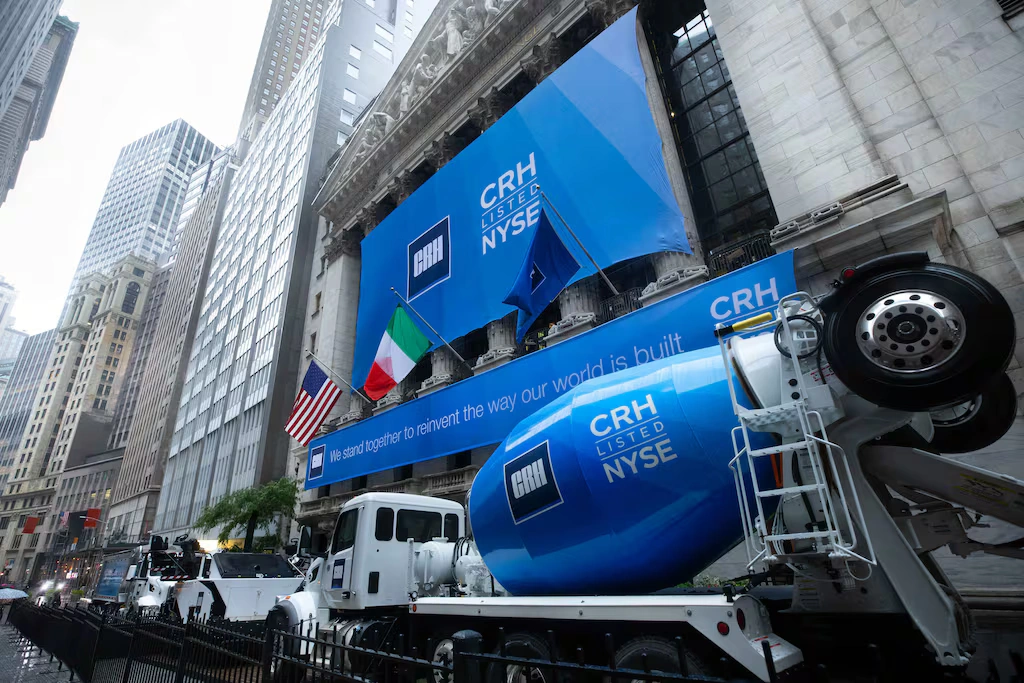
Irish-American building materials giant CRH is nearing its largest-ever acquisition with a deal to buy U.S. infrastructure products company Arcosa. We examine the strategic logic, market dynamics, and what this means for the global construction sector.
Key Takeaways
- CRH is nearing a deal to acquire Arcosa, which would be the company’s largest acquisition ever
- The deal signals continued consolidation in the global building materials and infrastructure products sector
- CRH’s U.S.-centric strategy, accelerated since its Nasdaq relisting in 2023, positions it to capture America’s multi-decade infrastructure investment cycle
- Arcosa operates across construction products, engineered structures, and transportation products — complementing CRH’s aggregates, cement, and building solutions businesses
- The transaction would further entrench CRH’s position as the dominant materials supplier for the U.S. infrastructure buildout
The Deal Taking Shape
According to reports in the Financial Times, first surfaced in Reuters’ June 22 press digest, CRH is nearing a deal to acquire Arcosa in what would be the Irish-American building materials conglomerate’s largest-ever acquisition (FT / Reuters Press Digest, June 22, 2026).
The deal represents the convergence of two significant industrial themes: the ongoing consolidation of the global building materials industry and the long-run investment thesis around American infrastructure renewal. CRH has been among the most aggressive acquirers in the construction materials space for two decades, assembling a portfolio that spans aggregates, cement, asphalt, readymixed concrete, and building products across North America and Europe. Arcosa, spun off from Trinity Industries in 2018, operates across three segments — construction products, engineered structures, and transportation products — with a particularly strong position in infrastructure materials including aggregates, lightweight aggregates, and utility structures for the power and telecommunications sectors.
CRH’s American Pivot
To understand why this deal makes strategic sense for CRH, it is necessary to understand how dramatically the company has reoriented itself since its 2023 primary listing move from London to New York. CRH’s decision to redomicile its primary listing on the Nasdaq — an unusual move for a European industrial company — was an explicit bet on the United States as the world’s most attractive market for construction materials over the next decade.
The rationale centred on a set of structural investment drivers with unusually long time horizons. The Infrastructure Investment and Jobs Act, the Chips and Science Act, and the Inflation Reduction Act collectively committed hundreds of billions of dollars to roads, bridges, semiconductor fabrication plants, data centres, clean energy installations, and grid modernisation. Every dollar of that spending has a significant materials content — aggregates, cement, reinforced concrete, steel structures, and engineered building products.
CRH’s existing U.S. platform gives it meaningful exposure to this pipeline through its Americas Materials segment. An Arcosa acquisition would extend that exposure into infrastructure-specific product lines — utility poles and transmission structures for the energy grid buildout, storage tanks and pressure vessels for industrial customers, and aggregates for the transportation infrastructure market — that are directly in the path of the most durable U.S. government spending commitments.
Why Arcosa Makes Sense as a Target
Arcosa is not a glamorous business. It does not produce cutting-edge technology or generate the kind of narrative that attracts retail investor enthusiasm. What it produces — lightweight aggregates, natural aggregates, construction site support equipment, engineered utility structures, marine transportation equipment — are the unglamorous physical inputs without which large-scale infrastructure projects cannot proceed.
This is precisely what makes it attractive to CRH. Building materials is a scale business where geographic density, distribution network efficiency, and purchasing power over raw material inputs determine margins as much as any technological advantage. An Arcosa acquisition would add significant scale in the U.S. Southeast and Southwest — geographies where population growth, housing construction, and data centre development are driving above-average infrastructure spending.
Arcosa’s construction products segment — which includes aggregates, specialty materials, and trench shields for utility and pipeline projects — fits particularly well with CRH’s existing aggregates portfolio. Aggregates (crushed stone, sand, and gravel) are the highest-volume, most geographically local construction material: they cannot economically be transported more than approximately 50 miles, which means market position is almost entirely a function of quarry ownership and proximity to demand centres. Every quarry acquisition is a permanent, non-replicable competitive advantage.
The Consolidation Logic
The global building materials industry has been consolidating for 25 years, driven by the economics of scale and the logic of quarry aggregation. CRH, LafargeHolcim (now Holcim), HeidelbergCement, and Buzzi Unicem have systematically assembled regional and national scale across North America and Europe. The U.S. market — historically more fragmented than European counterparts — is now at an inflection point where the remaining independent mid-size players represent the last wave of scale-building acquisition opportunities.
Arcosa, with a market capitalisation that was in the $3–4 billion range prior to any deal announcement, represents the kind of bolt-on acquisition that is large enough to be transformative for CRH’s market position but not so large as to create balance sheet distress. CRH’s strong investment-grade credit rating and cash generation capability give it the financial flexibility to execute a transaction of this scale without compromising the rest of its capital return programme.
Ryanair’s Michael O’Leary Also in the FT Headlines
The Financial Times’ June 22 edition carried CRH’s Arcosa deal alongside another significant European business story: Michael O’Leary is reportedly in line for a 150 million euro payout in his latest Ryanair contract (FT / Reuters Press Digest, June 22, 2026). The compensation package — one of the largest in European aviation history — reflects Ryanair’s extraordinary financial performance under O’Leary’s leadership and the board’s determination to retain a chief executive who has delivered shareholders returns that are, by any measure, exceptional.
The juxtaposition of CRH’s infrastructure consolidation story with O’Leary’s compensation headlines captures a broader theme in European business: the premium that global capital markets are placing on executive track records of capital allocation and value creation at a time when European corporate performance has lagged American peers.
What to Watch
The deal has not yet been formally announced, and the terms remain to be disclosed. Key variables to watch include the acquisition price relative to Arcosa’s recent trading levels — the premium will signal how competitive the bidding process was and how strongly CRH’s management believes in the infrastructure spending thesis. Regulatory review in the United States, particularly under the current administration’s scrutiny of industrial consolidation, will also be a consideration, though building materials transactions have historically attracted less antitrust attention than technology or media deals.
If completed, the acquisition would mark CRH’s definitive transition from a broadly diversified European building materials conglomerate into the world’s leading pure-play American infrastructure materials company — a repositioning with profound long-term implications for how the stock is valued, how it is compared to peers, and how much of global infrastructure capital allocates to its shares.
Discover more from The Economy
Subscribe to get the latest posts sent to your email.
Acquisitions
Paramount’s $111 Billion Warner Bros. Discovery Merger Clears DOJ, But Faces New Hurdles
Paramount Skydance’s blockbuster $111 billion acquisition of Warner Bros. Discovery cleared its biggest regulatory hurdle earlier this month when the US Department of Justice’s Antitrust Division approved the deal without requiring concessions — but the transaction is still far from finalized, facing continued legal challenges, foreign-investment scrutiny, and a tight closing timeline.
DOJ Gives the Green Light
The Hollywood Reporter reported that the DOJ found the merger would not harm competition in the markets for streaming, linear TV, or film production and distribution, clearing the way for Paramount to become the largest theatrical distributor in the country and own a top-five streaming service. According to Variety, the approval came without any required concessions from the companies.
Under the terms of the original agreement, Paramount agreed to pay $31.00 per share in cash for all outstanding shares of Warner Bros. Discovery, a transaction valued at roughly $110-111 billion depending on the methodology used, according to SEC filings. The deal would bring together Warner Bros. Pictures, HBO, CNN, TNT, TBS, and HGTV under Paramount’s ownership, per a report from World of Reel.
Industry Backlash
The merger has drawn significant opposition from Hollywood’s creative community. World of Reel reported that more than 5,500 industry professionals — including actors Mark Ruffalo, Javier Bardem, and Joaquin Phoenix, along with high-profile directors such as David Fincher and Denis Villeneuve — signed an open letter from the Writers Guild of America warning the deal could eliminate jobs and raise consumer prices. Separately, consumer groups have filed an antitrust lawsuit seeking to block the deal, which Paramount has asked a judge to dismiss, according to The Digital Weekly.
Foreign Investment Concerns
A more recent complication centers on foreign ownership of the combined company. Variety reported that three Democratic senators — Cory Booker, Elizabeth Warren, and Adam Schiff — sent a letter to FCC Chairman Brendan Carr urging the agency to block the deal from closing until a national security review of foreign investors is complete. According to the senators’ letter, the merged Paramount-WBD entity would be roughly 49.5% owned by foreign investors, with about 38.5% of the equity held by sovereign wealth funds from Saudi Arabia, Qatar, and Abu Dhabi.
The European Commission is separately investigating the deal under the EU’s Foreign Subsidies Regulation, examining approximately $24 billion in financing tied to those same sovereign wealth funds, with a provisional deadline of July 14 for its review, Variety reported.
Closing Timeline Under Pressure
Paramount CEO David Ellison and his team have pledged to close the deal by September 30, 2026, according to Deadline, and have promised to pay shareholders a daily “ticking fee” if the deadline is missed. Combined with potential delays from the EU review and the FCC foreign-investment scrutiny, analysts say the process could realistically stretch into September even under a best-case scenario.
If completed, the deal would leave the US film industry with just four major studios — Paramount, Disney, Universal, and Sony — according to legal news outlet JURIST, intensifying scrutiny over its long-term effects on competition and consumer choice in media and entertainment.
Discover more from The Economy
Subscribe to get the latest posts sent to your email.
Lachlan Murdoch is not waiting for the total collapse of linear television. In a preemptive strike that fundamentally rewrites the economics of digital broadcasting, the Fox Roku acquisition has materialized overnight as a $22bn paradigm shift. This is not merely a media merger. It is a calculated infrastructure play. By absorbing the dominant operating system of the living room, Fox bypasses the crowded content wars entirely. They have stopped trying to sell the best programming and instead bought the digital pipes through which all programming must flow. The transaction signals a permanent pivot away from legacy cable bundles, positioning a traditional broadcasting heavyweight as a formidable gatekeeper in the global ad-tech ecosystem.
To grasp the sheer scale of this pivot, one must look at the decaying foundations of traditional broadcast revenue. Linear television advertising continues its relentless, multi-year contraction. US broadcast television ad spend fell by 8.4% last year, a structural bleed that executives privately admit is irreversible. Audiences have migrated, but more importantly, advertiser budgets have followed the granular targeting capabilities of Connected TV (CTV).
Roku sits at the absolute apex of this new distribution hierarchy. While competitors burned billions chasing subscriber growth with prestige television, Roku quietly built a toll road. The hardware is cheap, but the platform’s real value lies in its Average Revenue Per User (ARPU), driven heavily by its Free Ad-Supported Streaming TV (FAST) channel ecosystem. The OECD notes that digital platform ad revenues outpaced traditional media by a ratio of three to one in 2025. Fox recognized that owning a singular streaming service like Tubi was insufficient. To truly capture the shifting billions in global ad spend, they needed the underlying operating system. This acquisition bridges the gap between content creation and algorithmic ad delivery.
The Mechanics of a $22bn Buyout
The numbers surrounding the buyout are staggering, reflecting both the premium required to secure a market leader and the strategic urgency inside Fox headquarters. At $22bn, Fox is paying a significant premium over Roku’s trailing 90-day average share price. The all-cash and stock transaction immediately dilutes some existing Fox shareholders but provides the sheer capitalization necessary to finalize the transaction without entering a protracted bidding war. Anthony Wood, Roku’s notoriously independent founder and CEO, is expected to step down from daily operations by December 14, transitioning into an advisory role while his executive team integrates with Fox’s Los Angeles operations.
For Fox, the immediate prize is Roku’s sprawling user base. The platform boasts over 75 million active accounts globally. These are not merely passive viewers; they are highly measurable, addressable data nodes. By integrating this audience with Tubi—Fox’s existing, highly successful AVOD (Advertising-Based Video on Demand) asset—the combined entity instantly commands a plurality of the free streaming market. According to the UK’s Office for National Statistics, consumer engagement with ad-supported digital television grew by 42% over the last fiscal year. Fox now holds the keys to monetizing that precise demographic shift.
This integration goes beyond simple audience aggregation. The core synergy lies in advertising technology. Roku’s proprietary ad-bidding framework, the OneView platform, allows brands to execute highly targeted campaigns across both linear and streaming environments. Fox brings deep relationships with Fortune 500 advertisers and massive live sports inventory to the table. Merging Fox’s premium live inventory with Roku’s programmatic execution creates a closed-loop ecosystem.
Brands can now purchase a Super Bowl commercial and immediately retarget those same viewers on Roku’s home screen. The data loop is entirely self-contained. Financial Times analysis indicates that closed-loop digital ad ecosystems generate profit margins roughly 300 basis points higher than fragmented networks. This structural advantage justifies the massive valuation. Fox is not buying a tech company; they are purchasing a permanent, defensible moat against the encroaching advertising dominance of Amazon and Google.
Why the Fox Ad-Tech Strategy Requires Hardware
The streaming industry has spent a decade obsessing over content. Billions were incinerated producing dragons, superheroes, and prestige dramas, all to acquire fickle subscribers who churn the moment a season ends. Fox fundamentally rejected this model. The analytical brilliance of this merger lies in its total disinterest in the subscription wars. By acquiring Roku, Fox shifts its operational focus from the costly business of renting attention to the highly lucrative business of taxing it.
Why is Fox buying Roku?
Fox is buying Roku to secure dominance in the connected television advertising market. By merging Roku’s seventy-five million active hardware accounts with Fox’s existing Tubi streaming platform, the broadcaster acquires a massive, proprietary data ecosystem entirely immune to traditional cable television subscriber declines.
This strategy relies heavily on owning the physical gateway to the living room. Roku’s operating system is the default interface for millions of televisions manufactured by third-party brands like TCL and Hisense. When a consumer turns on their screen, the first thing they see is Roku’s interface. That interface is prime real estate. Every click, pause, and channel launch is tracked, quantified, and sold. By controlling the hardware layer, Fox guarantees its own content—live news, sports, and Tubi’s library—receives preferential placement.
Wall Street analysts have historically undervalued Roku’s hardware division, often criticizing its razor-thin or negative profit margins. Yet, this completely misreads the business model. Roku sells dongles at a loss to acquire lifetime data streams. Brian Wieser, a leading independent media analyst, recently noted that the modern television interface is the most valuable unmonopolized territory left in consumer technology. Fox’s balance sheet can easily absorb the hardware losses.
Furthermore, this acquisition positions Fox to capitalize on the explosive growth of retail media networks. Consumer brands increasingly demand direct attribution for their television ad spend. Roku’s sophisticated tracking allows a viewer to see a commercial for dog food and directly purchase it via a remote click. Fox is acquiring the transactional infrastructure of the future living room. They have bypassed the brutal economics of Hollywood content production to own the digital shelf where all content is eventually sold.
Antitrust Scrutiny and the Future of Streaming Consolidation 2026
A transaction of this magnitude will immediately trigger intense regulatory scrutiny. In Washington, the Federal Trade Commission (FTC) under Chair Lina Khan has consistently demonstrated hostility toward vertical integration that threatens to lock competitors out of essential digital infrastructure. The primary regulatory concern centers on platform neutrality. Will Fox prioritize its own channels on the Roku home screen, artificially burying applications from competitors like Disney, NBCUniversal, or Netflix?
The legal arguments will be complex. Fox will likely argue that they are a clear underdog in the broader technology landscape, fighting a necessary defensive battle against the trillion-dollar market caps of Apple, Amazon, and Alphabet. Google already owns YouTube and the Android TV operating system. Amazon possesses Prime Video and the Fire TV ecosystem. Fox executives will frame this buyout as a required equalization of the competitive playing field. The Bank of England’s recent macro-financial stability report highlights that concentrated digital ad markets pose systemic risks to smaller commercial enterprises. By creating a viable third alternative to the Google-Amazon duopoly in connected television, Fox may successfully appease regulators.
- Data Hegemony: The merger creates a localized data monopoly. Roku knows exactly what Americans watch, when they watch it, and how they interact with advertisements.
- Political Spending: As the 2028 election cycle approaches, Fox and Roku will offer political campaigns unprecedented hyper-local targeting capabilities on television screens.
- Market Access: Small and medium-sized enterprises, previously priced out of national television campaigns, will increasingly utilize Roku’s self-serve ad platform to target exact postal codes.
The downstream effects for legacy media competitors are severe. Companies without proprietary distribution hardware are now entirely at the mercy of platform owners. They will be forced to hand over an increasing percentage of their advertising inventory just for the privilege of remaining on the Roku interface. A recent policy brief from the UK’s Competition and Markets Authority concluded that platform gatekeepers routinely extract up to 30% of third-party ad revenues. Fox is now the gatekeeper.
The Bearish View on Roku’s $22bn Buyout
Not all market observers view this integration as a guaranteed triumph. A vocal contingent of institutional investors views the $22bn price tag as a massive overreach, driven more by executive hubris than sound financial modeling. The bearish perspective argues that Roku’s underlying hardware business is fundamentally broken, trapped in a deflationary spiral driven by cheap Asian manufacturing.
The picture is more complicated than the press releases suggest. Rich Greenfield, a prominent technology and media analyst, has consistently pointed out that Roku’s operating system dominance is heavily concentrated in North America. Expanding that footprint globally requires billions in hardware subsidies. Competitors like Samsung and LG firmly control their own proprietary television operating systems, locking Roku out of the premium global TV market. Critics rightly question the logic of paying $22bn for a North American hardware distributor when the future of media growth is undeniably global.
That said, the cultural integration poses equally severe risks. Fox is a legacy media conglomerate rooted in traditional broadcast mentalities. Roku is a Silicon Valley engineering firm. The graveyard of corporate acquisitions is littered with media companies fundamentally misunderstanding the technology firms they purchase. If Fox attempts to aggressively monetize the user experience—flooding the interface with intrusive advertising or polarizing content—they risk driving consumers directly into the arms of Apple TV or Amazon Fire. The platform’s value relies entirely on consumer trust, an incredibly fragile asset that a heavy-handed corporate culture could inadvertently shatter.
Closing The Deal
The Fox Roku acquisition is an aggressive, definitive bet on the future of media consumption. Lachlan Murdoch has correctly identified that the era of the neutral television interface is over. In the modern digital economy, if you do not own the distribution platform, you are merely a tenant paying ever-increasing rent to technology conglomerates.
This $22bn gamble reframes the structural reality of the entertainment industry. It forces competitors to either secure their own hardware distribution pipelines or accept diminished margins as purely wholesale content providers. The transaction proves that the ultimate prize in the streaming wars was never the content itself; it was the precise behavioral data generated by the remote control. Fox has secured the living room.
Discover more from The Economy
Subscribe to get the latest posts sent to your email.

Rachel Reeves’s £25 Billion Problem: What the Autumn Budget Gap Means for Britain

Inside the Fed’s Most Divided Vote in Years: Why Warsh Held the Line on Rates

Pakistan Passed Its Third IMF Review

The Fed Is Fractured — And a New Chair Just Made It Louder, Not Quieter

The UK Economy in 2026 Is Neither Recession Nor Recovery :Stagflaton

Indonesia’s $121 Billion Nickel Bet Is Facing a Battery Chemistry

Why Ultra-Wealthy Families Are Splitting Between Singapore and Dubai inmarkets 2026

China Chose Political Control Over Fixing Its Deflation Trap in 2026

Oil Markets Are Oversupplied and Geopolitically Explosive at the Same Time

Russia’s Budget Deficit Blew Past Its Full-Year Target in Three Months

Malaysia’s Rare Earth Bet: Six Powers Are Negotiating for Kuantan at Once

Gulf Sovereign Capital Bypasses Pakistan Despite Record 2026 Spending Spree

Pakistan’s $10bn US Facility Request: Inside the New Gulf Capital Triangle

China Criticizes US Bill Targeting Russian Oil Buyers — Why It Matters

AI Bubble Warning 2026: Why BIS, IMF and Bank of England Fear a Market Crash

Russia Bans Diesel Exports 2026: Global Fuel Market Impact Explained

Gold Price Forecast 2026: Fed’s July 29 Decision and Record Central Bank Buying Explained

Strait of Hormuz Blockade 2026: Oil Prices Surge 9% as US-Iran Conflict Reignites

Strait of Hormuz 2026: Why Markets Still Don’t Trust It’s Open

Down But Not Out: Inside the Slow Sinking of Russia’s War Economy

Gulf Capital Retreat From Pakistan 2026: UAE Loan Freeze & What It Means

China Politburo July 2026: Stimulus Signals Explained

Pakistan IMF Deal 2026: Third Review Cleared, Budget 2026-27 and Inflation Outlook

Pakistan Economy 2026: GDP Grows 3.7% as IMF Completes EFF Review Amid Middle East Risk

Apple vs OpenAI Lawsuit: The Economic Story Behind the Headline

Global Stock Market Selloff 2026: Stagflation Fears Return as Iran Conflict Reignites

The Yuan Now Settles 67% of Russian Oil Payments — Quiet De-Dollarization in Action

Indonesia Russian Oil Imports 2026: Why Jakarta Is Diversifying Crude Supply
-

 Markets & Finance7 months ago
Top 15 Stocks for Investment in 2026 in PSX: Your Complete Guide to Pakistan’s Best Investment Opportunities
-

 Analysis5 months ago
Johor’s Investment Boom: The Hidden Costs Behind Malaysia’s Most Ambitious Economic Surge
-

 Analysis6 months ago
Top 10 Stocks for Investment in PSX for Quick Returns in 2026
-

 Analysis6 months ago
Brazil’s Rare Earth Race: US, EU, and China Compete for Critical Minerals as Tensions Rise
-

 Banks7 months ago
Best Investments in Pakistan 2026: Top 10 Low-Price Shares and Long-Term Picks for the PSX
-

 Investment7 months ago
Top 10 Mutual Fund Managers in Pakistan for Investment in 2026: A Comprehensive Guide for Optimal Returns
-

 Global Economy7 months ago
15 Most Lucrative Sectors for Investment in Pakistan: A 2025 Data-Driven Analysis
-

 Global Economy7 months ago
Pakistan’s Export Goldmine: 10 Game-Changing Markets Where Pakistani Businesses Are Winning Big in 2025