
Analysis
Why China’s Demand Stimulus Still Isn’t Working

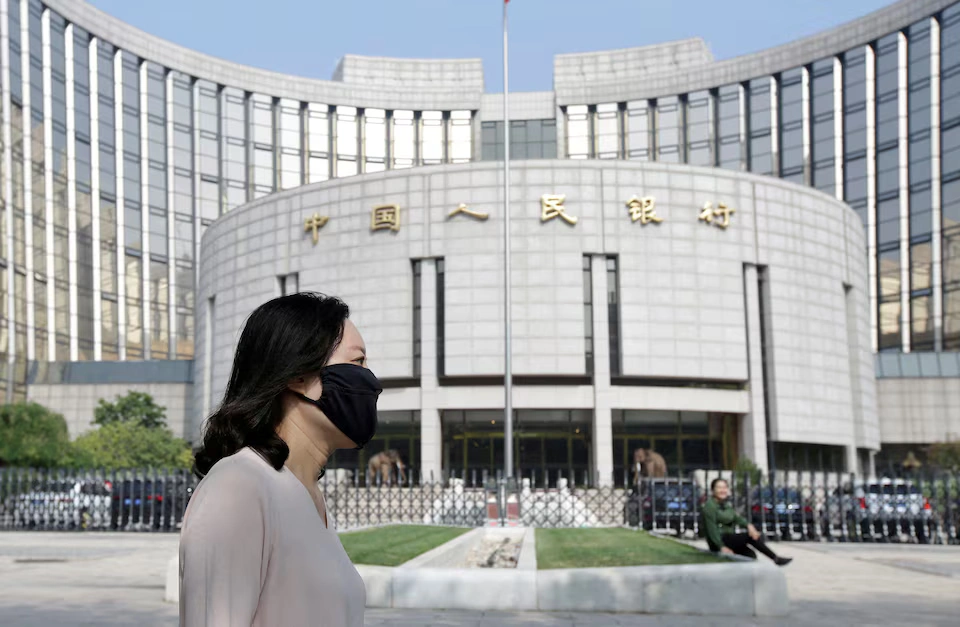
In a supermarket in Fuyang this past February, shoppers pushed carts past red lanterns and “Golden Horse Welcoming Spring” banners during China’s longest Lunar New Year holiday on record. Rail networks carried more than 18.7 million passengers in a single day, and Hainan’s duty-free counters rang up 30.8% more sales than a year earlier. For a few weeks, it looked like Beijing’s demand stimulus push might finally be taking hold. The relief didn’t last. By May, retail sales had fallen 0.6% year-on-year — the first monthly decline in more than three years. Xi Jinping has spent eighteen months promising to make households, not factories, the engine of Chinese growth. The data keep saying otherwise.
That gap between rhetoric and reality sits at the centre of China’s economic story heading into the first year of the 15th Five-Year Plan. For two decades, growth has leaned on investment and exports — a model the IMF’s chief economist, Pierre-Olivier Gourinchas, has said needs to “pivot to a more domestically-driven engine of growth.” The IMF now projects China’s GDP growth will slow to 4.5% in 2026, down from 5% in 2025, with private domestic demand described as lackluster even as headline inflation averaged zero percent last year. The World Bank reaches a similar conclusion: households kept funnelling savings into bank deposits through 2025 despite real interest rates that were flat or negative, while local government revenue stayed squeezed by a continued slide in land-lease income. Beijing has answered with trade-in subsidies, interest-rate cuts and a 48-measure consumption action plan. None of it has shifted the basic arithmetic: China still saves more, and spends less, than almost any economy its size.
China’s Demand Stimulus Keeps Hitting the Same Wall
The headline number from May was stark. China’s National Bureau of Statistics reported retail sales fell 0.6% year-on-year, the first such drop since December 2022, reversing April’s 0.2% gain and missing even the most pessimistic forecasts in a Reuters poll. Home appliance and audiovisual equipment sales plunged 15.6%; auto sales tumbled 16.1%, extending an eighth consecutive month of decline in the world’s largest car market. Only services kept the picture from looking worse: spending on catering, travel and entertainment grew 5.4%, outpacing goods retail by 4.2 percentage points, according to Caixin Global.
Beijing’s response was immediate but modest. The government injected a fresh 62.5 billion yuan ($9.2 billion) into the consumer trade-in scheme by the end of June, even as it quietly scaled the 2026 program back to 250 billion yuan from 300 billion yuan in 2025, narrowing eligibility to cars, appliances and smart glasses. Nine government departments also rolled out a joint action plan built around 48 separate measures, spanning:
- Subsidised dining and catering vouchers in lower-tier cities
- Expanded reimbursement for elder-care and healthcare services
- Relaxed visa rules to draw foreign tourist spending
- Additional tax-refund points at border crossings for inbound shoppers
It’s a familiar pattern. The Ministry of Commerce says the broader trade-in program has driven 4.16 trillion yuan in cumulative sales since launch — real money, by any measure. Yet the same dataset shows why the lift keeps fading: full-year 2025 retail sales growth came in at 3.7%, trailing industrial output’s 5.9% expansion and the economy’s overall 5% growth rate, Reuters reported. Growth bottomed at 0.9% year-on-year in December, recovered to 2.8% in early 2026, then slipped to 1.7% by March as the subsidy cycle turned, in the words of analysts at ING, “from a tailwind to a headwind.” Auto sales fell 9.1% in the first quarter even as China’s passenger-car exports jumped 60.6% — a sign that excess domestic production is increasingly finding buyers abroad rather than at home.
Monetary policy moved alongside the fiscal support. The People’s Bank of China entered 2026 promising a “moderately loose” stance and in January cut interest rates on several structural lending tools by 0.25 percentage points, lowering the one-year central bank lending facility rate from 1.5% to 1.25%. Governor Pan Gongsheng has signalled more is coming, telling Xinhua there is “still room for further RRR and interest rate cuts this year.” New refinancing tools are now earmarked specifically for services consumption and elder care — a quiet admission that goods subsidies alone weren’t going to do the job. Consumer prices briefly perked up too: CPI rose 1.3% year-on-year in February, the fastest pace in three years, before easing to 1.0% in March as core inflation slipped from 1.8% back to 1.1%. Producer prices, meanwhile, are still falling, extending a fourth straight year of factory-gate deflation.
There’s also a self-inflicted wound. Beijing’s “anti-involution” campaign, aimed at curbing cut-throat price wars among manufacturers of everything from solar panels to electric vehicles, is meant to fix a supply-side problem. But the IMF’s Article IV report warns that continued industrial-policy support for priority sectors risks perpetuating the very overcapacity it’s trying to cure, adding to deflationary pressure rather than easing it. Subsidise demand with one hand and subsidise supply with the other, and the price level barely moves.
Why China’s Household Savings Rate Won’t Budge
Subsidies treat a symptom. The disease is precautionary saving, and it’s structural rather than cyclical. A December 2025 IMF working paper by economists Yizhi Xu, Fan Zhang, Rongyu Cui and Ding Hua traces China’s stubbornly high household savings rate to three forces that reinforce one another: thin social spending in rural areas, the hukou household-registration system that denies many migrant workers full access to urban healthcare, schooling and pensions, and a property-market correction that has eroded the wealth of homeowners, who make up more than 90% of Chinese households.
Why Is China’s Domestic Demand Still Weak?
China’s domestic demand stays weak because three forces compound: a property slump that erased household wealth, thin social safety nets that force precautionary saving, and a hukou system denying migrant workers full urban benefits. Subsidies lift spending briefly, but they don’t fix why households save first.
The mechanics matter. The IMF researchers find that falling housing wealth pushes homeowners to save more, not less, as they try to rebuild lost equity — an effect that has held steady since the property correction began in 2021. More than 50 Chinese developers have defaulted since then; Country Garden, once the country’s largest, saw contracted sales fall by 70% to 6.91 billion yuan in a single December after an October debt default. What’s shifted is the other side of the ledger: would-be buyers, once forced to save aggressively for a down payment, are increasingly just postponing the purchase altogether amid uncertainty over future prices — which means the old “save to buy” motive is weakening even as the “save because I lost equity” motive intensifies.
Hukou reform has made real, if uneven, progress. Beijing has eased registration restrictions in dozens of cities since 2024, and the National Development and Reform Commission has continued chipping away at residency limits in smaller cities. But the IMF’s modelling suggests reform alone won’t be enough. Pair stronger social safety nets with hukou liberalisation and a smoother property-market transition, the paper argues, and Beijing could meaningfully cut precautionary saving. Pursue trade-in subsidies in isolation, and the savings rate barely moves — which is more or less what’s happened since 2024.
The Second-Order Costs of a Spending Gap That Won’t Close
The consequences extend well past China’s borders. With factory-gate prices still falling, manufacturers facing weak domestic orders are doing what they’ve always done: exporting the surplus. That’s part of why passenger-car exports surged even as domestic auto sales fell, and a similar pattern is playing out across solar panels, batteries and steel. Trading partners in Europe and Southeast Asia have noticed, and China’s trillion-dollar annual trade surplus keeps surfacing as a flashpoint in talks with Washington and Brussels alike.
Inside China, the strain shows up in local-government finances and in investment data that are now flashing red alongside consumption. Fixed-asset investment fell 4.1% in the first five months of 2026, and property investment extended its slide, dropping 16.2% over the same period — a sharper fall than January-April’s 13.7% decline, Reuters reported. NBS spokesperson Fu Linghui attributed part of the slowdown to extreme summer heat and heavy rain in some regions, along with the broader transition from old growth drivers to new ones. Land-lease revenue, once a primary funding source for cities, kept contracting through 2025, and the World Bank found consolidated fiscal revenue growth barely turned positive — just 0.2% year-on-year through October. That squeezes precisely the public services, healthcare, pensions, childcare subsidies, that economists say would do the most to unlock household spending in the first place.
Underneath the headline weakness, consumer behaviour is shifting in ways the subsidy programs weren’t built to capture. Chinese travellers are spending less overseas and more at home — a swing Bloomberg Intelligence estimates could redirect roughly $27 billion in outbound tourism spending back into the domestic market, while relaxed visa rules and a softer yuan are expected to draw in an additional $15 billion from inbound visitors. That’s a genuine bright spot, but it’s also a reminder of what’s actually growing: travel and experiences, not the durable-goods spending the trade-in subsidies were built to support.
Then there’s demography, which makes the 2026–2030 window unusually urgent. China’s population could shrink by close to 60 million people between 2026 and 2035, according to projections from the China-focused research firm Rhodium Group, as annual deaths climb toward 15 million a year while births keep falling — the ratio of new births to total population dropped to just 0.563% in 2025, down from 1.199% a decade earlier. Beijing’s 15th Five-Year Plan includes, for the first time, an entire chapter devoted to population policy. The retirement-age increase passed in 2024, to 63 for men and 58 for white-collar women, is expected to add roughly 0.2 percentage points to annual growth through 2030, the IMF estimates, but it does nothing to fix the underlying birth-rate collapse. For small and mid-sized exporters squeezed between soft domestic orders and rising trade friction, the math keeps getting harder, not easier.
Not Everyone Thinks the Strategy Is Failing
Not every economist reads the data this way. Standard Chartered’s Liao Wei points to China’s rising total factor productivity, climbing since 2021, as evidence the export engine can keep absorbing domestic slack without derailing growth, particularly as global appetite for AI-related hardware lifts demand for technology-intensive Chinese exports, she told China Daily. Tao Chuan, chief economist at Guolian Minsheng Securities, goes further, forecasting 2026 growth “no lower than 5%” and describing a shift toward what he calls an export-consumption equilibrium, in which subsidy-driven spending gradually gives way to sustainable services growth.
Beijing’s own assessment, delivered through the Central Economic Work Conference and echoed in Caixin’s opinion pages, holds that the economy’s fundamental trend remains positive and that 2025’s growth, officially 5%, in line with target, proves the model is working, just more slowly than critics would like.
That said, the gap between official confidence and independent estimates is wide enough to give pause. Rhodium Group’s analysts calculate that China’s real 2025 GDP growth likely landed between 2.5% and 3%, roughly half the 5.2% pace the National Bureau of Statistics reported through the first three quarters, with the biggest divergence concentrated in investment figures rather than consumption. If that estimate is closer to the mark, the resilience Beijing points to owes more to production and exports than to any genuine pickup in household spending. The picture is more complicated than either side’s headline number suggests.
A Pivot Beijing Can Postpone But Not Avoid
Strip away the subsidy cycles and the trade data, and the tension is simple: Xi Jinping wants Chinese households to spend like an advanced economy’s consumers while the state still taxes, spends and insures like a developing one. Trade-in vouchers can pull a few months of auto and appliance sales forward. They can’t replace a pension system, fix a broken property market, or convince a young professional in Chengdu that her job is secure enough to stop saving for the worst. The IMF’s own modelling suggests a serious reform package, stronger safety nets, faster hukou liberalisation, a real housing-market transition, could lift consumption’s share of GDP by roughly four percentage points over five years. That’s the size of the prize. It’s also the size of the political and fiscal commitment Beijing has so far avoided making. Until that changes, the trade-in subsidies will keep buying time rather than buying confidence, and the gap between Xi’s ambition and his households’ bank balances will keep showing up in the data, one weak month at a time.
Discover more from The Economy
Subscribe to get the latest posts sent to your email.


The Federal Reserve’s rate-setting committee held its benchmark borrowing rate steady on July 29, keeping it in a range of 3.5% to 3.75% — but the calm on the surface masked one of the most contested votes of the post-pandemic era. The Federal Open Market Committee split 9 to 3, with three members pushing to raise rates rather than hold, according to NPR’s coverage of the decision.
Chair Kevin Warsh, who took over the Eccles Building earlier this year after a nomination process that rattled bond markets, used his post-meeting press conference to make a point of not making a point. Rather than signal where rates are headed next, Warsh told reporters the Fed would judge market reaction “direct and unfiltered” instead of offering the rolling forecasts investors have come to expect, a stance detailed in CNBC’s meeting recap.
A rate hike was genuinely on the table
What made this meeting unusual wasn’t just the dissent — it was how close markets came to pricing in a hike rather than a cut. Fed funds futures tracked by CME Group put the odds of a rate increase at roughly 35% heading into the decision, up sharply from 26% a week earlier, according to CNBC’s markets analysis. That is a striking reversal from the rate-cutting cycle many investors had expected when Warsh’s nomination was first floated as a “productivity-led growth” pivot away from his predecessor’s caution.
The market reaction told its own story. The S&P 500 slid roughly 0.6% during Warsh’s press conference, the Dow shed more than 840 points intraday, and the 10-year Treasury yield rose to 4.657%, even as the Fed opted for a hold rather than a hike.
Why Warsh is playing it differently
Warsh’s approach reflects both economic and political calculus. Treasury yields have climbed since the Fed’s prior meeting despite the hold, a dynamic Warsh acknowledged directly. And unlike his predecessor, Warsh has been explicit that he intends to set policy independent of the White House’s preferences — even as he awaits a possible additional ally on the Board once a pending internal review concludes, according to CNBC’s analysis of the political backdrop.
Why this matters beyond Washington
A genuinely undecided Fed has knock-on effects well past US borrowers. Higher-for-longer Treasury yields pull global capital toward dollar assets, complicating rate paths in London, Ottawa, and emerging markets alike — a dynamic playing out in parallel with the UK’s own fiscal squeeze (see our companion report on the Autumn Budget) and China’s deflationary drag on global demand. For businesses and investors across the Gulf, Southeast Asia, and South Asia weighing dollar-denominated debt or dollar-pegged currencies, an unpredictable Fed chair is arguably a bigger variable than the rate level itself.
Discover more from The Economy
Subscribe to get the latest posts sent to your email.
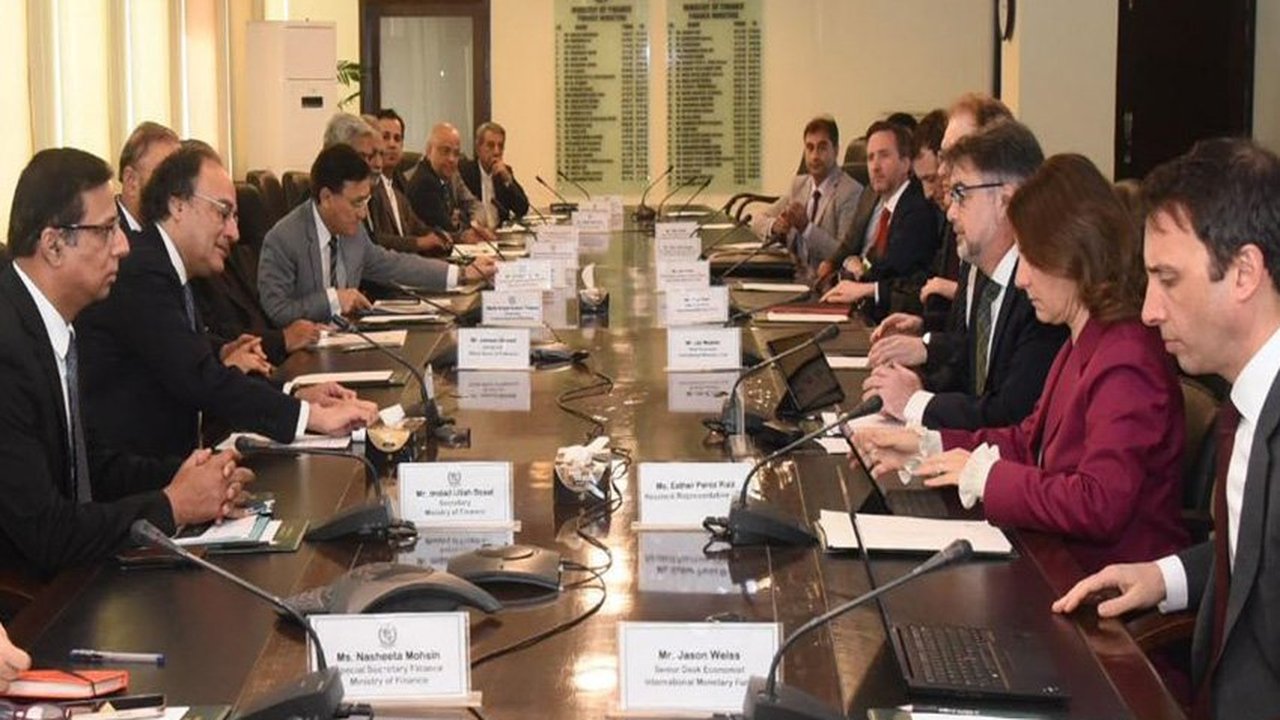
The IMF’s Executive Board completed Pakistan’s third review of its 37-month Extended Fund Facility (EFF) and second review of its Resilience and Sustainability Facility (RSF) on May 8, 2026, unlocking roughly $1.1 billion under the EFF and $220 million under the RSF, according to the IMF’s official statement. Total disbursements under both arrangements now stand at roughly $4.8 billion. Acting Chair Nigel Clarke credited Pakistan’s “strong program implementation” for supporting macroeconomic recovery and building resilience to shocks.
The Genuinely Good Numbers
By the IMF’s own account, the underlying data supports the assessment. GDP growth accelerated to an average of 3.8% year-on-year in the first half of FY26, driven by the auto, construction and garment industries, even accounting for flood disruption in July-August, according to the IMF’s staff report. Inflation, while ticking up to 7.3% year-on-year in March as commodity price pass-through hit domestic energy prices, remained within a broadly contained range, with core inflation at 7.6%. The current account was described as broadly balanced, and reserve rebuilding exceeded earlier projections — the State Bank of Pakistan projects reserves continuing to climb to roughly $18 billion by June 2026, according to analysis from the Islamabad Policy Research Institute.
The State Bank confirmed receipt of $1.3 billion from the IMF on May 12, 2026, according to CSS Prep’s policy analysis, which notes reserves had fallen to dangerously low levels in 2022-2023 before this recovery.
The External Risk the IMF Flagged Explicitly
The Fund’s own report is notably candid about downside exposure: under its April 2026 World Economic Outlook adverse scenario, the cumulative hit to Pakistan’s GDP from continued Middle East conflict could rise to around 1.5 percentage points by FY27, with inflation and the current account deficit each worsening by roughly 1.5-2.5 percentage points of GDP, according to the IMF’s staff country report. Given Pakistan’s reliance on imported energy, oil price volatility discussed in the IMF’s global outlook feeds directly into this specific country risk.
The Reform Question That Keeps Recurring
The structural policy conditions attached to this review read as familiar territory: sustaining fiscal consolidation, broadening the tax base, maintaining tight monetary policy to keep inflation within the State Bank’s target range, and advancing energy-sector reform — commitments the IMF’s own end-of-mission statement described as still “ongoing” rather than complete, per the IMF’s March 2026 mission statement.
A sharper framing comes from Pakistani policy analysts themselves: reforms that would genuinely break the IMF-program cycle — broadening the tax base to include agriculture and retail, ending energy subsidies, privatizing loss-making state-owned enterprises — impose concentrated, visible costs on politically organized interest groups, while the benefits of reversing those costs are diffuse and delayed, according to CSS Prep’s analysis. That political-economy imbalance, the analysis argues, consistently favors populist continuation of stabilization support over the structural reform that would end the need for it — a pattern this third review’s genuine macroeconomic progress doesn’t yet break.
Social Cost of the Adjustment
Pakistan’s poverty headcount rate rose to 25.3% in FY24, up sharply from 18.3% in FY22, driven by overlapping shocks from COVID, floods and inflation, according to the IMF’s staff report. The Benazir Income Support Programme (BISP) remains the primary social protection mechanism absorbing the distributional cost of IMF-mandated energy price increases and fiscal tightening — whether its scale is adequate remains, in the IMF’s own words, a live policy question rather than a settled one.
Discover more from The Economy
Subscribe to get the latest posts sent to your email.
The Federal Reserve held its benchmark interest rate steady at 3.5%-3.75% on July 29, 2026, but the more consequential detail was the vote itself: 9-3, with three regional Federal Reserve Bank presidents — Cleveland’s Beth Hammack, Minneapolis’s Neel Kashkari, and Dallas’s Lorie Logan — dissenting in favor of a rate hike, according to CNBC’s coverage of the meeting. Inflation has remained above the Fed’s 2% target for more than five years, the underlying tension driving the split.
A New Chair, A Different Communication Style
The decision was the latest under Fed Chair Kevin Warsh, who took over after Jerome Powell’s term expired on May 15, 2026, according to iShares’ 2026 Fed outlook. Warsh has deliberately shortened the Fed’s post-meeting statements and pulled back on the kind of explicit forward guidance markets had grown accustomed to under his predecessors — he has reportedly dedicated one of five internal task forces specifically to rethinking how the Fed communicates, according to CNBC’s reporting. Warsh has publicly called inflation “a choice,” repeatedly emphasizing the importance of getting prices under control in recent congressional testimony.
At his post-meeting press conference, Warsh pushed back on characterizing the decision as a “pause,” instead describing it as “a rigorous review of the economic situation” and “a view of what our own homework is to try to resolve those questions in the period ahead,” according to a separate CNBC recap. Warsh has reportedly used the phrase “family fight” 13 times across five public appearances to acknowledge the committee’s internal divisions — an unusually candid framing for a sitting Fed Chair.
Why the Split Exists
Governor Christopher Waller has separately voiced concern that higher rates could become necessary without more inflation progress, even though he voted for the hold at this meeting. The full committee’s June projections penciled in one quarter-point increase by the end of 2026 — a notable shift from the rate-cutting path markets had priced in earlier in the year, according to the Fed’s own June 2026 Summary of Economic Projections, which explicitly flags that the federal funds rate outlook “is subject to considerable uncertainty” given how sensitive each participant’s view is to how inflation and employment data evolve from here.
Complicating Factors
Renewed U.S.-Iran tensions have already pushed mortgage rates near a one-year high independent of the Fed’s own decisions, since longer-term rates track Treasury yields and inflation expectations rather than the Fed funds rate directly, according to CNBC’s analysis. Separately, iShares had earlier projected that once a new Chair was confirmed, the Fed might seek one or two rate cuts to bring rates closer to a 3%-3.25% range — a path the July hold and hawkish dissents now put in serious doubt.
The next FOMC meeting is scheduled for September 15-16, 2026, and will include a fresh Summary of Economic Projections, according to Forbes’ Fed tracker — the next real test of whether Warsh’s committee can narrow its internal divide or whether the “family fight” framing becomes the defining feature of Fed policy through the rest of 2026.
Discover more from The Economy
Subscribe to get the latest posts sent to your email.

Rachel Reeves’s £25 Billion Problem: What the Autumn Budget Gap Means for Britain

Inside the Fed’s Most Divided Vote in Years: Why Warsh Held the Line on Rates

Pakistan Passed Its Third IMF Review

The Fed Is Fractured — And a New Chair Just Made It Louder, Not Quieter

The UK Economy in 2026 Is Neither Recession Nor Recovery :Stagflaton

Indonesia’s $121 Billion Nickel Bet Is Facing a Battery Chemistry

Why Ultra-Wealthy Families Are Splitting Between Singapore and Dubai inmarkets 2026

China Chose Political Control Over Fixing Its Deflation Trap in 2026

Oil Markets Are Oversupplied and Geopolitically Explosive at the Same Time

Russia’s Budget Deficit Blew Past Its Full-Year Target in Three Months

Malaysia’s Rare Earth Bet: Six Powers Are Negotiating for Kuantan at Once

Gulf Sovereign Capital Bypasses Pakistan Despite Record 2026 Spending Spree

Pakistan’s $10bn US Facility Request: Inside the New Gulf Capital Triangle

China Criticizes US Bill Targeting Russian Oil Buyers — Why It Matters

AI Bubble Warning 2026: Why BIS, IMF and Bank of England Fear a Market Crash

Russia Bans Diesel Exports 2026: Global Fuel Market Impact Explained

Gold Price Forecast 2026: Fed’s July 29 Decision and Record Central Bank Buying Explained

Strait of Hormuz Blockade 2026: Oil Prices Surge 9% as US-Iran Conflict Reignites

Strait of Hormuz 2026: Why Markets Still Don’t Trust It’s Open

Down But Not Out: Inside the Slow Sinking of Russia’s War Economy

Gulf Capital Retreat From Pakistan 2026: UAE Loan Freeze & What It Means

China Politburo July 2026: Stimulus Signals Explained

Pakistan IMF Deal 2026: Third Review Cleared, Budget 2026-27 and Inflation Outlook

Pakistan Economy 2026: GDP Grows 3.7% as IMF Completes EFF Review Amid Middle East Risk

Apple vs OpenAI Lawsuit: The Economic Story Behind the Headline

Global Stock Market Selloff 2026: Stagflation Fears Return as Iran Conflict Reignites

The Yuan Now Settles 67% of Russian Oil Payments — Quiet De-Dollarization in Action

Indonesia Russian Oil Imports 2026: Why Jakarta Is Diversifying Crude Supply
-

 Markets & Finance7 months ago
Top 15 Stocks for Investment in 2026 in PSX: Your Complete Guide to Pakistan’s Best Investment Opportunities
-

 Analysis5 months ago
Johor’s Investment Boom: The Hidden Costs Behind Malaysia’s Most Ambitious Economic Surge
-

 Analysis6 months ago
Top 10 Stocks for Investment in PSX for Quick Returns in 2026
-

 Analysis6 months ago
Brazil’s Rare Earth Race: US, EU, and China Compete for Critical Minerals as Tensions Rise
-

 Banks7 months ago
Best Investments in Pakistan 2026: Top 10 Low-Price Shares and Long-Term Picks for the PSX
-

 Investment7 months ago
Top 10 Mutual Fund Managers in Pakistan for Investment in 2026: A Comprehensive Guide for Optimal Returns
-

 Global Economy7 months ago
15 Most Lucrative Sectors for Investment in Pakistan: A 2025 Data-Driven Analysis
-

 Global Economy7 months ago
Pakistan’s Export Goldmine: 10 Game-Changing Markets Where Pakistani Businesses Are Winning Big in 2025