Analysis
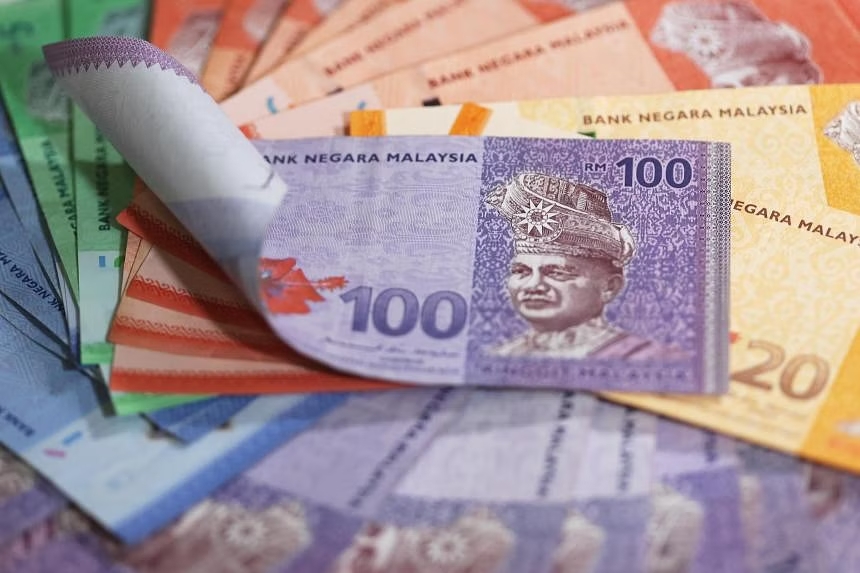
Malaysian Ringgit Set to Test New High for 2026, Strategists Say
Despite a bruising 4% slide in March as the Iran war roiled markets, the ringgit has clawed its way back — and the case for fresh 2026 highs is stronger than the headlines suggest.
Live Data Snapshot — April 20, 2026
| Indicator | Level |
|---|---|
| USD/MYR (spot) | 3.9555 ▾ |
| YTD Performance | +9.47% |
| 2026 Year-to-Date High | 3.88 |
| Q1 2026 GDP Growth | 5.5% |
| MUFG Year-End Target | 3.70 |
| Hyperscaler DC Investment | MYR 90B+ |
The numbers hit the wires just before dawn on Friday, and they were better than almost anyone had forecast. Malaysia’s Department of Statistics confirmed first-quarter GDP growth of 5.5% — comfortably ahead of the Bloomberg consensus of 5.1%, and a ringing endorsement of an economy that, in a year defined by war premiums and dollar volatility, has consistently refused to follow the emerging-market script. By mid-morning in Kuala Lumpur, the ringgit had ticked higher, nudging back toward the gravitational pull of 3.88 per dollar — the level it kissed in late February, the year-to-date high for the Malaysian ringgit 2026, just days before the US-Iran conflict erupted and pulled it to 4.10.
The question exercising desks from Singapore to New York is no longer whether the ringgit’s March correction was a detour or a destination. It was, on the weight of evidence accumulating this weekend, emphatically the former. The currency is currently trading around 3.9555, having already recovered the bulk of its 4% March drawdown. And a widening coalition of strategists — from Loomis Sayles and Deutsche Bank to MUFG — is making the case that the Malaysian ringgit 2026 high will not merely be retested, but surpassed. The structural foundations underpinning this view are the subject of this analysis: 5.5% GDP, a clean macro policy framework, and a data-centre investment wave of tectonic scale that has fundamentally rewritten Malaysia’s place in the global technology supply chain.
The March Dip in Context: Fear, Not Fundamentals
To understand where the ringgit is going, it helps to understand why it stumbled. The US-Iran conflict, which erupted in earnest in late February following escalating incidents in the Strait of Hormuz, triggered one of the sharpest bouts of emerging-market risk aversion since the 2022 Federal Reserve hiking cycle. Oil markets spiked. The dollar jumped. And a number of Asian currencies — the ringgit among them — were sold indiscriminately by global funds reducing exposure to anything that carried the word “emerging.”
The irony, as any close observer of Malaysia’s macro position would note, is that the country is a net energy exporter. Rising oil prices — the very catalyst for risk-off selling — are, by most conventional analysis, accretive to Malaysia’s current account. Bank Negara Malaysia data shows the trade surplus widened to MYR 22.1 billion in January 2026, up from MYR 19.3 billion a year earlier, driven by electrical and electronics exports (MYR 22.1 billion) and palm oil products (MYR 7.0 billion). The ringgit’s sell-off, in other words, was a liquidity-driven dislocation rather than a signal about deteriorating domestic fundamentals — and the market has begun to correct it accordingly.
“Malaysia offers a relatively rare mix of resilient growth, credible macro management, distance from key geopolitical flashpoints, and a diversified economy spanning oil to data centres.”
— Hassan Malik, Global Macro Strategist, Loomis Sayles (an affiliate of Natixis Investment Managers)
Hassan Malik’s phrase — “a relatively rare mix” — deserves to be unpacked, because it is analytically precise rather than promotional. Most of the currencies outperforming in the emerging-market universe in any given year are leveraged to a single theme: commodity tailwinds, a rate-differential play, or a post-crisis bounce. The ringgit’s 2026 story is genuinely multi-variate, and that structural diversification is the thesis in miniature.
5.5%: The GDP Print That Changes the Calculus
Malaysia’s economy grew 5.5% year-on-year in Q1 2026 — its fastest quarterly pace since 2022, and its second consecutive year of acceleration after expanding 5.2% across the whole of 2025. The advance estimate, released by the Department of Statistics Malaysia, exceeded even the most bullish in the Bloomberg survey, and it comes against a backdrop of genuine global headwinds: an active Middle Eastern conflict, a US tariff regime recalibrated by the Supreme Court’s ruling against Trump’s reciprocal levies, and a structurally cautious global consumer.
What drove the beat? The combination is instructive. Fixed investment — the category most directly tied to the data-centre buildout — remained a significant contributor, though it has normalised slightly from its Q4 2024 peak of 3 percentage points of year-on-year growth. Electrical and electronics exports, Malaysia’s dominant goods category, continued to print strongly. Tourism receipts accelerated. And domestic consumption, supported by a labour market that remains near full employment and a government fiscal stance that has been disciplined without being austere, provided a stable base.
Malaysia: Key Macro Scorecard — April 2026
| Indicator | Latest Reading | Prior Period | Signal |
|---|---|---|---|
| Q1 2026 GDP Growth (yoy) | 5.5% | 5.2% (2025 full year) | ✅ Upside surprise |
| Trade Surplus (Jan 2026) | MYR 22.1bn | MYR 19.3bn (Jan 2025) | ✅ Widening |
| USD/MYR (spot, Apr 20) | 3.9555 | ~4.10 (March lows) | ✅ Recovering |
| USD/MYR (2026 YTD high) | 3.88 | — | ⚡ Key resistance |
| Foreign Bond Inflows (YTD) | MYR 16.52bn | — | ✅ Strong demand |
| BNM Policy Rate | Steady | Unchanged since last review | ✅ Credible anchor |
| MUFG End-Year Forecast | 3.70 | GDP 2026 revised to 4.9% | ✅ Bullish bias |
Sources: BNM, DoS Malaysia, MUFG Research, Bloomberg, Trading Economics. Data as of 20 April 2026.
MUFG, which revised its 2026 GDP forecast for Malaysia upward to 4.9% (from 4.5%) in February, had flagged at the time that its end-Q1 USD/MYR forecast was 3.85 — a level last seen in early 2018. The Q1 GDP outperformance has, if anything, strengthened the bank’s medium-term conviction, with its full-year target for the currency sitting at the more ambitious 3.70 level. That would represent an appreciation of around 5.7% from current levels and would constitute a genuine multi-year high for the ringgit versus the dollar.
The Data-Centre Thesis: Johor’s Transformation and Its Currency Impact
Perhaps the single most consequential structural development in the MYR USD outlook 2026 — and one that differentiates Malaysia from virtually every other ASEAN economy — is the extraordinary scale of data-centre investment flowing into the country. This is not, at this point, an emerging story. It has been building since Singapore’s 2019 moratorium on new data-centre permits redirected hyperscaler capex southward into a country with cheaper land, manageable electricity costs, and a strategic position 40 minutes by road from one of the world’s busiest financial and technology hubs.
What has changed in 2026 is the sheer magnitude of committed capital and the accelerating pace of construction. Mordor Intelligence values the Malaysian data-centre market at USD 6.14 billion in 2025, forecasting it will reach USD 11.40 billion by 2031 at a CAGR of 10.86%. Hyperscaler commitments to Malaysia now total at least MYR 90.2 billion, comprising Oracle’s USD 6.5 billion plan, Google’s USD 2 billion cloud region, Microsoft’s USD 2.2 billion expansion, and contributions from ByteDance, Amazon, Alibaba, and NTT DATA. In aggregate, Malaysia attracted at least MYR 210.4 billion (USD 51.4 billion) in digital investment across 2023 and 2024 alone, per official government data.
Johor, the state that borders Singapore, has absorbed the bulk of this surge. As of November 2025, Arizton Advisory estimates Johor’s data-centre pipeline at approximately 4.0 GW of upcoming power capacity, with 700 MW under active construction and 3.3 GW in planned or announced stages. The Sedenak Tech Park in Kulai — once rows of textile factories — now hosts Microsoft, Oracle, ByteDance, and Tencent on a 745-acre complex.
Malaysia — Hyperscaler Investment Commitments (USD Equivalent)
| Company | Committed Investment | Primary Focus |
|---|---|---|
| Oracle | USD 6.5 billion | Cloud + AI infrastructure |
| Microsoft | USD 2.2 billion | Cloud region (Johor SEA-3) |
| YTL / NVIDIA | USD 2.25 billion | AI-ready campuses |
| USD 2.0 billion | New cloud region | |
| ByteDance / TikTok | Multibillion | Johor data hub |
| Amazon Web Services | Multibillion | Regional infrastructure |
| Alibaba | Multibillion | Cloud expansion |
Sources: Mordor Intelligence, Arizton Advisory, Bloomberg, ResearchAndMarkets. Figures are announced commitments and may include phased disbursements.
Why Data Centres Move Currencies
The Malaysia data centre ringgit impact operates through three distinct channels, each of which is relevant to the MYR USD outlook 2026.
First, the construction and operational phases of these projects generate sustained foreign direct investment inflows — hard currency that must be converted into ringgit to pay Malaysian contractors, engineers, and utilities. Second, the projects elevate Malaysia’s position in the global technology value chain, attracting a broader category of supply-chain investment in components, cooling systems, and networking infrastructure. Third, and perhaps most importantly for long-run currency valuation, they diversify Malaysia’s export base away from a historical dependence on commodity cycles — reducing the currency’s beta to oil and palm oil price swings and introducing a more stable, structural source of dollar earnings.
In short: every server rack commissioned in Johor is, in a small but real sense, a vote in favour of the ringgit’s long-term purchasing power. The cumulative effect of MYR 90 billion in committed hyperscaler capital is not trivial when mapped against an economy of Malaysia’s size.
Deutsche Bank’s Case: Ringgit Has a Structural Edge Over ASEAN Peers
Deutsche Bank‘s Sameer Goel, the bank’s global head of emerging markets and APAC research, articulates the regional comparative advantage with precision. In his assessment, Malaysia’s “robust cyclical fundamentals going into the conflict, status as a net energy exporter, and linkages to the global tech capex cycle” combine to put the ringgit at “a relative advantage within the region.” This is a more nuanced claim than a simple bullish call — it positions the ringgit as a relative outperformer in a basket of ASEAN currencies, rather than an absolute directional bet in isolation.
The comparison matters. Consider the regional peer group. The Thai baht remains hobbled by a tourism recovery running below pre-pandemic trajectory and an export sector exposed to a softening Chinese consumer. The Indonesian rupiah carries a persistent current account deficit concern and a political risk premium tied to fiscal discussions in Jakarta. The Philippine peso is buffeted by remittance-flow volatility and a banking sector navigating higher-for-longer interest rates. The Vietnamese dong, for all the narrative about supply-chain diversification, lacks the depth and convertibility to attract the kind of institutional flows that move currency markets at scale.
Against this backdrop, the Malaysian ringgit’s combination of current account surplus, fiscal consolidation, credible central bank independence, and tech-sector tailwinds constitutes a genuinely differentiated value proposition.
ASEAN Currency Relative Performance Snapshot — 2026 YTD
| Currency | 2026 YTD vs USD | Key Support | Key Vulnerability |
|---|---|---|---|
| Malaysian Ringgit (MYR) | +9.47% | Data centres, net energy exporter | Iran conflict, US tariff residuals |
| Thai Baht (THB) | +3–5% est. | Tourism recovery | Below-trend growth, political noise |
| Indonesian Rupiah (IDR) | Lagging | Commodity exports | Current account deficit |
| Philippine Peso (PHP) | Mixed | Remittances | Rate sensitivity, fiscal pressure |
| Singapore Dollar (SGD) | Stable | MAS policy, financial hub | Trade openness, geopolitical exposure |
Estimates compiled from Bloomberg, MUFG, Deutsche Bank, and Trading Economics as of April 2026. Non-MYR figures are illustrative approximations.
Bank Negara’s Quiet Masterclass in Policy Credibility
One of the most underappreciated drivers of the ringgit’s 2026 strength is the institutional credibility of Bank Negara Malaysia (BNM). In an environment where emerging-market central banks face the perennial temptation to cut rates pre-emptively or to deploy reserves in defence of a weakening currency, BNM has done neither. Its decision to hold rates steady — a signal of confidence in domestic demand durability and a commitment to containing inflation without sacrificing the growth outlook — was read by markets as a mark of precisely the kind of “credible macro management” that Hassan Malik cited.
The evidence of institutional confidence is visible in the bond market. Foreign investors have accumulated MYR 16.52 billion in Malaysian bonds year-to-date, per Bloomberg data — an inflow pace that is substantial by historical standards and that provides a structurally supportive undercurrent for the currency. When global funds make a medium-term allocation to Malaysian fixed income, they are not simply chasing yield; they are expressing a view on the durability of Malaysia’s macro framework. The ringgit, in this sense, is the equity of the Malaysian state.
The Government’s AI Cloud Wager
Prime Minister Anwar Ibrahim’s announcement — embedded in the 2026 state budget — of a RM 2 billion allocation for a sovereign AI cloud adds a further dimension to the structural story. This is not merely a tech subsidy; it is a statement of industrial policy intent that positions Malaysia explicitly as a node in the global AI infrastructure chain, rather than a passive recipient of foreign direct investment. The distinction matters for currency markets because it signals a longer policy time horizon — a government investing in AI capacity intends to capture the productivity and export-revenue benefits of that capacity over a multi-year cycle.
The Geopolitical Risk: Real, but Misread
It would be intellectually dishonest to dismiss the risks entirely. The US-Iran conflict is not a peripheral event. It has disrupted shipping lanes, elevated oil-price volatility, and introduced a category of uncertainty into global risk pricing that was absent at the start of the year. The ringgit’s 4% slide in March was not irrational — it was the market’s reasonable first-pass response to a conflict whose trajectory and duration were, and remain, unknowable.
⚠️ Risk Factors to Monitor
Investors should weigh: (1) a prolonged Strait of Hormuz disruption that could reduce net energy-export receipts; (2) any escalation triggering a broader EM risk-off episode and indiscriminate Asia FX selling; (3) US tariff policy uncertainty — Malaysia’s US export share has risen to 16.4% (Jan 2026) from ~15.3% at end-2025, increasing sensitivity to bilateral trade shocks; and (4) the pace of data-centre commissioning versus the timeline of dollar-inflow realisation. A delay in construction could defer some of the capital-account support currently priced into market expectations.
What the market has since recognised — and what the Q1 GDP print has crystallised — is that Malaysia’s exposure to the conflict is structurally cushioned in ways that distinguish it sharply from genuinely conflict-proximate economies. The country’s net energy exporter status means higher oil prices are, on balance, a terms-of-trade positive. Its data-centre investment pipeline is denominated in long-term commitment agreements that are not disrupted by a two-week diplomatic pause in hostilities. And its geographic distance from the conflict zone — a point Malik specifically flagged — reduces the risk of contagion through tourism, labour-market, or trade-finance channels.
The phrase “Malaysian ringgit strengthening despite Iran conflict” has become a minor SEO phenomenon in financial media circles over recent weeks. The grammatical framing is telling: “despite” implies the conflict ought to have been a more decisive headwind than it proved. The more accurate formulation is perhaps “the ringgit strengthening because Malaysia’s structural position cushions it from the conflict.” That reframing carries significantly different investment implications.
Why Malaysian Ringgit Will Hit Fresh 2026 Highs: Five Reasons
- GDP acceleration creates a self-reinforcing narrative. At 5.5% in Q1, Malaysia is growing faster than its ASEAN neighbours by a widening margin. Growth differentials, over time, drive capital flows — and capital flows drive currencies. The data released on Friday will be read as confirmation, not aberration, of a durable expansion.
- The 3.88 level is a technical magnet, not a ceiling. Having been reached once, the year-to-date high acts as a reference point for options desks, momentum strategies, and trend-following funds. A clean break — supported by the trade data due Monday — could trigger a cascade of automated orders that accelerates the move well beyond 3.88 toward the 3.70 level MUFG targets for year-end.
- Hyperscaler FDI provides multi-year capital account support. Unlike portfolio flows, which can reverse in hours, the USD 51+ billion in committed digital investment flows through the capital account over years. This creates a structural dollar supply that is not correlated with risk sentiment cycles.
- Bank Negara’s credibility reduces the risk premium. Markets apply a discount to currencies where the central bank is perceived as politically influenced or reactive. BNM has — through its steady-hand approach in a difficult year — earned a credibility premium that is now priced into the currency’s relatively tight bid-ask spreads and the confidence of foreign bond investors.
- Dollar weakness provides the macro tailwind. The broader USD context matters. The Supreme Court’s invalidation of Trump’s reciprocal tariffs, combined with evidence of Fed policy remaining on hold, has weakened the structural case for a strong dollar. A softer USD/DXY regime is the single most powerful macro tailwind available to the ringgit — and it appears to be materialising.
Investor Implications: How to Position for the MYR USD Outlook 2026
For institutional investors, the ringgit’s story in 2026 is most cleanly accessed through Malaysian Government Securities (MGS and MGII), both of which offer real yield that is positive and credibly anchored by BNM’s policy framework. Foreign inflows of MYR 16.52 billion YTD suggest this trade is well-established, but not crowded to the point of exhaustion.
- FX carry: Long MYR / short USD carry trades remain constructive given the BNM hold stance and positive real yield differential. The trade is most efficient via 3-month NDF contracts for investors without onshore market access.
- Equity exposure: Malaysian equities with data-centre and technology supply-chain exposure — notably within the KLCI’s tech and industrial subsectors — offer a way to express the structural thesis with additional upside leverage if the capacity buildout accelerates further.
- Corporate hedging: Malaysian exporters who receive USD revenues face an increasingly unfavourable conversion environment as the ringgit strengthens. Firms with large US-dollar receivables should be reviewing their rolling hedge ratios in light of the MUFG 3.70 year-end target.
- Regional portfolio allocation: A shift in ASEAN currency weights toward MYR and away from IDR and PHP — the most current-account-challenged of the peer group — is consistent with the regional relative-value thesis articulated by Deutsche Bank’s Sameer Goel.
The Bigger Picture: Malaysia as a Structural Story, Not a Trade
There is a version of this analysis that treats the ringgit’s 2026 strength as a cyclical phenomenon — a well-timed coincidence of strong GDP, tech FDI, and a temporarily weak dollar that will fade when the cycle turns. That version is wrong, or at least incomplete.
The deeper story is that Malaysia has spent the better part of a decade diversifying away from its historical identity as an oil-and-commodities economy and toward a position as a node in the global AI and digital infrastructure supply chain. As analysts at the Asia Society Policy Institute have noted, the country’s National AI Roadmap, its Johor-Singapore Special Economic Zone (established January 2025), the cross-border rail link due at end-2026, and Prime Minister Anwar’s RM 2 billion sovereign AI cloud commitment are not disconnected policy initiatives — they are components of a coherent industrial strategy aimed at embedding Malaysia permanently in the global technology value chain.
Currencies, in the long run, are claims on the productivity and competitiveness of their underlying economies. An economy that is successfully adding USD 11+ billion of data-centre capacity, attracting Google, Oracle, Microsoft, ByteDance, and Amazon simultaneously, growing at 5.5% in the face of a Middle Eastern conflict, and managing its macro framework with the discipline of a central bank that has earned genuine institutional trust — that economy’s currency has earned its 2026 gains. And if the trade data due Monday confirms that exports held up even as the Iran war rippled through shipping markets, the next target will not be 3.88. It will be 3.70.
The ringgit new high 2026 is not a question of whether. It is, on the basis of every structural indicator available this morning in Kuala Lumpur, a question of when.
Discover more from The Economy
Subscribe to get the latest posts sent to your email.
Analysis
Pakistan’s $750mn Eurobond Upsize Signals Investor Confidence
Pakistan exercised the greenshoe option to upsize its Eurobond to $750mn after overwhelming global demand. Here’s what this credibility reset means for investors, policymakers, and frontier markets worldwide.
The Greenshoe Moment That Rewrote Pakistan’s Credit Narrative
There is a specific sound that seasoned sovereign debt bankers learn to recognize — not the ring of a deal closing, but the quieter signal that comes just before it: the greenshoe option exercised. It means demand outran supply. It means the market wanted more of you than you dared to offer.
On April 20, 2026, Pakistan heard that sound for the first time in four years.
After successfully pricing a $500 million, 3-year Eurobond under its Global Medium-Term Note (GMTN) programme — its first return to international capital markets since 2022 — Islamabad did not merely celebrate the re-entry. It upsized. By exercising a greenshoe (over-allotment) mechanism, Pakistan raised the total Pakistan Eurobond issuance to $750 million, pulling in an additional $250 million from global institutional investors who, clearly, were hungry for more.
Adviser to Finance Minister Khurram Schehzad announced the development on social media, describing the 3-year Eurobond as having “witnessed strong investor demand despite ongoing global market and geopolitical uncertainties — signalling renewed confidence in Pakistan’s economic outlook.” That is diplomatic understatement for what is, analytically, a watershed moment.
This is not just a financing headline. This is a credibility reset — one with cascading implications for Pakistan’s external debt strategy, its sovereign yield curve, the trajectory of the IMF-supported reform programme, and the broader calculus of frontier-market investing in an era of elevated geopolitical risk.
What Is the Greenshoe Option — and Why Does It Matter Here?
For non-specialist readers: a greenshoe option (formally, the over-allotment option) allows a bond issuer to sell additional securities — typically up to 15–20% of the original deal size — when investor demand exceeds the initial offering. Critically, the additional bonds are issued at the same terms and interest rate as the original, meaning the issuer captures extra funding without paying a premium for it.
In Pakistan’s case, demand was sufficiently robust to absorb an additional $250 million — a 50% increase over the base deal — at identical pricing terms. The fact that investors chose to take on more Pakistani sovereign risk at the same yield, rather than demanding a concession, speaks volumes about how the market has repriced the country’s creditworthiness.
Compare this to 2022. The last time Pakistan attempted to access commercial dollar markets, it was fighting a balance-of-payments crisis that would eventually require a complex IMF bailout, with foreign exchange reserves having drained to dangerously low levels and credit rating agencies cutting the sovereign’s outlook to negative. The contrast with today is not incremental — it is categorical.
The Four-Year Journey Back: From Crisis to Capital Market Re-Entry
Pakistan’s road back to the Eurobond market is a study in what disciplined, if painful, macroeconomic adjustment can achieve.
Between 2022 and 2025, Pakistan endured one of the most severe fiscal consolidations in its modern history under the umbrella of successive IMF programmes. Policy interest rates were hiked to a peak of 22% in May 2024, causing real economic contraction but decisively breaking the inflationary spiral that had gripped the country. The State Bank of Pakistan (SBP) has since cut rates progressively — to 10.5% by end-2025 — as inflation returned to a more manageable trajectory.
The critical inflection point, signalling genuine intent to global creditors, was the on-time repayment of a $1.3 billion Eurobond that matured on April 8, 2026 — just twelve days before this new issuance. Together with $126.125 million in coupon obligations on other outstanding bonds, Pakistan’s total external debt payments that single day exceeded $1.426 billion, executed without fanfare or delay. Khurram Schehzad described debt servicing as “a non-event — reflecting consistency, discipline, and strengthened capacity.” For international investors watching from London, New York, and Dubai, that non-event was the loudest possible signal.
A sovereign that makes a $1.4 billion payment on time during a Middle East energy shock is a sovereign that deserves a second look at its new paper.
Decoding the Demand: Who Is Buying Pakistani Debt and Why
Pakistan Eurobond investor demand in 2026 reflects a confluence of factors that any serious emerging-market portfolio manager would recognize:
1. The rating upgrade cycle. All three major agencies — Fitch, Moody’s, and S&P — have revised Pakistan’s sovereign ratings or outlooks upward since 2024. Fitch Ratings affirmed Pakistan’s long-term IDR at ‘B-‘ with a Stable Outlook in April 2026, citing progress on fiscal consolidation and macroeconomic stability broadly in line with the IMF programme. Moody’s has moved to Caa1 with a stable outlook. These upgrades are not symbolic — they directly expand the pool of institutional investors permitted by mandate to buy Pakistani paper.
2. The yield pickup in a compressed global landscape. With US Treasuries still elevated but broadly range-bound, and European spreads compressed, investors in search of yield have increasingly turned to emerging-market sovereign paper that offers genuine compensation for credit risk. A 3-year Pakistani Eurobond, structured by a sovereign that has just demonstrated timely repayment capacity on $1.4 billion in a single day, offers a compelling risk-adjusted return relative to alternatives.
3. The IMF anchor. The staff-level agreement for the third review of Pakistan’s Extended Fund Facility (EFF) and the second review of the Resilience and Sustainability Facility (RSF) — confirmed during the IMF–World Bank Spring Meetings in April 2026 — provides exactly the kind of policy continuity signal that institutional investors need before committing capital. IMF programmes are imperfect instruments, but they are, in the language of bond markets, a floor with periodic inspections.
4. Macro fundamentals improving faster than expected. The SBP Governor briefed JP Morgan, Barclays, Citibank, Jefferies, and Franklin Templeton on the sidelines of the Spring Meetings, noting that real GDP growth reached 3.8% in H1-FY26, up sharply from just 1.8% in the first half of the prior fiscal year. SBP foreign exchange reserves are projected to strengthen to approximately $18 billion by June 2026, buoyed by continued SBP dollar purchases and expected bilateral inflows.
Reading the Yield Curve: What the $750mn Deal Builds
One of the most technically significant aspects of this Pakistan $750 million Eurobond 2026 transaction is its role in what debt managers call yield curve construction — the process of establishing market-determined reference rates across different maturities.
Pakistan’s sovereign dollar curve has, for four years, been essentially theoretical — secondary-market prices existed on outstanding bonds, but no new benchmark had been set. A new primary issuance, especially one that clears with a greenshoe exercised, establishes a fresh, liquid reference point.
Think of it as re-installing a lighthouse after years of darkness. Future Pakistani issuances — Sukuk, Panda Bonds, project-finance paper — will now have a credible pricing anchor. Investment banks arranging those transactions can point to a recent, market-tested yield from a liquid deal as their starting point.
This is the deeper logic behind Schehzad’s comment about adding “fresh liquidity to Pakistan’s sovereign yield curve, strengthening its presence in global bond markets and supporting the development of a more efficient pricing benchmark for future transactions.” It is not boilerplate — it is a precise description of how sovereign debt markets function.
For comparison: in Pakistan’s 2021 Eurobond issuance — the last before the four-year hiatus — the government accessed markets at yields reflecting the pre-crisis period. The current deal, priced after the full repayment cycle and under a functioning IMF programme, establishes a new, more credible par value for Pakistani sovereign risk. The tightening of that yield over successive issuances is the financial barometer of the reform programme’s success.
The Risks: Middle East Conflict, Oil Prices, and the IMF Trajectory
Intellectual honesty demands that we acknowledge what the celebratory headlines are burying: Pakistan remains in a fragile fiscal position, and the global environment has worsened since the reform programme began.
The IMF’s April 2026 World Economic Outlook maintained Pakistan’s FY26 growth forecast at 3.6% — significantly below the government’s own target of 4.2% — and cut the FY27 projection to 3.5%, down from 4.1% earlier. Inflation is projected to average 7.2% this fiscal year and rise further to 8.4% in FY27, eroding the purchasing power gains achieved during the disinflation cycle.
The most acute near-term risk is energy. Pakistan sources approximately 90% of its total energy imports from the Middle East, and the ongoing regional conflict has sent oil and gas prices surging while freight costs and insurance premiums have risen dramatically — compressing the trade account precisely when the country needs external buffers to hold.
Meanwhile, Pakistan faces a substantial external repayment calendar through June 2026: around $4.8 billion in total external obligations are due by mid-year, including bilateral deposit rollovers with Gulf partners. The $3.5 billion UAE facility repayment was executed in April, but the sequencing of these obligations remains a pressure point.
Fitch flagged Pakistan’s general government interest-to-revenue ratio at a very high 46.5% — meaning nearly half of every rupee collected in government revenue goes to service debt. The public debt-to-GDP ratio, while declining from 70.7% in FY25 to a projected 68.9% in FY26, remains well above the peer median of 51.3% for ‘B’-rated sovereigns. These are not footnotes; they are structural constraints that limit policy space precisely when flexibility is most needed.
The greenshoe option exercised is encouraging. But the patient is recovering, not recovered.
The Pipeline: Sukuk, Panda Bonds, and the Architecture of Diversification
What makes this Eurobond truly consequential is not the $750 million itself — in the context of Pakistan’s external financing needs, it is meaningful but not transformative. What matters is what it enables.
Pakistan’s upcoming financing pipeline includes:
- GMTN Programme continuation: The GMTN framework provides a shelf registration that allows Pakistan to tap international capital markets repeatedly without requiring a full new documentation process each time. This issuance activates that pipeline for 2026.
- Sukuk issuance: Pakistan has established itself as a credible issuer of Islamic finance instruments. A new Sukuk, backed by the demonstrated repayment record and GMTN activation, would tap the Gulf’s substantial Islamic finance pools — particularly from Saudi Arabia, UAE, and Malaysia — providing diversification away from conventional dollar debt markets.
- Panda Bond debut: Finance Minister Muhammad Aurangzeb confirmed plans to issue Pakistan’s first-ever Panda Bond — yuan-denominated sovereign debt sold in China’s onshore capital market. Initial plans call for approximately $250 million equivalent. This would be geopolitically and financially significant: it diversifies currency and investor base, deepens the China-Pakistan economic relationship beyond CPEC infrastructure, and provides rupee-insulated funding that doesn’t add to dollar-denominated debt exposure.
Together, this multi-instrument strategy reflects a maturation in Pakistan’s external debt management — from reactive crisis financing to proactive portfolio construction. It is precisely the kind of approach that sovereign debt specialists at the World Bank Group have recommended for frontier economies seeking to reduce refinancing risk.
Lessons for Frontier Economies: The Pakistan Template
One of the underreported dimensions of this transaction is its demonstration effect for other frontier and emerging economies navigating the post-pandemic, post-rate-shock landscape.
Pakistan’s re-entry offers a replicable template:
Repay visibly. Reform credibly. Re-enter strategically.
The sequencing matters enormously. Pakistan could not have exercised a greenshoe in April 2026 without the $1.426 billion repayment on April 8 that preceded it. That payment — executed smoothly during a regional energy crisis — was the marketing roadshow that no investment bank fee could purchase.
Countries like Egypt, Ethiopia, and Sri Lanka — all navigating their own external financing crises — are watching. The lesson is not that pain is optional, but that structured reform under multilateral supervision, combined with visible sovereign credibility signals (timely repayments, transparent communications, policy consistency), eventually reopens commercial markets on terms that don’t penalise the sovereign indefinitely.
For global investors, Pakistan’s greenshoe moment is a reminder that frontier markets are not a monolith. Differentiation is both possible and necessary. A sovereign that has implemented genuine fiscal consolidation, rebuilt reserves from crisis lows, and demonstrated consistent external obligations management deserves a different risk premium than one that has not.
Policy Recommendations: Building on the Momentum
The successful Pakistan Eurobond upsizing is a window of opportunity, not a destination. Here is what Islamabad must do to convert this moment into durable market access:
1. Institutionalise the GMTN pipeline. Use the momentum from this deal to announce a structured calendar of future issuances — giving the market predictability and reducing the stigma premium on Pakistan paper caused by irregular market access.
2. Accelerate the Panda Bond. With the Eurobond baseline established, a Panda Bond issuance within H1 FY27 would signal genuine currency and geographic diversification — a powerful message to both Chinese and Western institutional investors.
3. Protect the IMF programme. The third EFF review approval is existential. Any slippage on fiscal targets — particularly the primary surplus — risks triggering the kind of market re-pricing that would undo months of credibility building. Fiscal discipline is not a constraint on growth at this stage; it is its precondition.
4. Build reserves aggressively. The SBP’s target of $18 billion in reserves by June 2026 should be treated as a floor, not a ceiling. Additional Eurobond proceeds going directly to FX buffers serves the dual purpose of strengthening the external position while providing the market with visible proof of reserve accumulation.
5. Communicate the reform story continuously. The Roshan Digital Account — with over $12.4 billion in inflows across 917,000+ accounts — is an underappreciated success story. Diaspora capital, properly channelled, can be a significant and stable external financing source.
The Bottom Line: A Signal Worth Heeding
Pakistan’s $750 million Eurobond upsize is, at its core, a repricing event. Not of a single bond, but of a sovereign’s credibility in international markets. The greenshoe option exercised is not merely a financial technicality — it is a market verdict: global investors, armed with current data, see enough upside in Pakistan’s reform trajectory to want more exposure, not less.
Against a backdrop of Middle East conflict, elevated global inflation, and tightening financial conditions across emerging markets, that verdict carries exceptional weight.
This is not the moment to declare victory. Pakistan’s debt-to-GDP remains elevated, its energy import dependence is an acute vulnerability, and the IMF programme has several more reviews — and several more tests — ahead of it. But for the first time in four years, Pakistan is writing its financial narrative from a position of demonstrated capacity rather than desperate necessity.
For global investors, the message is clear: the risk premium on Pakistan has compressed, and the yield curve is being rebuilt. Those who understand frontier debt cycles know that the optimal entry point is rarely after the recovery is complete — it is precisely in moments like this one: when the greenshoe gets exercised, and the lighthouse comes back on.
Frequently Asked Questions (FAQ)
1. What is the Pakistan Eurobond upsizing and why did it happen?
Pakistan initially issued a $500 million, 3-year Eurobond under its GMTN programme in April 2026, marking its first return to international capital markets after a four-year absence. Due to strong demand from global institutional investors, it exercised the greenshoe (over-allotment) option to raise an additional $250 million, bringing the total Pakistan Eurobond issuance to $750 million.
2. What is the greenshoe option in sovereign bond issuance?
A greenshoe option allows a bond issuer to sell additional securities — typically up to 15–20% above the original offering size — at the same terms and interest rate, when investor demand exceeds initial supply. In Pakistan’s case, the greenshoe enabled the government to capture an additional $250 million in financing without offering any pricing concession to investors.
3. What does the Pakistan $750 million Eurobond 2026 mean for the country’s FX reserves?
The proceeds are intended to bolster Pakistan’s foreign exchange buffers and support external financing needs. The SBP has projected its reserves will reach approximately $18 billion by June 2026. The Eurobond proceeds, combined with IMF disbursements and bilateral inflows, contribute directly to that target.
4. What is Pakistan’s credit rating in 2026?
As of April 2026, Fitch Ratings has affirmed Pakistan’s long-term foreign currency IDR at ‘B-‘ with a Stable Outlook. Moody’s has rated Pakistan at ‘Caa1’ with a stable outlook. S&P maintains a comparable sub-investment-grade rating. All three agencies have moved away from the negative outlook that characterized the 2022 crisis period.
5. What are Pakistan’s next bond market plans after the Eurobond?
Pakistan has outlined a pipeline that includes additional issuances under the GMTN programme, a potential Sukuk issuance targeting Islamic finance investors, and the country’s inaugural Panda Bond in China’s onshore capital market. These are designed to diversify Pakistan’s external financing base by currency, instrument type, and investor geography.
6. What are the key risks to Pakistan’s Eurobond strategy?
The main risks include: the ongoing Middle East conflict driving up energy import costs (Pakistan sources ~90% of energy from the region); potential IMF programme slippage if fiscal targets are missed; a high government interest-to-revenue ratio (~46.5%); and significant upcoming external debt obligations through June 2026. These risks underline why reform continuity is essential to sustaining market access.
7. How does Pakistan’s Eurobond compare to peers and what does it mean for frontier markets broadly?
Pakistan’s re-entry after four years, with a greenshoe exercised, is a differentiated signal in the frontier debt space. Countries like Sri Lanka and Egypt have faced similar crises with varying reform outcomes. Pakistan’s template — visible repayments, IMF-anchored reforms, and proactive market communication — provides a replicable model for frontier economies seeking to rebuild commercial market access post-crisis.
Discover more from The Economy
Subscribe to get the latest posts sent to your email.
Analysis
A Retro Rally Is Coming from E-Merging Markets
The world’s most exciting investment story isn’t happening in Silicon Valley. It’s playing out in Seoul, São Paulo, Mumbai, and Lima — and most of Wall Street is still asleep at the wheel.
There is a particular kind of market moment that veteran investors recognize not from data screens or analyst decks, but from a feeling — a low hum of structural inevitability that precedes the loudest rallies. I felt it in 2001, when a commodities-drunk world began pouring capital into Brazil, Russia, and South Korea as if Jim O’Neill had personally rung a dinner bell. I felt it again in 2009, when BRICS balance sheets, flush with reserves and unburdened by subprime toxin, recovered so fast they made Western regulators look like amateur philosophers. And I am feeling it again now, in the spring of 2026, with an urgency that is harder to ignore than ever.
Call it the retro rally. The e-merging markets — emerging economies that are simultaneously digitally merging with global capital flows and structurally reconnecting with the fundamentals that powered their last great supercycle — are staging a comeback. It is disciplined. It is broad. And it is, I will argue, only just beginning.
The Numbers Don’t Lie (And They Are Screaming)
Let us start with the facts, because they are arresting enough on their own. The MSCI Emerging Markets Index delivered a total return of 33.6% in 2025, outpacing both the S&P 500 (17.9%) and the MSCI World Index (21.6%). That is not a rounding error. That is a generational rerating.
And 2026 is not cooling off. After that stellar 2025, the MSCI EM Index is up 7% year-to-date, and the technical backdrop remains constructive — the index recently cleared major resistance stemming from its 2021 highs, with more than two-thirds of constituents trading above their 200-day moving average. More tellingly, the iShares MSCI Emerging Markets ETF attracted more than $4 billion in January 2026 alone, its strongest month for inflows since 2015.
The five best-performing country-specific ETFs so far this year all belong to emerging markets. Leading the parade: South Korea’s iShares MSCI South Korea ETF (EWY), up 43.28% year-to-date after a staggering 96% surge in 2025. Even the skeptics who called 2025 a dollar-weakening mirage are having a harder time arguing that case now.
Why “Retro”? Because the Playbook Is Ancient — and It Works
Here is where most commentary goes wrong. The mainstream narrative frames the 2025–2026 EM rally as a derivative of two developments: a weakening U.S. dollar and AI semiconductor euphoria radiating outward from Taiwan and South Korea. Those are real. But they are the headlines, not the story.
The deeper story is that the fundamentals driving this rally look uncannily like 2003. And that should excite you — because what followed 2003 was one of the most sustained, wealth-generating bull markets in emerging-market history.
Think about what the early 2000s EM boom was built on: commodity tailwinds, disciplined central bank policy, domestic demand expansion, current-account surplus accumulation, and valuations so compressed that even modest earnings growth produced explosive equity returns. During the early 2000s, emerging markets saw strong growth, driven by China’s economic expansion, rising commodity prices, and increased foreign direct investment — and P/E ratios surged, reflecting investor optimism.
Today’s setup rhymes with remarkable precision. Commodity-linked economies such as Brazil and Peru are benefiting from firm metals and agricultural demand, while Thailand and Turkey are gaining from improved financial conditions and cyclical recovery dynamics. Domestic consumption is rising across South and Southeast Asia. And central banks across the EM universe — having run tighter monetary policy than the Fed for two consecutive years — are now positioned to ease from positions of genuine credibility, not desperation.
This is not the chaotic, liquidity-addled EM surge of 2009. It is something quieter, more structural, and — paradoxically — more durable.
The Valuation Case: A 42% Discount Is Not a Coincidence
Spend enough decades in this business and you develop a deep suspicion of the word “cheap.” Markets are cheap for a reason, and often that reason is correct. But the current valuation gap between emerging and developed markets is not a reflection of risk-adjusted reality. It is a legacy of a decade-long capital migration toward U.S. tech concentration that has now, visibly, begun to reverse.
Even after the 2025 rally, the MSCI EM Index still trades at around a 42% discount to the S&P 500 — noticeably wider than the long-term average discount of 32%. Read that again. After its best year since 2017, after 33% total returns, after a flood of institutional recognition — EM is more discounted relative to its own history than it was before the rally. That is not a sign of a market that has peaked. That is a sign of a market that has barely begun to reprice.
Over the next two years, EM offers slightly better earnings growth than the S&P 500 — 14.9% CAGR versus 14.5% — at considerably lower valuations. The PEG ratio for EM sits at just 0.9x, compared with 1.5x for the U.S. and 1.3x for Europe.
The setup is almost offensively simple. You are being offered superior earnings growth at a structural discount, in markets where institutional allocations are near 20-year lows. EM allocations remain close to a 20-year low, while the U.S. has sucked in global capital like an AI-powered robotic Dyson.
That Dyson is starting to clog.
The Great Rotation: Why U.S. Tech Concentration Is the E-Merging World’s Best Friend
Here is the contrarian spine of this argument, the thing I believe most forcefully and that most commentators are still too timid to say plainly: the coming EM supercycle is not just enabled by dollar weakness — it is structurally powered by the inevitable rotation away from U.S. tech concentration.
U.S. equities now account for roughly two-thirds of global equity benchmarks, an extraordinary concentration. When allocations are that skewed, even modest adjustments can have meaningful consequences. A one-percentage-point reallocation away from U.S. equities can translate into a proportionally significant inflow into EM simply because the asset class is smaller.
Consensus expects 21% EPS growth in EM equities in 2026 — substantially higher than the U.S. at 15% and developed markets at 13%. Meanwhile, markets have begun to question the eye-watering valuations of U.S. tech stocks, and the U.S. Dollar Index is on the cusp of breaking a long-term uptrend — further weakness could introduce 5% or more in downside from a technical analysis perspective.
Every percentage point of dollar depreciation is an earnings multiplier for EM corporates reporting in local currencies but competing in global commodity and export markets. It is, in effect, a stealth stimulus that requires no legislation, no central bank vote, and no press conference from Jerome Powell.
Goldman Sachs Research forecasts that emerging-market stocks will return roughly 16% in 2026, with falling interest rates, Chinese export strength, and earnings growth among the primary tailwinds. The firm also notes that EM has become more resilient to global shocks — when AI bubble fears triggered U.S. selloffs, the MSCI EM Index declined less than the S&P 500 on average.
Country by Country: Where the Alpha Is Actually Hiding
South Korea has gone from geopolitical punchline to portfolio hero. The KOSPI’s near-doubling over the past 18 months reflects not just semiconductor euphoria, but a genuine corporate governance revolution — something Korean conglomerates have resisted for generations. The “Value-Up” program, forcing chaebol to return capital and improve ROE, is doing for Korean equities what Abenomics once promised — but actually delivering.
Brazil is having a commodity and political-stability moment simultaneously, a combination that rarely lasts but, when it arrives, is extraordinarily powerful. Iron ore, soybeans, and deepwater oil are all trading above long-run marginal cost. The Lula government, whatever its fiscal ambitions, has not scared off foreign direct investment the way markets feared in 2022.
India is the secular story — but now with cyclical tailwinds. Manufacturing investment, a consumption middle class of 400 million and growing, and an AI-adoption curve that J.P. Morgan describes as underpinning “durable structural growth trends” are compounding into one of the most structurally compelling investment theses in any market, anywhere. J.P. Morgan’s 2026 outlook is driven by cyclical factors such as a weaker U.S. dollar and more favorable global financial conditions, combined with structural growth trends they believe will allow EM GDP to outpace developed markets meaningfully, underpinned by stronger demographics, rising domestic consumption, and continued investment into manufacturing, infrastructure, and digital ecosystems.
Peru deserves more attention than it receives. Copper demand from the global electrification supercycle is not slowing. Peru sits atop some of the most economically extractable reserves on earth, and its equity market remains priced as though the global energy transition is someone else’s story.
Thailand and Turkey are benefiting from cyclical recovery dynamics and improved financial conditions — not the sexy headline, but often where the real money is made when a rally broadens.
The AI Spillover: Not What You Think
The AI narrative in emerging markets is typically told through Taiwan’s TSMC and South Korea’s Samsung and SK Hynix. That story is real. Earnings per share are expected to increase 37% in EM’s technology hardware and semiconductor sectors in 2026, and almost 15% in the internet, media, and entertainment sector.
But the more interesting AI spillover story is the one happening beneath the headlines. China’s technology sector is thriving again, boosted by the emergence of AI startup DeepSeek and supportive government policies encouraging entrepreneurs. China’s tech giants are flush with cash to fuel growth plans for AI and other ventures.
And then there is the infrastructure dimension. The data centers, the energy grids, the undersea cables, the ports — the physical scaffolding of the digital economy — are being built aggressively across Southeast Asia, the Gulf, and parts of Latin America. The equity beneficiaries are not just chip makers. They are construction firms, utilities, logistics operators, and banks writing the project finance. This is old-fashioned capex-cycle investing, running in parallel with the semiconductor narrative, largely invisible to investors who are only watching the Magnificent Seven.
The Risks Are Real — Don’t Let the Optimism Fool You
I have watched too many EM bull markets shatter on geopolitical glass to paper over the risks here. They are substantial:
- Trump tariffs remain an existential variable. A broad tariff escalation targeting Southeast Asian manufacturing — Vietnam, Thailand, Indonesia — could rapidly compress margins in export-oriented economies. The administration’s unpredictability is itself a risk premium that does not appear in any valuation model.
- China slowdown is the perennial tail risk. China makes up 31% of the MSCI EM Index weighting, and while macro conditions are slowly improving and deflation is being addressed by shuttering inefficient capacity, the recovery remains fragile. A property-sector relapse or another round of technology-sector crackdowns could drag the entire index.
- Dollar reversal: The EM bull case depends heavily on continued dollar softness. If U.S. growth surprises to the upside in late 2026 — forcing the Fed to pause its easing — the dollar could strengthen sharply, unwinding a significant portion of EM currency gains.
- Geopolitical shocks: The Korean Peninsula, the Taiwan Strait, and the India-Pakistan border all carry non-trivial escalation risk in the current environment.
The IMF’s World Economic Outlook and Bank for International Settlements research on capital flow volatility are worth reading carefully alongside any EM optimism. These institutions have the institutional memory, and the scar tissue, that many retail-focused EM narratives lack.
The Structural Case: This Is Not 2010 (Thank God)
The 2009–2010 EM recovery was fueled by Chinese stimulus-driven commodity demand and a near-zero interest rate flood of capital with nowhere else to go. It ended badly — not with a crash, but with a decade of grinding underperformance as China slowed, the dollar strengthened, and U.S. tech became the only trade that mattered.
This rally’s foundations are different. Structurally different. What began as a rebound is developing into something more structural, powered by capital flows, currency dynamics, and a macroeconomic cycle that increasingly favors parts of the developing world. The key distinction: EM central banks are entering an easing cycle from positions of genuine credibility. Stronger EM balance sheets and rising domestic investment are encouraging capital to flow out of the U.S. and into EM markets — a dynamic already showing up in firmer EM and Asian currencies.
When capital follows genuine earnings improvement rather than yield desperation, it tends to stay longer.
State Street Global Advisors articulates the critical structural thesis: the EM-versus-developed-market return-on-equity convergence story is the trend investors will most want to watch in 2026 and beyond. If EM can out-earn developed markets and inch closer to world ROE levels, EM equities could enter a new cycle of sustained strength.
ROE convergence is not a trading thesis. It is a decade-long structural argument. And it is quietly — almost shyly — starting to assert itself.
Implications for Investors and Policymakers
For global investors, the message is uncomfortable in its simplicity: the time to build meaningful EM exposure is not after the consensus is formed. It is now, while allocations are near 20-year lows, while the valuation discount exceeds its long-term average, and while the structural tailwinds are clear but underweighted. The specific opportunities worth examining — through Aberdeen’s analytical framework, Capital Group’s regional research, or Lazard Asset Management’s EM outlook — are in South Korean and Taiwanese hardware, Indian domestic consumption, Brazilian commodity exporters, and select Southeast Asian industrial beneficiaries of supply-chain reshoring.
For policymakers in the developed world, the EM resurgence carries a message that ought to prompt genuine reflection: two decades of capital concentration in U.S. tech — enabled by regulatory permissiveness, zero interest rates, and passive index mechanics — have created a fragility that is only now becoming visible. When that capital begins to rotate, as it is doing, the reverberations will be felt not just in portfolio returns but in trade balances, currency markets, and the geopolitical leverage that capital concentration quietly confers.
For emerging-market policymakers themselves, this moment is both an opportunity and a test. The investors flowing in now are not the hot-money tourists of 2009. They are institutional allocators looking for durable returns, governed by ESG mandates and long-term liability matching. They will stay — but only if policy frameworks remain coherent. Fiscal discipline, central bank credibility, and rule of law are not abstract virtues. Right now, they are priced assets.
The Punchline: The Retro Rally Has Barely Begun
I have spent thirty years watching capital flow around the world in patterns that look random until, suddenly, they look obvious. This is one of those moments of gathering obviousness. The e-merging markets — the ones digitally integrating with global capital while structurally reconnecting with the fundamentals that drove their greatest historical outperformance — are not in the middle of a cycle. They are, if the evidence is read honestly, at the beginning of one.
The 2000s boom made generational fortunes for investors who understood that value, domestic demand, commodity exposure, and policy discipline could compound over a decade when the developed world was busy with its own crises. Today’s version of that story has additional layers: AI infrastructure, supply-chain rewiring, demographic dividends, and a dollar that is beginning to crack.
The rally is real. The discount is real. The structural case is real. The only thing that is not real is the consensus that this is already priced in.
It is not. Not even close.
The e-merging world is merging with the global economy on its own terms, at its own pace, with its own balance sheets. That is not nostalgia. That is the future — dressed in a very familiar suit.
Discover more from The Economy
Subscribe to get the latest posts sent to your email.
Analysis
Thailand’s $30 Billion Debt Gamble: Necessary Crisis Medicine or Fiscal Recklessness?
Thailand mulls raising its public debt ceiling to 75% of GDP for $30 billion in new borrowing. Is it bold crisis management or a dangerous leap into a fiscal abyss? An in-depth analysis.
In a country where fiscal prudence has long doubled as national identity, the numbers arriving from Bangkok this week carry a weight beyond arithmetic. Thailand’s government is quietly moving to raise its public debt ceiling — for the second time in five years — to make room for roughly one trillion baht, or $30 billion, in fresh borrowing. The culprit this time is not a pandemic but a geopolitical wildfire: the US–Iran conflict that has throttled global energy markets, pushed Brent crude toward $100 a barrel, and exposed, with brutal clarity, just how dangerously dependent the Thai economy remains on imported energy. The question confronting Prime Minister Anutin Charnvirakul is one faced by finance ministers across the emerging world: when does necessary stimulus tip into a debt spiral you cannot escape?
A Ceiling Built for Calmer Times
Thailand’s current public debt ceiling of 70% of GDP was itself an emergency upgrade. In September 2021, as the pandemic ravaged Southeast Asia’s second-largest economy, Prime Minister Prayut Chan-o-cha’s government raised the statutory cap from 60% to 70% under the State Fiscal and Financial Disciplines Act of 2018, unlocking room for 1.5 trillion baht in Covid-era borrowing. At the time, it was sold as a temporary measure. Five years on, public debt has never come close to falling back below 60%, and the ceiling the government once vowed to treat as a hard limit is about to be cracked open again.
Bloomberg reported today that officials from the Finance Ministry and the Prime Minister’s office are in active discussions to raise that ceiling to 75% of GDP — a five-percentage-point jump that would unlock approximately one trillion baht in new fiscal space. Deputy Prime Minister Pakorn Nilprapunt confirmed Monday that the government is preparing an emergency decree for initial borrowing of up to 500 billion baht. A final decision requires sign-off from the fiscal and monetary policy committee chaired by Anutin himself, a politician better known for populism than fiscal discipline.
The Energy Shock Making the Case
The economic rationale for intervention is not contrived. Thailand is, by the metrics that matter most in an oil shock, among the most exposed economies in Asia. The country’s net energy imports run to roughly 6–8% of GDP — the largest such deficit in the region — and approximately 58% of its fuel imports originate from the Middle East. When the Strait of Hormuz tightened and oil prices surged, Thailand didn’t just feel a headwind. It walked into a wall.
The transmission is already visible across three channels:
- Energy costs: KKP Research estimates that a moderate-conflict scenario with oil at $90–105/barrel inflicts approximately 202.9 billion baht in additional energy costs on the Thai economy.
- Exports: Higher input costs cascade through Thailand’s manufacturing supply chains — petrochemicals, plastics, automotive parts — shaving an estimated 195 billion baht from export revenues.
- Tourism: Gulf tourism, which normally accounts for 7% of total visitor spending, has collapsed to near zero following airport closures caused by Iranian attacks in March, cutting tourism income by an estimated 29 billion baht.
The Bank of Thailand has already slashed its 2026 GDP growth forecast to 1.3%, down from 1.9% projected just four months ago, assuming the conflict ends in the second half of the year. The World Bank’s April 2026 East Asia and Pacific Economic Update independently arrived at the same figure, identifying Thailand alongside Laos and Cambodia as the region’s most exposed economies. In a prolonged-war scenario, with Brent at $135–145, independent analysts at SCB EIC warn that growth could crater to just 0.2% while inflation surges toward 5.8%.
The Oil Fund: A Fiscal Time Bomb Already Ticking
Before examining the wisdom of a debt ceiling increase, it is worth understanding the fiscal pressure already on the table. Thailand’s Oil Fund — the statutory mechanism that cushions domestic fuel prices against global volatility — was, as of late March, burning through an extraordinary 2.59 billion baht per day, with its accumulated deficit reaching 35 billion baht and monthly subsidy exposure of approximately 80 billion baht. When the Oil Fund exhausts its own borrowing capacity and the government is forced to issue sovereign guarantees for its liabilities, those debts convert directly into public debt. The ceiling increase, in this light, is partly a belated recognition of contingent liabilities already crystallising on the state’s balance sheet.
The baht, meanwhile, has depreciated approximately 5% against the dollar in recent months, eroding the purchasing power of Thailand’s import-heavy economy and adding a currency dimension to what was already an inflationary energy shock. Foreign investors pulled $823 million net from Thai equities and $705 million from bonds in March alone — the largest combined outflow since October 2024. Every baht of new sovereign borrowing must be priced against that backdrop.
The IMF’s Uncomfortable Counterview
Here is where the story becomes uncomfortable for Bangkok’s fiscal architects. Less than a year ago, the International Monetary Fund explicitly advised Thailand to reinstate its former 60% debt ceiling — not raise the existing one to 75%. The Fund’s concern was structural: Thailand’s “fiscal space” — the buffer between current debt and a level that impairs the state’s ability to absorb future shocks — is eroding faster than headline numbers suggest. Off-budget borrowing through state-owned enterprises and instruments like Section 28 of the Fiscal Responsibility Act add further opacity to the true debt burden.
The IMF’s warning that a sustainable ceiling, accounting for future shock risk, may be as low as 66% reads today not as excessive caution but as prescient. Thailand’s public debt is already projected at 68.17% of GDP by the end of fiscal year 2026 under baseline assumptions — before any new emergency borrowing. Add one trillion baht in fresh issuance and the ratio easily pushes toward 73–74%, a whisker from the proposed new ceiling, with no guarantee that the energy shock ends on schedule.
Fiscal Credibility: The Asset Markets Cannot Price
The core risk is one that does not appear in any quarterly budget statement: fiscal credibility. Thailand’s investment-grade sovereign rating and its ability to borrow domestically at relatively low spreads have rested, in part, on a public perception — reinforced by law — that its government respects statutory debt limits. Raising the ceiling twice in five years, and in the current episode doing so via an emergency decree that bypasses the normal legislative deliberation, sends a signal to bond markets that the ceiling is political rather than structural.
Consider the global context. The post-2022 emerging-market debt landscape has been fundamentally reshaped by the era of higher-for-longer interest rates and successive external shocks. Countries from Sri Lanka to Pakistan to Ghana discovered, at enormous social cost, that the distance between “manageable” debt and debt crisis compresses rapidly when growth disappoints, currencies weaken, and refinancing costs spike simultaneously. Thailand is not in that class — it has deeper capital markets, stronger institutions, and a far healthier current account. But the direction of travel matters as much as the current coordinates.
MUFG Research notes one important mitigant: unlike 2022, Thailand enters this shock with a current account surplus of approximately 3% of GDP, versus a deficit of 2.1% during the Russia-Ukraine episode. That is a genuine buffer. But it also argues for a more targeted, time-limited borrowing programme — not a permanent ceiling expansion that becomes the new baseline for the next crisis.
What the Money Should Buy — and What It Should Not
Not all stimulus is equal, and Thailand’s government has not yet specified how the new funds would be raised or spent. That ambiguity is itself a warning sign. The experience of Covid-era emergency decrees across Southeast Asia — where large borrowing programmes were approved in principle, then captured by political patronage, transfers to loss-making state enterprises, or infrastructure projects of questionable economic return — should weigh heavily on the design of any new spending package.
The case for spending is strongest in three areas:
- Targeted energy subsidies for households and small enterprises below an income threshold, replacing the blunt Oil Fund mechanism that subsidises luxury vehicle owners alongside the genuinely vulnerable.
- Reskilling and manufacturing resilience investments that reduce long-term energy intensity — a structural reform Thailand has deferred for two decades.
- Tourism infrastructure that diversifies away from Gulf and Chinese dependency, building resilience for the next shock.
The case for spending is weakest in two areas:
- Blanket cash transfers that generate consumption without addressing the supply-side energy constraint.
- Capital injections into state-owned enterprises — energy companies, airlines, transit networks — that absorb fiscal resources without improving allocative efficiency.
Government Spokesperson Rachada Dhnadirek’s carefully vague assurance that Anutin’s administration “will explore all options to ease the hardship of the public” is precisely the kind of language that has historically preceded fiscally undisciplined spending in Thailand’s political economy.
The ASEAN Lens: Thailand Is Not Alone, But It Is Not Average
Thailand’s predicament mirrors, with regional variations, a broader ASEAN fiscal dilemma. The World Bank estimates that US tariffs — now running roughly nine percentage points higher on average than in 2024 — are shaving 0.5 percentage points or more from Thai GDP on top of the energy shock. The compound effect of simultaneous trade and energy shocks, arriving at precisely the moment that a new government needs political credibility, is genuinely severe.
Yet within ASEAN, the contrast with Malaysia is instructive. Malaysia — a net oil exporter — has seen its fiscal position strengthen as prices rise, even while raising diesel prices to 39.54 baht per litre. Indonesia is managing its energy exposure through a combination of production diversification and targeted subsidy reform. Vietnam, despite similar exposure to global supply chains, has maintained tighter fiscal discipline and is benefiting from trade-diversion away from China.
Thailand’s structural challenge is not merely cyclical. The World Bank’s April 2026 assessment explicitly links the country’s growth underperformance to a failure to advance structural reforms — not just to external shocks. Raising a debt ceiling without a credible medium-term fiscal framework for returning debt below 70% risks entrenching, not resolving, that structural weakness.
The Verdict: Borrow — But Bind Yourself While You Do
This column’s position is neither dogmatic austerity nor blank-cheque stimulus. The case for emergency borrowing is real: Thailand faces an asymmetric external shock that its monetary policy tools — with the policy rate already at historically low levels and the baht already under pressure — cannot adequately address alone. Fiscal intervention is warranted.
But the design of that intervention matters enormously. The Thailand debt ceiling increase to 75% of GDP should be conditional, not permanent. Specifically, the government should:
- Sunset the new ceiling — legislate an automatic return to 70% once public debt falls below 71% for two consecutive fiscal years, removing the political incentive to treat 75% as the new normal.
- Ring-fence the borrowing with mandatory quarterly expenditure disclosure and an independent audit mechanism, publishing spending breakdowns in line with IMF fiscal transparency standards.
- Link new issuance to structural benchmarks — energy efficiency targets, subsidy means-testing completion, and tourism diversification metrics — that create accountability beyond the next election cycle.
- Engage multilateral creditors early: An ADB policy-based loan or IMF precautionary arrangement would reduce market borrowing costs and send a credibility signal to bond investors.
Thailand has borrowed its way through crises before and emerged. The 1997–98 Asian Financial Crisis remains the region’s most searing lesson in what happens when debt management loses its anchor. Anutin’s government would be wise to remember that the baht’s credibility, once lost, took a decade to restore.
A $30 billion bet on fiscal stimulus, properly designed and tightly governed, can be crisis medicine. Executed carelessly, in the heat of political pressure and with the spending plan still “not finalised,” it risks being the first act of a longer, more painful fiscal drama — one whose consequences will outlast any single government, any single energy shock, and quite possibly, this prime minister’s tenure.
Discover more from The Economy
Subscribe to get the latest posts sent to your email.
-
Markets & Finance3 months agoTop 15 Stocks for Investment in 2026 in PSX: Your Complete Guide to Pakistan’s Best Investment Opportunities
-
Analysis2 months agoBrazil’s Rare Earth Race: US, EU, and China Compete for Critical Minerals as Tensions Rise
-
Analysis2 months agoTop 10 Stocks for Investment in PSX for Quick Returns in 2026
-
Banks3 months agoBest Investments in Pakistan 2026: Top 10 Low-Price Shares and Long-Term Picks for the PSX
-
Investment3 months agoTop 10 Mutual Fund Managers in Pakistan for Investment in 2026: A Comprehensive Guide for Optimal Returns
-
Global Economy4 months agoPakistan’s Export Goldmine: 10 Game-Changing Markets Where Pakistani Businesses Are Winning Big in 2025
-
Global Economy4 months ago15 Most Lucrative Sectors for Investment in Pakistan: A 2025 Data-Driven Analysis
-
Asia4 months agoChina’s 50% Domestic Equipment Rule: The Semiconductor Mandate Reshaping Global Tech