
Analysis
The SpaceX Factor: Hong Kong Stocks Face Liquidity Test From Mega IPO

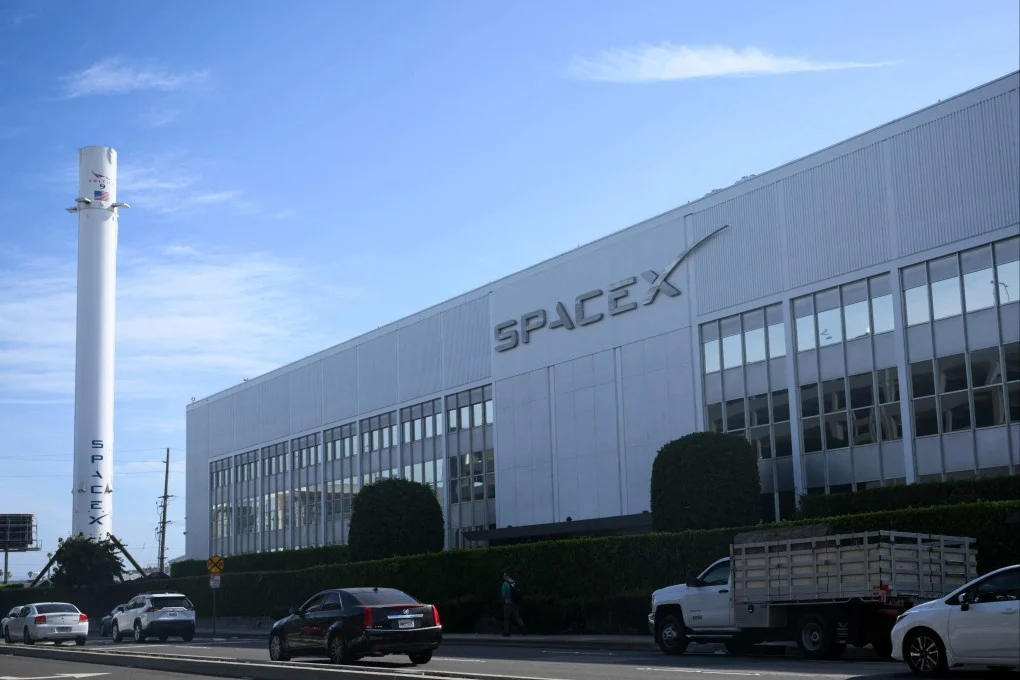
SpaceX priced its Hong Kong IPO liquidity shock into markets before a single share changed hands on Nasdaq. The commercial aerospace giant raised US$75 billion at US$135 per share — making it the largest initial public offering in history, eclipsing Saudi Aramco’s US$29.4 billion listing in 2019 — and the reverberations landed swiftly on the Hang Seng Index, which fell for a fifth consecutive week as global capital rotated toward Elon Musk’s trillion-dollar rocket company. For a market that ranked first in global IPO fundraising just twelve months ago, the timing could scarcely be worse.
The question now is not whether SpaceX’s listing matters to Hong Kong. It already does. The question is how deep the wound goes — and whether the city’s capital markets can absorb the shock without losing the momentum that defined their extraordinary 2025 revival.
Hong Kong spent 2025 reclaiming a title it had not held since 2019. The Hong Kong Stock Exchange (HKEX) raised the equivalent of roughly US$37.2 billion across 106 new listings, according to data compiled by Deloitte China Capital Market Services Group, with eight mega-IPOs accounting for a disproportionate share. Cornerstone investors — many of them foreign — contributed 42% of total capital raised, according to a Goldman Sachs report from July 2025. The city entered 2026 with a pipeline of over 300 listing candidates, and bankers from UBS to JPMorgan forecast another HK$300 billion fundraising year.
Then came SpaceX. A single US listing, valued at approximately US$1.77 trillion, has mobilised more capital than Hong Kong’s entire 2025 calendar. The structural question — whether global liquidity pools are deep enough to accommodate both markets simultaneously — is now unavoidable.
The mechanism by which SpaceX pulls capital from Hong Kong is not exotic. It’s elementary portfolio physics.
Overseas investors holding positions in Hong Kong-listed technology and consumer companies must choose, at the margin, where to deploy fresh capital. An IPO of this scale generates powerful gravitational pull: institutional allocations are competitive, lock-up dynamics create post-listing secondary demand, and the narrative around Starlink and commercial space offers the kind of secular growth story that typically commands premium allocations from global long-only funds.
The evidence of that pull is already visible in the trading data. The Hang Seng Index closed at 24,249 points on 11 June 2026 — a decline of 0.65% on the day and part of a five-week losing streak, according to IG International. The Hang Seng Tech Index fell more than 2% in the same period. China’s Star Market 50 Index dropped nearly 4%.
More telling than the index moves were the fund flows beneath them. Southbound flows through the Stock Connect programme — which channels mainland Chinese capital into Hong Kong equities — remained nominally positive at HK$4.2 billion for the week ending 12 June. Yet that headline masked significant de-risking: the Tracker Fund recorded net outflows of HK$5.8 billion, and the CSOP Hang Seng Tech ETF shed HK$2.9 billion, pointing to broad-based institutional selling rather than isolated retail jitters.
Rahul Ghosh, a portfolio specialist for global equities at T. Rowe Price, had flagged the dynamic in advance. “Historical experience also suggests markets can experience some weakness ahead of large IPOs as investors raise cash,” Ghosh noted, adding that overseas traders could sell Hong Kong stocks to fund SpaceX participation — though he cautioned such pressure often proved temporary.
The compounding factor is the lock-up expiry calendar. Hong Kong’s market faces the end of selling restrictions on shares worth HK$760 billion — approximately US$97 billion — in the third quarter of 2026, according to the South China Morning Post. Unlike many peer markets, Hong Kong imposes no curbs on fund flows for global investors. That openness, which is both a structural strength and a structural vulnerability, leaves it uniquely exposed to sudden external re-allocations.
Why the SpaceX IPO Hits Hong Kong Harder Than Most Markets
The surface reading — capital leaves Hong Kong to chase SpaceX — is accurate but insufficient. The deeper story concerns the specific investor base that drives Hong Kong’s secondary market and what it reveals about the city’s lingering dependencies.
Hong Kong’s 2025 recovery was heavily reliant on two categories of buyer: mainland Chinese retail and institutional flows via the Southbound Stock Connect programme, and a cohort of returning global funds rebalancing into undervalued Chinese technology equities. Both are now under pressure from different directions. The Southbound Stock Connect average daily volume fell 19.4% in November 2025 compared with the prior month, a sign that the mainland-flow tailwind was already decelerating before SpaceX entered the equation.
Global funds face a more acute dilemma. SpaceX is listed on Nasdaq, not HKEX. It is not a Chinese technology company, not an emerging-market play, and not a yield-generating financial stock. Yet it competes for the same global equity allocation budgets — particularly from growth and innovation-focused long-only funds — that have been driving Hong Kong’s recovery.
What Does “Liquidity Risk” Actually Mean for Hong Kong’s IPO Market?
Liquidity risk in this context means the narrowing of the window in which Hong Kong’s pipeline of 300-plus listing candidates can convert demand into strong debut valuations. When a single US listing absorbs more than twice the capital raised across all of Hong Kong’s 2025 IPOs, the allocation pool for concurrent Hong Kong debuts shrinks — not to zero, but enough to compress pricing and dampen cornerstone participation.
Wang Zheng, chief investment officer at Jingxi Investment Management in Shanghai, put it plainly: many investors will focus on the SpaceX IPO, potentially causing outflows from emerging economies and the Asia-Pacific region as they prepare for subscriptions. That assessment, offered before the listing, has since been borne out in the data.
Yet the picture is more complicated than a simple zero-sum transfer. Capital markets are not a fixed pool; they expand and contract with sentiment, leverage, and monetary conditions. The Federal Reserve’s persistent reluctance to cut rates — compounded by oil-price-driven inflation expectations — tightens the global liquidity environment independent of any single IPO. SpaceX amplifies an existing constraint rather than creating one from scratch.
The first-order effect — short-term selling pressure on Hong Kong equities — is already playing out. The second-order effects are more consequential and less immediately legible.
For HKEX’s IPO pipeline, the SpaceX timing is acutely uncomfortable. The exchange was forecasting another record fundraising year, with IPO proceeds potentially exceeding HK$300 billion, according to UBS vice-chairman John Lee Chen-kwok. That target remains achievable, but the SpaceX overhang introduces meaningful execution risk for the thirty-to-forty companies likely to market between now and October. Cornerstone investors — many of them the same global funds now digesting their SpaceX allocations — will be more selective. Pricing pressure will shift in favour of buyers.
The Hang Seng HK-US TECH Index adds an ironic dimension. Hang Seng Indexes Company announced on 12 June that SpaceX will be added to the Hang Seng HK-US TECH Index as a designated US-listed constituent. Passive funds tracking that index will be forced to buy SPCX shares when the reweighting takes effect on 29 June 2026, creating mechanistic demand for a stock listed in New York. For funds that hold both the Hang Seng Tech ETF and a US index product, SpaceX’s inclusion generates simultaneous buying pressure in New York and offsetting selling pressure in Hong Kong as existing constituents are diluted.
There are further downstream effects for monetary conditions. The SpaceX listing arrives as Hong Kong’s interbank market already carries elevated risk premia relative to pre-conflict levels, with US strikes against Iran having introduced fresh inflationary uncertainty into global oil markets. The People’s Bank of China has held key lending rates at record lows for ten consecutive months to support the mainland economy, but Hong Kong’s linked exchange rate system means monetary conditions here track the Federal Reserve, not the PBoC. Rate relief, if it comes, will be on Washington’s timetable — not Beijing’s.
For individual investors, the implications are more immediate. Hong Kong’s market has no capital flow controls. A retail investor in Wan Chai faces the same choice as a pension fund in Singapore: stay in Tencent and Xiaomi, or rotate into the world’s most talked-about new listing. The brokerage Futu Securities reported increased cash-out activity from existing Hong Kong holdings ahead of SpaceX’s pricing date, with clients reserving liquidity for the Nasdaq subscription window.
Not everyone reads the SpaceX factor as a structural threat to Hong Kong. The most credible opposing argument comes from JPMorgan.
Paul Uren, the US bank’s Asia-Pacific investment banking head, made the case at the JPMorgan Global China Summit in Shanghai in late May. “What we’ve seen is that global pools of capital have continued to focus on ways to diversify, both geographically and by industry,” Uren told the South China Morning Post. His view: the liquidity drain from SpaceX is unlikely to ripple into regional markets, precisely because the global push for geographic diversification creates structural demand for Hong Kong-listed Chinese equities that no single US listing can displace.
The argument has real merit. Hong Kong’s 2025 resurgence was not a temporary anomaly driven by cheap money — it reflected a structural re-rating of Chinese technology companies, many of which trade at material discounts to comparable US peers on a price-to-earnings basis. That valuation gap does not evaporate because Elon Musk launched rockets.
Nomura made a similar point in January 2026, projecting an 8-to-10% return for the Hang Seng Index over the year on the basis of sustainable earnings growth, a strengthening RMB, and continued international capital diversification. Those structural drivers remain intact.
That said, the JPMorgan and Nomura frameworks both assume a relatively orderly global liquidity environment. They were formulated before a US$75 billion IPO, a US-Iran conflict driving oil above $90 per barrel, and the Federal Reserve signalling rates higher for longer. Under those combined conditions, even the optimistic scenario involves meaningful near-term volatility for Hong Kong equities.
There is a reliable test for whether an external shock represents a structural threat or a cyclical disruption: does it change the reasons people invest in a market, or only the timing of when they do so?
SpaceX does not change Hong Kong’s fundamental investment proposition. The city remains Asia’s deepest pool of internationally accessible Chinese equities, with a legal infrastructure, a currency peg, and a clearing system that have no equivalent in the region. The 300-company listing pipeline reflects genuine demand from Chinese firms seeking offshore capital, not a temporary bubble. And the Hang Seng’s valuation discount to US technology indices remains wide enough to absorb considerable capital rotation without collapsing the bull case.
What SpaceX does change is the short-term marginal calculus. It raises the cost of attention, compresses the window for peak-demand IPO pricing, and concentrates selling pressure into a market that was already contending with lock-up expiries, tightening interbank rates, and geopolitical uncertainty from the Middle East. The next ninety days will tell whether Hong Kong’s capital markets have built the resilience to absorb an external shock of this magnitude without giving up the ground so painstakingly recovered in 2025.
The question isn’t whether Hong Kong can survive the SpaceX factor. It’s whether the city’s market machinery is now robust enough — in the deepest, most structural sense — to treat a US$75 billion gravitational event as routine background noise, rather than a defining test. The answer is probably yes. But “probably” is doing a lot of work right now.
Discover more from The Economy
Subscribe to get the latest posts sent to your email.



Navigating Mortgage and Loan Refinancing in a High-Yield Environment
Global public debt crossing critical thresholds has kept central bank policies volatile, resulting in fluctuating US Treasury yields throughout 2026. For homeowners and commercial property holders burdened by previous high-interest borrowing cycles, finding optimal refinance windows has become a high-stakes financial puzzle. Stalled disinflation and stubborn employment numbers mean rate cuts are incremental, requiring borrowers to act with precision.
Timing your mortgage or commercial loan refinance in this environment requires a deep understanding of yield curve movements and lender risk appetites.
Decoding 2026 Refinance Dynamics
The 10-Year Treasury Yield Benchmark
Mortgage rates continue to track closely with the 10-year US Treasury yield. When macroeconomic anxiety spikes debt issuance, yields rise, tightening consumer borrowing capacity. Savvy borrowers monitor weekly Treasury auctions to lock in rates during brief dip windows.
Hybrid ARMs and Alternative Structures
With fixed rates remaining elevated, 7/1 and 10/1 adjustable-rate mortgages (ARMs) have surged in popularity. These products offer lower initial monthly payments, giving borrowers breathing room until central bank easing cycles fully materialize.
| Loan Product | Current Rate Range | Best For | Key Risk Factor |
| 30-Year Fixed Mortgage | 6.2% – 6.8% | Long-term predictability | Higher initial monthly outlay |
| 7/1 Hybrid ARM | 5.5% – 5.9% | Short-term ownership / flipping | Rate reset risk after year 7 |
| Commercial Refinance | 7.0% – 8.2% | Corporate asset restructuring | Strict DSCR lender covenants |
Actionable Steps for Successful Refinancing
To maximize your chances of securing favorable refinance terms in a volatile market, follow a disciplined preparation strategy.
Boost Your Credit Score Immediately: Lenders in 2026 are applying stringent credit tiering; a 20-point increase can drop your APR by a crucial quarter-point.
Shop Regional Credit Unions: Smaller financial institutions often offer portfolio loans with more flexible underwriting than major national banks.
Calculate the Break-Even Point: Ensure your total closing costs are recouped through monthly savings within 24 months of closing.
“Market Strategist View: Refinancing in 2026 is an exercise in opportunistic timing. Borrowers must maintain immaculate financial profiles ready to strike the moment Treasury yields dip.”
Mastering the complexities of today’s debt environment ensures you can successfully lower your debt service costs and protect your long-term financial stability.
Discover more from The Economy
Subscribe to get the latest posts sent to your email.

The days of pulling generic auto insurance quotes based purely on your zip code and age are officially over. In 2026, insurance comparison engines are powered entirely by generative AI and real-time telematics. These platforms digest thousands of live data points—ranging from your driving smoothness via connected vehicle sensors to real-time traffic congestion patterns—to generate hyper-personalized premiums instantly.
For consumers, this evolution represents both a massive opportunity for savings and a hidden trap for penalty pricing. Understanding how AI algorithms evaluate risk is essential for anyone looking to lower their monthly auto insurance premiums.
How AI Comparison Engines Evaluate Your Risk Profile
Behavioral Telematics and Connected Cars
Modern cars stream performance data directly to insurance aggregators. Generative AI models analyze braking sharpness, acceleration curves, cornering G-forces, and phone distraction metrics. Drivers who maintain smooth, defensive habits are rewarded with dynamic rate cuts of up to 40% compared to traditional rating tiers.
Predictive Traffic and Weather Modeling
AI tools now cross-reference your daily commute route with predictive weather and accident probability models. If your standard parking location or driving corridor has a statistically higher incidence of uninsured motorist claims, your quotes will reflect that hyper-local risk assessment.
| Comparison Factor | Traditional Rating Model | 2026 Generative AI Model | Impact on Premium |
| Mileage & Usage | Annual estimated odometer reading | GPS tracking & live trip duration | High (up to 35% savings) |
| Driving Behavior | MVR driving record & accidents | Real-time braking, speed, & G-force | Critical (determines tier) |
| Vehicle Tech | Make, model, and safety rating | ADAS calibration & repair cost data | Moderate |
Strategies to Lower Your AI-Driven Insurance Quote
To outsmart the algorithm and secure the lowest possible premium in 2026, drivers must proactively manage their digital footprint on insurance platforms.
Opt-In for Telematics Trial Periods: Many insurers offer immediate 15% discounts just for installing their driving app; let it track safe habits for 30 days to lock in permanent savings.
Scrub Unverified Public Records: Ensure your motor vehicle report is free of clerical errors that AI risk models misinterpret as reckless behavior.
Compare AI Aggregators: Use platforms that integrate multi-carrier API feeds rather than single-brand comparison sites to find the best risk-adjusted rate.
“Industry Note: AI-driven pricing rewards transparency and precision. Drivers who actively manage their telematics data consistently out-save those relying on legacy quote calculators.”
Embracing AI comparison tools allows savvy policyholders to customize coverage limits precisely to their driving habits, eliminating wasted premium spend while ensuring robust protection.
Discover more from The Economy
Subscribe to get the latest posts sent to your email.

Despite decades of bans and strict handling mandates, asbestos remains a silent killer across legacy manufacturing plants, shipyards, and modern green-energy infrastructure retrofits. In 2026, regulatory changes by the EPA and tightened occupational health standards have triggered a fresh wave of mesothelioma litigation. Manufacturers attempting to fast-track industrial transitions are encountering catastrophic oversight, exposing workers to legacy toxins and opening corporate parent companies to unprecedented liability.
Navigating a mesothelioma claim in 2026 requires understanding how modern industrial supply chains intersect with historical exposure. Trusts established decades ago are being audited under stricter transparency laws, altering payout ratios and accelerating fast-track settlements for terminally ill plaintiffs.
Modern Industrial Exposure Hotspots
Green Retrofitting and Renewable Energy Infrastructure
A primary source of 2026 asbestos exposure occurs during the decommissioning and retrofitting of older industrial facilities for renewable energy production. Workers insulating electrical grids, modernizing HVAC systems, or upgrading manufacturing floors frequently disturb encapsulated asbestos materials that were improperly documented or ignored during facility audits.
Automotive and Aerospace Supply Chains
With advanced manufacturing booming, workers handling specialized friction materials, gaskets, and heat shields face ongoing risks. Supply chain tracing has become more sophisticated, allowing legal teams to pinpoint exact corporate entities responsible for raw material distribution across multinational borders.
| Industry Sector | Primary Exposure Risk | Legal Venue / Trust | Avg. Claim Value Range |
| Green Energy Retrofit | Disturbed insulation, pipe lagging | Federal Tort / Manufacturer Trust | $1.2M – $3.5M |
| Shipbuilding & Marine | Boiler insulation, structural seals | Asbestos Bankruptcy Trusts | $800K – $2.4M |
| Automotive Manufacturing | Brake components, high-heat gaskets | Third-Party Product Liability | $600K – $1.8M |
Securing Maximum Compensation: Steps for Plaintiffs
Time is of the essence in mesothelioma cases. Plaintiffs and their families must act decisively to secure financial recovery before statutes of limitations expire.
Retain Specialized Counsel: Work exclusively with national mesothelioma law firms possessing deep historical databases of asbestos-containing products.
Audit Employment History: Document every job site, supervisor name, and equipment brand encountered throughout your career.
Expedite Medical Filings: Secure a formal pathological diagnosis quickly to qualify for expedited trust fund distribution and priority trial settings.
“Expert Insight: Modern asbestos litigation is no longer just about historical tracking; it is about holding modern corporations accountable for failing to conduct rigorous environmental safety audits before initiating industrial retrofits.”
By combining meticulous work history reconstruction with aggressive multi-trust filings, victims can secure substantial financial relief to cover specialized immunotherapy and family support.
Discover more from The Economy
Subscribe to get the latest posts sent to your email.

10-Year Treasury Yield Tops 5%: What It Means for Mortgages, Stocks, and the Fed

Ceasefire Negotiations in 2026: Predicting the Rebound of European and Asian Economies

Emerging Markets Update: The Impact of World Bank Policies on PSX Stability

Costco Oil Shortage 2026: Will Prices Double for All Synthetic Motor Oils?

Trump’s $5,000 Promise: The Hidden Tax Implications for Retail Investors

Global Economy Outlook 2026: What Ceasefire Talks Mean for the Tech Sector

China Stocks Today: Are Big Economies in Asia Nearing a Market Bottom?

Stock Market Crash 2026? How the Trump $5,000 Dividend Impacts Global Inflation

Tax-to-GDP Ratio Explained: Global Benchmarks, Fiscal Sovereignty & 2026 Insights

Trade Deficit & Terms of Trade Explained: Global Impact, Real-World Examples, and 2026 Insights

Supply vs Demand Shocks Explained: Market Equilibrium, Inflation Risks & Policy Responses in 2026

Microeconomics vs. Macroeconomics Explained: Key Differences, Interdependence & Global Impact

Devaluation vs Depreciation: Clear Differences, Causes, and Economic Impact

Purchasing Power Parity (PPP) Explained: Global Rankings, Living Standards & Why Nominal Exchange Rates Mislead in 2026

State Farm’s $5B Dividend 2026: Who Qualifies & Payout Dates

US-China Relations in Q3 2026: Trade Tariffs and Supply Chain Risks

Gold’s Wild 2026: From a Record $5,600 Peak to a 24% Crash and Back Toward $4,500

Oil Surges as Strait of Hormuz Traffic Collapses Again

Bank of England Set to Hold Rates Through Year-End, Reuters Poll Shows

SpaceX Starship Flight 14: First Orbital Attempt & Starlink V3 Launch Explained

The 2026 Crypto Regulatory Shift: What It Means for Institutional Investors

Top 30 Stocks for Investment in PSX for Massive ROI in 2026

AI Chip Stocks 2026: The Best Semiconductor Investments Beyond Marvell

AI-Powered Training: The Next Multi-Billion Dollar Ecosystem in Fitness

Tween Back-to-School Trends 2026: What’s Driving the $85B Season

Russia’s Black Sea Oil Exports Fall for a Fifth Straight Week

Global Chip Selloff Deepens: What’s Driving the Aug. 19 Semiconductor Rout

Shein Clothes Quality & Safety in 2026: What Lab Tests Show
-

 Markets & Finance8 months ago
Top 15 Stocks for Investment in 2026 in PSX: Your Complete Guide to Pakistan’s Best Investment Opportunities
-

 Analysis7 months ago
Johor’s Investment Boom: The Hidden Costs Behind Malaysia’s Most Ambitious Economic Surge
-

 Analysis7 months ago
Top 10 Stocks for Investment in PSX for Quick Returns in 2026
-

 Analysis7 months ago
Brazil’s Rare Earth Race: US, EU, and China Compete for Critical Minerals as Tensions Rise
-

 Banks8 months ago
Best Investments in Pakistan 2026: Top 10 Low-Price Shares and Long-Term Picks for the PSX
-

 Investment8 months ago
Top 10 Mutual Fund Managers in Pakistan for Investment in 2026: A Comprehensive Guide for Optimal Returns
-

 Global Economy9 months ago
15 Most Lucrative Sectors for Investment in Pakistan: A 2025 Data-Driven Analysis
-

 Global Economy9 months ago
Pakistan’s Export Goldmine: 10 Game-Changing Markets Where Pakistani Businesses Are Winning Big in 2025