
Analysis
Salesforce Intercom Acquisition: The $3.6bn AI CRM Shakeup


The era of quiet capital in enterprise software has definitively ended. After a multi-year hiatus from the mega-deals that defined its early expansion, San Francisco’s cloud pioneer has returned to the negotiating table. The Salesforce Intercom acquisition, announced Tuesday, injects a sudden $3.6bn premium into the business-to-business software market. Chief Executive Marc Benioff has built a career on identifying software transitions just before they reach critical mass. Now, by absorbing the Dublin-founded messaging platform, he is betting that the transition to autonomous customer service is no longer a fringe enterprise experiment, but the core engine of corporate profitability over the next decade.
The broader technology landscape has spent the past twenty-four months fixated on efficiency. The structural reality of the Software as a Service (SaaS) sector is that net-new seat growth has stagnated. Corporations are aggressively consolidating their vendor lists. According to recent market analysis on IT spending frameworks, global enterprise software spending is projected to reach $1.04 trillion this year, but the vast majority of that capital is flowing toward systems that promise direct labour reduction. Furthermore, the shift from reactive software to proactive, conversational platforms has fundamentally altered procurement economics. Data from the Financial Times technology indices suggests that artificial intelligence deployments in customer-facing roles have reduced first-response times by upwards of 40% in large-scale pilot programmes. That said, isolated tools are losing favour. Chief Information Officers demand unified architectures, setting the stage for a ruthless period of industry-wide consolidation.
The Core Development: Valuations and Mechanics
Salesforce’s agreement to purchase Intercom for $3.6bn represents a fascinating premium in a market that has rigorously punished elevated multiples. Intercom, which fundamentally altered how companies communicate with website visitors through its ubiquitous chat widget, generated approximately $300m in Annual Recurring Revenue (ARR) last year. This translates to a 12x revenue multiple—a figure that harkens back to the aggressive valuations of 2021. Yet, the price tag reflects more than just user acquisition; it is a defensive strike to capture proprietary automation mechanics. Industry evaluations on generative AI market positioning consistently rank Intercom’s proprietary AI bot, Fin, as a benchmark for low-hallucination, high-accuracy ticket resolution.
The mechanics of the deal highlight a mutual necessity. Eoghan McCabe, who returned as Intercom’s CEO in October 2022 to steer the company through a turbulent macroeconomic environment, has successfully executed a radical pivot toward AI-first support. Under his renewed leadership, the firm reduced its workforce while aggressively reallocating capital to machine learning engineering. This lean, highly concentrated bet on automation directly caught the attention of Salesforce’s corporate development team. According to market intelligence from the OECD regarding corporate technology acquisitions, acquiring proven, highly specialised AI architectures is now statistically cheaper than attempting to develop them organically within legacy codebases.
For Salesforce, the injection of Intercom’s technology immediately modernises Service Cloud, its primary cash engine. Service Cloud generated $2.06bn in a single quarter last year, but it faces increasing pressure from agile, AI-native upstarts. Integrating a platform that already resolves 50% of routine customer inquiries autonomously provides Salesforce with an immediate, quantifiable upgrade to sell to its sprawling, global enterprise base.
The Analytical Layer: Reshaping AI Customer Service CRM
The acquisition is not merely an aggregation of market share; it is a fundamental re-architecture of how business software functions. The strategic intent here moves beyond simply adding a messaging widget to a dashboard. It signals the total convergence of data storage, system intelligence, and frontend customer interaction.
Why is Salesforce buying Intercom?
Salesforce is acquiring Intercom to dominate the automated customer service sector. By integrating Intercom’s generative AI bot, Fin, into its existing Service Cloud architecture, Salesforce directly targets the rising demand for autonomous support systems while neutralising a formidable competitor in the customer experience market.
This integration solves a deeply entrenched friction point in the AI customer service CRM ecosystem. Historically, chatbots have failed because they were detached from the central nervous system of customer data. They could answer generic questions, but they could not modify a shipping address, process a refund, or contextualise a user’s five-year purchase history. Intercom possesses the conversational intelligence, but Salesforce owns the underlying data graph. Fusing the two creates a highly potent commercial offering: an AI agent that speaks with Intercom’s fluidity but acts with Salesforce’s systemic authority.
The financial logic is equally compelling. Salesforce’s historical M&A strategy—most notably the $27.7bn purchase of Slack in 2021 and the $15.7bn acquisition of Tableau in 2019—has always relied on cross-selling. By plugging Intercom into its existing distribution network of 150,000 corporate clients, Salesforce can bypass the brutal customer acquisition costs that typically plague standalone SaaS companies. The true value of the $3.6bn outlay will be measured not by Intercom’s standalone revenue, but by how successfully it prevents customer churn within the broader Salesforce ecosystem.
Implications for the Software Ecosystem
The downstream consequences of this consolidation will force an immediate recalibration among mid-market and enterprise software providers. Rivals like Zendesk and HubSpot now face a heavily fortified competitor that controls both the system of record and the primary system of engagement. HubSpot, which has aggressively expanded its own service hub, will likely need to accelerate its own artificial intelligence roadmap to prevent enterprise clients from migrating to the newly integrated Salesforce suite.
Still, the ripples extend beyond direct competitors. This transaction serves as a crucial barometer for the venture capital ecosystem. Thousands of early-stage startups are currently building point-solutions for customer support, hoping to capture a sliver of the automation boom. The Salesforce Intercom acquisition effectively caps the ceiling for these independent operators. It strongly suggests that the future of enterprise software belongs to bundled, all-in-one platforms rather than best-of-breed, fragmented tools. Regulatory filings and economic analysis from the UK’s Competition and Markets Authority note a growing trend where dominant technology firms utilise targeted acquisitions to enclose emerging technological ecosystems before they can mature into independent threats.
Furthermore, this deal will fundamentally alter the labour economics of the customer support industry. With Fin integrated directly into Service Cloud, enterprise call centres will require drastically fewer tier-one support agents. The software will intercept, process, and resolve the vast majority of inbound queries, leaving only complex, high-friction escalations for human operators. This transition will dramatically improve corporate margins while quietly erasing a massive tier of entry-level digital labour.
Competing Perspectives: The Antitrust and Integration Risk
The picture is more complicated than a seamless synergy narrative. Skeptics within the financial community argue that Salesforce is historically prone to integration bloat. Critics point to the prolonged, often clumsy assimilation of Slack, arguing that bolting an agile, design-led product like Intercom onto the aging, complex architecture of Salesforce risks degrading the very user experience that made Intercom valuable.
There is also the looming spectre of regulatory intervention. The Federal Trade Commission (FTC), under the direction of Lina Khan, has demonstrated an aggressive hostility toward technology consolidation. While $3.6bn does not rank among the largest tech acquisitions, regulators are increasingly scrutinising “killer acquisitions” where incumbents buy fast-growing disruptors specifically to eliminate future competition. Antitrust lawyers suggest the deal will face intense scrutiny regarding data monopolisation. If an investigating body determines that merging Intercom’s conversational data with Salesforce’s market-dominant CRM creates an insurmountable barrier to entry for smaller competitors, the deal could face prolonged delays or outright injunctions. According to structural competition guidelines published by the Department of Justice, vertical integrations involving algorithmic data dominance are now subject to the same strict analytical frameworks as traditional horizontal mergers.
That said, Salesforce clearly calculates that the operational advantages outweigh the regulatory friction. They are betting that the enterprise market’s demand for functional, secure AI integration will force regulators to view the merger as a product enhancement rather than an anticompetitive strike.
Closing Synthesis
The acquisition of Intercom is not merely a financial transaction; it is a structural admission about the future of software. Standalone applications are giving way to intelligent, unified architectures that can natively understand and execute complex business logic. Marc Benioff is paying a premium because the cost of failing to own the conversational layer of the internet is structurally higher than $3.6bn.
Salesforce has essentially purchased the missing linguistic interface for its massive database empire. Whether they can integrate it without suffocating Intercom’s agility will determine if this deal is remembered as a masterstroke or an expensive misstep. Ultimately, the survival of enterprise software giants no longer depends on building the best database, but on owning the artificial intelligence that speaks for it.
Discover more from The Economy
Subscribe to get the latest posts sent to your email.


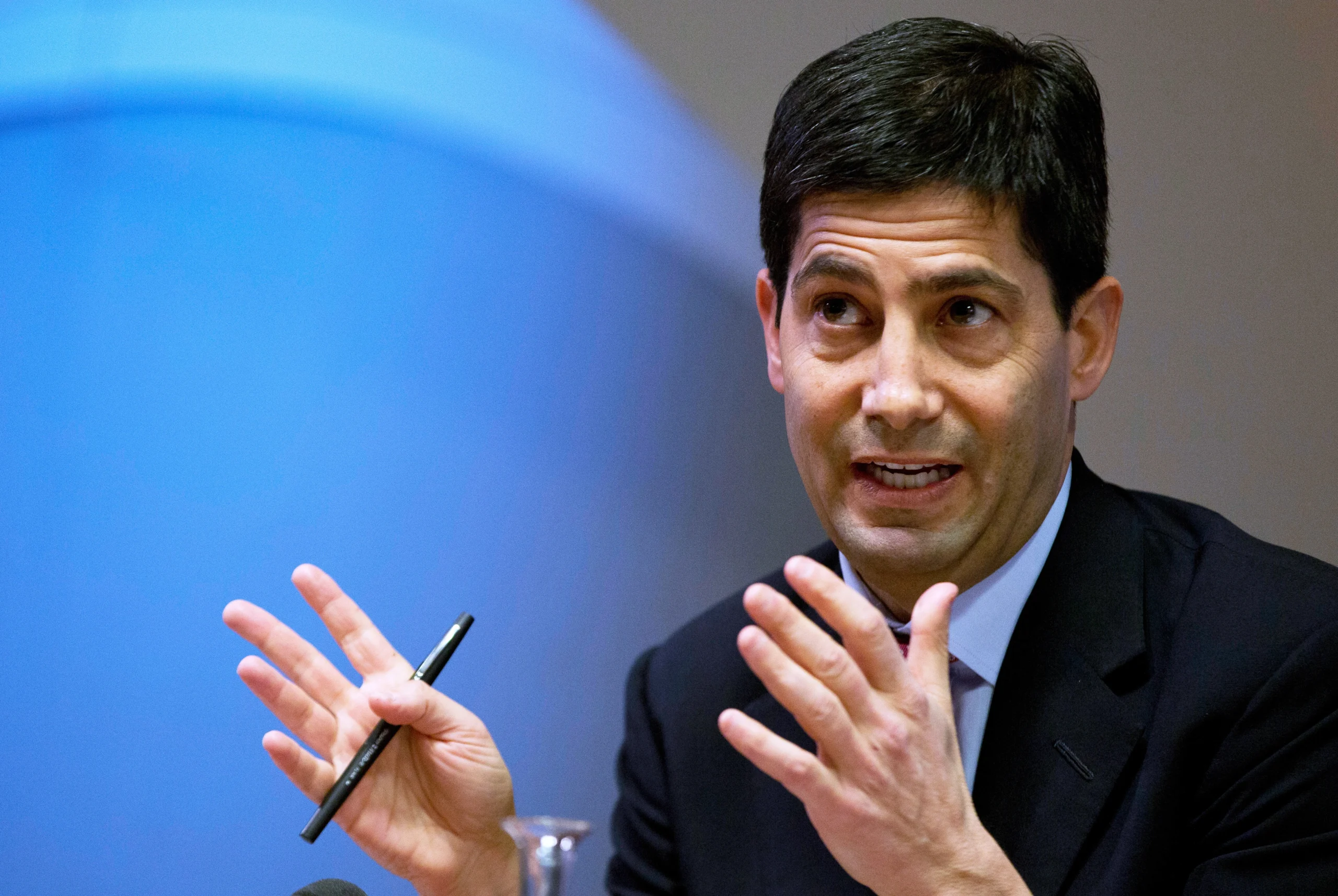
The Federal Reserve’s rate-setting committee held its benchmark borrowing rate steady on July 29, keeping it in a range of 3.5% to 3.75% — but the calm on the surface masked one of the most contested votes of the post-pandemic era. The Federal Open Market Committee split 9 to 3, with three members pushing to raise rates rather than hold, according to NPR’s coverage of the decision.
Chair Kevin Warsh, who took over the Eccles Building earlier this year after a nomination process that rattled bond markets, used his post-meeting press conference to make a point of not making a point. Rather than signal where rates are headed next, Warsh told reporters the Fed would judge market reaction “direct and unfiltered” instead of offering the rolling forecasts investors have come to expect, a stance detailed in CNBC’s meeting recap.
A rate hike was genuinely on the table
What made this meeting unusual wasn’t just the dissent — it was how close markets came to pricing in a hike rather than a cut. Fed funds futures tracked by CME Group put the odds of a rate increase at roughly 35% heading into the decision, up sharply from 26% a week earlier, according to CNBC’s markets analysis. That is a striking reversal from the rate-cutting cycle many investors had expected when Warsh’s nomination was first floated as a “productivity-led growth” pivot away from his predecessor’s caution.
The market reaction told its own story. The S&P 500 slid roughly 0.6% during Warsh’s press conference, the Dow shed more than 840 points intraday, and the 10-year Treasury yield rose to 4.657%, even as the Fed opted for a hold rather than a hike.
Why Warsh is playing it differently
Warsh’s approach reflects both economic and political calculus. Treasury yields have climbed since the Fed’s prior meeting despite the hold, a dynamic Warsh acknowledged directly. And unlike his predecessor, Warsh has been explicit that he intends to set policy independent of the White House’s preferences — even as he awaits a possible additional ally on the Board once a pending internal review concludes, according to CNBC’s analysis of the political backdrop.
Why this matters beyond Washington
A genuinely undecided Fed has knock-on effects well past US borrowers. Higher-for-longer Treasury yields pull global capital toward dollar assets, complicating rate paths in London, Ottawa, and emerging markets alike — a dynamic playing out in parallel with the UK’s own fiscal squeeze (see our companion report on the Autumn Budget) and China’s deflationary drag on global demand. For businesses and investors across the Gulf, Southeast Asia, and South Asia weighing dollar-denominated debt or dollar-pegged currencies, an unpredictable Fed chair is arguably a bigger variable than the rate level itself.
Discover more from The Economy
Subscribe to get the latest posts sent to your email.
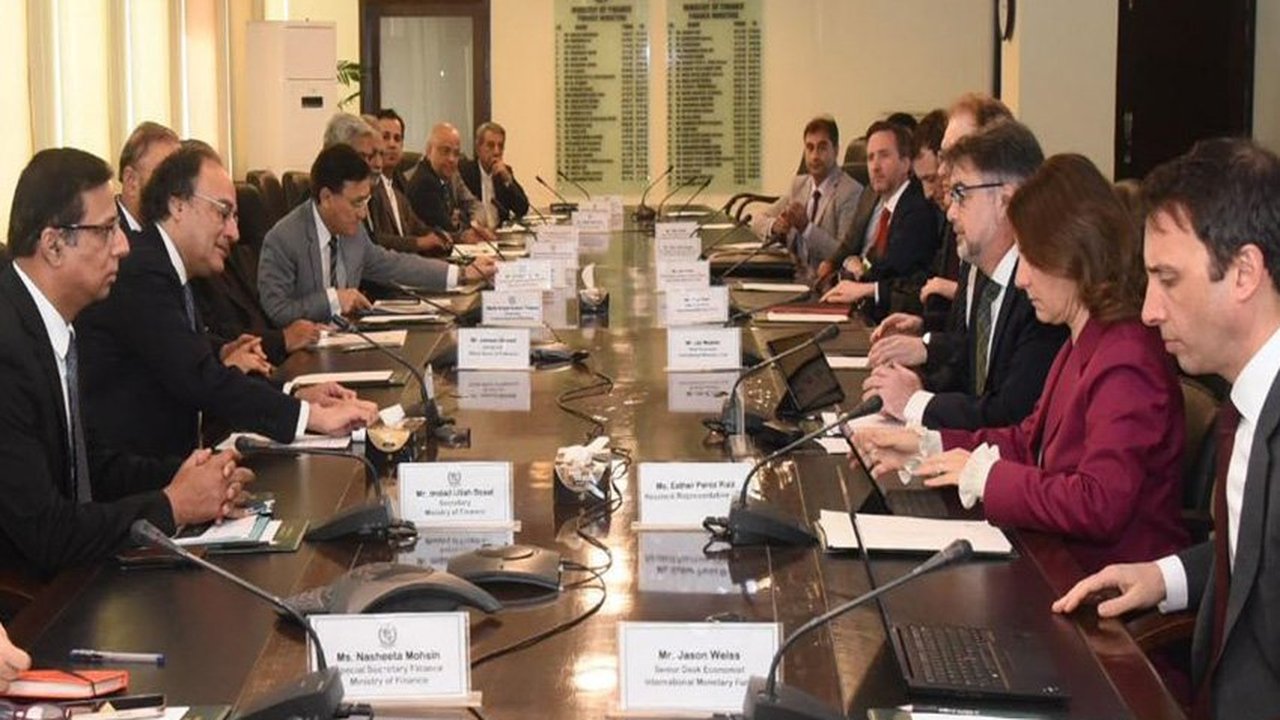
The IMF’s Executive Board completed Pakistan’s third review of its 37-month Extended Fund Facility (EFF) and second review of its Resilience and Sustainability Facility (RSF) on May 8, 2026, unlocking roughly $1.1 billion under the EFF and $220 million under the RSF, according to the IMF’s official statement. Total disbursements under both arrangements now stand at roughly $4.8 billion. Acting Chair Nigel Clarke credited Pakistan’s “strong program implementation” for supporting macroeconomic recovery and building resilience to shocks.
The Genuinely Good Numbers
By the IMF’s own account, the underlying data supports the assessment. GDP growth accelerated to an average of 3.8% year-on-year in the first half of FY26, driven by the auto, construction and garment industries, even accounting for flood disruption in July-August, according to the IMF’s staff report. Inflation, while ticking up to 7.3% year-on-year in March as commodity price pass-through hit domestic energy prices, remained within a broadly contained range, with core inflation at 7.6%. The current account was described as broadly balanced, and reserve rebuilding exceeded earlier projections — the State Bank of Pakistan projects reserves continuing to climb to roughly $18 billion by June 2026, according to analysis from the Islamabad Policy Research Institute.
The State Bank confirmed receipt of $1.3 billion from the IMF on May 12, 2026, according to CSS Prep’s policy analysis, which notes reserves had fallen to dangerously low levels in 2022-2023 before this recovery.
The External Risk the IMF Flagged Explicitly
The Fund’s own report is notably candid about downside exposure: under its April 2026 World Economic Outlook adverse scenario, the cumulative hit to Pakistan’s GDP from continued Middle East conflict could rise to around 1.5 percentage points by FY27, with inflation and the current account deficit each worsening by roughly 1.5-2.5 percentage points of GDP, according to the IMF’s staff country report. Given Pakistan’s reliance on imported energy, oil price volatility discussed in the IMF’s global outlook feeds directly into this specific country risk.
The Reform Question That Keeps Recurring
The structural policy conditions attached to this review read as familiar territory: sustaining fiscal consolidation, broadening the tax base, maintaining tight monetary policy to keep inflation within the State Bank’s target range, and advancing energy-sector reform — commitments the IMF’s own end-of-mission statement described as still “ongoing” rather than complete, per the IMF’s March 2026 mission statement.
A sharper framing comes from Pakistani policy analysts themselves: reforms that would genuinely break the IMF-program cycle — broadening the tax base to include agriculture and retail, ending energy subsidies, privatizing loss-making state-owned enterprises — impose concentrated, visible costs on politically organized interest groups, while the benefits of reversing those costs are diffuse and delayed, according to CSS Prep’s analysis. That political-economy imbalance, the analysis argues, consistently favors populist continuation of stabilization support over the structural reform that would end the need for it — a pattern this third review’s genuine macroeconomic progress doesn’t yet break.
Social Cost of the Adjustment
Pakistan’s poverty headcount rate rose to 25.3% in FY24, up sharply from 18.3% in FY22, driven by overlapping shocks from COVID, floods and inflation, according to the IMF’s staff report. The Benazir Income Support Programme (BISP) remains the primary social protection mechanism absorbing the distributional cost of IMF-mandated energy price increases and fiscal tightening — whether its scale is adequate remains, in the IMF’s own words, a live policy question rather than a settled one.
Discover more from The Economy
Subscribe to get the latest posts sent to your email.
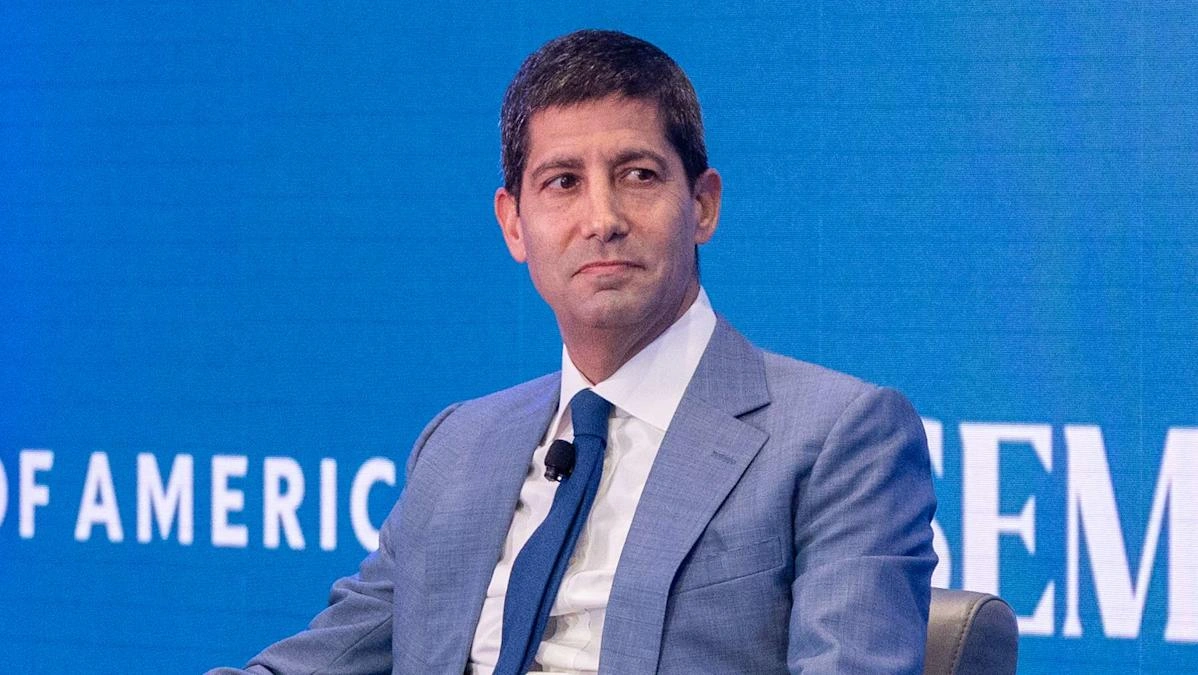
The Federal Reserve held its benchmark interest rate steady at 3.5%-3.75% on July 29, 2026, but the more consequential detail was the vote itself: 9-3, with three regional Federal Reserve Bank presidents — Cleveland’s Beth Hammack, Minneapolis’s Neel Kashkari, and Dallas’s Lorie Logan — dissenting in favor of a rate hike, according to CNBC’s coverage of the meeting. Inflation has remained above the Fed’s 2% target for more than five years, the underlying tension driving the split.
A New Chair, A Different Communication Style
The decision was the latest under Fed Chair Kevin Warsh, who took over after Jerome Powell’s term expired on May 15, 2026, according to iShares’ 2026 Fed outlook. Warsh has deliberately shortened the Fed’s post-meeting statements and pulled back on the kind of explicit forward guidance markets had grown accustomed to under his predecessors — he has reportedly dedicated one of five internal task forces specifically to rethinking how the Fed communicates, according to CNBC’s reporting. Warsh has publicly called inflation “a choice,” repeatedly emphasizing the importance of getting prices under control in recent congressional testimony.
At his post-meeting press conference, Warsh pushed back on characterizing the decision as a “pause,” instead describing it as “a rigorous review of the economic situation” and “a view of what our own homework is to try to resolve those questions in the period ahead,” according to a separate CNBC recap. Warsh has reportedly used the phrase “family fight” 13 times across five public appearances to acknowledge the committee’s internal divisions — an unusually candid framing for a sitting Fed Chair.
Why the Split Exists
Governor Christopher Waller has separately voiced concern that higher rates could become necessary without more inflation progress, even though he voted for the hold at this meeting. The full committee’s June projections penciled in one quarter-point increase by the end of 2026 — a notable shift from the rate-cutting path markets had priced in earlier in the year, according to the Fed’s own June 2026 Summary of Economic Projections, which explicitly flags that the federal funds rate outlook “is subject to considerable uncertainty” given how sensitive each participant’s view is to how inflation and employment data evolve from here.
Complicating Factors
Renewed U.S.-Iran tensions have already pushed mortgage rates near a one-year high independent of the Fed’s own decisions, since longer-term rates track Treasury yields and inflation expectations rather than the Fed funds rate directly, according to CNBC’s analysis. Separately, iShares had earlier projected that once a new Chair was confirmed, the Fed might seek one or two rate cuts to bring rates closer to a 3%-3.25% range — a path the July hold and hawkish dissents now put in serious doubt.
The next FOMC meeting is scheduled for September 15-16, 2026, and will include a fresh Summary of Economic Projections, according to Forbes’ Fed tracker — the next real test of whether Warsh’s committee can narrow its internal divide or whether the “family fight” framing becomes the defining feature of Fed policy through the rest of 2026.
Discover more from The Economy
Subscribe to get the latest posts sent to your email.

Rachel Reeves’s £25 Billion Problem: What the Autumn Budget Gap Means for Britain

Inside the Fed’s Most Divided Vote in Years: Why Warsh Held the Line on Rates

Pakistan Passed Its Third IMF Review

The Fed Is Fractured — And a New Chair Just Made It Louder, Not Quieter

The UK Economy in 2026 Is Neither Recession Nor Recovery :Stagflaton

Indonesia’s $121 Billion Nickel Bet Is Facing a Battery Chemistry

Why Ultra-Wealthy Families Are Splitting Between Singapore and Dubai inmarkets 2026

China Chose Political Control Over Fixing Its Deflation Trap in 2026

Oil Markets Are Oversupplied and Geopolitically Explosive at the Same Time

Russia’s Budget Deficit Blew Past Its Full-Year Target in Three Months

Malaysia’s Rare Earth Bet: Six Powers Are Negotiating for Kuantan at Once

Gulf Sovereign Capital Bypasses Pakistan Despite Record 2026 Spending Spree

Pakistan’s $10bn US Facility Request: Inside the New Gulf Capital Triangle

China Criticizes US Bill Targeting Russian Oil Buyers — Why It Matters

AI Bubble Warning 2026: Why BIS, IMF and Bank of England Fear a Market Crash

Russia Bans Diesel Exports 2026: Global Fuel Market Impact Explained

Gold Price Forecast 2026: Fed’s July 29 Decision and Record Central Bank Buying Explained

Strait of Hormuz Blockade 2026: Oil Prices Surge 9% as US-Iran Conflict Reignites

Strait of Hormuz 2026: Why Markets Still Don’t Trust It’s Open

Down But Not Out: Inside the Slow Sinking of Russia’s War Economy

Gulf Capital Retreat From Pakistan 2026: UAE Loan Freeze & What It Means

China Politburo July 2026: Stimulus Signals Explained

Pakistan IMF Deal 2026: Third Review Cleared, Budget 2026-27 and Inflation Outlook

Pakistan Economy 2026: GDP Grows 3.7% as IMF Completes EFF Review Amid Middle East Risk

Apple vs OpenAI Lawsuit: The Economic Story Behind the Headline

Global Stock Market Selloff 2026: Stagflation Fears Return as Iran Conflict Reignites

The Yuan Now Settles 67% of Russian Oil Payments — Quiet De-Dollarization in Action

Indonesia Russian Oil Imports 2026: Why Jakarta Is Diversifying Crude Supply
-

 Markets & Finance7 months ago
Top 15 Stocks for Investment in 2026 in PSX: Your Complete Guide to Pakistan’s Best Investment Opportunities
-

 Analysis5 months ago
Johor’s Investment Boom: The Hidden Costs Behind Malaysia’s Most Ambitious Economic Surge
-

 Analysis6 months ago
Top 10 Stocks for Investment in PSX for Quick Returns in 2026
-

 Analysis6 months ago
Brazil’s Rare Earth Race: US, EU, and China Compete for Critical Minerals as Tensions Rise
-

 Banks7 months ago
Best Investments in Pakistan 2026: Top 10 Low-Price Shares and Long-Term Picks for the PSX
-

 Investment7 months ago
Top 10 Mutual Fund Managers in Pakistan for Investment in 2026: A Comprehensive Guide for Optimal Returns
-

 Global Economy7 months ago
15 Most Lucrative Sectors for Investment in Pakistan: A 2025 Data-Driven Analysis
-

 Global Economy7 months ago
Pakistan’s Export Goldmine: 10 Game-Changing Markets Where Pakistani Businesses Are Winning Big in 2025