
Markets & Finance
Ray Dalio US Suez Moment 2026: Dollar Decline, $39 Trillion Debt & Empire’s End

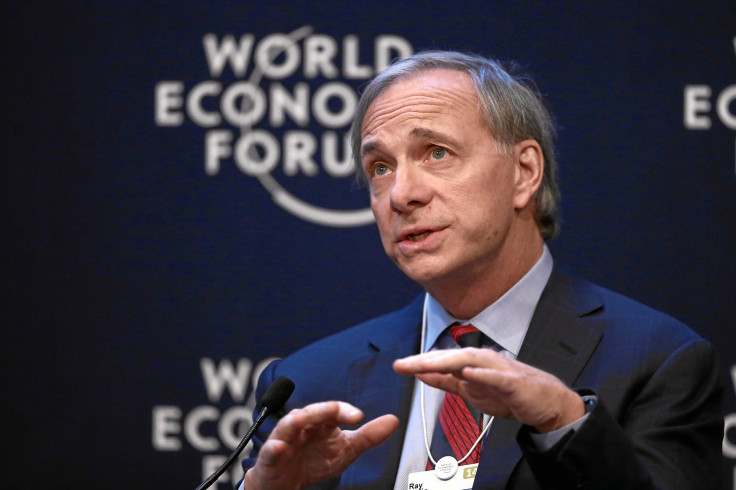
In the autumn of 1956, British Prime Minister Anthony Eden received a phone call that ended an empire. The military operation in Egypt had succeeded. The Suez Canal was under Anglo-French control. And Washington told London to stop.
The United States, alarmed by Soviet threats of intervention and unwilling to see its Cold War allies destabilize the Middle East, forced Britain and France to withdraw. Within a decade, the British Empire was in managed retreat. The pound sterling—for over a century the world’s reserve currency—began its long slide. It took thirty years for the cycle to complete: George Soros finally drove the final stake through the Bank of England in 1992.
Ray Dalio did not write that history as a lesson about Britain. He wrote it as a warning about the United States in March 2026. And this week, Fortune published his most comprehensive articulation yet of why he believes America has just lived through its own version of that afternoon.
The Hormuz Parallel
The Bridgewater Associates founder has spent decades mapping what he calls the Big Debt Cycle—the rise and fall of reserve-currency empires over five centuries of financial history. The pattern, he argues, is consistent across cases: a dominant power overextends militarily over a critical trade route, suffers a loss of geopolitical face despite tactical success, and watches allies and creditors quietly recalibrate their confidence.
The 2026 U.S.-led bombing campaign against Iran fits that template, Dalio contends. The strikes degraded Iranian military capacity but did not topple the regime. The Strait of Hormuz—through which roughly a fifth of the world’s daily oil supply moves—was disrupted for weeks, sending energy prices surging and triggering a global inflation shock. Negotiations produced a stalemate rather than a decisive resolution.
“It all comes down to who controls the Strait of Hormuz,” Dalio wrote on X. The motivational asymmetry, he argued, was stark: for Iran’s leadership, the conflict was existential. For American voters, it was gas prices and midterm politics.
The Debt Foundation Is Already Cracked
What makes Dalio’s warning more than historical analogy is the fiscal backdrop against which the Hormuz crisis played out. U.S. federal debt crossed $39 trillion on March 18, 2026, with the latest trillion accumulating in record time—driven by tax reductions that eroded revenues and war expenditures that accelerated spending. All three major credit ratings agencies have now downgraded U.S. sovereign debt: S&P in 2011, Fitch in 2023, and Moody’s in May 2025.
The dollar’s share of global foreign exchange reserves has fallen to 56.9%, its lowest level since 1995 and down from a peak of 72% in 2001. Capital and technology spending by the top five U.S. mega-cap technology companies now represent roughly 30% of the entire S&P 500—a concentration of financial weight last seen half a century ago.
NVIDIA alone has surpassed a $5 trillion market capitalization, making it worth more than the entire GDP of most nations. Microsoft, Alphabet, Amazon, and Meta are projected to spend between $660 billion and $700 billion on AI infrastructure in 2026 alone. Dalio sees this as a dangerous divergence: financial markets increasingly levitating above an economy where households are under acute pressure, real wages have declined because of energy shock, and consumption—which accounts for 67% of U.S. GDP—faces structural headwinds.
The Dollar Isn’t Collapsing—Yet
Dalio is careful about what he is and is not claiming. Britain’s sterling did not collapse at Suez. It bled for three decades before the final break. The dollar today is still, as Wall Street analysts say, the “cleanest dirty shirt” in the global monetary wardrobe. No alternative reserve currency exists at anything close to the scale that would be required to replace it.
But the trajectory, Dalio argues, is what matters—not the current position. He draws a direct structural comparison: allies stopped deferring to London after Suez; creditors quietly reassessed British debt; the currency’s global role eroded steadily even as the British economy remained functional and respected. The analogy, he acknowledges, has limits. He frames this as contingent possibility, not inevitability.
Asian leaders Dalio has spoken with recently—he described spending a month in Asia, including ten days in China, in early 2026—have reached a collective conclusion that the U.S. can no longer credibly project military force across multiple theaters simultaneously. “It’s clear that the United States cannot fight a war,” he told Bloomberg Television in early June, citing public unwillingness to absorb casualties. He flagged Taiwan as the most acute potential flashpoint, noting that Beijing could trigger a global market crash by signaling a semiconductor blockade without firing a single shot.
What to Watch—and What to Hold
Dalio is not prescribing specific trades, but the historical pattern points in a consistent direction. In prior empire-transition periods, the indicators to monitor are: allies and creditors losing confidence, erosion of reserve currency status, selling of sovereign debt assets, and currency weakness—especially against gold.
Gold has already tracked that roadmap. Prices surged approximately 60% in the twelve months through March 2026. Goldman Sachs has revised its year-end 2026 gold price target to $4,900 per troy ounce—down from an earlier $5,400 forecast, reflecting the expectation that the Fed will not cut rates this year—but remains constructive on the long-term outlook.
“People don’t have, typically, an adequate amount of gold in their portfolio,” Dalio told CNBC in a February 2025 interview. “When bad times come, gold is a very effective diversifier.”
Dalio has identified the window between the 2026 U.S. midterm elections and the 2028 presidential election as a period of particular vulnerability, when debt pressures and intensifying political conflict over taxes and spending will converge. The outcome is not predetermined. Empires do extend their lives through what Dalio calls “life-extending” measures: prudent debt management, inflation control, and national unity. But with U.S. interest payments alone projected to exceed $1 trillion annually, those measures feel increasingly aspirational.
Discover more from The Economy
Subscribe to get the latest posts sent to your email.



Is SpaceX going public in 2026? SpaceX is actively preparing for a potential initial public offering targeted for mid-to-late 2026, with reported valuation estimates that have climbed dramatically over the course of the year — from around $800 billion in insider share-sale discussions in December 2025, to over $1 trillion by mid-2026, to Bloomberg reports of a $1.5 trillion target more recently, according to reporting compiled by Capital Brief. That trajectory represents an extraordinary escalation from SpaceX’s own late-2023 tender offer valuation of roughly $175 billion — nearly a tenfold increase in under three years.
If completed anywhere near the higher end of reported estimates, this would be the largest initial public offering in history, surpassing Saudi Arabia’s Aramco, which remains the only company ever to reach a trillion-dollar-plus IPO valuation, having listed at $1.7 trillion in 2019.
What’s Actually Confirmed, Versus Speculation
Featured Snippet Target: Elon Musk has effectively confirmed SpaceX is preparing for a 2026 IPO, responding “As usual, Eric is accurate” to a journalist’s analysis of why the company appears ready to go public — but Musk has separately and explicitly disputed specific valuation figures reported by Bloomberg and the Wall Street Journal, meaning the exact valuation, timing, and even whether the full company (versus just Starlink) will be listed all remain genuinely unconfirmed as of September 2026.
That distinction matters for anyone reading SpaceX IPO headlines this year: the company’s intent to go public appears real and has been acknowledged by Musk himself, but nearly every specific number attached to the deal — from the $800 billion figure to the more recent $1.5 trillion reports — has come from unnamed sources cited by financial media rather than official company disclosures, and Musk has pushed back on at least one of those figures directly.
Why SpaceX Is Considering Going Public Now
SpaceX board director Kimbal Musk’s associate and company leadership have framed the potential IPO around a specific financial threshold: Musk has previously stated Starlink specifically would go public once its revenue growth became steady and predictable — a milestone the company appears to have now reached. SpaceX’s overall revenue is projected to reach roughly $15 billion in 2025, climbing to an estimated $22-24 billion in 2026, with Starlink as the primary revenue driver, according to reporting from IDN Financials.
SpaceX’s own internal communications have framed the potential listing explicitly around funding needs rather than simply providing liquidity to existing shareholders. In a December 2025 letter to shareholders, SpaceX indicated plans to channel IPO proceeds toward accelerating the Starship rocket program’s launch cadence, establishing AI-powered data centers in orbit, developing a “Moonbase Alpha” concept, and supporting both robotic and eventual human missions to Mars, according to Outlook Business. That’s a notably broader capital-allocation vision than a typical IPO prospectus, reflecting SpaceX’s unusual position as simultaneously a commercial launch provider, a satellite internet company, and an increasingly central node in U.S. space and defense strategy.
Listing the Whole Company, Not Just Starlink
An important shift in SpaceX’s IPO planning during 2026 has been the move away from spinning off Starlink as a standalone public entity — long considered the most likely path to a public listing — toward preparing to list SpaceX’s core business in its entirety. According to DriveTeslaCanada’s reporting on Bloomberg’s coverage, that shift would bring the full SpaceX operation — rockets, Starlink satellites, a growing defense contracting business, and various off-world infrastructure projects — into a single public entity, rather than carving out only the more straightforwardly valued satellite-internet business.
That distinction matters enormously for how the eventual IPO gets valued. Starlink alone, as a subscription satellite-internet business, would be comparatively simple for public-market analysts to model against comparable telecom and satellite companies. The full SpaceX entity — encompassing an active national-security launch provider handling more than 80% of global payload weight, according to analysis from QZ, alongside a rapidly scaling satellite business and speculative future ventures like orbital data centers and lunar infrastructure — is a fundamentally harder company for public markets to price cleanly.
The Comparison That Keeps Coming Up
Every report on SpaceX’s potential IPO valuation inevitably returns to the same comparison: Saudi Aramco’s 2019 listing, which raised approximately $29 billion at a $1.7 trillion valuation and remains the only trillion-dollar-plus IPO in history. If SpaceX executes even the lower end of its reported fundraising targets — $25-30 billion raised — it would still exceed Aramco’s raise amount while potentially matching or exceeding Aramco’s valuation, depending on which of the widely varying reported figures ultimately proves accurate. Some reports suggest SpaceX could reach a valuation “in the same valuation airspace as Meta or Amazon” — a scale of comparison that, regardless of the exact final number, places SpaceX’s potential public debut among a small handful of the most consequential stock-market listings in history.
The Bottom Line
SpaceX’s 2026 IPO remains genuinely in-progress rather than finalized: Musk has acknowledged the company is preparing for a public listing, but the specific valuation (reported anywhere from $800 billion to $1.5 trillion), timing (mid-to-late 2026, with some reports suggesting a possible slip into 2027), and structure (full company versus Starlink spinoff) all remain unconfirmed by the company itself. What is clear is that any completed listing at even the lower end of reported estimates would represent one of the most significant capital markets events in recent history, both for its sheer scale and for what it would signal about public investors’ appetite for space, satellite, and AI-infrastructure exposure in a single company.
Next step: Investors and space-industry watchers should treat specific SpaceX IPO valuation figures reported by any single outlet with real skepticism until the company files actual registration documents — the reported estimates have nearly doubled within a matter of months this year, and Musk himself has directly disputed at least one widely-cited figure.
Discover more from The Economy
Subscribe to get the latest posts sent to your email.
What is Pakistan’s central bank policy rate in 2026? The State Bank of Pakistan (SBP) held its policy rate unchanged at 11.5% at its September 14, 2026 meeting, according to the central bank’s official statement, even as headline inflation jumped to 11.1% year-on-year in August from 9.2% in July. The Monetary Policy Committee specifically cited the “recent intensification of the prolonged Middle East conflict” as having pushed already-elevated global commodity prices even higher, compounding persistent supply chain disruptions — a clear signal that Pakistan’s domestic inflation fight in 2026 has become inseparable from the global oil-price volatility tied to the Strait of Hormuz crisis.
That single decision captures the core tension defining Pakistan’s economy this year: a genuine, hard-won macroeconomic stabilization story running headlong into external shocks the country has no control over.
The Long Road From 22% to 11.5%
Featured Snippet Target: The State Bank of Pakistan has cut its policy rate by roughly 1,100 basis points since June 2024, when rates peaked at 22% amid inflation nearing 40% — one of the most aggressive monetary easing campaigns among emerging-market central banks in recent history — before pausing the cutting cycle in 2025 and holding steady through 2026 amid renewed inflation risk from Middle East-driven commodity price increases.
That easing campaign reflected a genuine turnaround in Pakistan’s inflation trajectory: from a peak above 38% in May 2023, inflation had fallen to single digits by late 2024, allowing the central bank room for aggressive cuts. But the pace of easing slowed and eventually paused as new pressures emerged — first flood-related agricultural disruptions in late 2025, and then, more significantly, the economic fallout from the Iran conflict that erupted in February 2026.
The Pause, Meeting by Meeting
The SBP’s rate path through 2026 has been a study in caution rather than continued easing. The central bank held rates steady at 11% in October 2025 for a fourth consecutive meeting, citing modest economic growth alongside external-sector vulnerabilities and inflation risks, with foreign exchange reserves projected to reach $15.5 billion by December 2025 and around $17.8 billion by June 2026, according to reporting from Arab News. By April 2026, with Middle East tensions escalating and oil prices surging, the SBP raised its rate by 100 basis points to 11.50%, according to ARY News — reversing its prior easing bias entirely in direct response to the geopolitical shock. The rate has been held steady at that level through subsequent meetings in June, July, and September.
The Good News Buried in the September Statement
Despite the inflation jump, the SBP’s September policy statement contained several genuinely positive developments that complicate any purely negative reading of Pakistan’s 2026 economic trajectory. The central bank’s foreign exchange reserves surpassed the end-June 2026 target of $18 billion, driven by continued FX purchases amid a small current account deficit for the fiscal year and the realization of planned official inflows. Separately, Standard & Poor’s upgraded Pakistan’s sovereign credit rating to “B” during the year — a meaningful signal of improving international investor confidence in the country’s debt sustainability. Inflation expectations among both consumers and businesses had also eased in the latest sentiment surveys, according to the SBP’s own reporting, suggesting the current inflation spike is being read by markets as externally-driven rather than a sign of a fundamental loss of policy credibility.
Growth, Floods, and a Still-Live IMF Program
Pakistan’s real GDP growth for the fiscal year was revised upward into the upper half of a previously projected 3.25%-4.25% range as of late 2025, underpinned by robust performance in agriculture and industry alongside rising domestic demand, according to Trading Economics coverage of the central bank’s own projections. That growth trajectory has had to absorb genuine shocks: flood-related crop losses drove a temporary inflation spike to 5.6% in September 2025, and border closures with Afghanistan disrupted staple food supplies including tomatoes and apples. Pakistan’s stabilization program remains anchored by its ongoing International Monetary Fund arrangement, with fiscal consolidation and the realization of planned external inflows continuing to be treated by the SBP as prerequisites for durable macroeconomic stability, consistent with the terms of the country’s 37-month, roughly $7 billion IMF Extended Fund Facility.
The Real Asset Allocation Shift Feeding Pakistan’s Stock Rally
Pakistan’s improving macro picture — falling rates through 2024-2025, easing inflation, and rising foreign reserves — has had a direct and visible knock-on effect on domestic markets: a structural shift of household savings out of fixed-income instruments and into equities, as falling returns on traditional savings vehicles pushed investors toward the stock market, according to brokerage house Topline Securities’ analysis reported by Aaj News. That reallocation has been the primary fuel behind the KSE-100’s historic rally through 2026, even as the index has periodically corrected sharply on single-session sentiment shifts.
The Bottom Line
Pakistan’s 2026 economic story is genuinely two-sided: a real, credible stabilization achieved through 1,100 basis points of rate cuts, improving foreign reserves, a credit rating upgrade, and a domestic savings shift that has fueled one of the world’s best-performing stock markets — all now being tested by an externally-driven inflation shock tied to Middle East oil-price volatility that is entirely outside the State Bank’s control. The SBP’s response so far — holding rates steady rather than resuming cuts or panicking into further hikes — suggests the central bank is treating the current inflation spike as a temporary, externally-driven disruption rather than a sign that its underlying stabilization program has failed.
Next step: Businesses and investors tracking Pakistan’s economy should watch the SBP’s October 26, 2026 Monetary Policy Committee meeting closely — a continued hold would reinforce the “temporary external shock” reading, while any additional rate hike would signal the central bank sees the Middle East-driven inflation pressure as more durable than currently assessed.
Discover more from The Economy
Subscribe to get the latest posts sent to your email.

Is the AI stock rally a bubble? The honest answer in 2026 is that the market itself is genuinely split — and the concentration numbers explain why the debate has gotten so intense. Roughly two dozen stocks now account for over half of the S&P 500’s total value, a concentration level comparable to the 32-stock peak reached during the 2000 dot-com bubble, according to market analysis relayed through Charles Schwab’s commentary. Three companies alone — Alphabet, Amazon, and Meta — are expected to drive roughly 70% of the S&P 500’s entire 2026 earnings growth.
That’s the bear case in a single statistic: an index marketed to investors as broadly diversified across 500 companies is, in practice, a leveraged bet on whether a handful of AI infrastructure spenders convert capital expenditure into earnings fast enough to justify their valuations.
The Bull Case: Spending Is Turning Into Real Revenue
Featured Snippet Target: The bull case for 2026’s AI rally rests on genuine, verifiable revenue growth rather than pure speculation — Microsoft’s AI revenue run rate surpassed $37 billion annually, Alphabet’s Google Cloud backlog nearly doubled to over $460 billion, and Amazon Web Services grew 28% — figures that distinguish this cycle from dot-com-era companies that had capital spending but little corresponding revenue.
Alphabet spent $35.67 billion on capital expenditure in a single recent quarter — more than double the prior year’s pace — while Amazon led hyperscaler quarterly spending at $44.2 billion, according to reporting compiled by Yahoo Finance’s technology desk. Combined, the four largest U.S. hyperscalers — Alphabet, Amazon, Microsoft, and Meta — are on pace to spend over $700 billion in 2026 alone. Unlike the fiber-optic overbuild of the dot-com era, where telecom capacity sat unused for years, current AI infrastructure spending is being absorbed by measurable, growing cloud and AI-service revenue in the same reporting periods it’s being deployed.
The Financing Shift That’s Making Analysts Nervous
What has shifted the debate in recent months isn’t the spending itself — it’s how that spending is being funded. Goldman Sachs has characterized 2026 as marking a transition from a low-cost-of-capital “Modern” market cycle to a higher-volatility “Post-Modern” one, in which capital expenditure is increasingly rewarded over shareholder buybacks: S&P 500 companies posted 24% year-on-year capex growth in the second quarter of 2026 alongside a 1% decline in gross buybacks, according to market commentary circulated via KuCoin’s research desk.
Consensus hyperscaler capex estimates for the 2026-2028 period were revised upward from roughly $2.5 trillion to $2.8 trillion during recent earnings seasons, with gross debt issuance among these companies expected to peak near $460 billion in fiscal 2028 — roughly a third of total capex — according to Macquarie’s Investment Strategy Insights. Alphabet’s own June 2026 equity raise, combining Class A common stock, Class C capital stock, and mandatory convertible preferred shares, ranks as the largest single AI-funding capital raise in market history. That shift — from funding AI buildout purely from operating cash flow toward relying on debt and equity markets — is precisely the kind of financing pattern that historically precedes sharper corrections when growth expectations disappoint, even when the underlying business fundamentals remain genuinely strong.
Early Cracks Have Already Appeared
The market has not been uniformly bullish through 2026 — there have already been real bouts of AI-specific volatility. Mid-September commentary from CNBC noted bond yields spiking and AI-linked stocks selling off even as broader investor sentiment remained constructive on equities generally — an early signal that markets have begun pricing a wider range of outcomes for the AI capex cycle than the largely unbroken bull run of the year’s first half suggested. That divergence between AI-specific stocks and the broader market is itself notable: in a genuine across-the-board bubble, sentiment tends to move in lockstep across a sector; a split reaction suggests investors are starting to differentiate between AI companies converting spending into revenue and those merely riding sector-wide enthusiasm.
What Would Actually Confirm a Bubble
The distinction analysts increasingly draw is not “is there a lot of spending” — there unambiguously is — but whether that spending is converting into durable revenue at a pace that justifies current valuations. The genuinely bubble-confirming scenario would involve a sustained gap opening between hyperscaler capex growth and actual AI-linked revenue growth, forcing companies to either write down infrastructure investments or continue raising debt at deteriorating terms to sustain spending. As of September 2026, revenue growth at the largest hyperscalers has generally kept pace with — and in some cases exceeded — capex growth, which is the key data point separating this cycle from a pure speculative bubble so far.
The Bottom Line
The 2026 AI trade sits in a genuinely ambiguous middle ground: spending levels and market concentration have reached bubble-era extremes by historical comparison, but the revenue being generated alongside that spending remains real and, so far, largely justifies it. The financing shift toward debt — rather than the spending level itself — is the single most important variable to watch, because it introduces a genuine failure mode (refinancing risk, credit-market stress) that pure equity-funded capex would not carry. Neither the unambiguous bull case nor the unambiguous bubble case is fully supported by the data as it stands; both remain live possibilities depending on how the next several quarters of hyperscaler earnings play out.
Next step: Track the spread between hyperscaler capex growth rates and their AI-linked revenue growth rates each earnings season — a widening gap, more than any single stock’s valuation multiple, would be the clearest confirming signal that 2026’s AI rally has crossed from justified investment into unsustainable bubble territory.
Discover more from The Economy
Subscribe to get the latest posts sent to your email.

Solar Panel Installation Cost in 2026: Why the Math Changed Overnight

Business Insurance: What Coverage You Actually Need and What It Costs in 2026

Auto Insurance Quotes: How to Get the Lowest Rate Without Losing Coverage

Huntington Online Banking: Full Features, Fees, and How It Compares in 2026

Apply for a Bank Account Online: What You Need and How Long It Actually Takes

World’s Largest Economies: Ranking the Top Global Powers

Business Loan: A Complete 2026 Guide to Rates, Types, and Qualifying

Fast Invoice Factoring: How to Turn Unpaid Invoices Into Cash Within 24 Hours

Investment Banking Services: What They Cost and How to Choose the Right Firm in 2026

Structured Settlement Loan: What “Cash Now” Offers Actually Cost You

DUI Attorney: Why Your First Call After an Arrest Should Never Be to the Court

Personal Injury Lawyer: A Complete Guide to Filing Your Claim in 2026

Commercial Vehicle Accident Lawyer: Holding Companies Accountable Beyond the Driver

Inside the White House Feud: How Trump’s Allies Are Painting Anthropic’s Dario Amodei as the Face of ‘AI Doomerism’

Top 30 Stocks for Investment in PSX for Massive ROI in 2026

SpaceX Starship Flight 14: First Orbital Attempt & Starlink V3 Launch Explained

Oil Prices Break $100 in 2026: Middle East Conflict & Energy Markets

AI Chip Stocks 2026: The Best Semiconductor Investments Beyond Marvell

Fidelity Investments Review 2026: SPAXX Yields & Zero-Fee Funds

BRICS+ Cross-Border Payments 2026: Interoperability Explained

Tween Back-to-School Trends 2026: What’s Driving the $85B Season

10-Year Treasury Yield Hits 4.80%: What It Means for Rates & Portfolios

Shein Clothes Quality & Safety in 2026: What Lab Tests Show

China’s US$10.8 Billion Trade Shortcut: Why the Pinglu Canal Matters

MRVL Earnings 2026: Why Marvell Sank Despite Beating Estimates

IMF & World Bank 2026 Global Economic Outlook: Growth, Inflation, Debt

Middle East War Economics 2026: Oil Prices & Energy Markets

High-CPM Finance Niches 2026: Publisher Monetization Blueprint
-

 Markets & Finance9 months ago
Top 15 Stocks for Investment in 2026 in PSX: Your Complete Guide to Pakistan’s Best Investment Opportunities
-

 Analysis7 months ago
Johor’s Investment Boom: The Hidden Costs Behind Malaysia’s Most Ambitious Economic Surge
-

 Analysis7 months ago
Top 10 Stocks for Investment in PSX for Quick Returns in 2026
-

 Banks8 months ago
Best Investments in Pakistan 2026: Top 10 Low-Price Shares and Long-Term Picks for the PSX
-

 Analysis8 months ago
Brazil’s Rare Earth Race: US, EU, and China Compete for Critical Minerals as Tensions Rise
-

 Investment9 months ago
Top 10 Mutual Fund Managers in Pakistan for Investment in 2026: A Comprehensive Guide for Optimal Returns
-

 Global Economy9 months ago
15 Most Lucrative Sectors for Investment in Pakistan: A 2025 Data-Driven Analysis
-

 Global Economy9 months ago
Pakistan’s Export Goldmine: 10 Game-Changing Markets Where Pakistani Businesses Are Winning Big in 2025